 Lynden
 Exterior Work in a Marine Climate
Bellingham sits on the water in Whatcom County, and that location shapes everything about how a house ages here. Homes close to Bellingham Bay deal with salt-laden air, which is more corrosive to fasteners, trim, and cheap exterior coatings than the drier air found further inland. Add in the driving rain that comes off the Pacific through much of the fall, winter, and spring, plus a moss and algae season that can stretch nearly year-round on shaded north- and west-facing walls, and you get a climate that is genuinely tough on siding — even siding that looks fine for the first few years.
We work throughout Whatcom County, and Bellingham is one of the areas where we see the clearest evidence of climate-driven siding failure: swollen seams, peeling paint, soft trim boards, and moss creeping up from grade. None of that is unusual for the area. It's just what happens when a product isn't matched to the conditions it's asked to survive.
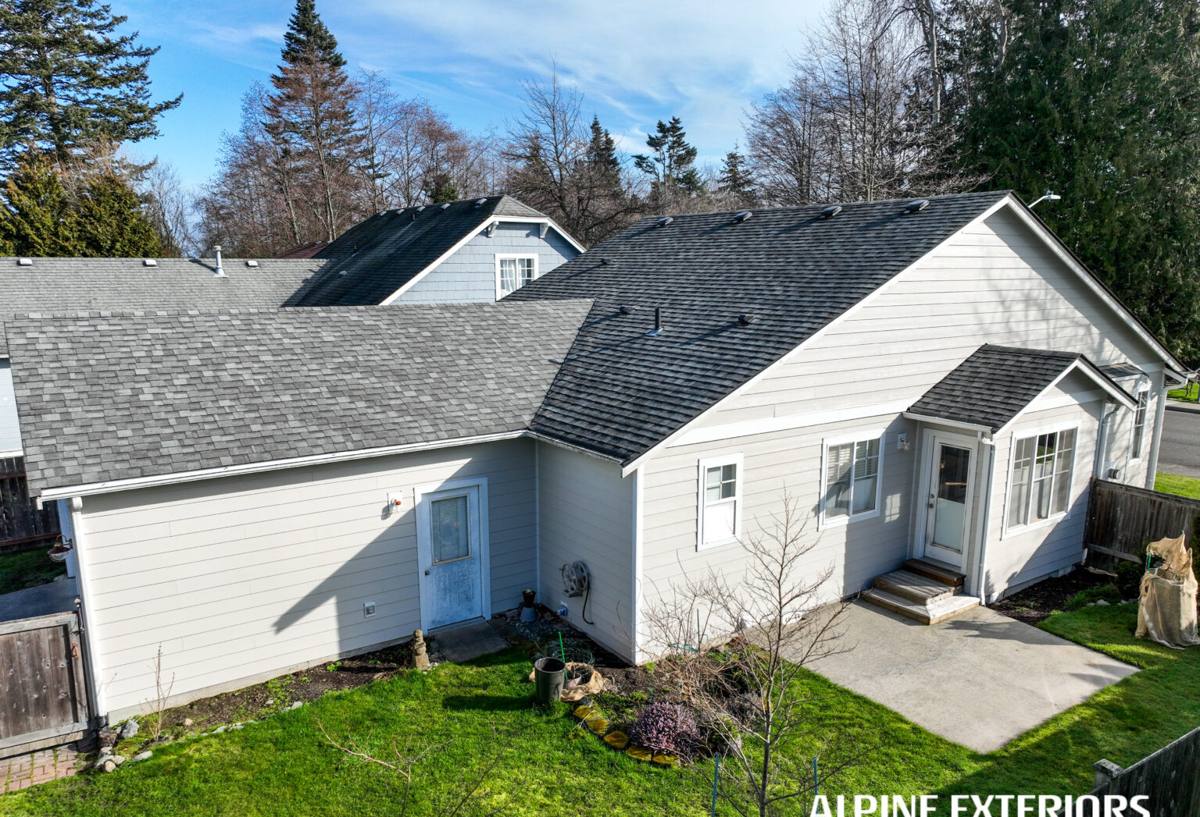
What Salt Air and Driving Rain Actually Do
It helps to be specific about the mechanisms, because "coastal weather is rough on houses" is true but not very useful on its own.
- Salt air accelerates corrosion on exposed fasteners, metal flashing, and hardware. Once a fastener starts rusting, the wood or composite around it stays wetter longer, which speeds up decay in that spot.
- Driving, wind-blown rain doesn't just fall straight down — it gets pushed sideways and upward under laps, around window trim, and into any gap in the water-resistive barrier. Siding systems that rely on caulk and paint film alone to stay watertight tend to fail here faster than they would in a calmer climate.
- Extended damp periods keep wall assemblies wet for days at a stretch during the rainy months. Materials that absorb moisture and swell — engineered wood panels, untreated trim, some composite products — lose dimensional stability over repeated wet-dry cycles.
- Moss and algae thrive in the shade and moisture that shaded walls, tree cover, and north exposures create around Bellingham. Beyond the cosmetic issue, moss holds moisture against the siding surface and can work into seams and fastener heads over time.
Why We Only Install James Hardie Fiber Cement
We made a decision as a company to install James Hardie fiber cement siding exclusively — not vinyl, not LP SmartSide or other engineered wood panel products, not cedar, not primed spruce. That's a deliberate standard, not a sales preference, and it's worth explaining plainly rather than just asserting it.
Fiber cement is made from cement, sand, and cellulose fibers, which makes it non-combustible and dimensionally stable — it doesn't expand and contract with moisture the way wood-based products do. James Hardie's HZ product lines are engineered for different climate zones, and the HZ5 formulation used in the Pacific Northwest is built specifically to hold up in wetter, cooler conditions like Whatcom County sees. The ColorPlus factory finish is baked on under controlled conditions rather than field-applied, which matters in a climate where paint has a narrow window to cure properly outdoors. And Hardie backs the product with a strong, transferable warranty, which gives homeowners real recourse if something goes wrong with the material itself.
Wood-based composite siding and engineered wood panels aren't bad products in every application — some perform reasonably well in drier climates with disciplined maintenance. But they depend on an intact paint film and careful field detailing to keep moisture out, and in a marine climate with long wet seasons, that's a maintenance burden we're not willing to install a house's protection on top of. Vinyl siding is low-maintenance and inexpensive, but it's a thin plastic product that can warp in heat, crack in cold, and fade — and it isn't the air and moisture barrier that a fiber cement system installed correctly can be. Cedar is a beautiful, genuinely traditional Pacific Northwest material, but it requires ongoing sealing, staining, and vigilance against rot and insects that most homeowners underestimate when they choose it. We'd rather put one product on a house that we know performs to spec in this climate than sell several products with different risk profiles.
How the Common Siding Options Compare
| Material | Moisture Behavior | Maintenance | Typical Lifespan |
|---|---|---|---|
| James Hardie fiber cement | Dimensionally stable, engineered for wet climates (HZ5) | Low — factory finish, occasional wash | 30+ years with correct install |
| Vinyl | Doesn't rot, but seams and gaps can let water behind it | Low, but can warp or crack over time | 20-30 years |
| LP SmartSide / engineered wood panels | Prone to swelling at cut edges and seams if not sealed perfectly | Moderate — paint film needs monitoring | Highly install-dependent |
| Cedar | Absorbs moisture; performs best with disciplined upkeep | High — sealing/staining on a recurring schedule | Varies widely with maintenance |
What Correct Installation Looks Like Here
Material choice only gets you part of the way. In a climate like Bellingham's, the installation details matter as much as the product itself — maybe more.
Rain Screen and Drainage Gap
A drainage gap behind the siding lets any water that does get past the surface drain out and lets the wall assembly dry rather than staying wet against the sheathing. This matters more in a driving-rain climate than in a mild, dry one.
Flashing at Every Penetration
Windows, doors, hose bibs, light fixtures, and deck ledgers are all places water can work its way in. Proper flashing — installed in the right order, lapped correctly — is what actually keeps water out, not caulk alone.
Clearance at Grade and Roof Lines
Siding installed too close to grade, decks, or roof surfaces stays wet longer and is more exposed to splashback, moss growth, and, near the coast, salt residue. Keeping proper clearance is a small detail that pays off over decades.
Fastener Selection
Corrosion-resistant fasteners matter everywhere, but they matter more within reach of salt air. Using the wrong fastener is a cheap mistake with an expensive, slow-motion consequence.
Beyond Siding: The Whole Exterior
Siding doesn't fail in isolation — roofing, windows, and decks all interact with it, and in Bellingham's climate they all face similar pressures from wind-driven rain and prolonged dampness. We handle all four:
- Roofing — the first line of defense against the same driving rain that stresses siding; roof-to-wall flashing details directly affect how well siding performs below them.
- Windows — proper window flashing is one of the most common failure points we find during siding replacement, and it's far easier to get right when siding and windows are addressed together.
- Decks — ledger board attachment and deck-to-house flashing are frequent sources of hidden moisture intrusion, especially on older homes.
Tackling siding without looking at how it meets the roofline, window openings, and any attached deck often means missing the actual source of a moisture problem.
Signs Your Bellingham Home May Need New Siding
- Paint that's peeling, bubbling, or needs repainting more often than every few years
- Soft or spongy spots when you press on siding or trim, especially near the bottom courses
- Visible warping, buckling, or gaps at seams and corners
- Persistent moss or algae staining that returns quickly after cleaning
- Rusty streaking from fasteners or corroded trim hardware
- Rising energy bills that may point to a compromised weather barrier
- Visible rot or delamination at butt joints and around window and door trim
What Drives the Cost of a Siding Project
| Factor | Why It Matters |
|---|---|
| Home size and wall complexity | More corners, gables, and dormers mean more cutting, flashing, and labor |
| Existing wall condition | Rotted sheathing or framing found during tear-off adds repair scope |
| Trim and accent details | Board-and-batten, shake-style panels, and trim upgrades add cost over flat lap siding |
| Access and site conditions | Steep lots, limited access, or landscaping near the house can affect labor time |
| Color and finish selection | Factory ColorPlus finishes come at different price points depending on the line |
We won't quote a number without seeing the house, but we're happy to talk through realistic ranges and what typically drives cost up or down during a free estimate.
Why a Local Crew Matters
Whatcom County's climate isn't identical to Seattle's, and it isn't identical to inland Washington either. A crew that works this specific stretch of coastline regularly develops a feel for how moss establishes on local roofs, how far driving rain pushes under laps in a typical winter storm, and where salt exposure tends to concentrate on a given lot. That local pattern recognition shows up in the small decisions made on-site — where to add extra flashing, which details to double-check — that don't always make it into a generic installation manual.
It also matters for accountability. A local, established crew is easy to reach if a question comes up five or ten years down the road, and has a reputation in the community worth protecting.
Get a Free, No-Pressure Estimate
If you're noticing any of the warning signs above, or you're just planning ahead for a Bellingham home that's due for new siding, we're glad to take a look and talk through honest options — including why we'd recommend James Hardie fiber cement for your specific home. Use the form below to request a free estimate; there's no obligation and no pressure.