 Lynden
 Exterior Work in Nooksack, WA
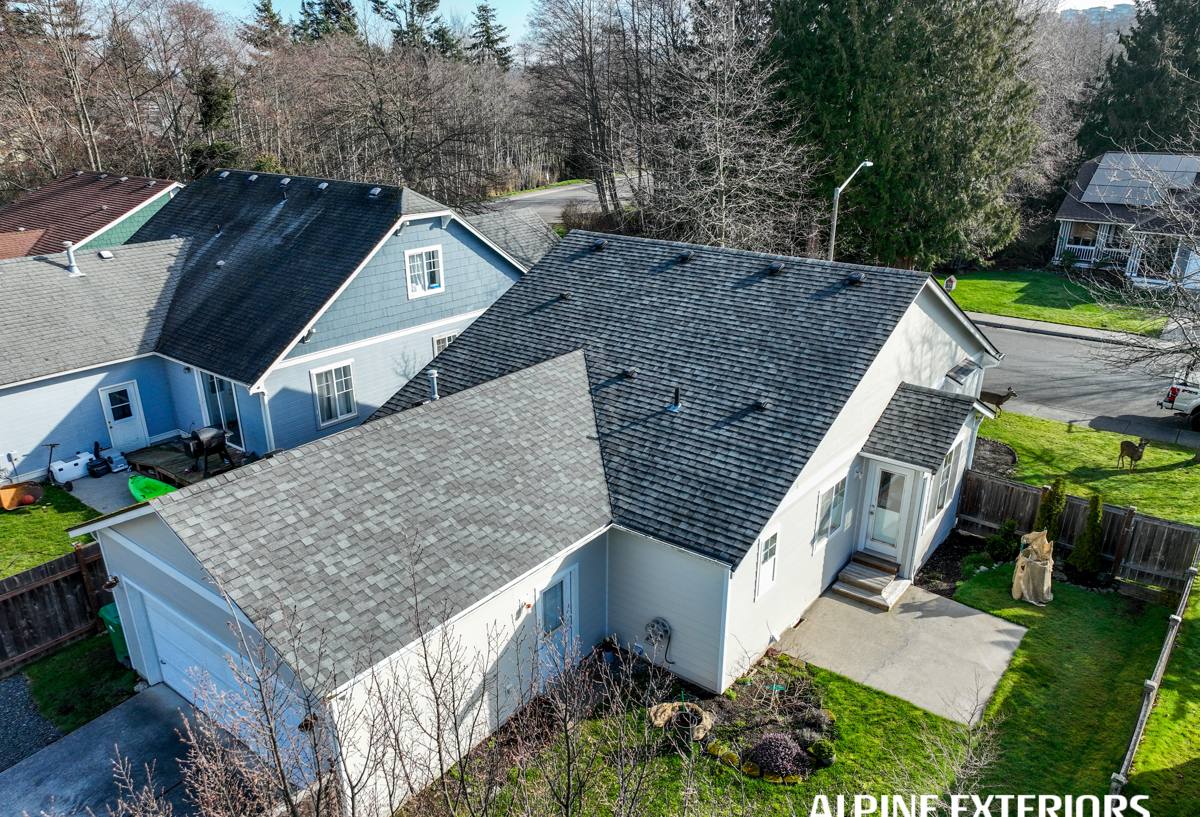
Nooksack sits in the farm country of Whatcom County, a few minutes from Lynden and close enough to the Nooksack River and the foothills that the weather here behaves differently than it does twenty miles south in Bellingham or forty miles south in Everett. Homes in and around Nooksack take on a specific combination of moisture, wind-driven rain, and salt-tinged marine air moving in off Puget Sound and Bellingham Bay. None of that is dramatic on any given day. It's the accumulation over years that wears an exterior down, and it's why the siding, trim, and roofing choices that work fine in a drier climate often don't hold up the same way here.
We're a local crew that installs siding, roofing, windows, and decks throughout Whatcom County, including Nooksack. This page is about what the climate actually does to a house in this area, what we install and why, and what a homeowner should expect from a real exterior project — not a sales pitch, just straight information.
What the Climate Actually Does to a House Here
Salt Air and Slow Corrosion
Marine air carries fine salt content that settles on exterior surfaces, fasteners, and metal flashing. It's not concentrated the way it would be right on the water, but over years it accelerates corrosion on lower-grade fasteners and untreated metal trim, and it contributes to the slow breakdown of paint films and caulk joints. A siding system's fastener quality and flashing details matter more here than in an inland, dry climate.
Driving Rain and Wind-Driven Moisture
Whatcom County storms don't just fall straight down — winter and fall systems frequently push rain sideways against the west and south faces of a house. That means water gets forced into laps, seams, and butt joints that would stay dry in a calmer climate. Any siding product with weak seams, poor overlap, or joints that rely on caulk alone as the primary water barrier is going to take on moisture over time in this kind of exposure.
A Long Moss and Algae Season
Shaded north and east walls, tree-lined lots, and the extended damp season common to this part of the county all favor moss and algae growth on exterior surfaces. Wood-based sidings and paint films are especially vulnerable — moss holds moisture against the substrate, and that moisture is what actually causes rot, not the moss itself. A siding material that doesn't feed moss growth, and a finish that resists it, buys years of maintenance-free life that painted wood or engineered wood products don't get here.
Why We Install Only James Hardie Fiber Cement Siding
We don't install vinyl, LP SmartSide, primed spruce, cedar, or other fiber cement brands. That's a deliberate standard, not a lack of options. Here's the honest reasoning behind it, specific to a climate like Nooksack's:
- Vinyl is inexpensive and low-maintenance, but it's a thin plastic product that expands and contracts with temperature swings, can crack in a hard freeze, and doesn't hold paint if a homeowner ever wants to change the color. In driving rain it also relies heavily on a properly lapped and taped water-resistive barrier underneath, since the panels themselves aren't a sealed system.
- LP SmartSide and other engineered wood products use wood strand cores with resin binders. They perform well when detailing and maintenance are kept up, but any wood-based product is more vulnerable to the kind of prolonged dampness and moss exposure common in this area, and edge-sealing at every cut is critical and easy to miss on a job site.
- Primed spruce or cedar are traditional and attractive, but they need repainting on a real schedule, they're the most susceptible to moss, mildew, and moisture damage of anything on this list, and they're the most labor-intensive to keep looking good long-term.
- Other fiber cement brands (Cemplank, Allura) are legitimate fiber cement products, but we've standardized on one manufacturer so our crews install to one spec, one flashing detail, and one warranty structure — no guessing between product lines.
James Hardie fiber cement is non-combustible, doesn't feed moss or mildew the way wood does, and comes with a factory-applied ColorPlus finish that's baked on under controlled conditions rather than field-painted, so it holds color and resists fading and moisture intrusion far better than site-applied paint. Hardie also engineers specific product lines (HZ5, HZ10) rated for different climate zones — for the Pacific Northwest that means a plank engineered for a wetter, more freeze-thaw-active climate than the Southeast or Southwest lines. Installed correctly, with proper flashing, fastener spacing, and clearance details, it's a siding system built for exactly the conditions Nooksack sees every winter.
Siding Options Compared for This Climate
| Material | Moisture/rain performance | Moss & algae resistance | Maintenance |
|---|---|---|---|
| James Hardie fiber cement | Strong — engineered lap and flashing details, non-combustible core | High — doesn't feed organic growth | Occasional rinse; no repainting for the life of ColorPlus finish |
| Vinyl | Depends heavily on underlying water barrier; can warp or crack in temperature extremes | Moderate; can trap moisture behind panels | Low, but limited repair/color options |
| LP SmartSide / engineered wood | Good if edges are sealed and maintained; vulnerable if not | Moderate — wood-based core | Requires periodic caulk/paint upkeep at seams and cuts |
| Primed spruce / cedar | Weakest of the group in sustained wet exposure | Low — most susceptible to moss and rot | Regular repainting and moisture inspection needed |
Beyond Siding: Roofing, Windows, and Decks
Siding is one piece of the exterior envelope. We also handle roofing, windows, and decks, because those systems all interact — a siding job with bad flashing at the roofline or around window openings will fail no matter how good the panels are. Handling all four means one crew is accountable for how the whole exterior sheds water, not four separate contractors each pointing at the others.
Roofing
Roof condition drives siding decisions more than most homeowners expect. Failing flashing at a roof-to-wall transition is one of the most common sources of hidden water damage behind siding in this region, especially on homes with dormers or multiple roof planes.
Windows
Older single-pane or aging vinyl windows are a common source of both energy loss and water intrusion around the rough opening. When we're already opening up a wall for siding work, it's often the right time to address window flashing and, if needed, replacement.
Decks
Whatcom County's rain and moss issues apply just as much to decks as to walls — ledger board flashing where a deck meets the house is one of the more common rot points we find on older homes in this area.
Why a Local Crew Matters Here
Nooksack and the surrounding Lynden area have their own microclimate quirks — exposure to wind coming off the valley, proximity to the river, and lot-by-lot differences in shade and drainage that a crew unfamiliar with the area won't necessarily account for. A local contractor also means someone who's actually available for a warranty call, who knows which details tend to fail first on homes in this specific area, and who isn't driving in from out of the region for a one-time job. We're not a national franchise cycling through crews — we live and work in this county.
What to Expect From Our Process
- An in-person walk-around of the exterior to assess current siding, trim, flashing, and any moisture or moss issues already present
- A written estimate that specifies the exact Hardie product line, profile, and color — no vague allowances
- Discussion of what's underneath: house wrap condition, sheathing, and whether any hidden rot needs to be addressed before new siding goes on
- A clear installation timeline and what to expect day-to-day during the project
- Proper flashing and clearance details at every window, door, roofline, and deck ledger — not just panel installation
- A walkthrough at completion before final sign-off
Maintenance in a Moss-Prone Climate
Even the best siding benefits from basic upkeep in this climate. A short annual routine goes a long way:
- Rinse siding annually, focusing on shaded north and east-facing walls where moss and algae take hold first
- Keep gutters clear so overflow doesn't run down the face of the siding
- Trim back vegetation and tree limbs that keep a wall surface shaded and damp
- Inspect caulking around windows, doors, and trim every year or two and re-caulk as needed
- Watch for soft spots at deck ledgers and roof-to-wall transitions, the two most common hidden moisture points
What Affects the Cost of a Siding Project
| Factor | Why it matters |
|---|---|
| Home size and wall complexity | More corners, gables, and dormers mean more cutting, flashing, and labor time |
| Existing siding removal | Tear-off and disposal of old wood, vinyl, or damaged material adds time and cost |
| Hidden sheathing or framing repair | Rot found once old siding comes off has to be addressed before new siding goes on |
| Hardie product line and profile | Lap siding, shingle-style panels, and trim boards vary in material and labor cost |
| Color and finish | Standard ColorPlus colors versus custom field-painted options affect price |
We don't quote a job over the phone with any real accuracy — every one of these factors needs an actual look at the house.
Get a Free Estimate
If you're weighing a siding, roofing, window, or deck project on a home in Nooksack, we're glad to come take a look and give you a straight, no-pressure estimate. No obligation, and no surprise upsells once we're on site — just an honest read on what your home needs and what it would take to do it right. Use the form below to get started.