 Lynden
 Sumas and the Whatcom County Climate
Sumas sits at the far edge of Whatcom County, hard against the Canadian border in the Nooksack River valley. It's a small, tight-knit farming and border community, and like the rest of the county, its weather is shaped by the Salish Sea to the west and the foothills of the Cascades to the east. That combination doesn't just mean rain — it means long stretches of damp, low-light weather where siding, trim, and roofing rarely get a chance to fully dry out between storms.
Homes in Sumas deal with driving rain that comes in sideways during winter storms, humidity that lingers in the valley through fall and spring, and a moss season that, depending on the year, can run eight months or longer on north-facing walls and shaded rooflines. It's not dramatic weather most of the time — it's persistent weather, and persistent moisture is exactly what wears down the wrong exterior materials over years, not days.
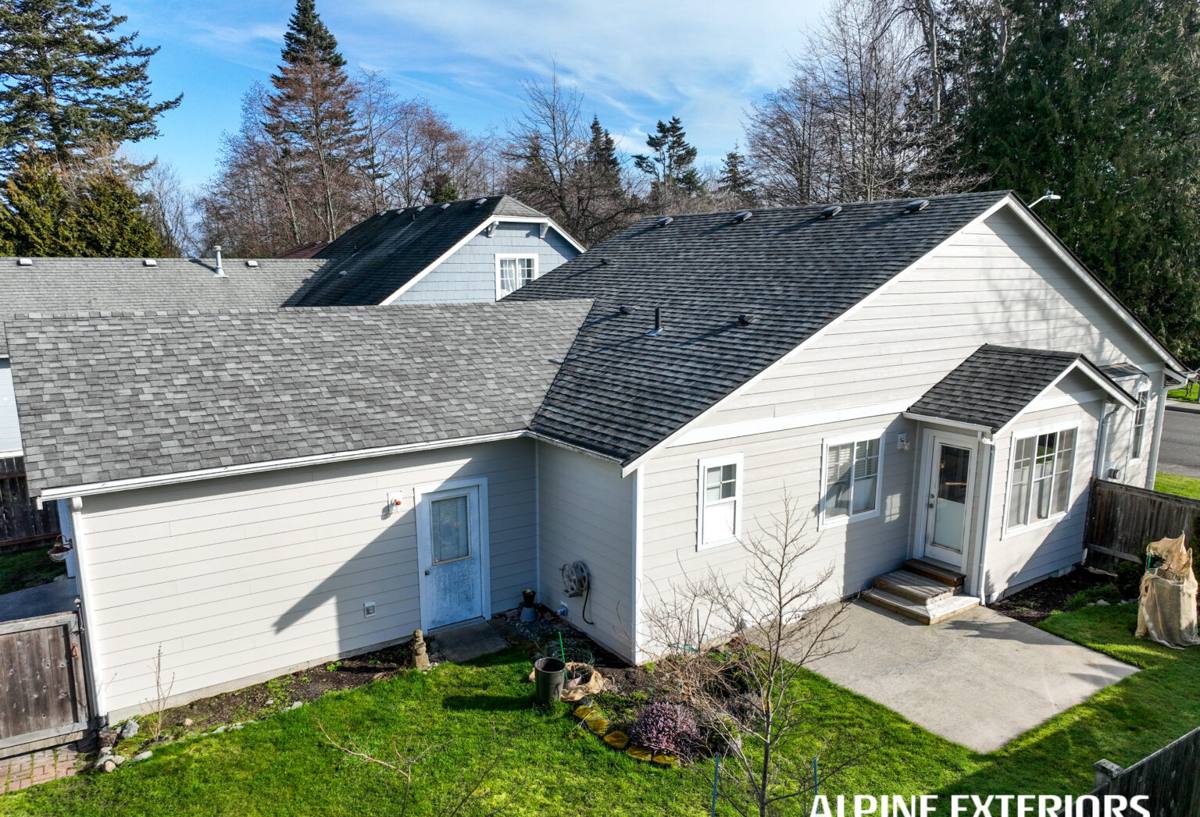
What Constant Moisture Does to the Wrong Siding
Every siding material handles water differently, and the difference only shows up after a few Whatcom County winters. Wood and wood-based products absorb moisture at cut edges and fastener points, which is where rot typically starts — often behind the siding, where you can't see it until paint is peeling or a wall feels soft. Vinyl doesn't rot, but it flexes and gaps with temperature swings, and those gaps become entry points for wind-driven rain. Once water gets behind a wall assembly in a climate like this, it doesn't get much chance to dry before the next system rolls through.
Moss and algae are their own problem. They don't just sit on the surface — on porous or textured materials, they hold moisture against the substrate, which accelerates whatever damage is already happening underneath. A siding product that resists moisture absorption in the first place, and that holds a factory finish instead of a field-applied paint job, has a real advantage in a place like Sumas.
Why This Matters More in a Valley Community
Sumas is more inland than coastal Whatcom County towns, but the marine air still reaches the valley, and low-lying ground here tends to hold humidity and fog longer than higher, more exposed sites. That's not a defect in the town — it's just the geography — but it means exterior materials here need to tolerate sustained dampness, not just occasional hard rain.
Why We Install Only James Hardie Fiber Cement
We made a decision years ago to standardize on James Hardie fiber cement siding and stop installing everything else — no vinyl, no LP SmartSide, no Cemplank or Allura, no primed spruce or cedar. That's not a marketing position, it's a maintenance-and-longevity position based on what actually holds up on homes in this climate.
James Hardie fiber cement is non-combustible and dimensionally stable, meaning it doesn't expand, contract, or absorb water the way wood-based or wood-fiber products do. Hardie's ColorPlus finish is baked on at the factory under controlled conditions, not brushed on at the jobsite, which gives it far better resistance to fading, chipping, and moisture intrusion at the surface. And Hardie engineers specific product lines — including HZ5 and HZ10 — for different climate zones, which matters in a county that sees real humidity and rainfall totals most of the year.
None of this means other products are worthless. Vinyl is inexpensive and low-maintenance in the right setting. Cedar has real appeal for homeowners who want a natural look and are willing to keep up with staining and sealing. LP SmartSide performs reasonably well when installed and maintained exactly to spec. Our position is narrower than "those products are bad" — it's that for the way we build and warranty our work, and for what we've seen play out on homes in this specific climate, Hardie fiber cement is the product we're willing to stand behind.
| Factor | Vinyl | Cedar / Wood | LP SmartSide | James Hardie Fiber Cement |
|---|---|---|---|---|
| Moisture absorption | Low, but gaps at seams | High at cut edges | Moderate, wood-fiber core | Very low, cement-based |
| Finish durability | Fades over time | Needs repainting/staining | Factory or field finish | Factory-baked ColorPlus finish |
| Fire resistance | Combustible | Combustible | Combustible | Non-combustible |
| Moss/algae resistance | Moderate | Low | Moderate | Higher, dense composition |
| Typical warranty structure | Varies by manufacturer | None standard | Manufacturer-dependent | Long-term, transferable |
Roofing, Windows, and Decks for the Same Weather
Siding is only one piece of a home's defense against Whatcom County weather, and we treat roofing, windows, and decks the same way — as systems that have to work together, not separate projects. A roof with worn or undersized flashing will send water down behind good siding just as easily as bad siding will. Windows with failing seals let moist air into wall cavities year-round, not just during storms. And decks in Sumas take a beating from the same rain and shade-driven moss growth as north-facing walls.
When we look at a Sumas home, we're looking at how the roof sheds water, how the windows are flashed and sealed, how the deck drains, and how the siding ties into all of it — because a weak point in any one of those systems undermines the others.
What a Local Sumas Exterior Project Looks Like
Every project starts with a walk-around and an honest look at what's actually happening on the home — not just what the siding looks like from the driveway, but what's going on at trim boards, window flashing, and any spots where past moisture has already left marks. From there:
- We assess existing siding, trim, and any related roofing or window issues that affect the siding install.
- We walk you through James Hardie product options, textures, and colors that fit the home and the neighborhood.
- We handle removal of old material, repair of any damaged sheathing found underneath, and correct water-resistive barrier and flashing detail work before a single piece of Hardie goes up.
- Installation follows Hardie's specifications for fastener placement, clearances, and joint treatment — the details that determine whether a fiber cement job performs for decades or fails early.
- We do a final walkthrough so you know exactly what was done and what the warranty covers.
Why a Local Crew Matters Here
Sumas is a small community, and it doesn't always get the same attention from larger regional contractors who are based closer to Bellingham or further south. A crew that regularly works Whatcom County understands how the local permitting works, how the weather affects scheduling, and what the freeze-thaw and moisture patterns actually do to homes here over time — not just in theory, but from having done the work.
Choosing a Contractor for Exterior Work in Whatcom County
Whatcom County has no shortage of contractors willing to quote a siding, roofing, or window job. Fewer of them will tell you plainly what a product can and can't do, or walk away from installing something they don't believe will hold up in this climate. When you're vetting anyone for exterior work here, it's worth asking direct questions:
- Are they licensed and insured to work in Washington, and can they show proof without hesitation?
- Do they install one product line they stand behind, or whatever's cheapest for the bid?
- Will they explain moisture management and flashing details, not just the finished look?
- Do they offer a written, transferable warranty, and do they explain what voids it?
- Can they speak specifically to how their work holds up in Whatcom County's rain and humidity, not just general claims?
Maintenance That Actually Matters in Sumas
Even the right materials benefit from basic upkeep. A short annual routine goes a long way toward protecting a Sumas exterior:
- Rinse siding and trim once or twice a year to keep moss and organic buildup from taking hold, especially on shaded or north-facing walls.
- Keep gutters clear so water is directed away from siding and foundation lines, not sheeting down the wall.
- Trim back vegetation and tree limbs that keep sections of the exterior shaded and damp longer than the rest of the home.
- Check caulking and sealant around windows and trim penetrations each fall, before the wet season sets in.
- Walk the deck and exterior trim after major storms and note anything that looks different — early attention is cheaper than a later repair.
If you're planning exterior work on a home in Sumas — siding, roofing, windows, or a deck — we're glad to take a look and give you a straightforward, no-pressure estimate. Use the form below to get started.