 Lynden
 Ferndale's Exterior Climate Is Tougher Than It Looks
Ferndale sits close enough to Bellingham Bay and the Puget Sound shoreline that salt-laden air is a real factor in how exterior materials age here, not just a coastal talking point. Add Whatcom County's long wet season, frequent driving rain off the water, and the deep shade many lots carry under mature evergreens, and you get a climate that is genuinely harder on siding, trim, and roofing than most of the country ever deals with. Homes a few miles inland in Lynden face a milder version of the same pattern — lots of moisture, lots of gray months — but Ferndale properties closer to the water get the salt air on top of it, and that combination is what shortens the life of the wrong exterior products.
None of this means Ferndale homes are doomed to constant repairs. It means the materials and installation details matter more here than they would in a drier, inland climate, and that's the lens we bring to every siding, roofing, window, and deck project in the area.
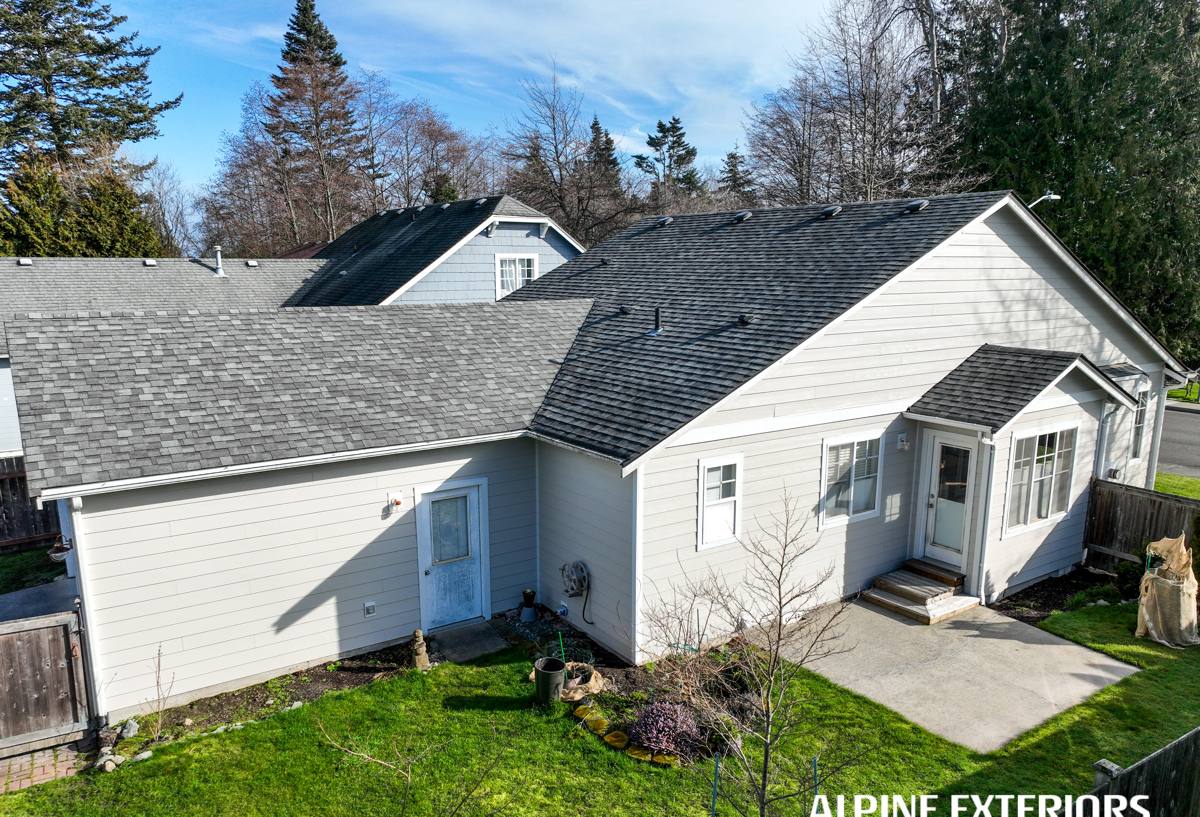
What Salt Air, Rain, and Moss Actually Do to a House
Salt Air and Metal Fasteners
Airborne salt accelerates corrosion on exposed fasteners, flashing, and metal trim. On siding systems that rely on face-nailing or exposed hardware, that corrosion shows up as rust streaking and, eventually, failed fastener points years before the siding itself would otherwise need replacing. It's a slow process, but it's constant, and it's worse the closer a property sits to open water.
Driving Rain and Wall Assemblies
Wind-driven rain doesn't just fall straight down — it gets pushed sideways into laps, seams, and butt joints. A siding system with poor water-shedding detail, or house wrap and flashing that wasn't installed correctly behind it, will let moisture work its way into the wall assembly over time. Once moisture gets behind siding in a climate this wet, it rarely dries out fast enough between storms to avoid causing damage.
Moss, Algae, and Prolonged Dampness
Whatcom County's moss season isn't limited to roofs. Shaded siding, especially on the north and west-facing walls of heavily treed lots, stays damp longer and grows moss, algae, and mildew far more readily than siding on a sun-exposed wall. That biological growth holds moisture against the surface, which is a problem for wood-based products in particular, and it's a cosmetic and maintenance headache no matter what the siding is made of.
Why We Only Install James Hardie Fiber Cement
We made a deliberate decision as a company to install exactly one siding system: James Hardie fiber cement. We don't offer vinyl, LP SmartSide, Cemplank, Allura, primed spruce, or cedar as alternatives, and that's worth explaining rather than just stating. Each of those products has legitimate strengths — vinyl is inexpensive, engineered wood is workable and paintable, cedar has a real aesthetic appeal — but each also carries a trade-off that gets magnified in a climate like Ferndale's: moisture sensitivity in wood-based products, expansion and contraction issues in vinyl during temperature swings, or maintenance schedules that most homeowners underestimate when they're comparing sticker prices.
Non-Combustible, Engineered for the Pacific Northwest
Hardie fiber cement is non-combustible, which matters everywhere but especially as wildfire smoke and dry-season risk become a bigger consideration even in historically wet parts of Washington. Just as relevant for Ferndale specifically, James Hardie makes climate-engineered product lines — the HZ5 line is formulated for the wetter, more humid conditions found in the Pacific Northwest, as opposed to the HZ10 formulation built for hot, dry climates. That's not marketing language; it's a real formulation difference aimed at how the product handles moisture cycling over decades.
ColorPlus Factory Finish
Most of what we install carries Hardie's ColorPlus factory-applied finish, which is baked on under controlled conditions rather than field-painted on site. That finish is engineered to resist fading and to hold up to the kind of prolonged damp exposure that causes field-applied paint to fail early on lesser products. It also means a cleaner installation, since color-matched caulk and touch-up products are formulated to work with the finish rather than being a generic field paint match.
Warranty That Actually Transfers
James Hardie backs its siding with a long-term, transferable limited warranty. For a homeowner who might sell within a decade or two — which is most homeowners — a warranty that transfers to the next owner is a real value, not a footnote, and it's one more reason we don't hedge our installations with a mix of products.
Roofing, Windows, and Decks: The Rest of the Building Envelope
Siding doesn't work in isolation. A house is a system, and in a climate that pushes rain sideways and grows moss on anything shaded, the roof, windows, and any exterior deck structure all interact with how well the siding performs.
- Roofing: Flashing details at roof-to-wall transitions are one of the most common sources of hidden leaks in this climate — they need to integrate correctly with the siding, not just sit next to it.
- Windows: Window flashing and the seal between the window frame and the siding plane are a frequent failure point on older Ferndale homes. Replacing siding is often the right moment to also address aging window flashing before it's covered back up.
- Decks: Exterior decks in this climate take the same driving rain and damp-shade exposure as siding, and ledger board connections in particular need careful flashing to keep water out of the house framing.
Because we handle all four trades, we can look at a Ferndale property as one connected exterior rather than a stack of separate contractor decisions, which reduces the odds of the classic problem where a new roof, new siding, and old window flashing don't actually work together.
What a Local Crew Brings to This Kind of Project
A crew that works Whatcom County regularly has already seen how houses in Ferndale, Lynden, and the surrounding communities actually age — which walls take the worst weather, which older homes tend to have hidden moisture damage behind original siding, and how local permitting and inspection processes run. That local knowledge shows up in small but real ways: knowing to check a north-facing wall under mature trees more carefully during a tear-off, or recognizing early signs of moisture intrusion that an out-of-area crew might miss because they're not used to seeing it as often.
It also means accountability. A local company has a reputation in the community to maintain and is easy to reach if a warranty question comes up five or ten years down the line — not a phone number connected to a crew that worked the area for one season and moved on.
How a Siding Replacement Project Works
Every project starts with an honest assessment of the existing siding and the wall assembly behind it, not just a measurement for a quote.
- On-site inspection of current siding condition, trim, flashing, and any visible signs of moisture damage
- Written estimate covering material, labor, and any additional work identified during inspection (rot repair, flashing corrections, etc.)
- Removal of old siding and inspection of the sheathing and house wrap underneath
- Repair of any damaged sheathing or framing before new material goes on — this step gets skipped by corner-cutting crews and it's the single most important part of the job
- Installation of house wrap, flashing, and James Hardie siding to manufacturer specification
- Final walkthrough and cleanup
A Practical Checklist for Homeowners Comparing Estimates
- Does the estimate specify the exact Hardie product line and profile, not just "fiber cement"?
- Does it include sheathing repair as a line item or a stated allowance, not an unpleasant surprise mid-project?
- Is flashing detail at windows, doors, and roof lines addressed explicitly?
- Does the crew installing the siding carry James Hardie's own installer training, not just general carpentry experience?
- Is the warranty explained in writing, including what's covered by the manufacturer versus the installer?
Cost Factors for a Ferndale Siding Project
Every home is different, but the same handful of factors drive cost on most projects in this area. Getting a firm number requires an on-site look, but this is a reasonable starting framework for what actually moves the price.
| Factor | Why It Matters Here |
|---|---|
| Home size and wall complexity | More corners, gables, and trim detail mean more labor and material cutting |
| Existing siding removal | Tear-off and disposal of old material, especially multiple layers, adds time |
| Sheathing or framing repair | Moisture damage found during tear-off is common on older coastal-exposure homes and must be fixed before re-siding |
| Hardie product line and profile | Lap siding, shingle-style panels, and board-and-batten carry different material and labor costs |
| Trim and accessory work | Fascia, soffit, and window trim replacement alongside siding affects total scope |
| Access and site conditions | Steep lots, mature landscaping, or limited access around the home affect labor time |
Living With Hardie Siding in a Moss-Prone Climate
One advantage of fiber cement in this climate is what it doesn't require. It won't rot, it's not a food source for insects, and it holds its factory finish far longer than field-painted alternatives, which cuts down on the repainting cycle that wood siding demands in a climate this wet. That said, no siding material is maintenance-free in Whatcom County's moss season. Shaded walls should still be rinsed periodically to keep moss and algae from taking hold, gutters need to stay clear so runoff doesn't sheet down the siding face, and any landscaping crowding the walls should be trimmed back to let those surfaces dry out between rains. These are simple homeowner tasks, not professional maintenance visits, but skipping them shortens the life of any siding material, Hardie included.
Get a Straightforward Look at Your Ferndale Property
If you're dealing with aging siding, questionable flashing, or you're just planning ahead for a home in a demanding coastal climate, we're happy to take a look and give you an honest read on where things stand. There's no pressure and no obligation — just a straight assessment and a written estimate you can use to make a good decision. The form below is the easiest way to get started.