 Lynden
 LP SmartSide Is a Real Product — Let's Start There
We get asked often enough that it's worth putting in writing: we don't install LP SmartSide. That's not because it's a scam or a product nobody should ever put on a house. It's a legitimate, widely used engineered wood siding that a lot of reputable contractors install correctly and a lot of homeowners are happy with. Our reasons for not carrying it come down to how it performs over decades in Whatcom County's specific climate, and what we've decided we're willing to warranty our own labor against.
This page is meant to explain that decision honestly, not to talk you out of a product with scare tactics. If you're comparing bids and one includes LP SmartSide, you deserve to understand the trade-offs before you sign anything.
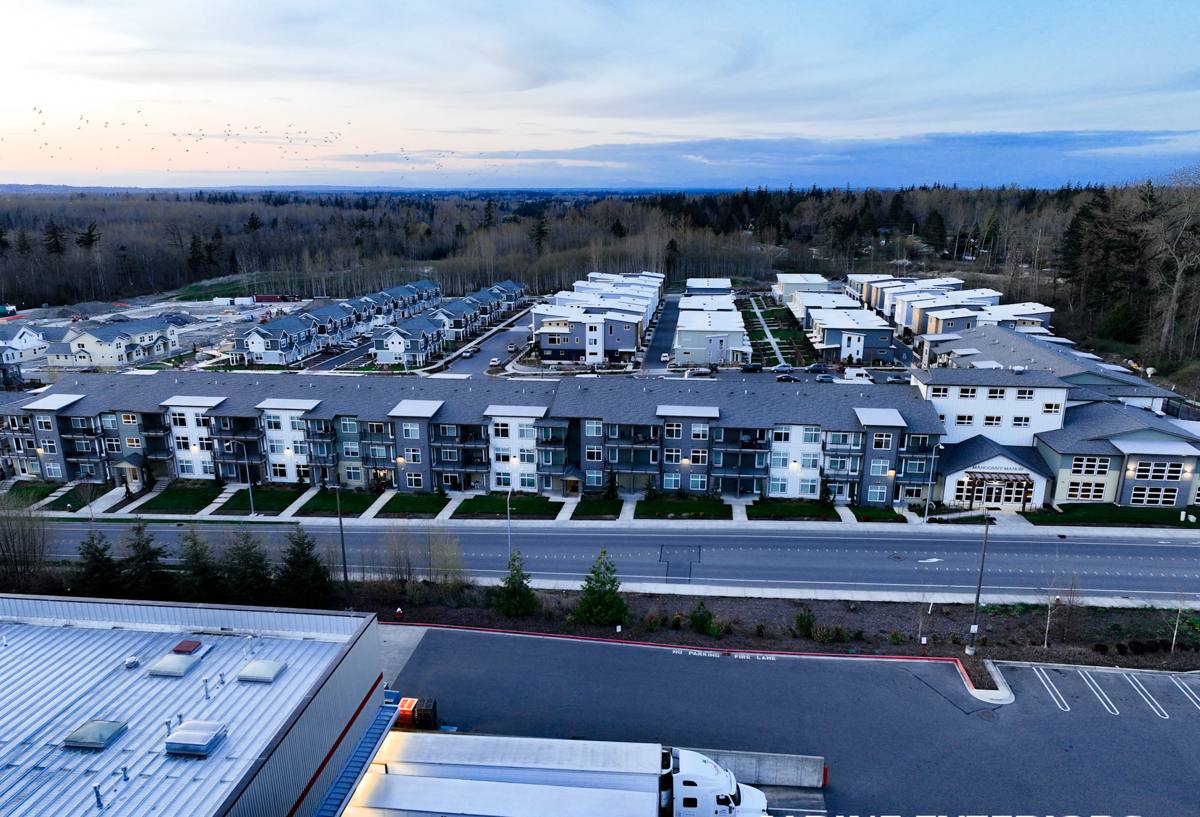
What LP SmartSide Actually Is
Engineered Wood, Not Solid Wood or Cement
LP SmartSide is made from wood strands — similar in concept to OSB — bonded with resin under heat and pressure, then treated with a zinc borate process (LP calls it SmartGuard) intended to resist fungal decay and insect damage. The panels or lap boards are primed at the factory, but they still need field-applied paint after installation, and the cut edges, seams, and fastener points need to be properly sealed and maintained for the life of the product.
What It Does Well
- Lighter weight than fiber cement, which can mean faster installation labor
- Good impact resistance — engineered wood flexes rather than cracking under a hard hit
- Lower material cost than most fiber cement products
- Comes in lap, panel, and trim profiles that mimic traditional wood siding closely
None of that is spin. It's a reasonable product for the right situation. The question we had to answer as a company is whether "the right situation" describes Lynden and the rest of Whatcom County.
Where Engineered Wood Struggles in This Climate
It's Still Wood at Its Core
Zinc borate treatment and resin bonding significantly improve an engineered wood product's resistance to moisture and rot compared to untreated lumber. But the core material is still wood fiber, and wood fiber swells when it absorbs water. The entire long-term performance of the product depends on the factory coating and field-applied caulking staying intact at every seam, cut end, and fastener penetration — for the full service life of the siding, not just the first few years.
Salt Air and Driving Rain
Lynden sits inland from Bellingham Bay and the Strait of Georgia, and this part of Whatcom County gets a steady diet of moisture-laden marine air combined with wind-driven rain off the water. That combination pushes water sideways into laps, seams, and trim joints in a way that drier inland climates don't have to deal with. Any siding product with a wood-based core is more exposed to that kind of chronic moisture exposure than a product with a cement-based core.
A Long Moss and Mildew Season
Whatcom County's moss season isn't a few weeks — it's most of the year. Moss and algae hold moisture directly against the siding surface for extended periods, and that sustained dampness is exactly the condition that stresses any coated wood product's weak points: cut edges, butt joints, and areas where caulk has started to shrink or crack. Fiber cement isn't immune to moss growth either, but it doesn't have an organic core that can absorb and hold water once moss takes hold.
The Maintenance Commitment Homeowners Take On
LP SmartSide's own installation and warranty documentation is clear that ongoing maintenance is the homeowner's responsibility, not optional upkeep. That includes:
- Repainting on a regular cycle — factory priming is not a finished, maintenance-free coat
- Re-caulking seams, trim joints, and fastener heads as caulk ages and shrinks
- Prompt touch-up of any nicks, scratches, or exposed cut edges before moisture can get in
- Keeping the siding clear of soil contact, mulch buildup, and standing vegetation
None of that is unreasonable to ask of a homeowner in theory. In practice, siding maintenance is one of the first things that gets deferred when life gets busy — and in a climate that's actively wet more months than not, a deferred maintenance cycle on a wood-based product has real consequences. James Hardie's factory-baked ColorPlus finish was built specifically to remove repainting from that equation for most of the product's service life.
Warranty Structure: Worth Reading Closely
Every siding warranty sounds impressive in a sales brochure. What matters is what's actually covered, for how long, and under what conditions. This is a general comparison of warranty structure — always confirm exact current terms directly with the manufacturer before making a decision.
| Factor | LP SmartSide (typical) | James Hardie (typical) |
|---|---|---|
| Material warranty length | Multi-year, often prorated after an initial full-coverage period | Non-prorated limited warranty, commonly 30 years on siding |
| Full labor coverage | Limited initial period (often around 5 years) | Longer labor coverage window in many cases |
| Finish/paint warranty | Field-applied paint is a separate, homeowner-maintained system | Factory ColorPlus finish carries its own separate finish warranty |
| Transferability | Varies by program and time of transfer | Transferable to a new owner under stated conditions |
| Maintenance conditions | Coverage tied to documented maintenance and correct installation | Coverage tied to correct installation and product-specific care |
The pattern that matters most: engineered wood warranties are more heavily conditioned on the homeowner keeping up a maintenance schedule, because the product's core material depends on that upkeep to keep performing. Fiber cement's warranty is less dependent on ongoing homeowner maintenance because the core material itself doesn't need a protective coat to stay structurally sound.
Installation Sensitivity
LP SmartSide's real-world performance is heavily dependent on installation details that are easy to get wrong: correct clearance from grade and roof lines, properly flashed and caulked butt joints, sealed cut ends on every single field cut, and correct fastener placement and spacing. Skipping or rushing any of these steps doesn't show up as a problem on day one — it shows up as a moisture problem five, ten, or fifteen years later, often after the labor warranty period has already lapsed.
We install one product, to one spec, on every job. That consistency is part of why we don't want to also carry a second product line with a different and less forgiving set of installation tolerances.
LP SmartSide vs. James Hardie: Side by Side
| Factor | LP SmartSide | James Hardie Fiber Cement |
|---|---|---|
| Core material | Engineered wood strand, resin-bonded | Cement, sand, and cellulose fiber |
| Moisture behavior | Can swell or degrade if edges/seams aren't sealed and maintained | Does not swell, rot, or absorb moisture the way wood does |
| Fire rating | Combustible, though treated | Non-combustible |
| Finish | Factory primed; field paint required | Factory-baked ColorPlus finish available, reduces repainting |
| Maintenance | Regular repainting and re-caulking expected | Lower ongoing maintenance when installed and finished correctly |
| Weight/handling | Lighter, easier to cut and handle | Heavier, requires fiber-cement-rated blades and tools |
| Upfront material cost | Generally lower | Generally higher |
Why We Standardized on James Hardie
We made a decision as a company to install one siding system and stand behind it fully: James Hardie fiber cement. It's non-combustible, it doesn't have an organic core that can absorb water and rot, and the ColorPlus factory finish holds up under the kind of sustained marine moisture, driving rain, and long moss season that Lynden and the rest of Whatcom County deal with most of the year. Hardie also offers HZ product lines specifically engineered for different climate zones, and a warranty structure that's less dependent on the homeowner keeping up a strict maintenance calendar for the material itself to hold up.
That's not a knock on every other product on the market. It's a statement about what we're willing to install our name and our labor warranty behind, given what we've seen hold up — and what doesn't — on homes in this specific corner of the Pacific Northwest.
What This Means for Your Project
If you're getting quotes from multiple contractors and one includes LP SmartSide or another engineered wood product, here's what's worth asking before you decide:
- What is the full warranty term, and how much of it is prorated versus full coverage?
- Who is responsible for repainting and re-caulking, and on what schedule?
- Are all cut edges factory-sealed or field-sealed, and how is that verified?
- What happens to labor coverage if maintenance isn't kept up on schedule?
- How does the installer detail moisture management at seams, trim, and grade clearance?
Whichever product you choose, those are the questions that actually determine how the siding performs in 10 or 20 years — not the sales brochure.
If you'd like to talk through your options for your home, we're happy to walk the exterior with you and give you a straight answer, including whether James Hardie is the right fit for your budget and timeline. Reach out for a free, no-pressure estimate using the form below.