 Lynden
 Wiser Lake's Climate Is Harder on Siding Than It Looks
Wiser Lake sits in the low, flat farmland just outside Lynden, and that setting comes with its own exterior wear pattern. The lake itself keeps humidity higher at ground level than you'll find in town, especially in the shoulder seasons when fog sits low over the water into the late morning. Add in Whatcom County's long, wet fall-through-spring stretch — driving rain off Bellingham Bay, wind that carries a faint edge of salt air even this far inland, and the shaded, damp conditions that come with tree lines and open water nearby — and you get a moss season that can run six months or longer on north- and east-facing walls.
None of that is unusual for this part of Washington. But it does mean siding on a Wiser Lake property is doing more work, more of the year, than siding on a home in a drier climate. Wood-based products swell, check, and hold moisture. Paint film breaks down faster under constant damp-dry cycling. Caulk joints work loose as materials expand and contract through freeze-thaw swings that, while mild by national standards, still happen several times a winter here. The homes that hold up best around Wiser Lake are the ones built with a siding system that was engineered for exactly this kind of exposure.
Why a Local Crew Matters More Than It Sounds Like It Should
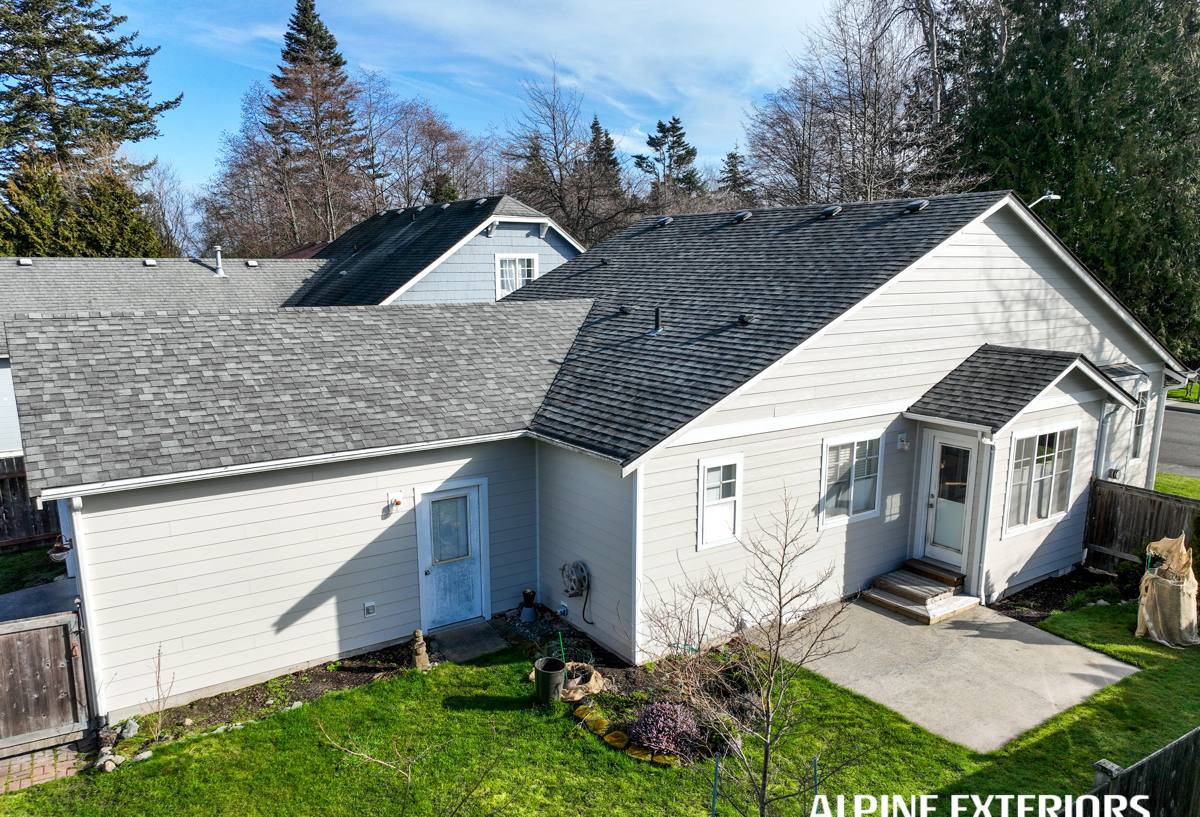
Siding installation is detail work, and the details that matter change by microclimate. A crew that mostly works drier inland areas or does one job a year in Whatcom County isn't going to have the same instinct for flashing details, weep screed placement, and starter strip gaps that a crew working Lynden and the surrounding lake and farm properties week in and week out does. Rain doesn't punish a siding job for bad workmanship right away — it takes a wet winter or two before a missed flashing detail shows up as a stain, a soft spot, or moss creeping in behind a J-channel.
We're based in Lynden and work this stretch of Whatcom County — Wiser Lake, the surrounding farmland, and the town itself — as our home territory, not a service radius on a map. That means we know which sides of a house catch the worst of the weather here, where moss tends to establish first, and how to detail an install so water sheds the way it's supposed to instead of finding a way behind the cladding.
What "Local" Actually Buys You
- Familiarity with how Whatcom County building and drainage requirements apply to siding, roofing, and window replacement projects
- Crews who've already handled the wind, damp, and mud-season logistics that come with working near a lake and open fields
- A warranty and a business that isn't going anywhere — we're still local if a question comes up five years from now
- Scheduling that accounts for our actual wet season instead of a generic install calendar
Our Exterior Services Around Wiser Lake
We do full exterior work, not just siding, which matters on a property where the roof, windows, siding, and any exterior decking are all fighting the same moisture and moss exposure. Handling more than one trade means fewer seams where two contractors' work meets — and fewer opportunities for water to find a gap.
Siding
James Hardie fiber cement, installed to manufacturer spec, is what we put on every home we side — more on why below.
Roofing
A roof and a siding system have to work together as one drainage plan. We look at flashing, gutters, and roof-to-wall transitions as part of any siding project, and we handle full roof replacement and repair as well.
Windows
Window replacement is often bundled with a siding job because the flashing and trim work overlaps. Old, leaky window flashing is one of the most common hidden moisture sources we find when we open up a wall during a re-side.
Decks
Lakeside and farm properties around Wiser Lake tend to get more deck use — and more deck exposure — than a typical in-town lot. We build and repair decks with the same attention to drainage and material selection we bring to siding.
Why We Only Install James Hardie Fiber Cement
We get asked fairly often why we don't offer vinyl, LP SmartSide, or other engineered wood siding options. It's a fair question, and the honest answer is that we made a decision a long time ago to specialize in one product system we could stand behind fully, rather than install several products with different maintenance profiles and different long-term outcomes.
Vinyl siding is inexpensive and easy to install, but it's a thin, flexible plastic product that can warp in direct sun, crack in a hard freeze, and fade over time — and it's not repairable in the way fiber cement is; damaged panels get replaced, not patched. Engineered wood products like LP SmartSide use treated wood strand substrates that perform well when installation and caulking are kept up perfectly, but they remain wood-based, which means they're more sensitive to sustained moisture exposure than fiber cement — a real consideration on a lake property with a long damp season. Primed spruce or cedar siding can look excellent, but raw wood requires ongoing paint maintenance and is the most moisture-sensitive option of all in a climate like ours.
James Hardie fiber cement is cement, sand, and cellulose fiber — it doesn't rot, it isn't attractive to pests, and it's non-combustible. The factory-applied ColorPlus finish is baked on under controlled conditions and holds color far longer than field-applied paint, which matters when a house is going to sit under six months of overcast, damp weather every year. Hardie also engineers specific product lines for different climates — the HZ5 line used through this region is formulated for wetter, colder conditions than the HZ10 line sold in the Southeast. It's a product built for exactly the weather Wiser Lake sees, backed by a strong transferable warranty, and it's the one system we're willing to put our name behind on every job.
Matching the Product to a Wiser Lake Property
Hardie's lineup gives us room to match the look of a home without changing the underlying performance.
| Product Line | Best Fit | Why It Works Here |
|---|---|---|
| HardiePlank lap siding | Most homes, farmhouse and traditional styles | Widest color range, classic look, proven long-term performer in wet climates |
| HardieShingle | Accent areas, gables, lake-house style homes | Adds texture without the maintenance burden of real cedar shingle |
| HardiePanel | Modern or board-and-batten styles | Clean vertical lines, popular on newer builds near the lake |
| HardieTrim | All installations | Matches the durability of the field siding at corners, windows, and fascia |
What Drives Cost on a Wiser Lake Siding Job
Every home is a little different, but the same handful of factors move the price up or down on most projects we quote in this area.
| Factor | Why It Matters |
|---|---|
| Amount of existing damage or rot | Hidden moisture damage found once old siding comes off has to be repaired before new siding goes on |
| House size and wall complexity | More corners, gables, and trim detail means more labor and material cutting |
| Product line and profile chosen | Shingle and panel styles run different material costs than standard lap |
| Window and trim work bundled in | Combining trades can reduce total disruption and sometimes total cost versus separate projects |
| Site access | Rural and lakefront lots can add setup time depending on driveway access and staging space |
What a Correct Installation Actually Involves
Fiber cement performs the way it's rated to only when it's installed correctly — this is the part that separates a siding job that lasts thirty-plus years from one that has problems in five.
- Proper starter strip and clearance at the base of the wall so water can't wick up into the bottom course
- Correct fastener type, spacing, and placement per Hardie's published installation guide
- Rain screen or drainage plane behind the siding so any moisture that gets past the cladding can drain and dry
- Properly lapped and sealed house wrap or weather-resistant barrier
- Flashing at every window, door, and roof-to-wall intersection, not just caulk
- Correct paint-line caulking at joints, with factory-cut edges primed where field cut
We install to Hardie's spec on every job, which is also what keeps the manufacturer's warranty intact — a warranty that's only as good as the installation behind it.
Maintaining Siding Near Wiser Lake
Fiber cement is low-maintenance compared to wood or vinyl, but "low-maintenance" isn't "no-maintenance," especially with the moss and moisture exposure common around the lake.
- Rinse siding annually, focusing on shaded north- and east-facing walls where moss and algae establish first
- Keep gutters clear so overflow doesn't run down the face of the siding
- Trim back vegetation and tree branches that keep a wall shaded and damp longer than the rest of the house
- Check caulk lines at trim and window joints every year or two and recaulk as needed
- Watch for any soft spots, staining, or paint failure, which can signal a flashing or drainage issue worth checking sooner rather than later
Signs It Might Be Time to Replace Your Siding
Homeowners around Wiser Lake often notice a few consistent warning signs before calling us out.
- Persistent moss or algae that comes back within weeks of cleaning
- Visible warping, cupping, or gaps opening up between boards
- Paint that's chalking, peeling, or failing faster than it used to
- Soft or spongy spots, especially near the bottom of walls or under windows
- Rising energy bills that may point to a failing weather barrier behind the siding
If you're seeing any of these on a Wiser Lake property, it's worth having someone take a look before the underlying structure is affected, not just the siding surface.
If you'd like an honest read on where your home's siding, roofing, windows, or decking stand, we're happy to come take a look. Reach out for a free, no-pressure estimate using the form below.