 Lynden
 Why Custer's Climate Is Harder on Siding Than Most of Whatcom County
Custer sits close enough to the water that homes here deal with a version of Pacific Northwest weather that's a notch more punishing than what you'll find further inland around Lynden or the Nooksack valley. The proximity to the coast means salt-laden air is a constant, low-grade presence on exterior surfaces. Combine that with driving rain that comes in sideways off winter storms, and you've got a climate that tests every seam, joint, and finish on a house year-round.
Then there's moss. Whatcom County's long, wet, mild winters create ideal growing conditions for moss and algae on north-facing walls, shaded siding, and anywhere moisture lingers instead of shedding off. Add a few months of shortened daylight and heavy cloud cover, and siding in this area rarely gets a real chance to dry out between rain events. That combination — salt exposure, wind-driven moisture, and moss — is exactly the profile that separates siding products that hold up here from ones that don't.
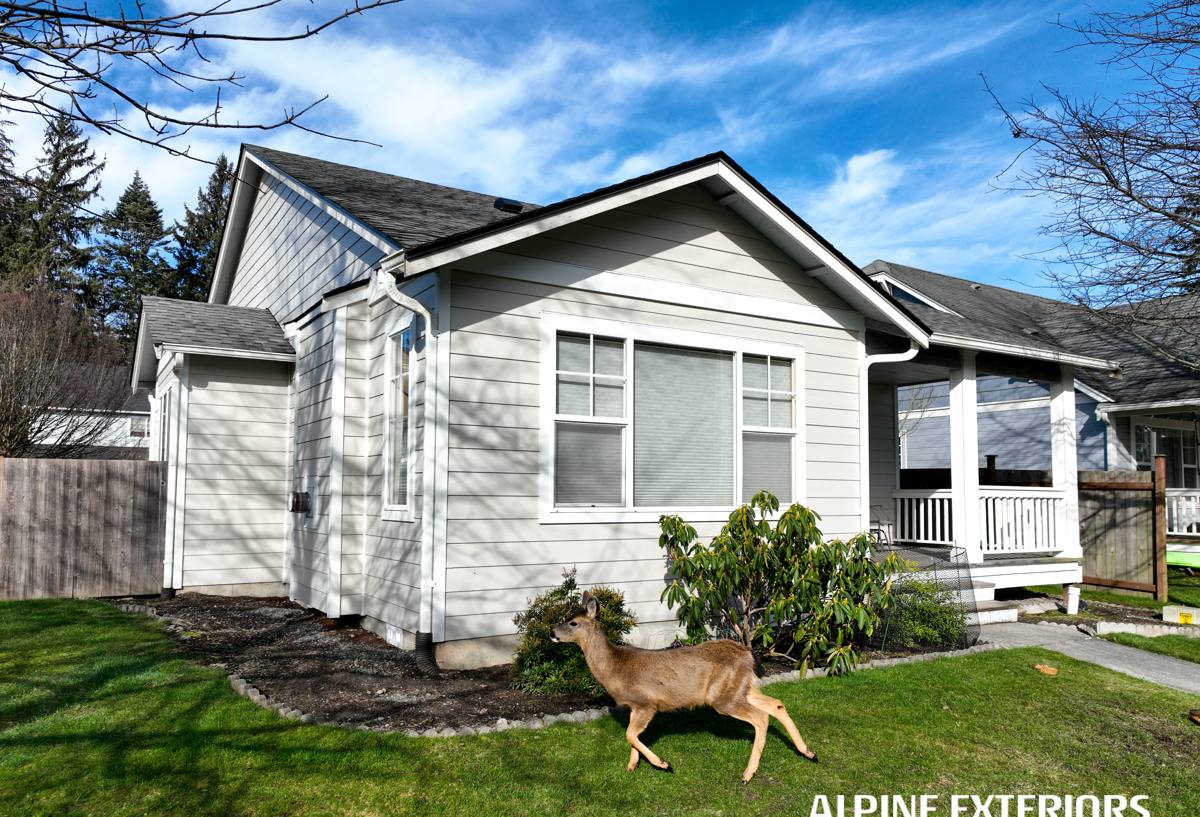
What Salt Air, Rain, and Moss Actually Do to a House
Salt Air
Airborne salt is corrosive to metal fasteners, flashing, and trim, and it accelerates the breakdown of lower-quality paint finishes. Over years, homes closer to the water tend to show chalking, fading, and finish failure sooner than the same product would show inland. It's not dramatic — it's a slow erosion that shows up as a tired-looking house well before the structure itself is actually failing.
Driving Rain
Wind-driven rain doesn't just wet the surface of siding — it tests every horizontal joint, every butt seam, every place where two pieces of material meet. Products that rely on caulk and paint film to stay sealed are only as good as that seal. Once it opens up even slightly, water gets behind the siding, and that's where the real damage starts: sheathing rot, mold, and repairs that cost far more than the siding itself.
Moss and Sustained Moisture
Moss doesn't just look bad — it holds moisture directly against the siding surface for extended periods. On wood-based or wood-fiber products, that sustained dampness is a direct path to swelling, delamination, and rot at edges and seams. Fiber cement doesn't feed moss the way wood-based products can, and it doesn't swell or delaminate from surface moisture the way wood fiber does, which matters enormously in a climate where a shaded wall might stay damp for weeks at a stretch.
Why We Only Install James Hardie Fiber Cement
We made a decision, as a company, to install one siding system: James Hardie fiber cement. That's not a marketing angle — it's a practical response to what we've seen hold up in this climate versus what struggles. We don't install LP SmartSide, vinyl, Cemplank, Allura, primed spruce, or cedar, and we think homeowners deserve an honest explanation of why, not just a sales pitch for what we do offer.
What Sets Fiber Cement Apart Here
- It's non-combustible, which matters for wildfire-conscious insurance underwriting and general peace of mind.
- It's engineered from cement, sand, and cellulose fiber — not wood — so it doesn't feed moss growth or rot the way wood-based products can when moisture sits on the surface.
- James Hardie's ColorPlus factory-applied finish is baked on and cured under controlled conditions, which gives it a real edge over field-applied paint when it comes to resisting fading and chalking from UV and salt exposure.
- Hardie's HZ5 product line is specifically engineered for regions with more moisture and freeze-thaw cycling, which fits the Whatcom County coastal belt well.
- The warranty is transferable and backed by a large, established manufacturer — worth something if you ever sell the home.
We're not going to claim the products we don't install are junk — some of them have real strengths in the right application. But when we weigh maintenance burden, long-term moisture behavior, and how a product ages specifically in a salt-air, high-rainfall, moss-prone environment like Custer, fiber cement is what we're willing to put our name on.
How Hardie Siding Installation Works, Start to Finish
Correct installation matters as much as the product itself — maybe more. Fiber cement that's installed to spec performs the way it's engineered to. Fiber cement installed with shortcuts can fail early regardless of the brand name on the box. Here's roughly what a proper installation involves:
- Tear-off and inspection. Old siding comes off and the sheathing underneath gets inspected for rot, soft spots, or existing moisture damage — common on older homes in wet climates.
- Weather-resistive barrier. A properly lapped house wrap or weather barrier goes on to manage bulk water and vapor before siding ever touches the wall.
- Flashing at every penetration. Windows, doors, and any wall penetration get flashed correctly — this is where driving rain finds its way in if it's skipped or rushed.
- Rainscreen or furring where appropriate. Creating a small air gap behind the siding lets any moisture that does get past the surface actually dry out, instead of sitting trapped against the wall — especially valuable in a climate that doesn't get long dry stretches.
- Correct fastening and clearances. Hardie specifies fastener type, spacing, and minimum clearance from grade, decks, and roof lines. These aren't suggestions — they're what the warranty is actually contingent on.
- Caulking and touch-up paint at cut edges. Factory finish covers the face of the board; cut ends and any field-touched areas need proper sealing to match that protection.
Skipping or rushing any one of these steps is how a good product ends up with a bad reputation. That's why installation quality is something we treat as inseparable from the material itself.
Comparing What Custer Homeowners Are Often Choosing Between
| Factor | James Hardie Fiber Cement | Vinyl | Wood / Wood Fiber |
|---|---|---|---|
| Moss and moisture resistance | High — doesn't feed organic growth or swell from surface moisture | Moderate — doesn't rot, but seams and panels can trap moisture behind them | Lower — moss retains moisture against the surface, accelerating rot |
| Fire resistance | Non-combustible | Melts/deforms under heat | Combustible |
| Finish durability in salt air | Factory-cured ColorPlus finish resists fading and chalking | Color is through-body but can fade and grow brittle over time | Field-applied paint/stain needs more frequent recoating |
| Typical maintenance | Periodic washing; repaint only at very long intervals if ever needed | Low maintenance but prone to cracking/warping with age | Regular repainting, caulking, and moisture monitoring |
| Warranty structure | Long-term, transferable manufacturer warranty | Varies widely by manufacturer and thickness | Often limited or product-specific |
Beyond Siding: Roofing, Windows, and Decks in the Same Climate
Siding doesn't work in isolation — it's one piece of a home's overall weather defense. We also handle roofing, windows, and decks, and in a place like Custer, all four systems face the same core stresses: wind-driven rain, salt air, and prolonged dampness.
A roof with compromised flashing or aging shingles will send water down behind siding no matter how well that siding is installed. Windows with failing seals let moisture into wall cavities from the inside out. Decks exposed to the same driving rain and moss conditions need materials and fastening details that account for standing water and constant shade in a lot of Whatcom County yards. When we look at a house, we're looking at how all of these systems work together, not just the siding in isolation.
What to Ask Any Contractor Before Hiring Them in This Area
Whatcom County's coastal weather punishes shortcuts faster than a drier climate would, so vetting a contractor here matters more than it might elsewhere. A few things worth asking before you sign anything:
- Are you licensed and insured to do exterior work in Washington State, and can you provide proof?
- Do you install a rainscreen or furring detail, or is siding installed directly against the wall?
- How do you flash windows, doors, and other wall penetrations?
- What's your experience with homes specifically in coastal or high-moisture parts of Whatcom County?
- What does the manufacturer's warranty actually require in terms of installation method, and will you document that you followed it?
A contractor who can answer these clearly, without hedging, is a good sign. One who brushes past them is worth a second look elsewhere.
Why a Local Crew Matters in Custer
Working regularly in Whatcom County means knowing which walls take the worst of the wind-driven rain, which north-facing sides need extra attention for moss, and how the coastal air near Custer and the surrounding Birch Bay and Blaine-area communities differs from the drier stretches further inland. That kind of pattern recognition doesn't come from a single job — it comes from doing this work, on this coastline, over and over. It shapes decisions on flashing details, fastener choices, and where a rainscreen gap earns its keep versus where it's overkill.
A crew that only occasionally works this close to the water can still do competent work, but a crew that works here regularly tends to catch the small details — the ones that don't show up as problems for a few years — before they become expensive.
What This Means for Your Home
If you're weighing a siding replacement in Custer, the climate itself should be part of the decision, not an afterthought. Salt air, sideways rain, and a long moss season aren't rare events here — they're the baseline conditions your siding has to perform in every single year. That's the reasoning behind standardizing on James Hardie fiber cement and installing it to spec, every time, rather than mixing in lower-cost alternatives that ask more of a homeowner in upkeep down the line.
If you'd like a straightforward look at your home's siding, roofing, windows, or decking, we're happy to come take a look and give you a free, no-pressure estimate — no obligation, just an honest read on where things stand.