 Lynden
 Storm Damage Roof Repair for Acme Homes
Acme sits back from the open water, tucked against the foothills east of Lynden where the Nooksack valley starts climbing toward the Cascades. That location changes what "storm damage" usually means here. Homes in Acme deal with less of the direct salt exposure that waterfront Whatcom County properties see, but they get more tree cover, more shade, and often stronger, more turbulent wind as storms funnel through the valley and hit rising terrain. Add in a long, damp moss season and driving rain that doesn't fall straight down, and a roof out here takes a different kind of beating than one closer to Bellingham Bay or Birch Bay.
When a storm comes through, the damage isn't always obvious from the ground. A few lifted shingles, a strained flashing seam, or a branch strike that cracked underlayment without punching all the way through can sit quietly for months before they show up as a ceiling stain. We repair storm-damaged roofs for homes in and around Acme, and the goal on every call is the same: figure out exactly what the storm did, fix that — not more, not less — and leave the roof genuinely ready for the next one.
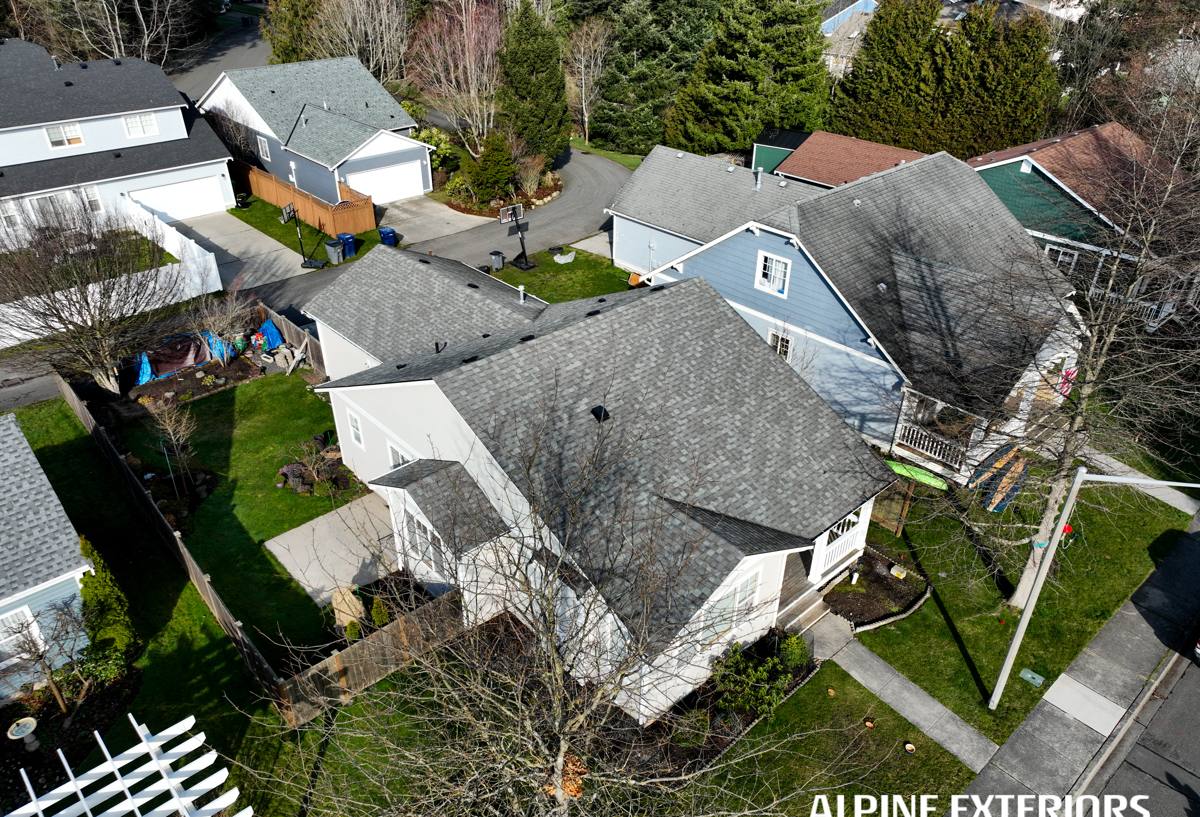
What Storms Actually Do to a Roof Out Here
Wind and Tree Strikes
Acme's tree cover is a mixed blessing. Mature trees break up some wind, but they also mean falling limbs, needle and debris buildup in valleys, and gusts that get funneled and accelerated as they move through gaps in the canopy. Wind damage on a roof like this is often patchy rather than uniform — a few courses of shingles lifted or torn on one slope, a ridge cap knocked loose, a vent boot cracked where a branch grazed it. It's easy to miss from a quick look at the ground.
Wind-Driven Rain
Rain in a storm doesn't fall straight down here — it gets pushed sideways into valleys, up under shingle edges, and around chimneys and pipe boots by the same wind that's stressing the roof structure. That's how a storm can drive water into a roof assembly through a spot that would never leak in ordinary rain. Flashing and underlayment that were marginal to begin with are usually where the water finds its way in first.
Moss, Shade, and Storm Damage Together
A roof already carrying moss or trapped moisture from Acme's long, shaded moss season is more vulnerable in a storm, not less. Moss holds water against the roofing material and can work shingle edges loose over time, so a wind event that a clean, dry roof would shrug off can tear or lift shingles that were already compromised. That's why a proper storm inspection here isn't just "did the wind rip anything off" — it's also a look at the roof's underlying condition.
What a Correct Storm Repair Actually Involves
A rushed storm repair is one of the most common ways a roof ends up leaking again within a year or two. Doing it right means treating the repair as a real roofing job, not a patch job, even when the damage looks minor. On every storm call we handle in Acme, that means:
- A full-slope inspection, not just a look at the obviously damaged area — wind damage is often worse a few feet away from where it's visible
- Checking the roof deck underneath removed or damaged shingles for soft spots or moisture intrusion before anything new goes down
- Matching replacement shingles as closely as possible in profile and color, and being upfront when an exact match isn't available due to age or discontinued product lines
- Re-securing or replacing flashing at valleys, chimneys, and vent penetrations near the damaged area, since storm stress often loosens flashing before it visibly fails
- Checking gutters and downspouts for debris or damage that could send water back up under the roof edge
- Photo documentation of the damage and repair for your records and, if needed, for an insurance claim
Skipping any of these to get a tarp down faster and call the job done is how a storm repair turns into a callback the next time it rains hard.
Our Process for Storm Damage Calls
1. Fast Response and Temporary Protection
If a roof is actively leaking or has an open area exposed to weather, the first priority is stopping active water intrusion — tarping the affected area and securing anything loose that could cause further damage or become a hazard. This buys time to do the actual repair correctly instead of rushing it.
2. Full Inspection
Once the roof is safe to get on, we inspect the full extent of the damage, not just the area that's visibly torn up. This includes checking the roof deck, the surrounding flashing, and adjacent slopes that took wind stress even if they didn't lose material.
3. Clear Scope and Honest Repair-vs-Replace Read
We tell you what we found, what it will take to fix it, and whether the damage is a straightforward repair or a sign the roof was already near the end of its useful life and a storm just exposed it. We don't pad a repair into a replacement to grow the job.
4. Insurance Documentation
If you're filing a claim, we document the damage with photos and a written scope your insurance adjuster can work from. We're not your insurance company and we don't manage the claim for you, but we make sure the paperwork reflects what the storm actually did.
5. Repair and Follow-Up
We complete the repair to the same standard as new work — correct underlayment, properly lapped flashing, matched materials where possible — and we're available afterward if anything about the repair needs a second look.
Repair or Replace: How to Think About It
Not every storm-damaged roof needs to come off. The right call depends on the roof's age, how much of it was affected, and what the deck underneath looks like once we're actually up there.
| Situation | Usually Means | Why |
|---|---|---|
| Isolated wind damage on a roof under 12-15 years old, deck intact | Targeted repair | Localized damage on an otherwise sound roof doesn't justify full replacement cost |
| Storm damage on a roof already near or past its rated lifespan | Replacement worth discussing | A storm often exposes a roof that was already failing; a repair may only buy a short delay |
| Damage spread across multiple slopes with soft or spongy deck sections | Larger repair or partial replacement | Deck-level moisture damage usually extends beyond what's visible from outside |
| Single missing ridge cap, a few lifted shingles, minor flashing separation | Small repair | Contained damage with a sound structure underneath needs a fix, not a project |
We'll walk the roof with you, explain what we're seeing, and give you the real trade-offs rather than defaulting to whichever option is bigger.
Signs Your Acme Roof May Have Storm Damage
- Shingles that look lifted, curled, or are missing entirely after a windstorm
- Granules collecting in gutters or at downspout outlets following heavy wind or rain
- A new water stain on an interior ceiling or wall, especially near an exterior wall or chimney
- Visible daylight through the roof deck when checked from inside the attic
- Flashing that looks bent, lifted, or pulled away from a chimney, vent, or valley
- Debris or broken limbs resting on the roof after a storm, even if nothing looks obviously torn
- A soft or spongy feel underfoot in an area that used to feel solid
Any of these is worth a look sooner rather than later. Storm damage that sits through another round of driving rain tends to get worse, not stay the same.
Why a Crew That Already Works Acme Matters
Acme isn't a waterfront neighborhood and it isn't the middle of downtown Lynden — it's its own microclimate, shaped by tree cover, valley wind, and terrain that a crew unfamiliar with the area might not account for. A contractor who's worked storm damage across this part of Whatcom County knows that a wind event here doesn't behave the same as one closer to open water, that shaded slopes hold moisture and moss longer, and that a repair matched to the wrong exposure won't hold up through the next storm season. That local read matters as much as the repair itself.
It also matters for response time. After a significant storm, roofing contractors across the county get busy fast, and a crew that already knows the area can often get to an active leak faster than one working from a spreadsheet of unfamiliar addresses.
A Note on Insurance Claims
Most homeowner policies cover sudden storm damage — wind, falling limbs, hail — though coverage details, deductibles, and how they treat pre-existing wear vary by policy. We're happy to document damage clearly enough for your adjuster to work with, point out what we believe is storm-related versus what looks like pre-existing wear, and give you a straightforward repair estimate you can bring into the claims process. We don't inflate a scope to chase a bigger check, and we won't tell you something is storm damage if it looks like ordinary age and moss wear to us — that kind of honesty is what keeps a claim from getting denied or delayed.
Get a Free, No-Pressure Estimate
If a recent storm left your Acme roof with missing shingles, a leak, or damage you're not sure how serious it is, we're glad to come take an honest look. Reach out using the form below to schedule a free estimate — no pressure, and no bigger sales pitch than the roof actually calls for.