 Lynden
 Roof Repair for Aldergrove, BC Homes
Aldergrove sits just north of the Aldergrove-Lynden border crossing, close enough to Whatcom County that many homeowners here already look to Lynden for contractors who understand the roofing problems this stretch of the border produces. The climate on both sides of the line is nearly identical — marine-influenced air carrying salt and moisture off the Georgia Strait and Puget Sound region, long stretches of driving rain through fall and winter, and a moss season that can run eight months or more depending on how much shade and cover a roof sits under. Roofs here don't fail because of one dramatic event. They fail slowly, from moisture that never fully dries out and organic growth that holds it in place against the shingles.
Roof repair in this kind of climate is different from patching a roof in a dry inland region. A fix that looks fine on a sunny afternoon can fail within a season if it doesn't account for how water actually moves across a roof here — under moss mats, behind poorly lapped flashing, and into valleys that stay wet longer than the rest of the field.
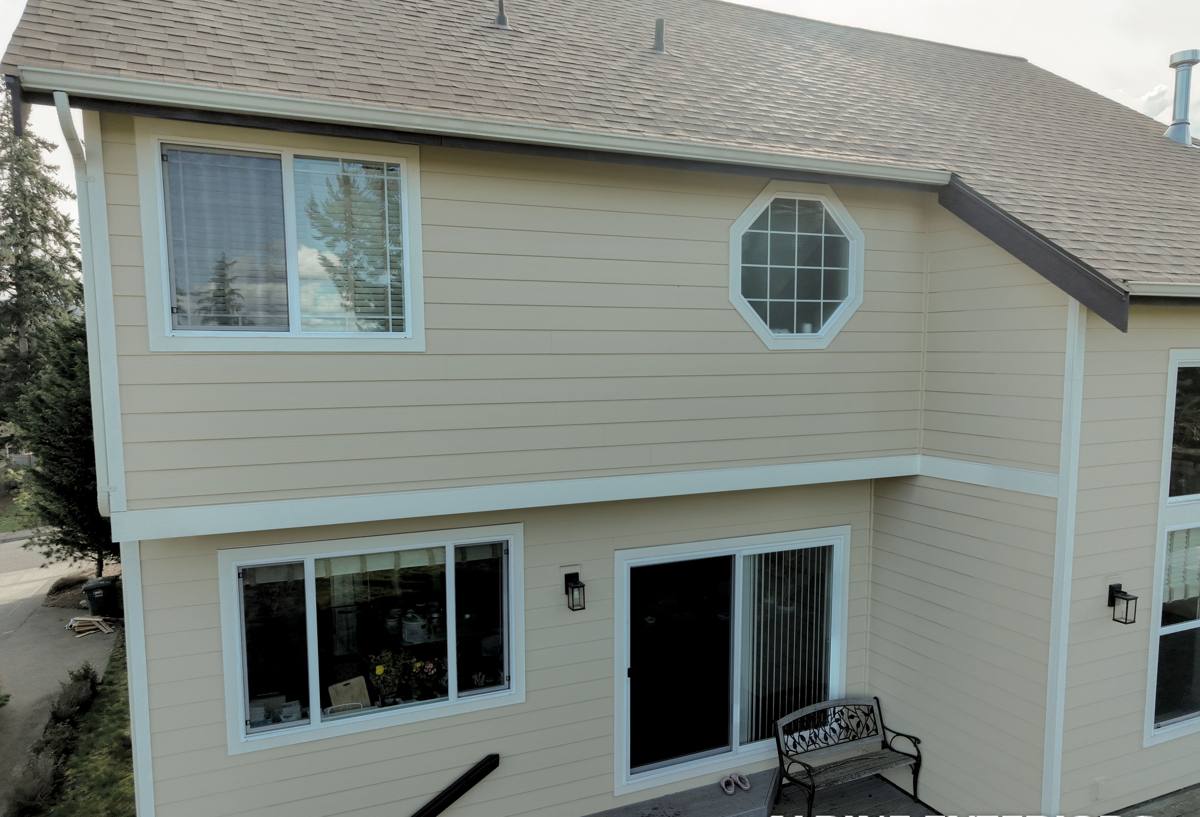
Why the Local Climate Matters for a Repair
Moss and Organic Growth
Moss doesn't just sit on top of shingles — it holds moisture against the granule surface and, over time, works its way under shingle edges and around fasteners. On shaded north-facing slopes and roofs near tree cover, moss growth can start within a year or two of a roof being cleaned. A repair that doesn't address the moss causing the damage is a temporary fix at best.
Driving Rain and Wind-Driven Moisture
Storms moving through this part of the Pacific Northwest tend to bring rain at an angle, not straight down. That matters for repair work because it pushes water sideways under shingle tabs, around vent boots, and into any flashing lap that isn't sealed and shingled correctly. A repair method that would hold up fine in a calmer climate can leak here if the water intrusion path was diagnosed wrong.
Salt and Marine Air
Homes closer to the water-influenced weather patterns that move through this corridor see faster wear on exposed metal — flashing, fasteners, gutter hardware — than homes further inland. Corroded flashing is one of the most common hidden causes of a "mystery leak" we find during repair calls.
Common Roof Problems We Find in This Area
- Moss-lifted shingles — moss growing under shingle tabs breaks the seal and lifts the edges, letting wind and rain get underneath
- Failed or corroded flashing — around chimneys, skylights, and roof-to-wall transitions, where metal wears faster in salt-influenced air
- Valley wear — valleys carry more water volume than any other part of the roof and show wear first
- Clogged or sagging gutters — backed-up gutters push water up and under the roof edge instead of away from it
- Nail pops and lifted fasteners — freeze-thaw cycles and moisture swelling can work fasteners loose over time
- Soft or sagging decking — a sign that a leak has been active longer than it looked from the ground
What a Correct Repair Actually Involves
A roof repair that holds up in this climate starts with figuring out where the water is actually getting in — which is often not directly above where the stain shows up inside. Water can travel along the underside of decking or down a rafter before it becomes visible. Cutting a hole in the drywall to chase a stain without first understanding the roof's water path leads to repeat repairs.
Once the entry point is confirmed, the work generally involves:
- Removing damaged shingles, moss, and any degraded underlayment around the repair area
- Inspecting the decking underneath for soft spots, rot, or delamination before covering it back up
- Replacing or resealing flashing at any nearby penetration, wall transition, or valley
- Installing new shingles that are matched as closely as possible in style, profile, and color to the existing roof
- Checking attic ventilation near the repair area, since poor airflow is often part of why moisture accumulated in the first place
- Cleaning moss and debris from the surrounding field, not just the repair spot, so the same growth doesn't undo the fix within a year
Skipping any one of these steps is how a "repair" turns into a second service call within a year or two.
Our Process for Aldergrove Repair Calls
1. Inspection
We walk the roof and the attic space where accessible, not just look from the ground. Ground-level inspections miss lifted shingles, cracked pipe boots, and early flashing corrosion that are obvious up close.
2. Honest Assessment
We tell you plainly whether this is a targeted repair, a larger repair covering multiple problem areas, or a situation where the roof is old enough that repair money would be better put toward replacement. We don't pad a repair scope to make a bigger job, and we don't downplay a problem to win a smaller one.
3. The Repair
We match materials as closely as reasonably possible, address the underlying cause (moss, flashing, ventilation) alongside the visible damage, and clean up the work area before we leave.
4. Follow-Up
If a repair is part of a roof that's showing its age in other spots, we'll point those out honestly so you can plan ahead rather than get surprised by the next leak.
Why Hiring a Crew That Already Works Aldergrove Matters
Aldergrove sits right at the Whatcom County border, and the roofing problems here track much closer to what we see in Lynden and the rest of the county than they do to drier inland areas. A crew that already works this corridor knows what moss growth looks like on roofs that sit in this rain and shade pattern, knows which flashing details tend to fail first in this air, and isn't guessing at material matching because they've worked on similar-aged roofing stock nearby.
There's also a practical logistics side to it. A contractor based in Lynden and already familiar with the Aldergrove-Lynden crossing can schedule and show up reliably without the routing guesswork that comes from a crew unfamiliar with the area. That matters more than it sounds like when you're trying to get a leak addressed before the next storm system rolls through.
Repair vs. Replacement: How to Think About the Decision
| Factor | Points Toward Repair | Points Toward Replacement |
|---|---|---|
| Roof age | Well within expected material lifespan | Near or past the material's typical service life |
| Damage location | Isolated to one area (valley, flashing, one slope) | Spread across multiple slopes or recurring in the same spots |
| Decking condition | Solid, no soft spots found | Soft, rotted, or delaminated decking discovered |
| Moss/growth history | First significant growth, caught early | Long-term moss damage with granule loss across large areas |
| Shingle matching | Discontinued or badly faded shingles make repairs visible | N/A — matching becomes part of the replacement decision |
None of these factors are absolute on their own — we look at them together during the inspection and give you a straight recommendation rather than defaulting to whichever job is bigger.
Signs You Likely Need a Roof Repair Call
- Water stains on ceilings or upper walls, especially after a heavy rain event
- Visible moss buildup, particularly on north-facing or shaded slopes
- Shingles that look lifted, curled, or are missing granules in patches
- Daylight visible through the roof deck from inside the attic
- Gutters that overflow or pull away from the fascia during storms
- Rusted or visibly corroded flashing around chimneys, vents, or skylights
- A musty smell in the attic that wasn't there before
Protecting a Repair Once It's Done
A repair lasts longer when it's paired with basic upkeep — keeping gutters clear so water isn't backing up under the roof edge, having moss treated or removed on a regular schedule rather than waiting until it's thick, and trimming back tree cover that keeps a roof shaded and damp longer than it needs to be. None of this is complicated, but in a climate that stays wet as much of the year as this one does, skipping it shortens the life of even a well-done repair.
If you're dealing with a leak, visible moss, or damaged shingles on an Aldergrove-area home, we're happy to come take a look and give you a straight answer on what it needs. Estimates are free, there's no pressure to book anything on the spot, and you can use the form below to get started.