 Lynden
 Deck Replacement Built for Laurel's Weather, Not Just Its Curb Appeal
If you own a home in the Laurel area near Lynden, you already know your deck takes a beating that decks in drier parts of the state never see. Whatcom County sits close enough to the water that salt-laden air reaches inland yards, driving rain comes in sideways for months at a stretch, and a long, damp moss season sets in every fall and doesn't let go until late spring. A deck that isn't built and finished with that reality in mind will show it early — soft spots underfoot, black streaking on the boards, rust bleeding from fastener heads, and a substructure that's rotting quietly where you can't see it. Replacing a deck out here isn't just a cosmetic upgrade. It's a chance to correct the drainage, framing, and material choices that let the last deck fail faster than it should have.
We work on decks throughout Lynden and the surrounding Laurel-area neighborhoods regularly, so we're not guessing at what holds up here. We know which details matter in this climate and which ones are just extra cost with no real payoff.
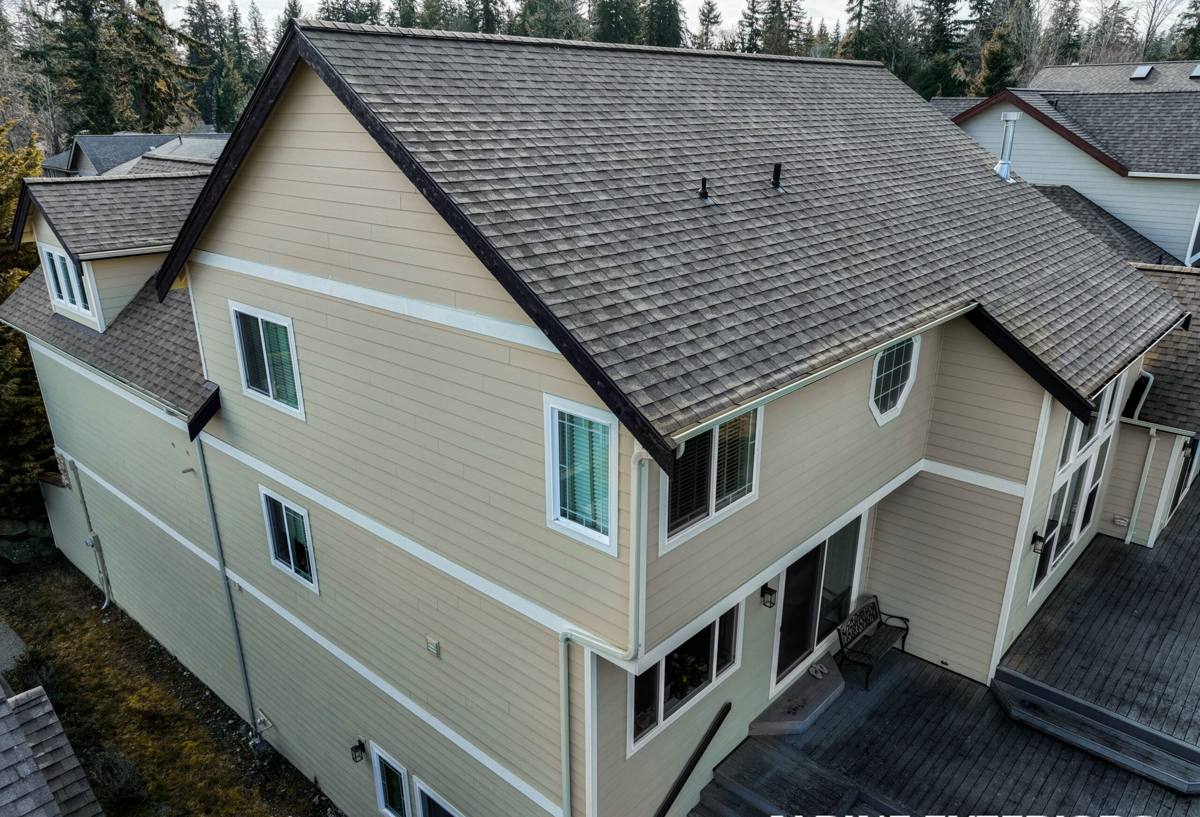
Why Decks in This Area Fail Early
Salt Air and Metal Fasteners
Even a few miles inland, salt-influenced air corrodes untreated or low-grade fasteners over a handful of seasons. Once a fastener starts rusting, it weakens, stains the surrounding wood or composite, and can eventually let a board shift underfoot. This is one of the most common reasons we get called out to a deck that's only 10-15 years old and already feels unsafe in spots.
Driving Rain and Poor Drainage
Rain that comes in at an angle finds its way into every gap, seam, and end-cut that isn't properly sealed or flashed. On older decks, this usually shows up as rot around ledger boards, post bases, and stair stringers — the framing members that see the most standing water and the least airflow.
Moss, Algae, and Trapped Moisture
Laurel's long moss season means organic growth gets a real foothold on any deck surface that doesn't drain and dry quickly. Moss and algae aren't just a slip hazard — they hold moisture against the decking material for weeks at a time, which accelerates wood rot and can void the warranty on some composite products if left unaddressed.
Signs Your Deck Needs Replacement, Not Just Repair
- Soft, spongy, or bouncy spots in the decking or framing underfoot
- Visible rot at ledger boards, posts, stair stringers, or joist ends
- Rust streaking around fastener heads or structural hardware
- Persistent moss or algae that returns within weeks of cleaning
- Railings or stairs that feel loose, wobbly, or out of code
- Gaps opening up between boards, or boards cupping and splitting
- A ledger board attachment you can't verify was flashed or bolted correctly
A repair can patch a board or two, but if the framing underneath has been absorbing water for years, patch work just delays the same failure. When the substructure is compromised, full replacement is the honest recommendation — and usually the more cost-effective one over a 10-year horizon.
What a Correct Deck Replacement Involves Here
Tear-Out and Substructure Inspection
We remove the old decking and railing down to the framing, then inspect posts, beams, joists, and the ledger connection to the house. This is where hidden rot usually turns up — especially around the ledger, which is the single most water-exposed connection point on most decks.
Framing and Ledger Correction
If the ledger wasn't properly flashed or bolted to the original build, we correct that as part of the replacement rather than reattaching a new deck to the same weak point. Framing lumber gets upgraded to pressure-treated or naturally rot-resistant stock sized appropriately for the span and load.
Fastener and Hardware Selection
Given the salt-air exposure common in this area, we use corrosion-resistant, code-rated structural hardware and fasteners rated for treated lumber contact. This one decision has more to do with how long your deck lasts than almost any other single choice in the build.
Decking Material Installation
Whether you choose wood or composite decking, proper spacing for drainage and expansion, correct fastening pattern, and attention to end-grain sealing all matter more here than in a dry climate. Skipping these steps is exactly how a brand-new deck starts showing moss and staining within its first year or two.
Railing, Stairs, and Code Compliance
Railing height, baluster spacing, and stair geometry all need to meet current code — not just match what was there before. We build to current requirements regardless of what the old deck had, since older decks in this area often predate current guardrail and stair code.
Decking Material Comparison for Whatcom County Conditions
| Material | How It Handles Local Moisture/Salt Air | Maintenance | Typical Lifespan Here |
|---|---|---|---|
| Pressure-treated wood | Good if sealed and re-sealed on schedule; end-cuts need extra treatment | Annual cleaning + re-staining/sealing every 2-3 years | 15-20 years with upkeep |
| Cedar | Naturally rot- and insect-resistant, but still needs sealing against driving rain | Cleaning + sealant every 2-3 years | 15-20 years with upkeep |
| Composite decking | Handles moisture well; capped composite resists moss staining better than wood | Periodic washing to prevent moss/algae buildup | 25-30+ years |
| PVC decking | Fully synthetic, no rot risk, but can feel and expand/contract differently in temperature swings | Low — mainly washing | 25-30+ years |
There's no universally "correct" material — it's a tradeoff between upfront cost, maintenance tolerance, and how the deck will be used. What matters more than the brand name on the decking is whether the framing underneath, the fasteners, and the drainage details were done right. We'll walk you through the honest tradeoffs for your specific deck rather than pushing whatever has the best margin.
Our Process for Laurel-Area Deck Replacements
- On-site assessment — We inspect the existing deck, framing, ledger attachment, and any visible rot or drainage issues, and talk through what you actually need versus what you might be told you need.
- Written proposal — You get a clear scope of work and pricing before anything is torn out, including material options and what each one changes about maintenance and lifespan.
- Permitting — Deck replacements of most sizes require a permit in this area; we handle that paperwork so inspections aren't a surprise partway through the job.
- Tear-out and disposal — Old decking, railing, and any compromised framing are removed and hauled off.
- Framing and structural work — Ledger, posts, beams, and joists are corrected or replaced to current code and sized for the deck's actual use (furniture, hot tub, grill, foot traffic).
- Decking, railing, and stair installation — Installed with the spacing, fastening, and flashing details this climate requires.
- Final walkthrough — We go over the finished deck with you, including basic maintenance guidance specific to the material you chose.
Cost Factors to Expect
| Factor | Why It Moves the Price |
|---|---|
| Deck size and shape | Larger and more complex footprints (multiple levels, angles) require more material and labor |
| Framing condition | Rotted ledger, posts, or joists add structural repair work beyond surface decking |
| Decking material | Wood, composite, and PVC carry different material costs and installation labor |
| Railing style | Cable, glass, or custom railing systems cost more than standard baluster railing |
| Height and stairs | Elevated decks with multiple stair runs need more structural support and labor |
| Permitting requirements | Larger or elevated decks may require engineering review, which adds time and cost |
Broadly, homeowners in this area should expect deck replacement costs to range from the low thousands for a small, simple wood deck up to well into the five figures for a large composite deck with custom railing and multiple stair runs. Exact numbers depend entirely on your deck's size, condition, and material choice — which is why we give a written estimate after seeing the actual site, not a number over the phone.
Why Hire a Crew That Already Works Laurel and Lynden
A deck built by someone unfamiliar with this specific stretch of Whatcom County often looks fine for the first year or two and then starts failing in the exact ways described above — because the framing details, fastener grade, and drainage planning that matter here weren't treated as priorities. A crew that already works in Lynden and the surrounding Laurel neighborhoods has seen which ledger attachments failed, which fastener grades held up, and which decking products handled the moss season without staining. That local pattern recognition is worth more than any brochure claim, and it shows up in how the deck performs five and ten years out, not just on install day.
We also know the local permitting process and inspection expectations, which keeps your project from stalling out waiting on paperwork or corrections that a crew unfamiliar with the county might not anticipate.
Maintenance After Your New Deck Is Installed
- Sweep debris off the deck regularly, especially in fall when leaves and needles accumulate
- Wash the surface at least once a year to prevent moss and algae from taking hold
- Check railing and stair connections annually for looseness
- Re-seal wood decking on the schedule appropriate to the product — don't wait until it looks dry and gray
- Keep gutters and downspouts near the deck clear so runoff isn't draining directly onto or under it
- Trim back vegetation that shades the deck and slows drying after rain
A well-built deck in this climate still needs some upkeep — no material here is fully maintenance-free given the rain and moss exposure — but the right build dramatically reduces how much work that upkeep actually takes.
Get a Free, No-Pressure Estimate
If your deck in the Laurel area is showing soft spots, rust staining, or moss that won't quit, we're happy to take a look and give you a straight answer about whether it needs replacement or just targeted repair. Fill out the form below for a free estimate — no pressure, just an honest assessment from a crew that already knows what this climate does to a deck.