 Lynden
 Asphalt Shingle Roofing for Maple Falls Homes
Maple Falls sits in the part of Whatcom County where tall conifers, steady tree cover, and a long, wet stretch of the calendar shape how a roof ages. Asphalt shingles remain the most practical choice for most homes here — they're durable, repairable, and reasonably priced compared to metal or specialty materials — but only when they're installed with this specific climate in mind. A shingle roof that would hold up fine in a dry inland climate can struggle here if the underlayment, ventilation, and moss defenses weren't built for driving rain and shaded, slow-drying surfaces.
We work throughout Whatcom County, and Maple Falls comes with its own combination of factors: more shade from surrounding trees than you'll find on open lots closer to town, moisture that lingers longer before a roof gets a chance to dry out, and a moss season that can run for the better part of the year rather than just a few winter months. None of that means asphalt shingles are the wrong choice — it means the installation and maintenance approach has to account for it.
What Makes This Climate Hard on a Roof
Whatcom County's weather pattern brings a steady flow of moisture off the water and through the lowlands, and that moisture doesn't move through quickly. Homes with heavier tree cover, like many in and around Maple Falls, stay damp longer after a storm passes because shade slows evaporation. That combination — frequent rain plus slow drying — is exactly what moss, algae, and moisture-related shingle wear need to take hold.
Driving Rain and Wind-Driven Moisture
Rain here doesn't always fall straight down. Wind-driven storms push water sideways and up under shingle edges, valleys, and flashing if those details weren't installed correctly. A roof that only handles vertical rainfall well isn't enough for this region — the underlayment and flashing details have to assume water will find its way sideways at some point.
Shade and Slow Drying
Trees are part of what makes Maple Falls appealing, but constant shade keeps roof surfaces damp for days after a storm. That extended dampness is the main driver of moss growth and accelerates granule loss on lower-grade shingles over time.
The Long Moss Season
In more open, sun-exposed parts of the county, moss tends to be a seasonal nuisance. In shaded, moisture-heavy spots it can become close to a year-round maintenance item. Left unmanaged, moss holds water against the shingle surface, works into seams, and can lift shingle edges over several seasons.
What a Correct Installation Includes
A shingle roof that's going to hold up in this environment is built in layers, and every layer matters more here than it would in a drier climate.
Underlayment
We use synthetic underlayment as a water-resistant barrier beneath the shingles, with self-adhering ice-and-water membrane at the eaves, valleys, and any roof-to-wall transitions — the spots where wind-driven rain is most likely to get pushed underneath the shingle layer.
Flashing
Step flashing at walls, proper valley flashing, and correctly lapped counter-flashing are non-negotiable in a climate with this much sustained moisture. Reused or improperly lapped flashing is one of the most common causes of hidden leaks we find on older Whatcom County roofs.
Ventilation
Balanced intake and exhaust ventilation keeps the attic dry and temperature-regulated, which protects the roof deck from the underside and helps shingles perform closer to their rated lifespan. Under-ventilated attics trap moisture, and trapped moisture accelerates deck rot and shingle deterioration from below — damage you won't see until it's advanced.
Fastening and Nailing Pattern
Correct nail placement and count, following the manufacturer's specification for the wind zone, keeps shingles from lifting during the wind-driven storms that come through the county. Under-nailing is a common shortcut that shows up as lifted or missing shingles a few years later.
Choosing Shingles for This Climate
Not every asphalt shingle product is built the same way, and the right pick depends on your roof's exposure, budget, and how much shade the house gets.
| Shingle Type | Best For | Climate Considerations |
|---|---|---|
| 3-Tab (Standard) | Budget-conscious projects, simpler rooflines | Lower cost but shorter lifespan under sustained moisture exposure; less wind resistance |
| Architectural (Dimensional) | Most Maple Falls homes | Heavier, more wind-resistant, better warranty structure; the standard choice for shaded, wet-climate roofs |
| Algae-Resistant (AR) | Shaded lots, north-facing slopes, heavy tree cover | Copper- or zinc-infused granules resist the algae staining and moss-friendly surface buildup common in shaded, damp conditions |
| Impact-Resistant | Homes wanting extended durability | Higher upfront cost; can reduce long-term maintenance and sometimes qualifies for insurance considerations |
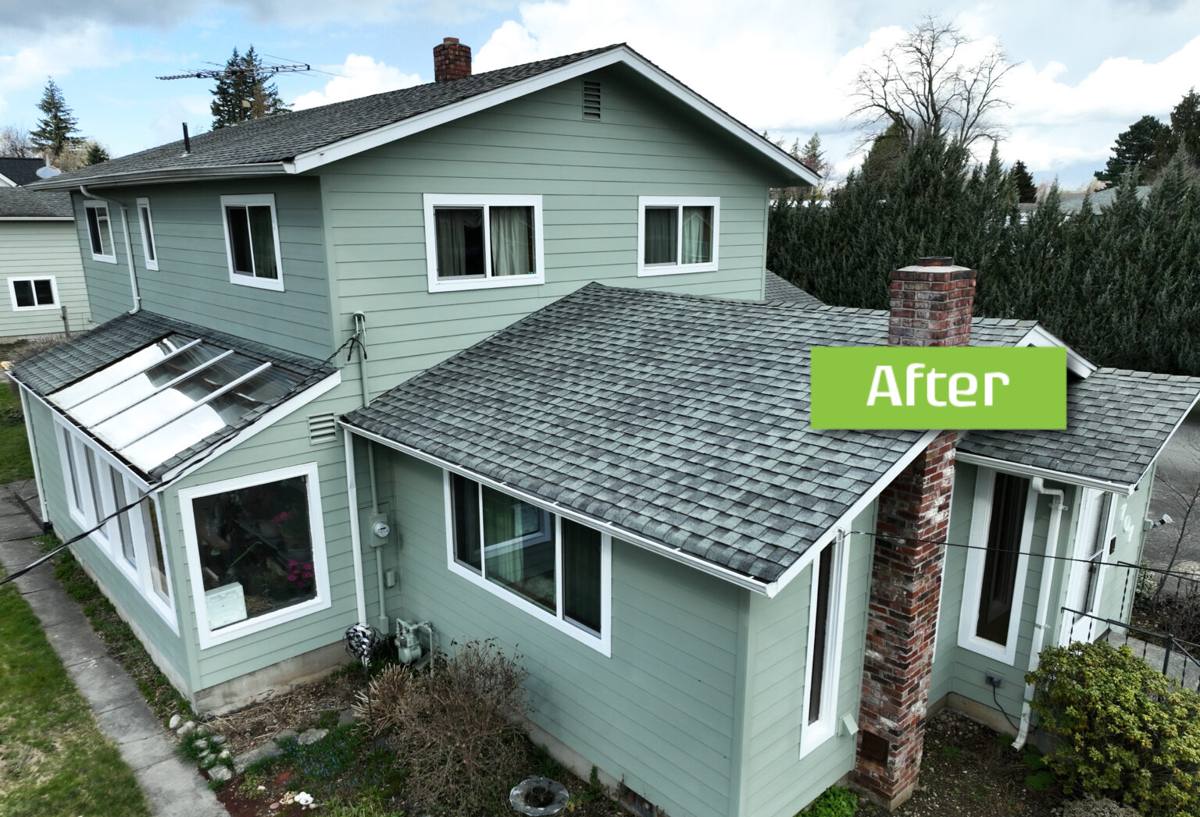
For most Maple Falls properties, we recommend architectural shingles with algae-resistant granules as the baseline — the added cost over standard 3-tab is modest, and the payoff in reduced moss and algae staining is significant given how much shade many lots have.
Signs a Roof Needs Attention
- Moss visible on the shingle surface, especially along the north-facing slope or shaded valleys
- Dark streaking or discoloration that doesn't wash off with light rain
- Granules collecting in gutters or at downspout outlets
- Shingle edges that look curled, lifted, or cracked
- Soft spots or sagging when viewed from the ground or attic
- Daylight visible through the roof deck from inside the attic
- Water stains on interior ceilings, especially after a windy storm
Catching these early usually means a repair. Ignoring them long enough — particularly moss that's been left to grow for a full season or more — tends to turn a repair into a full replacement.
Our Process
Inspection and Estimate
We start by getting on the roof, not just looking at it from the driveway. We check the deck condition, flashing, ventilation, and shingle wear, then walk you through what we find and what it means before we talk about cost.
Scope and Materials
We recommend a shingle line and underlayment system based on your roof's actual exposure — how much shade it gets, how steep it is, and how it's held up so far — not a one-size-fits-all package.
Installation
Tear-off, deck inspection and repair as needed, underlayment, ice-and-water membrane at vulnerable areas, flashing, ventilation components, and shingle installation to manufacturer spec.
Cleanup and Walkthrough
We clear debris and nails from the property, including a magnetic sweep, and walk the finished roof with you before we consider the job done.
Living With a Long Moss Season
Even a well-installed roof needs some ongoing attention in a climate where moss has this much time and moisture to work with. A little routine care goes a long way toward protecting the investment.
- Keep overhanging branches trimmed back to reduce shade and debris buildup on the roof surface
- Clean gutters at least twice a year so water isn't backing up under the shingle edge
- Have moss physically removed rather than just treated — chemical treatments alone don't remove what's already established
- Use zinc or copper strips near the ridge as an ongoing, low-maintenance moss deterrent
- Schedule a roof check after major windstorms, since lifted or displaced shingles are easy to miss from the ground
- Avoid pressure washing shingles directly — it can strip protective granules and shorten the roof's life
Repair, Maintenance, or Replacement
Not every issue means a new roof. If the deck is sound and the damage is localized — a section of wind-lifted shingles, a flashing leak, isolated moss damage — a targeted repair is usually the right call. Replacement makes sense when the shingles are past their practical lifespan, when moisture has reached the deck in multiple areas, or when repeated repairs in the same spots stop making financial sense. We'll tell you honestly which category your roof falls into rather than defaulting to the bigger job.
Why Local Experience Matters Here
A roofing crew that mostly works drier, more open climates will size up a Maple Falls roof differently than one that works this specific mix of shade, rainfall, and moss pressure every week. We're a Whatcom County contractor — we see how shingles, flashing, and ventilation systems actually perform under these conditions year after year, not just how they're rated on paper. That local track record shapes what we recommend, from the underlayment we use at eaves and valleys to which shingle lines hold up best on shaded lots.
If you're dealing with visible moss, a suspected leak, or you're just due for a roof that's showing its age, we're glad to take a look. Reach out for a free, no-pressure estimate using the form below, and we'll give you a straightforward read on where your roof stands.