 Lynden
 Storm Damage Roof Repair Built for the Nooksack Area
Homes around Nooksack and the surrounding Lynden countryside take a different kind of beating than roofs further inland. Wind off the Strait of Georgia and Puget Sound funnels up through Whatcom County, driving rain sideways under shingles and flashing that would stay dry in a calmer climate. Add in the tree cover along the Nooksack River corridor and the long, wet stretches of fall through spring, and you get a roof-aging recipe that's different from what you'd find in eastern Washington or even Seattle proper. Storm damage repair here isn't just about patching a hole after a windstorm — it's about understanding how this specific climate finds and exploits weak points.
We work on roofs in this area regularly, which matters more than it sounds. A repair that would hold up fine in a drier climate can fail here within a season if it doesn't account for wind-driven rain, moss growth, and the freeze-thaw cycles that hit Whatcom County a few times most winters.
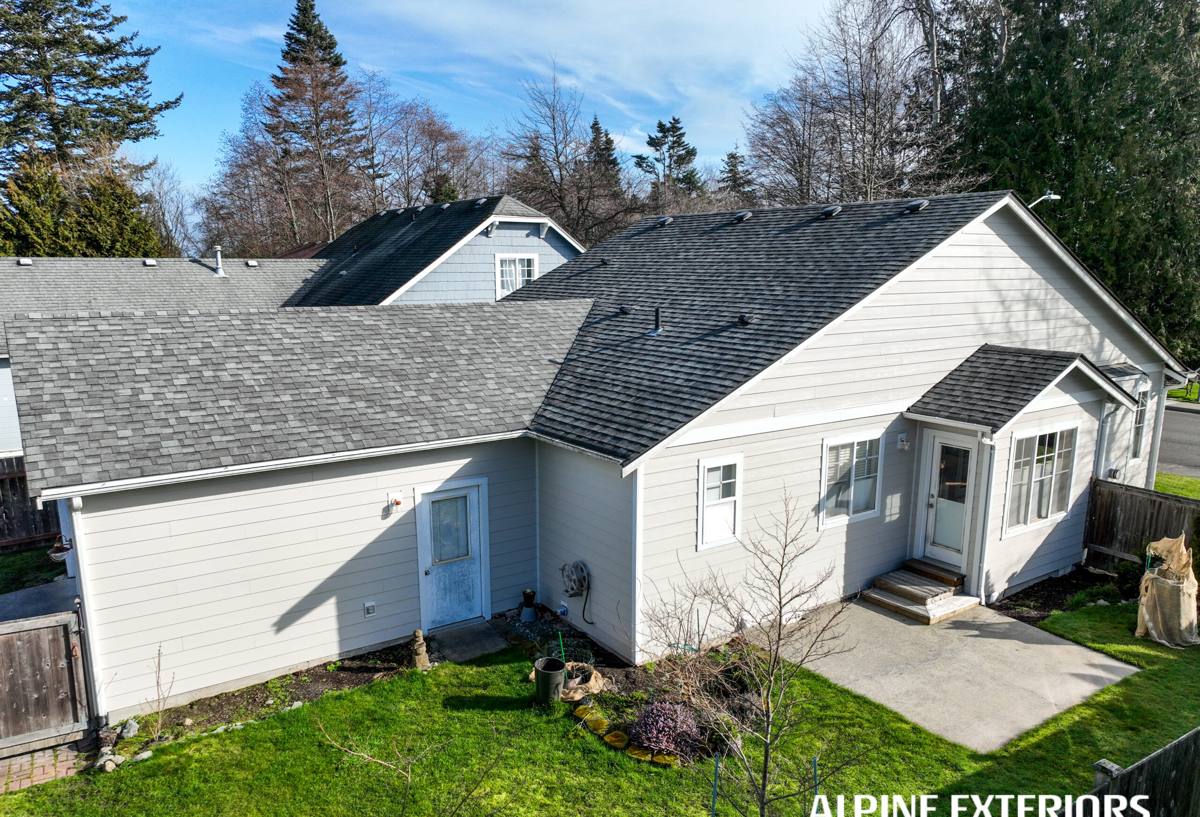
What Our Climate Actually Does to a Roof
Three things drive most of the storm-related roof calls we get in this area:
Driving Rain
Rain that falls straight down is easy for a roof to shed. Rain that's being pushed sideways by wind finds every lifted shingle tab, every gap in flashing, and every nail that's backed out even slightly. This is why storm damage here often shows up as interior leaks days or weeks after the actual wind event — water worked its way in gradually rather than all at once.
Long Moss Season
Whatcom County's combination of shade, moisture, and mild temperatures gives moss a long growing window. Moss holds water against the roof surface, works its way under shingle edges, and lifts material away from the deck over time. A storm that wouldn't damage a clean, moss-free roof can tear loose shingles that moss has already been prying up for months.
Wind Gusts and Debris
Storm systems moving through this part of Whatcom County can produce gusts strong enough to lift shingle edges, especially on roofs where sealant strips have already weakened from age or moss intrusion. Falling branches and debris add a second layer of risk on properties with mature trees, which describes a lot of homes in and around Nooksack.
Signs You Have Storm Damage (Not Just Normal Wear)
Not every roof issue after a windstorm is dramatic. Some of the most costly damage is the kind homeowners don't notice until it's already caused interior problems. After any significant wind or rain event, it's worth checking for:
- Shingles that are cracked, curled, creased, or missing entirely
- Granules collecting in gutters or at the base of downspouts
- Bent, lifted, or missing flashing around chimneys, vents, and roof valleys
- New or worsening water stains on ceilings or in the attic
- Soft or spongy spots when walking the roof (a sign water has reached the decking)
- Debris — branches, needles, moss clumps — pushed into valleys or against the roofline
- Gutters pulling away from the fascia or sagging under storm debris weight
If you see any of these, the roof should be looked at before the next rain, not after it. A small entry point left alone through one more storm cycle is how a $400 repair becomes a $4,000 one.
What a Correct Storm Damage Repair Actually Involves
A lot of storm repair work that gets done quickly and cheaply doesn't actually solve the problem — it just covers the visible symptom. A repair done right addresses both the damage and what let the storm damage happen in the first place.
Full Inspection, Not Just a Spot Check
We look at the whole roof plane, not just the area where damage is visible from the ground. Wind damage is frequently worse on the leeward or upper sections than what's obvious from the driveway, and a single missed lifted shingle nearby can turn into the next leak.
Matching the Existing System
Shingles, underlayment, and flashing all need to work together. Mixing a repair patch with material that doesn't match the roof's existing product line — or skipping proper step flashing at a wall or chimney intersection — creates a new weak point even if the visible damage is fixed.
Flashing and Valley Attention
Flashing failure is one of the most common causes of storm-related leaks in this region, and it's also one of the most commonly overlooked in a rushed repair. Valleys, chimney flashing, and roof-to-wall transitions all deserve a close look after any wind event, since these are the areas most exposed to wind-driven rain.
Deck Condition Check
If water has been getting under shingles for a while before the storm finally tore something loose, the decking underneath may already be soft or delaminating. A repair that just replaces surface shingles over compromised decking won't hold. We check the deck any time there's evidence water reached it.
Moss and Moisture: The Slow Damage Behind the Sudden Damage
Most storm damage we see in this area didn't start with the storm — it started months earlier with moss that was never addressed. Moss holds moisture against shingles, breaks down the granule surface that protects them from UV and rain, and physically lifts shingle edges as it grows. By the time a windstorm comes through, those already-compromised shingles are the ones that tear loose.
Part of an honest storm repair in Whatcom County means telling you if moss growth contributed to the failure, and what it will take to keep it from causing the same problem again — proper cleaning technique (not pressure washing, which damages granules), zinc or copper control strips where appropriate, and attention to any tree cover keeping sections of the roof shaded and damp longer than the rest.
Our Storm Damage Repair Process
- Initial call and triage. We ask what happened, what you're seeing (leaks, missing shingles, debris), and whether temporary protection is needed right away.
- On-site inspection. We walk the roof, check the attic side if accessible, and document the damage — both what's visible and what's likely to fail next if left alone.
- Temporary protection if needed. If there's an active leak or exposed decking, we tarp or otherwise secure the area before the next rain, especially important given how quickly weather can turn in this area.
- Written scope and estimate. You get a clear explanation of what's damaged, what needs to be repaired versus replaced, and an honest cost range before any work starts.
- Repair. Matching materials, correct flashing detail, and attention to the underlying cause — not just the visible symptom.
- Final walkthrough. We show you what was done and flag anything else worth watching, including moss or ventilation issues that could cause problems down the road.
Cost Factors in Storm Damage Roof Repair
Storm repair costs vary a lot depending on scope, and anyone who quotes a firm number before inspecting the roof is guessing. That said, here are the main factors that move the price:
| Factor | Why It Matters |
|---|---|
| Extent of shingle damage | A handful of missing shingles is a minor repair; a full section torn loose approaches partial re-roofing cost |
| Deck condition underneath | Soft or rotted decking needs to be replaced before new shingles go down, which adds material and labor |
| Flashing complexity | Chimneys, skylights, and multiple valleys take more time and material than a simple roof plane |
| Moss and debris cleanup | Roofs with heavy moss buildup often need cleaning before repair work can be assessed accurately |
| Access and roof pitch | Steep or hard-to-access roofs take longer and require more safety setup |
| Material availability/matching | Older shingle lines that are discontinued may require a broader repair area to keep the roof looking uniform |
In broad terms, a straightforward, small-area storm repair is often a few hundred to a couple thousand dollars; larger repairs involving deck replacement or extensive flashing work can run several thousand. We'll always give you a specific number after we've actually seen the roof, not before.
Insurance and Storm Damage
Many storm-related roof repairs are covered under homeowners insurance, particularly when the cause is a documented wind or storm event rather than gradual wear. We're not insurance adjusters and won't promise a claim outcome, but we can provide clear documentation and photos of the damage that support your claim, and we're glad to walk through the roof with your adjuster if that's useful. If you're not sure whether your situation is a covered storm claim or a maintenance issue, that's a fair question to ask us during the inspection — we'll give you a straight answer either way.
Why Hire a Crew That Already Works in Nooksack and Lynden
After a significant storm, it's common to see traveling crews going door to door in affected neighborhoods offering fast, cheap repairs. Some are legitimate. Many are gone before a warranty ever matters, and they don't know this area's specific failure patterns — the moss, the wind direction, the way water moves off these roofs in a hard rain.
A crew that's local to Whatcom County and works regularly in and around Nooksack has already seen how roofs in this specific area age and fail. That matters when the goal isn't just covering the hole a storm left behind, but making sure the same failure doesn't happen again next winter.
Get a Free, No-Pressure Estimate
If a recent storm has left you with missing shingles, a new leak, or damage you're not sure how to assess, we're happy to take a look. There's no pressure and no obligation — just a straight assessment of what's actually going on with your roof and what it would take to fix it right. Use the form below to request a free estimate.