 Lynden
 Window Replacement Built for Abbotsford's Weather
Abbotsford sits in the Fraser Valley corridor, close enough to the Salish Sea and the Lynden/Whatcom County line that homes here take on the same weather punishment we see on our side of the border: long stretches of driving rain, salt-laden air moving in off the coast, and a moss season that can run eight months out of the year in shaded yards. Windows are one of the first places that weather finds a way in. Old seals, tired flashing, and single-pane glass don't just cost you on the heating bill — they let moisture work into framing, sills, and the wall assembly behind them.
We've been doing exterior work in this region long enough to know that a window replacement here isn't the same job as one in a dry climate. The install has to account for wind-driven rain hitting the wall at an angle, not just falling straight down, and for the fact that moss and algae will colonize any surface that stays damp and shaded. Get the flashing and sealing wrong and you won't see the problem for a year or two — by then it's hidden water damage, not a cosmetic issue.
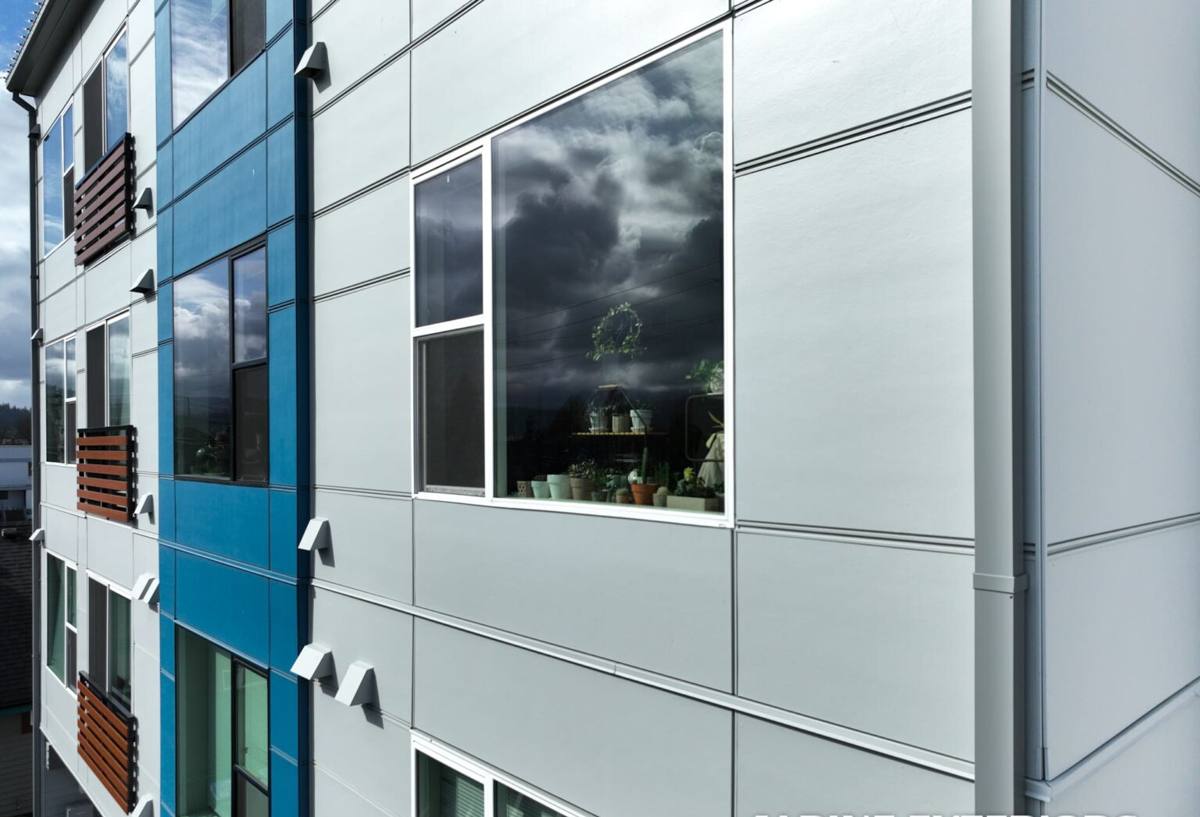
What Abbotsford's Climate Does to Old Windows
Driving Rain and Wind-Driven Moisture
Storms coming off the coast don't just drop rain straight down — they push it sideways into walls and window openings. Older windows, especially ones without proper head flashing or with degraded caulking, let that wind-driven rain track behind the trim and into the rough opening. Over years, that shows up as soft framing, stained drywall below the sill, or a musty smell in the room even when nothing looks visibly wrong.
Salt Air and Metal Fatigue
Homes closer to the water deal with salt-laden air that accelerates corrosion on window hardware — hinges, cranks, balance springs, and aluminum frames all wear faster in a marine-influenced climate. If your windows are getting hard to open, sticking, or the hardware feels gritty or corroded, that's usually salt air working on the metal parts faster than the glass itself is failing.
Moss and Sustained Shade
A long moss season means anything that holds moisture near a window — clogged sills, degraded caulk lines, wood trim without proper primer — becomes a growth surface. Moss and algae hold water against the surface even longer than the rain itself does, which speeds up rot in wood-framed and wood-trimmed windows specifically.
Signs It's Time to Replace, Not Repair
- Fogging or condensation between panes — the seal has failed and can't be fixed, only replaced
- Soft or spongy wood at the sill or lower corners of the frame
- Windows that won't stay open, won't latch, or are painted shut from swelling
- Visible gaps between the frame and the wall, or daylight around the edges of the sash
- Noticeable draft or cold spot near the window even with it fully closed
- Moss, algae, or black staining building up on the sill or lower frame every year despite cleaning
- Rising energy bills with no other explanation and older, single-pane or early dual-pane glass
Any one of these on its own might be manageable with a repair. Two or three together, especially soft wood plus fogging, usually means the window and the opening around it both need attention — and that's a replacement job, not a caulk-and-paint fix.
What a Correct Installation Actually Involves
A window replacement done right in this climate is as much about what's under the trim as the window itself. We remove the old unit down to the rough opening, check the sheathing and framing for hidden rot or moisture damage, and address anything we find before the new window goes in — installing a good window into a compromised opening just hides the problem for a few more years.
From there, correct flashing sequencing matters more here than almost anywhere else: sill pan flashing to direct any water that does get past the window back outside, properly lapped house wrap or building paper, and head flashing that sheds water away from the top of the opening rather than trapping it. We use exterior-rated sealants sized for the joint, not just a bead of whatever's on hand, and we make sure weep holes and drainage paths on the sill stay clear so water has somewhere to go.
Fit and Insulation
A window that's the right size but poorly shimmed and insulated will still draft and still let moisture track in around the frame. We shim for square and plumb, insulate the gap between the frame and the rough opening with a material that won't compress or settle over time, and finish with interior and exterior trim that's sealed correctly on both sides.
Choosing the Right Window for This Climate
| Frame Material | How It Handles Local Weather | Maintenance Reality |
|---|---|---|
| Vinyl | Good moisture and salt-air resistance, won't rot or corrode | Low — occasional cleaning, no painting |
| Fiberglass | Excellent dimensional stability in wet/dry cycling, strong seal retention | Low — durable finish, minimal upkeep |
| Aluminum | Prone to corrosion and thermal transfer in salt air and cold snaps | Higher — hardware and finish need more attention over time |
| Wood | Best appearance but most vulnerable to rot in driving rain and moss season | Highest — regular painting/sealing and moisture monitoring required |
We're not going to tell you wood windows are bad — plenty of homeowners want that look and are willing to keep up with the maintenance. What we will say honestly: in a climate with this much sustained moisture and moss pressure, wood frames need a real maintenance commitment to last, and if that's not something you want to keep up with, vinyl or fiberglass will give you a longer service life with a lot less work. That's a trade-off we'll walk through with you, not a sales pitch for one product.
Glass Packages Worth Considering
Dual-pane, argon-filled, low-E glass is the practical baseline for this region now — it cuts heat loss significantly over older single-pane or early dual-pane units, and the low-E coating helps manage solar heat gain in the summer months without darkening the glass. For rooms that catch more direct wind or face the prevailing weather, a triple-pane option can be worth the added cost, mainly for the extra sound dampening and the reduced condensation risk on the interior glass surface during cold, damp stretches. We'll tell you plainly if triple-pane is overkill for a given room versus where it actually earns its keep.
Our Process for Abbotsford Homeowners
- On-site assessment: we look at the actual windows and openings, not just take measurements off a form — condition of framing, sill, and existing flashing all factor into the quote.
- Honest scope: if we find rot or moisture damage during the walkthrough, we tell you before work starts, not after we've already opened up the wall.
- Written estimate: clear pricing on the windows, the install, and any additional framing or repair work identified.
- Installation: proper flashing, sealing, shimming, and insulation sequence — not just swapping glass into an old opening.
- Walkthrough: we check operation, seals, and finish work with you before we consider the job done.
Because we already work in the Abbotsford and Lynden area regularly, we know the building patterns common to homes here and the specific weather stresses they face. That matters when it comes to scheduling around wet-season windows for the work, sourcing materials rated for this climate, and knowing what to check for on a house of a given age and construction type.
Why Hiring a Crew That Knows This Area Matters
Window replacement looks like a straightforward swap-out job until you're the one dealing with a leak two winters later because the flashing wasn't lapped correctly for wind-driven rain. A crew that only occasionally works this climate may not build in the extra moisture protection this region actually demands — they're used to installing to a general standard, not to Fraser Valley or Whatcom County conditions specifically. We're on job sites in this region routinely, in the same rain and the same moss-prone conditions your home deals with every year, and we build the install to match that reality rather than a generic spec sheet.
If your windows are drafty, fogged, hard to operate, or just old enough that you're wondering whether it's time — we're happy to come take a look. A free, no-pressure estimate gets you a straight answer on condition, options, and real costs, with the form below.