 Lynden
 Why Bellingham Windows Take a Different Kind of Beating
Bellingham sits close enough to Puget Sound and the Strait of Georgia that salt-laden air is a real factor in how fast window components age, and it sits far enough into the Pacific storm track that driving rain — wind-blown rain hitting glass and frames at an angle instead of falling straight down — is a normal part of the weather here, not an occasional event. Add Whatcom County's long, damp, low-sun stretch from fall through spring, and you get months where moss, algae, and mildew have every condition they need to take hold on anything that stays wet and shaded. Windows sit right at the intersection of all three problems: they're exposed to salt corrosion on hardware and finishes, they're the first thing driving rain tests for a weak seal, and their sills and lower sashes are prime real estate for moss and black mildew streaking if drainage isn't right.
None of that means Bellingham homes need exotic products. It means the ordinary decisions — frame material, glass package, and especially installation detailing — matter more here than they would in a drier, calmer climate. A window that performs fine in a mild inland town can fail early on a house that takes weather straight off the water.
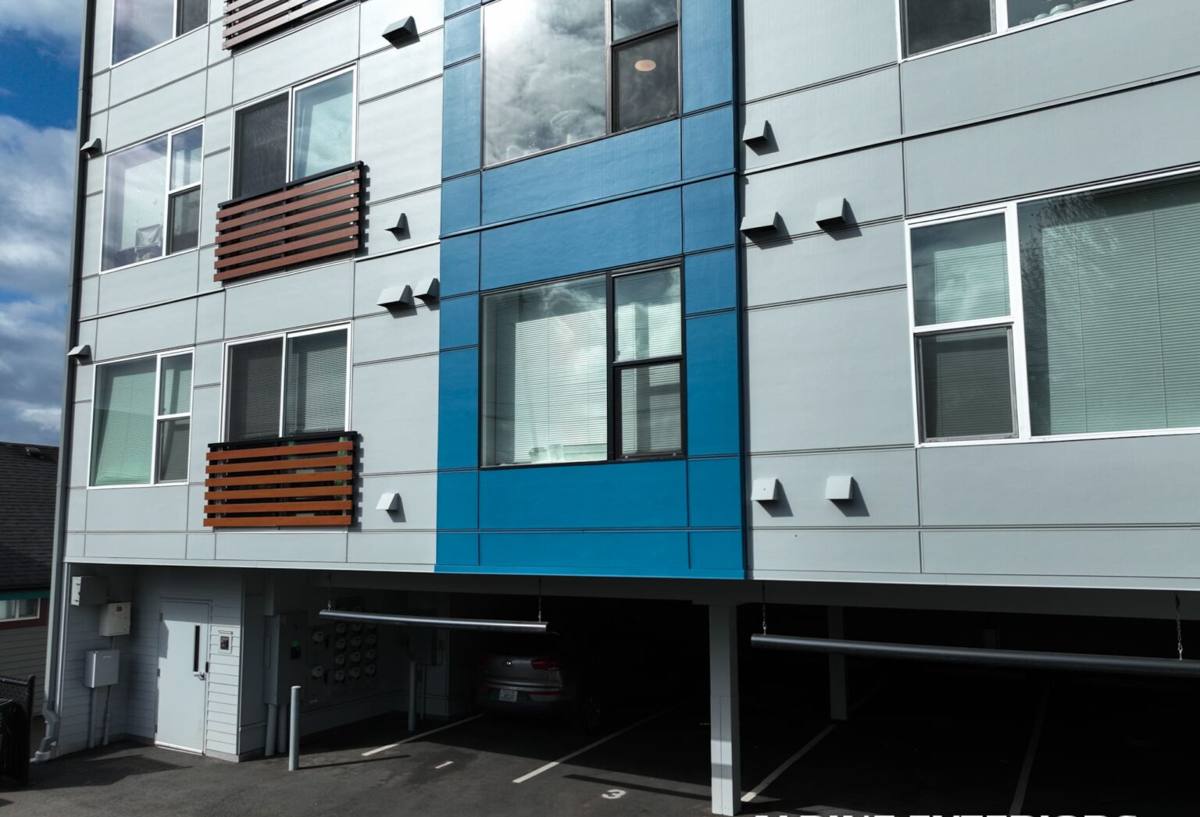
What "Energy-Efficient" Actually Means Here
Energy efficiency in a window comes down to a handful of measurable properties, and in this climate two of them matter more than most homeowners expect:
- U-factor — how much heat escapes through the window. Lower is better for our cool, wet winters where the goal is keeping heat in.
- Air infiltration rating — how much air leaks around the sash even when it's closed and locked. This is the number that predicts how a window will hold up against sustained, wind-driven rain and gusty marine weather, not just still air.
- Solar heat gain coefficient (SHGC) — how much solar heat passes through the glass. Bellingham doesn't get intense year-round sun, so this matters less than U-factor for most homes here, though it's still worth checking on south- and west-facing exposures.
- Glazing (double vs. triple pane) — more panes and gas fill improve insulation, but the bigger day-to-day issue in our climate is usually air and water sealing, not raw insulation value.
The honest trade-off: a window can carry a great energy label on paper and still perform poorly here if the air infiltration rating is mediocre or the installation doesn't seal it correctly against wind-driven rain. We weigh all of these together rather than chasing one number.
Double-Pane vs. Triple-Pane in a Marine Climate
Triple-pane glass gives you a lower U-factor and slightly better sound dampening, which some homeowners value given how often it rains here. It also adds weight, cost, and a bit more strain on hardware over time. For most Bellingham homes, a quality double-pane unit with a good low-E coating and argon fill delivers most of the practical benefit at a lower cost. Triple-pane earns its keep on north-facing rooms, additions with thin walls, or homes where the owner has a specific comfort or noise concern — we'll tell you honestly when it's worth the upgrade and when it isn't.
Frame Material: The Decision That Matters Most Near Salt Air
Frame material affects how a window handles moisture, salt exposure, and years of driving rain more than almost any other choice. Here's how the common options actually compare in this environment:
| Frame Material | Moisture & Salt Air Behavior | Maintenance | Typical Cost Position |
|---|---|---|---|
| Vinyl | Won't rot or corrode; performs well against salt air and rain when welded seams are sound | Low — occasional cleaning | Lower |
| Fiberglass | Very stable in wet, coastal conditions; resists warping and doesn't corrode | Low | Higher |
| Wood-clad | Attractive, but any breach in the exterior cladding exposes wood to rot in a climate this wet | Higher — cladding and seals need monitoring | Higher |
| Aluminum | Prone to corrosion in salt air and conducts cold, leading to condensation | Moderate | Varies |
We don't push wood-clad windows for homes in the wetter, saltier pockets of Whatcom County as a first recommendation — not because the product is bad, but because our standard is to recommend what holds up with the least ongoing risk in this specific climate. If a homeowner wants the look of wood and understands the maintenance commitment, that's a legitimate choice; we just make sure it's an informed one.
Signs Your Current Windows Are Already Costing You Money
Most homeowners don't replace windows because of one dramatic failure — they replace them because a handful of small signs add up:
- Fogging or a permanent haze between the panes (a failed seal on an older double-pane unit)
- Noticeable draft or cold spot near the frame on a windy day
- Condensation forming on the inside of the glass regularly through fall and winter
- Soft or discolored wood trim around the window, especially on walls that face prevailing weather
- Moss, algae, or dark streaking building up on sills or lower sashes that stay shaded and damp
- Difficulty opening, closing, or locking a sash that used to move freely
Any one of these is worth a look. Several together, especially on the side of the house that takes the most wind and rain, usually means the windows are past the point where caulk and weatherstripping will fix the underlying problem.
What a Correct Installation Actually Involves
The window itself is only part of the job. In a climate where driving rain is routine, how the window is integrated into the wall is what determines whether it stays dry for the next twenty years or starts leaking in five. A correct installation includes:
- Removing the old unit and inspecting the rough opening for hidden rot or moisture damage before anything new goes in
- Installing flashing that directs water up and over the top of the window and away at the sides — this is the single most common point of failure we see in older or poorly installed windows
- Integrating the window properly with the house's weather-resistive barrier and, where we're also handling siding or trim, tying the two together so there's no gap for wind-driven rain to exploit
- Shimming and securing the unit level and square so the sash operates correctly and seals evenly for its full lifespan
- Sealing with the right materials at the right points — not just a bead of caulk around the outside trim, but proper sealing at the flashing and frame
- Insulating the gap between the frame and rough opening so it doesn't become a thermal or air leak
Because we're a siding contractor first, window flashing and wall integration is work we already do every day — it's the same water-management logic that governs a correct siding job. That overlap is exactly why get window and siding work done by the same crew when possible: there's no finger-pointing later between "the window guy" and "the siding guy" about where a leak started.
How We Approach a Bellingham Window Project
The process is straightforward and we keep it that way on purpose:
- On-site assessment. We look at existing windows, the condition of surrounding trim and siding, sun exposure, and which walls take the most weather, then talk through what's actually needed versus what's optional.
- Product selection. We walk through frame material, glass package, and performance ratings in plain language, matched to your budget and to what this climate actually demands — not the most expensive option by default.
- Scheduling around the weather. Window replacement means an open wall for a period of time, so we plan installation days with Whatcom County's weather patterns in mind rather than gambling on a dry window that doesn't hold.
- Installation. Careful removal, opening inspection, correct flashing and sealing, and proper fit — the details covered above, done the same way on every job.
- Final check and cleanup. We test operation, check seals, and leave the site clean before we call the job done.
What Affects the Cost
We won't quote a number without seeing the job, but these are the factors that actually move the price up or down:
| Factor | Why It Matters |
|---|---|
| Frame material | Vinyl is typically the most economical; fiberglass and wood-clad cost more upfront |
| Glass package | Triple-pane and specialty low-E coatings add cost over a standard double-pane unit |
| Number and size of windows | Larger openings and whole-house replacements have different economies of scale than a single window swap |
| Condition of the existing opening | Hidden rot or water damage found during removal adds repair work before the new window goes in |
| Access and site conditions | Second-story or hard-to-reach windows take more time and equipment |
| Coordinating with siding or trim work | Combining window and siding work can be more efficient than doing them as separate projects |
Broadly, homeowners should expect a wide range depending on these factors — anyone who quotes a firm number before seeing your windows and the condition of the openings behind them is guessing.
A Quick Checklist Before You Hire Anyone
- Do they inspect the rough opening, not just measure the glass, before quoting?
- Do they explain frame material and glass options in terms of your specific home and exposure, not just push one product line?
- Do they talk about flashing and water management, or only about the window itself?
- Are they licensed and insured to work in Washington, and will they show you proof without being asked twice?
- Do they have experience working on homes in Bellingham and the surrounding Whatcom County weather, not just installing windows in general?
- Is the estimate written and itemized, so you know what you're actually paying for?
Why Local Experience in Bellingham Matters
A crew that regularly works in and around Bellingham has already seen how the local combination of salt air, driving rain, and a long moss season plays out on real houses — which walls fail first, which frame materials hold up, and where builders in this area commonly cut corners on flashing. That's not something you can fully substitute with a general contractor from a drier region reading a spec sheet. It shows up in small decisions: which side of the house gets extra attention during install, how sills are pitched to shed water, and which product lines we've simply stopped recommending because we've seen how they age here.
As a siding contractor based in Lynden and working throughout Whatcom County, window replacement is a natural extension of the water-management work we already do on every siding job — the two trades share the same core skill of keeping wind-driven rain out of the wall assembly.
If your windows are drafty, fogged, or just due for an honest look, we're glad to come take a look and give you a straightforward, no-pressure estimate — use the form below to get started.