 Lynden
 Metal Roofing Built for Custer's Coastal Conditions
Custer sits close enough to the water that homes here deal with a different mix of weather than roofs ten miles inland. Salt-laden air moves in off the coast, driving rain comes sideways during winter storms, and shaded, tree-lined lots hang onto moisture long after a storm passes. A metal roof can handle all of that better than most materials — but only if it's specified and installed with those specific conditions in mind. A metal roof built for a dry inland climate is not automatically the right metal roof for a Custer home.
This page covers what we actually look at when we're putting a metal roof on a home in this part of Whatcom County: the materials that hold up to salt air, the installation details that keep driving rain out, how moss factors into long-term performance, and what our process looks like from first look to final walkthrough.
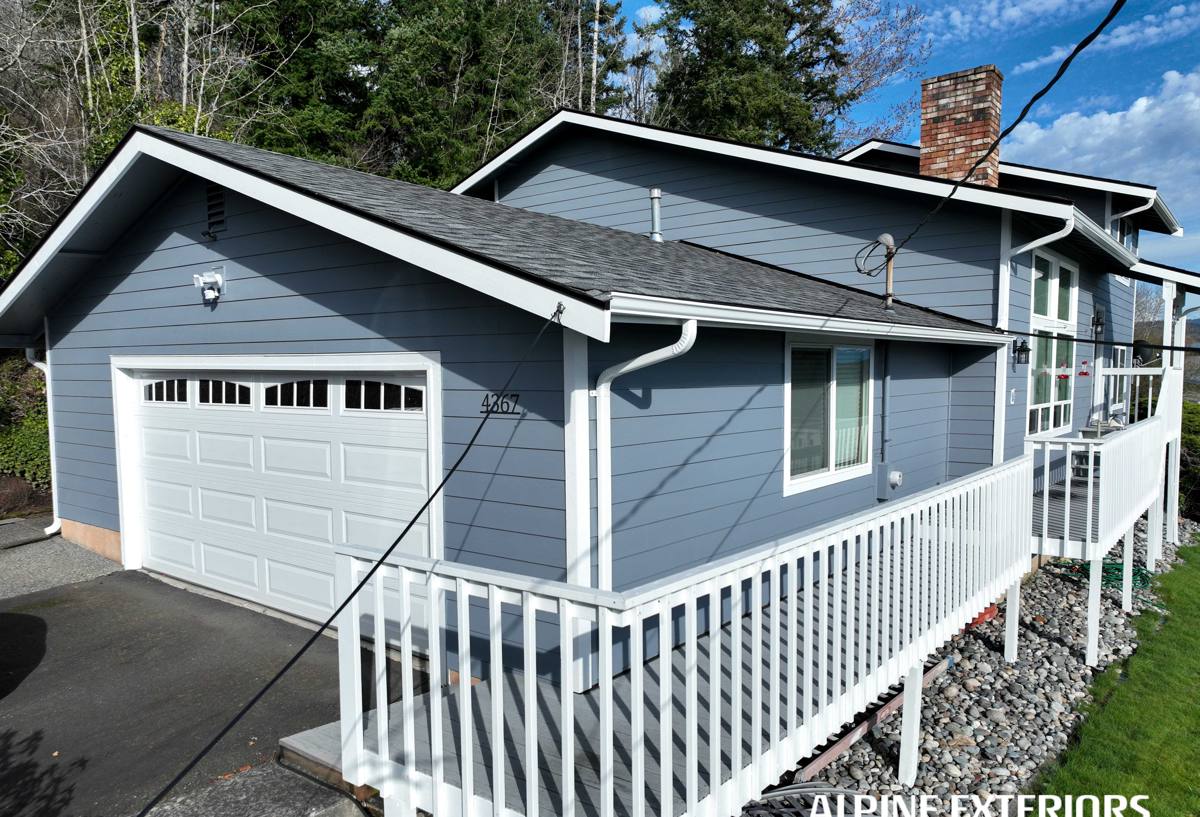
What Salt Air and Driving Rain Actually Do to a Roof
Salt air isn't just a coastal talking point — it's a real corrosion accelerant. Airborne salt settles on exposed metal, and combined with moisture it speeds up oxidation at fasteners, cut edges, and any spot where a protective coating has been scratched or worn thin during installation. Over years, that shows up first as rust bleeding from screw heads or panel seams, long before the rest of the panel shows any wear.
Driving rain adds a second problem: wind-driven water doesn't just fall straight down, it gets pushed sideways and upward under laps, around penetrations, and into any gap that a standard installation might get away with in a calmer climate. On a Custer roof, every seam, flashing detail, and fastener location has to assume water will be pushed at it from an angle, not just dropped on top of it.
Why This Matters for Material Choice
Not every metal roofing product is rated the same way for coastal exposure. Coating type, fastener material, and panel profile all affect how well a roof resists salt-driven corrosion over its service life. This is one of the areas where cutting corners doesn't show up for a few years — and then shows up all at once.
Choosing the Right Metal Roofing System
Metal roofing isn't one product — it's a category, and the differences between systems matter more in a salt-air, high-rainfall area than they would somewhere drier and further from the coast. The two main paths for a residential job are standing seam (concealed fastener) panels and exposed-fastener panels.
| Factor | Standing Seam (Concealed Fastener) | Exposed Fastener Panel |
|---|---|---|
| Fastener exposure | Fasteners hidden under the seam, not exposed to weather | Screws penetrate the panel face, each one a potential leak/corrosion point |
| Coastal durability | Better long-term resistance to salt-air corrosion at fastener points | Gaskets on exposed screws wear and need replacement over time |
| Upfront cost | Higher material and labor cost | Lower upfront cost |
| Maintenance | Minimal; occasional debris/moss clearing | Periodic fastener/gasket inspection recommended |
| Appearance | Clean, uninterrupted panel lines | Visible fastener pattern across the roof |
We'll walk through both options honestly on a home-by-home basis. Exposed-fastener panels aren't a bad product — they're a legitimate, budget-conscious choice — but on a roof this close to salt air and wind-driven rain, we want the homeowner to understand the maintenance trade-off before it's locked in under a warranty term.
Panel Gauge and Coating
Thicker gauge steel resists denting from debris and hail and holds screws more securely over time. Coating matters just as much as gauge — a quality factory-applied paint or coating system is what actually stands between the steel substrate and years of salt air and rain. We spec coatings rated for coastal/marine exposure rather than a generic interior-climate product, because the difference shows up in year eight or ten, not year one.
The Installation Details That Actually Keep Water Out
Metal roofing fails less often because of the panels themselves and more often because of what's underneath and around them. This is where a correct install and a rushed one diverge.
- Underlayment: A high-temp synthetic or self-adhered underlayment at eaves, valleys, and penetrations — not just felt — to back up the metal against wind-driven rain that finds its way past the panel laps.
- Flashing at every transition: Valleys, sidewalls, chimneys, and skylights need custom-formed flashing, not generic trim pieces stretched to fit. This is the single most common source of leaks on any roof, metal or otherwise.
- Fastener pattern and torque: Over-driven or under-driven screws both cause problems — over-driven compresses and fails the gasket, under-driven leaves a gap. Spacing has to follow the manufacturer's wind-load pattern, not a shortcut spacing.
- Panel overlap and seam direction: Laps run with prevailing wind and rain direction so driving rain rides over the seam instead of into it.
- Ventilation: Metal roofs still need proper ridge and intake ventilation underneath — trapped moisture under a tight metal roof deck causes its own problems independent of what the weather is doing outside.
Moss and Debris: The Slow Threat Metal Handles Differently
Whatcom County's long moss season is hard on any roof, but it interacts with metal differently than it does with shingles. Metal sheds moss more easily than asphalt because there's no granule surface for spores to grip — but moss and organic debris can still build up in valleys, around penetrations, and anywhere water sits rather than sheets off. Left alone, that trapped moisture is what eventually finds a fastener or seam that isn't perfectly sealed.
The fix isn't a different material — it's roof design and periodic clearing. Valleys and low-slope transitions get the most attention during install specifically because that's where debris collects on a tree-shaded Custer lot. We also flag overhanging branches during the estimate, since shade and leaf litter are two of the biggest drivers of moss buildup regardless of what the roof is made of.
Our Metal Roofing Process
- On-site assessment: We look at existing roof condition, deck condition, ventilation, tree cover, and drainage paths specific to your property before recommending a system.
- System and panel selection: Based on that assessment plus your budget, we walk through standing seam vs. exposed-fastener options and coating choices honestly, including the maintenance trade-offs of each.
- Tear-off and deck inspection: Old roofing comes off and the deck gets inspected for rot or soft spots before anything new goes down — a common source of hidden problems in older Whatcom County homes.
- Underlayment and flashing installation: This is where most of the actual waterproofing happens, done before a single metal panel is set.
- Panel installation: Panels go on following manufacturer fastening and overlap specs, adjusted for the wind and rain exposure of your specific lot.
- Final inspection and walkthrough: We check seams, flashing, and fastener lines, then walk the finished roof with you before calling the job done.
Maintenance Checklist for a Custer Metal Roof
A correctly installed metal roof is low-maintenance, not no-maintenance. A short annual check catches small issues before they become deck damage.
- Clear valleys and low points of moss, needles, and leaf debris, especially after fall and winter storms.
- Check gutters and downspouts for the same debris — clogged gutters back water up under eave flashing.
- Look for any rust starting at fastener heads or cut edges, particularly on the side of the roof facing prevailing weather.
- Trim back overhanging branches that keep sections of the roof shaded and damp longer than the rest.
- Have flashing around chimneys, vents, and skylights checked every few years, since these are the highest-risk leak points regardless of roof age.
What Affects the Cost of a Metal Roof in Custer
| Cost Factor | Why It Matters Here |
|---|---|
| Panel system (standing seam vs. exposed fastener) | Standing seam costs more upfront but reduces long-term maintenance in salt air |
| Coating/finish grade | Coastal-rated coatings cost more but resist corrosion longer near the water |
| Roof complexity | Valleys, dormers, and penetrations all add flashing labor, which is where leaks start |
| Deck condition | Rot or soft decking found at tear-off adds repair cost before installation continues |
| Ventilation upgrades | Older homes often need ridge/intake vent work added during a re-roof |
We give straightforward, itemized estimates rather than a single lump number, so you can see exactly what you're paying for and where there's room to adjust scope if needed.
Why a Crew That Already Works in Custer Matters
Roofing crews that mainly work drier, inland regions sometimes spec and install roofs the same way regardless of where the house sits. On a coastal-influenced property in Whatcom County, that generic approach is exactly what leads to early corrosion at fasteners, moss buildup in poorly designed valleys, and leaks at flashing that was detailed for a calmer climate. Working this specific area regularly means we're already accounting for salt air, wind direction, and moss season in the initial spec — not treating them as surprises after the fact.
It also means we're familiar with the older housing stock common around Lynden and the surrounding county, and can flag deck or ventilation issues tied to a home's age and construction rather than assuming every roof is a clean modern deck.
If you're weighing a metal roof for a Custer property, we're glad to take a look and give you a straightforward, no-pressure estimate — fill out the form below and we'll go from there.