 Lynden
 Why Birch Bay Roofs Wear Differently Than Roofs Inland
Birch Bay sits right on the water, and that changes what a roof has to put up with year after year. Homes a few miles inland in Whatcom County deal with rain and moss like everywhere else in this corner of the state, but a shoreline property adds salt-laden air, more direct wind exposure off the water, and driving rain that hits shingles at an angle instead of falling straight down. None of that means a roof is doomed to fail early — it means the details of the install matter more here than they do on a sheltered lot.
Salt air is corrosive to unprotected metal. Over years, cheap or poorly placed fasteners, flashing, and drip edge can start to rust, and once metal components fail, water finds a way in around them long before the shingles themselves are worn out. Wind off the water also puts more uplift stress on shingle edges and ridges, which is exactly where a roof is most likely to start losing material in a storm if it wasn't sealed and fastened correctly the first time.
The Long Wet Season and Moss Problem
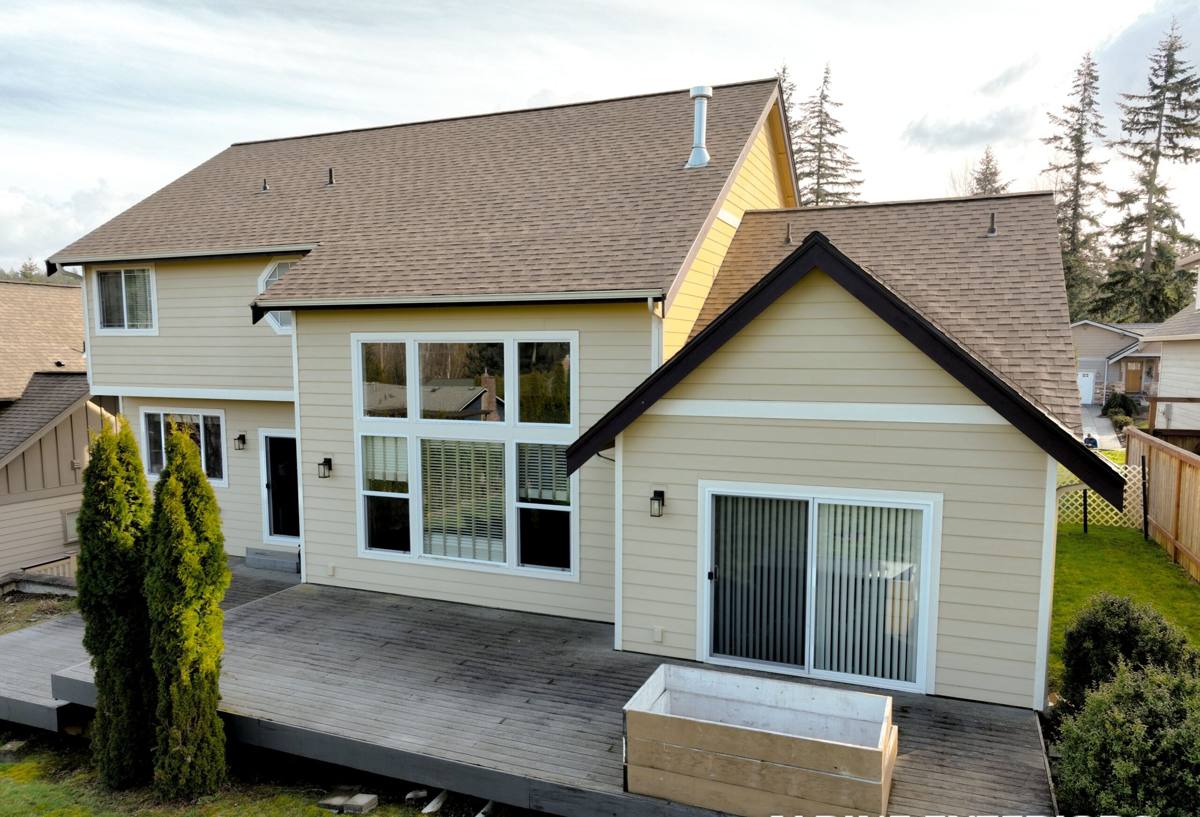
Whatcom County's wet season runs long, and Birch Bay's marine exposure keeps humidity and moisture in the air even on days it isn't actively raining. That combination is ideal for moss and algae growth on north-facing slopes and shaded sections of roof. Moss isn't just cosmetic — it holds moisture against the shingle surface, works its way under tabs as it grows, and can lift granules and shorten the life of an otherwise sound roof. A roof designed and maintained with this climate in mind slows that growth down significantly; one installed without it in mind can show heavy moss within just a few wet seasons.
What a Correctly Installed Shingle Roof Includes
An asphalt shingle roof is a system, not just a layer of shingles nailed to plywood. In a coastal, high-moisture area like Birch Bay, every layer underneath the shingles matters as much as the shingles themselves.
Underlayment
Synthetic underlayment (or a self-adhered membrane in vulnerable areas like valleys and eaves) is the backup waterproofing layer if wind ever drives rain up under a shingle edge. Given how often that happens on wind-exposed shoreline lots, this isn't a place to cut corners.
Flashing
Flashing around chimneys, skylights, sidewalls, and roof-to-wall transitions is where most leaks actually start on an aging roof — not in the open field of shingles. In a salt-air environment, the flashing material and fastener coating matter: corrosion-resistant metal and fasteners hold up far longer than standard-grade material.
Ventilation
Proper intake and exhaust ventilation keeps the attic dry and temperature-regulated, which does two things: it protects the underside of the roof deck from condensation damage, and it helps shingles last their full rated lifespan instead of cooking and curing prematurely from trapped heat.
Fastening
Shingles need to be nailed in the manufacturer's specified pattern, with the correct nail length for the deck thickness, placed in the nailing zone printed on the shingle — not just "close enough." Under-driven, over-driven, or misplaced nails are one of the most common causes of early wind damage, and it's a detail that's invisible once the roof is finished, which is exactly why it needs to be done right the first time.
Choosing a Shingle for a Water-Exposed Property
Not every asphalt shingle product is a good fit for a wind- and salt-exposed roof. The table below is a general guide to how common shingle classes compare for this kind of setting.
| Shingle Type | Wind Resistance | Algae/Moss Resistance | Typical Lifespan |
|---|---|---|---|
| Standard 3-tab | Lower — smaller nailing area, less wind rating | Only if algae-resistant granules specified | Shorter end of the range |
| Architectural / laminate | Higher — heavier, multi-layer construction | Widely available with algae-resistant granules | Mid-to-long range |
| Impact-resistant / high-wind rated | Highest — built for storm-exposed regions | Usually available with algae-resistant granules | Long range, with stronger warranty terms |
For most Birch Bay homes, an architectural shingle with a higher wind rating and algae-resistant granules is the practical middle ground — it costs more than 3-tab up front but holds up noticeably better against both wind and the moss/algae staining common to this climate. We'll walk through the specific product lines and their published wind and warranty ratings during your estimate rather than guessing at a one-size-fits-all recommendation.
Our Process for a Birch Bay Reroof
- Roof and attic inspection — checking deck condition, existing ventilation, flashing points, and any moisture or moss damage before quoting anything.
- Scope and material walkthrough — reviewing shingle options, underlayment upgrades, and flashing needs specific to your roof's exposure and slope orientation.
- Tear-off and deck check — removing old roofing down to the deck and repairing any soft or rotted sheathing before anything new goes down.
- Underlayment and flashing installation — including reinforced protection at valleys, eaves, and any wall or penetration flashing.
- Shingle installation — installed to manufacturer nailing and exposure specs, not shortcut patterns.
- Ventilation check — confirming intake and exhaust are balanced for the attic size.
- Final walkthrough and cleanup — magnetic sweep for stray fasteners and a full site cleanup before we consider the job done.
Signs a Birch Bay Roof Needs Attention
Because failures in this climate often start at flashing and edges rather than in the open shingle field, it's worth knowing what to watch for between inspections.
- Granules collecting in gutters or at downspout outlets
- Moss or dark streaking building up on north-facing or shaded slopes
- Curling, cupping, or cracked shingle edges, especially on wind-exposed slopes
- Rust staining or visible corrosion at flashing, vents, or exposed fasteners
- Daylight or staining visible in the attic around chimneys, vents, or skylights
- Shingles missing or lifted after a windstorm off the water
- Soft spots or sagging felt underfoot on the roof deck
Any one of these on its own may not be urgent, but catching them early is almost always cheaper than waiting for a leak to show up inside the house.
What Drives the Cost of a Reroof Here
| Factor | Why It Matters in Birch Bay |
|---|---|
| Roof size and pitch | More surface area and steeper pitches take more labor and material |
| Number of layers to remove | Tear-off of old roofing adds labor time before new material goes down |
| Deck condition | Rot from long-term moisture or moss exposure means sheathing repair before shingles go on |
| Flashing scope | More chimneys, skylights, valleys, and wall transitions mean more flashing detail work |
| Shingle class chosen | Higher wind-rated, algae-resistant products cost more per square than standard 3-tab |
| Access and site conditions | Steep terrain, tree cover, or tight lot access can add setup and safety time |
We'll give you real numbers based on your actual roof rather than a rough estimate off a phone call — every one of these factors changes the total, sometimes significantly.
Why Local Experience in This Area Matters
A crew that regularly works the water-exposed parts of Whatcom County knows to plan for wind uplift at ridges and rakes, to spec corrosion-resistant fasteners and flashing without being asked, and to recognize early moss and algae patterns specific to shaded, humid roof sections. That's different knowledge than a crew that mostly works dry, sheltered inland lots. It shows up in the small decisions made throughout the job — nail patterns, underlayment placement in valleys, flashing choices at wall transitions — the kind of details that don't show up on a spec sheet but decide how the roof performs during the next windstorm or wet winter.
Maintenance That Actually Extends the Life of the Roof
A well-installed asphalt shingle roof in this climate still benefits from basic upkeep. Keeping gutters and valleys clear of debris prevents standing water and ice damming in cold snaps. Periodic moss treatment or gentle removal on shaded slopes keeps growth from working under shingle tabs. And a visual check after any significant windstorm — looking for lifted or missing shingles — catches small problems before they become interior water damage. None of this requires a contractor visit every time, but a periodic professional inspection is worth it on a roof that takes the kind of weather Birch Bay sees.
If you're weighing a repair against a full reroof, or just want an honest read on how much life is left in your current roof, we're happy to take a look. The estimate is free, there's no pressure attached to it, and you can start with the form below.