 Lynden
 Decking Built for Birch Bay's Coastal Conditions
Birch Bay sits right up against the water, and that changes what a deck has to deal with compared to a yard a few miles inland in Lynden or Everson. Salt-laden air moves in off the bay and settles on every exterior surface, wind-driven rain finds its way into joints and fastener holes that would stay dry elsewhere in Whatcom County, and the long gray stretch of fall through spring gives moss and algae months to get established on anything that holds moisture. A deck built for a drier climate, or built without those specifics in mind, shows it within a few seasons — soft spots, discoloration, boards that cup or crown, and hardware that streaks rust down the face of the decking.
Composite decking is a good match for this environment when it's specified and installed correctly, but "composite" isn't one product. The board composition, the cap layer, the fastening system, and the substructure underneath all matter more here than they would in a climate that doesn't combine salt exposure with sustained wet weather. This page covers what we look at when we design and build a composite deck for a Birch Bay property.
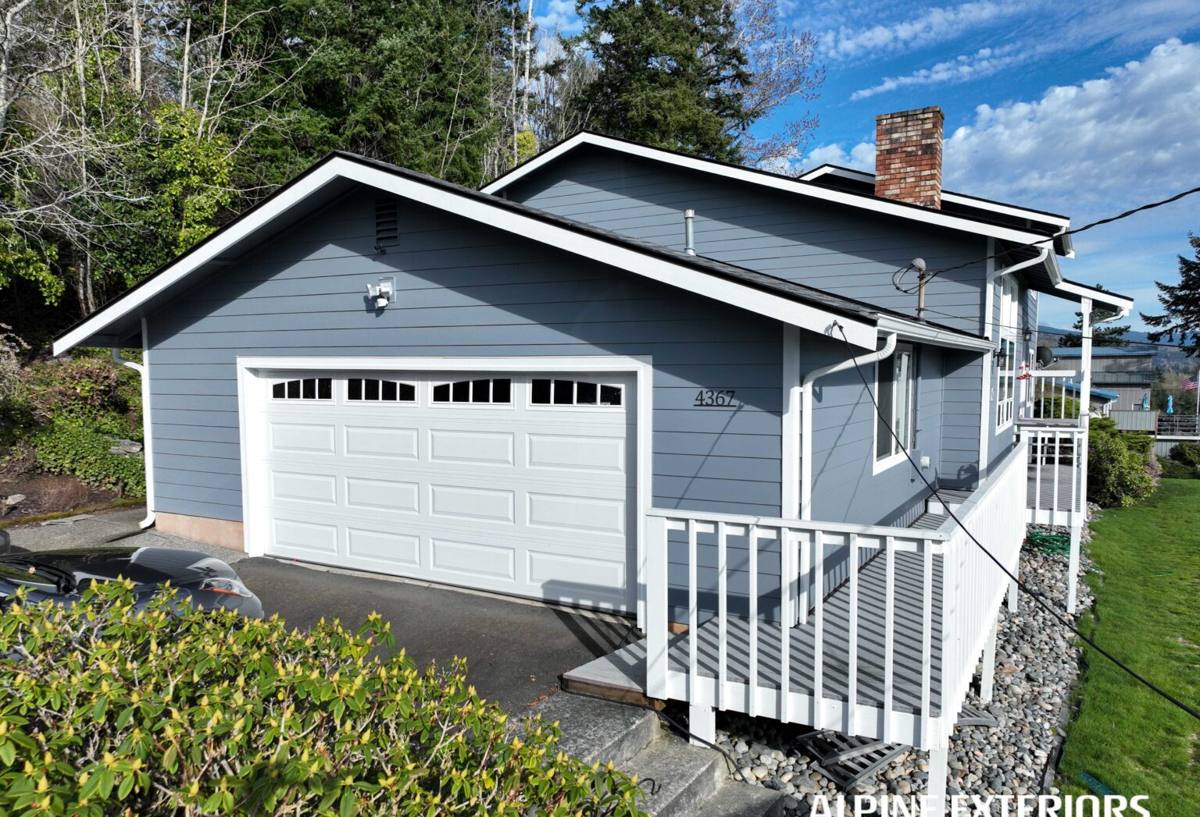
Why Salt Air Changes the Decking Conversation
Salt air isn't just a coastal talking point — it's a practical maintenance and materials issue. Airborne salt is corrosive to exposed metal, and it accelerates the breakdown of finishes and adhesives that aren't rated for it. On a deck near Birch Bay, that shows up in a few specific ways:
- Fasteners, brackets, and railing hardware corrode faster if they're not stainless steel or a coated fastener rated for coastal/marine exposure.
- Aluminum railing systems and post caps need a finish that actually holds up to salt, not just standard powder coat.
- Composite boards with a full-wrap capstock resist salt residue and staining far better than uncapped or partially-capped boards, which can absorb moisture and salt at the cut ends and fastener points.
- Any exposed wood framing underneath — ledger boards, joists, posts — needs corrosion-resistant connectors and flashing, since that's the part of the deck most owners never look at.
None of this means composite decking performs poorly near the water. It means the spec has to account for where the deck is, not just what the board looks like on a sample chip.
Driving Rain and What It Does to a Deck Over Time
Whatcom County gets its share of steady rain, but the wind that comes with storms off the bay pushes water sideways into places a calm rain never reaches — under rail post bases, into the gap between fascia board and frame, behind any trim that isn't properly flashed. On wood decks, that's a slow rot problem. On composite decking, the boards themselves generally don't rot, but a poorly built deck can still fail around them:
- Ledger board attachment to the house is the single most common failure point on any deck, coastal or not — if flashing and waterproofing aren't done right at that connection, water gets behind the siding and into the wall assembly, which is a much bigger and more expensive problem than the deck itself.
- Joist tops need protection (typically a joist tape or membrane) so that water shedding off composite boards doesn't sit on top of the framing and slowly degrade it, even with treated lumber.
- Proper board spacing and a slight slope away from the house keep water moving off the deck instead of pooling, which matters more in a climate that doesn't give standing water much chance to dry out between storms.
A composite deck surface can be nearly maintenance-free while the structure underneath it still needs to be built like it's going to see decades of driving rain — because in Birch Bay, it is.
Moss, Algae, and the Long Wet Season
Whatcom County's moss season isn't a minor cosmetic issue — it's most of the year. Shaded decks, decks under tree cover, and decks on the north or west side of a house stay damp long enough for moss and algae to take hold, and once established, it holds moisture against the board surface and gets slippery underfoot. A few things reduce this:
- Capped composite boards with a textured, non-porous surface resist algae growth better than uncapped composite or wood, since there's less for spores to grip and less moisture absorbed into the board itself.
- Gapping and airflow underneath the deck matter — a low deck with poor ventilation stays damp longer and gives moss more time to establish, regardless of what the surface material is.
- Regular rinsing (plain water, occasionally with a mild cleaner) keeps organic growth from ever getting a foothold, and composite surfaces make that easy since there's no wood grain for debris to lodge in.
We factor sun exposure, tree cover, and airflow into the deck design itself where we can — orientation and structure do a lot of the work before cleaning routine ever comes into play.
What a Correct Composite Deck Build Involves
A composite deck is only as good as what's underneath it. Here's what we treat as non-negotiable on a Birch Bay project:
Foundation and Framing
Footings sized and set to code for the soil conditions on site, posts and beams sized for the actual span and load, and joist spacing tightened up from standard wood-deck spacing where composite manufacturers call for it — composite boards generally need closer joist spacing than solid wood to avoid deflection over time.
Ledger Attachment and Flashing
Proper ledger flashing integrated with the house's existing water management, correct fastening into structural framing (not just sheathing), and a waterproof membrane at the ledger-to-wall connection. This is the connection point we're most careful about, since it's the one that can cause damage to the house itself if it's done wrong.
Fastening System
Hidden fastener clip systems where the product allows it, for a clean surface with no exposed screw heads to corrode or streak. Where face-screwing is required, stainless steel fasteners rated for the environment.
Railing and Hardware
Railing systems and post hardware matched to the same coastal-durability standard as the decking itself — aluminum or composite railing with corrosion-resistant fasteners, not a mismatched system that becomes the first thing to fail.
Edge Details
Picture-frame or fascia board details finished so cut ends of composite board (which are more absorbent than the capped face) aren't left exposed to weather.
Comparing Decking Approaches for a Bay-Facing Property
| Factor | Wood Decking | Uncapped/Basic Composite | Fully-Capped Composite |
|---|---|---|---|
| Salt air resistance | Moderate — needs regular sealing to hold up | Fair — can absorb moisture and salt at exposed areas | Strong — capstock resists staining and moisture uptake |
| Moss/algae resistance | Low — grain and texture give organic growth a place to establish | Moderate | Strong — smooth, non-porous cap sheds growth better |
| Maintenance in this climate | Annual cleaning, sealing, and inspection for rot | Periodic cleaning, watch for fading/staining | Occasional rinsing, minimal upkeep |
| Upfront cost | Lowest | Mid-range | Higher, but with a longer service life and less labor over time |
| Long-term cost near the water | Higher — sealing, repairs, possible board replacement | Moderate | Lowest over the deck's lifespan |
None of these are wrong choices in every situation — wood has its place, and a homeowner on a tighter budget may reasonably choose a lower-tier composite. What we won't do is install a product that isn't built for this environment and let a homeowner find out the hard way three winters in. We'll walk through the honest trade-offs for your specific site and budget.
Our Process for a Birch Bay Deck Project
- Site visit and assessment — we look at sun exposure, tree cover, existing drainage, soil, and how exposed the site is to wind and salt off the bay.
- Design and product selection — board profile, color, railing system, and fastening approach matched to the site conditions and your budget.
- Permitting — Whatcom County permit requirements handled as part of the project, not an afterthought.
- Structural build — footings, framing, and ledger attachment done to the standard that has to hold up to decades of coastal weather, not just pass inspection.
- Decking and railing installation — hidden fastening where possible, correct spacing, edge details finished.
- Walkthrough — we show you what maintenance (if any) the specific product you chose actually needs, so there are no surprises.
Why Local Coastal Experience Matters Here
A crew that mostly works inland projects can build a technically sound deck and still miss the details that matter specifically near the water — flashing choices that assume less wind-driven rain, hardware specs that assume less salt exposure, or a structure that doesn't account for how much longer things stay damp in a shaded, bay-adjacent yard. We work across Whatcom County, including the coastal conditions around Birch Bay, and we build to that standard whether the site is right on the water or a few miles back from it. That means we're not learning the coastal details on your project — we already know what fails first out here and design around it.
Maintenance Checklist for Composite Decks Near the Bay
- Rinse the deck surface periodically to clear salt residue and organic debris, especially after storms.
- Check railing posts and hardware annually for early signs of corrosion, particularly at connection points.
- Keep gutters and downspouts near the deck clear so runoff isn't dumping extra water onto or under the structure.
- Trim back vegetation that shades the deck and slows drying time, if moss becomes a recurring issue.
- Inspect the ledger board connection and any visible flashing once a year for signs of water intrusion.
- Clear leaves and debris from between boards so moisture doesn't sit trapped against the fastening system.
If you're planning a new deck or replacing one that hasn't held up to Birch Bay's weather, we're happy to take a look and give you a straightforward, no-pressure estimate — just fill out the form below and we'll go from there.