 Lynden
 Deck Replacement in Birch Bay
Birch Bay sits right on the water, and that changes what a deck has to survive. A deck built the same way you'd build one twenty miles inland won't hold up the same way here. Salt-laden air, wind-driven rain coming off the Salish Sea, and a moss season that can run eight months out of the year all work on wood, fasteners, and connections faster than most homeowners expect. If your deck is cupping, springy underfoot, or growing more green than gray, replacement — done correctly for this specific location — is usually the honest answer, not another round of patch repairs.
This page covers what a Birch Bay deck replacement actually involves: what the climate does to decks here, what correct construction looks like, how we run the job, and what to ask any contractor before you sign anything.
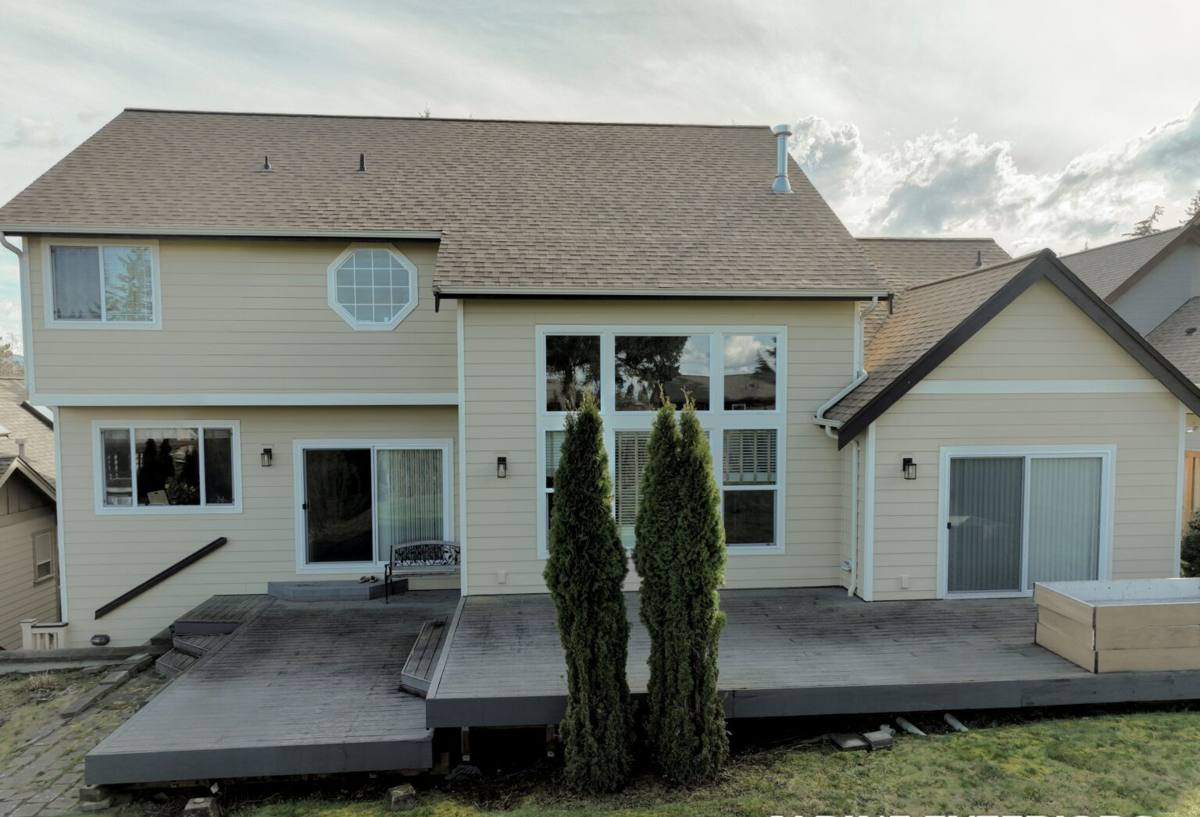
Why Birch Bay's Climate Wears Decks Out Faster
Three things are working against your deck at the same time, and they compound each other.
Salt Air
Airborne salt from the bay settles on every exposed surface — decking boards, railings, and especially metal fasteners and connectors. Standard fasteners corrode faster in this environment, and corroding hardware is one of the most common hidden causes of a deck that feels loose or unsafe well before the decking itself looks worn out.
Driving Rain
Wind off the water doesn't just drop rain straight down — it pushes it sideways, under railings, behind fascia boards, and into any gap where flashing or sealant has failed. That means water intrusion at the house connection (the ledger board) and at fastener penetrations is a bigger risk here than it would be on a sheltered inland lot.
Moss and Sustained Moisture
Whatcom County's long wet season keeps deck surfaces damp for extended stretches, and shaded or north-facing decks in Birch Bay often stay damp even longer because of the marine air. Moss and algae aren't just cosmetic — they hold moisture against the board surface, which accelerates rot in wood decking and can make composite surfaces slick and slow to dry.
Signs You Need Replacement, Not Just Repair
Repair makes sense when the problem is isolated — one bad board, one loose railing baluster. Replacement is the right call when the problems are structural or spread across the whole deck. Common signs we see on Birch Bay homes:
- Soft, spongy, or springy decking boards, especially near the house or in shaded areas
- Visible rust or corrosion streaking down from fasteners or metal connectors
- Gaps, soft wood, or staining at the ledger board where the deck meets the house
- Persistent moss or algae that returns within weeks of cleaning
- Railings or posts that flex or wiggle under normal pressure
- Cupping, splitting, or checking across most of the decking surface, not just a board or two
If you're only seeing one or two of these, a repair may buy you a few more years. If you're seeing several at once, the deck is telling you the whole system — framing, fasteners, and surface — is aging out together.
What a Correct Replacement Involves
A deck replacement that's actually built for this location goes beyond swapping old boards for new ones. The parts that don't show are the parts that determine how long it lasts.
Ledger and House Connection
This is the single most important connection on the deck and the most common point of hidden rot. It needs proper flashing that sheds water away from the house band board, not just caulk, which fails over time in a marine climate.
Framing and Fasteners
Given the salt air, we use fasteners and structural connectors rated for corrosion resistance rather than standard hardware. This costs a little more up front and saves you from hidden framing failures down the road.
Ventilation Under the Deck
Low-clearance or ground-level decks trap moisture underneath, which speeds up rot in framing that you can't see from the top. Correct spacing and grading beneath the deck lets air move and water drain instead of pooling.
Surface Material Selection
The decking surface itself needs to handle sustained dampness and salt exposure without becoming a moss trap or degrading early. We'll walk through the honest trade-offs of each option below.
Decking Material Comparison
| Material | Moisture & Salt Air Behavior | Maintenance | Typical Lifespan |
|---|---|---|---|
| Pressure-Treated Wood | Absorbs moisture readily; needs sealing to resist salt air and rain | Annual cleaning and re-sealing recommended | 10–15 years with upkeep |
| Cedar | Naturally rot-resistant but still needs sealing near the coast | Regular sealing; moss control in shaded areas | 15–20 years with upkeep |
| Composite Decking | Doesn't absorb water like wood; can be slick when damp or mossy without periodic cleaning | Low — periodic washing to prevent moss buildup | 25–30 years |
| PVC / Capped Polymer | Fully resists moisture absorption; best fit for sustained marine dampness | Lowest — occasional rinsing | 25–30+ years |
We don't push one product on every job. Wood costs less up front but demands real upkeep in this climate to hit its full lifespan — if that maintenance gets skipped, wood decking near the water can show serious wear in well under ten years. Composite and PVC cost more initially but are a better match for a low-maintenance homeowner who wants the deck to hold up through Whatcom County's wet season without annual sealing.
Our Process
- On-site assessment. We check the framing, ledger connection, and fastener condition, not just the surface boards, so you know what's actually driving the replacement.
- Honest scope and options. You get a clear explanation of what needs replacing structurally versus what's cosmetic, and a material recommendation based on how you use the deck and how much upkeep you want going forward.
- Proper tear-off. Removal of the old deck surface and, where needed, framing — done carefully to protect the house siding and surrounding landscaping.
- Structural correction first. Ledger flashing, corrosion-resistant fasteners, and framing repairs happen before a single new board goes down. This is the step that determines whether the new deck lasts.
- Decking installation. Installed to manufacturer spec for whichever material you choose, with attention to gapping and drainage that accounts for our rain load.
- Final walkthrough. We go over the finished deck with you, including basic maintenance guidance specific to a Birch Bay location.
Cost Factors
Every deck is different, so we won't quote a number without seeing the site — but these are the factors that move the price most:
| Factor | Why It Matters |
|---|---|
| Deck size and shape | More square footage and complex angles mean more material and labor |
| Decking material chosen | Wood costs less upfront; composite and PVC cost more but need less long-term maintenance |
| Framing condition | Rotted or corroded framing found during tear-off adds scope but shouldn't be skipped |
| Height and railing requirements | Elevated decks need code-compliant railings and stairs, which add cost |
| Site access | Waterfront and hillside lots common in Birch Bay can affect equipment access and labor time |
Why Hire a Crew That Already Works in Birch Bay
A contractor who mostly builds decks inland, away from the water, may not think twice about standard fasteners or a caulk-only ledger seal — and in a drier, more sheltered setting, that might hold up fine. Birch Bay doesn't give you that margin. A crew that regularly works this stretch of Whatcom County coastline already knows which hardware corrodes too fast here, which decking surfaces turn into moss traps in shaded coastal lots, and how to detail a ledger connection so wind-driven rain doesn't find its way in. That local pattern recognition is worth more than any brochure — it's the difference between a deck that needs major work again in eight years and one that goes twenty.
What to Ask Before Hiring
- Do you use corrosion-resistant fasteners and connectors, or standard hardware?
- How do you flash and seal the ledger board where the deck meets the house?
- Will you inspect and, if needed, replace framing — not just the surface decking?
- What clearance and drainage do you build in underneath the deck?
- Can you explain the maintenance trade-offs between the materials you're recommending, not just push one product?
- Do you carry proper licensing and insurance for work in Whatcom County?
A contractor who answers these clearly and specifically, without dodging into generic marketing language, is one who actually understands what this location demands.
If your deck is showing its age or you're just not sure whether it needs repair or full replacement, we're happy to take a look. Fill out the form below for a free, no-pressure estimate — we'll walk the deck with you, explain what we find, and give you honest options for your Birch Bay home.