 Lynden
 Building a Deck That Actually Holds Up in Blaine
Blaine sits close enough to the water that homes here deal with a different set of pressures than a deck built twenty miles inland. Salt-laden air off the Strait of Georgia and Semiahmoo Bay works on metal fasteners and hardware year-round. Driving rain off the water finds every gap in flashing and end-grain that isn't sealed properly. And the long, wet Pacific Northwest moss season — often eight or nine months out of the year in Whatcom County — turns any north-facing or shaded deck surface into a slip hazard if it isn't built and finished with that in mind. A deck that would be fine in a dry inland climate can start showing corrosion, soft spots, and slick moss growth within a couple of seasons out here if it's built to a generic spec instead of a coastal one.
We build and install custom decks for homeowners in Blaine and the surrounding Lynden area, and the approach we use reflects what actually happens to lumber, composite, fasteners, and finishes in this specific environment — not a one-size-fits-all deck package.
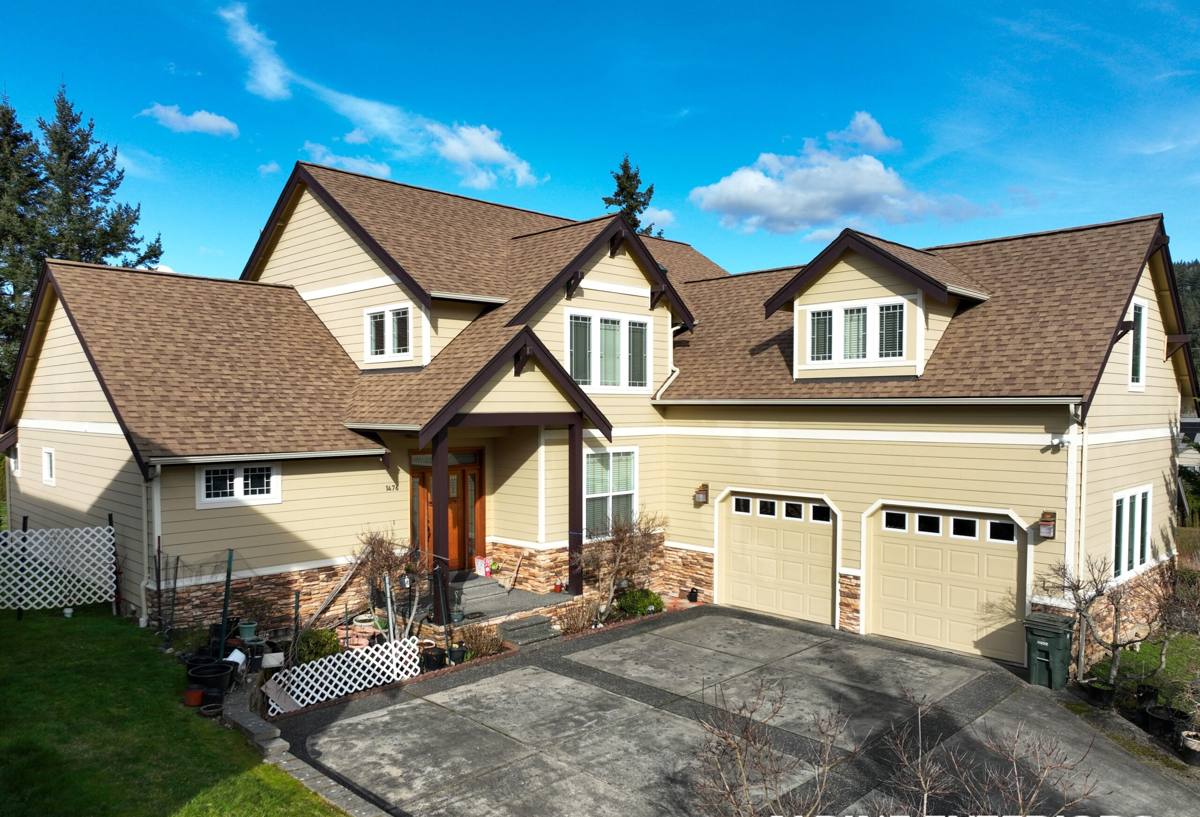
What Blaine's Climate Actually Does to a Deck
Before getting into materials and process, it's worth understanding the three things working against a deck here:
- Salt air and corrosion: Airborne salt accelerates rust on any fastener, bracket, or connector that isn't rated for coastal exposure. Standard electro-galvanized screws and joist hangers can start bleeding rust stains and losing holding strength well before their inland counterparts would.
- Driving rain and moisture intrusion: Wind-driven rain doesn't just fall straight down — it pushes into ledger connections, post bases, and any seam where the deck meets the house. Poor flashing at the ledger board is one of the most common causes of hidden rot we find on older decks in this area.
- Moss and algae growth: Shaded or north-facing deck boards stay damp for days at a time during fall, winter, and spring. Without the right board profile, spacing, and finish, moss and algae take hold fast and make the surface genuinely slippery — a real safety issue on stairs and landings.
None of these are exotic problems, but they're specific to marine and near-marine climates like Blaine's, and they change what "correct" deck construction looks like.
Getting the Structure Right: Framing and Foundation
The framing is where a deck's long-term durability is decided, and it's also the part homeowners see least once the project is finished. For decks in Blaine, we pay particular attention to:
Footings and Post Bases
Post bases need to sit above grade and be detailed so standing water doesn't pool against the post end grain. Whatcom County's frost depth requirements and soil drainage vary block to block near the water, so footing depth gets confirmed for the actual site rather than assumed from a standard plan.
Ledger Attachment
Where the deck attaches to the house is the single most common failure point we see on older coastal decks. Proper flashing — installed in the correct order behind the siding, not just caulked over the top — keeps driving rain from working its way into the rim joist and wall framing. This is not a place to cut corners, and it's also not visible once the deck is finished, which is exactly why it matters that whoever builds it does it right the first time.
Fasteners and Connectors
For coastal exposure we use fasteners and structural connectors rated for corrosive environments — stainless steel or coated hardware suited for marine-adjacent use, not standard interior-grade galvanized. It costs more up front and it's the difference between hardware that's still sound in fifteen years and hardware that's staining the deck and losing strength in five.
Decking Material Options for Blaine's Climate
There's no single "best" decking material — it depends on budget, maintenance appetite, and how exposed the deck is to sun, shade, and moisture. Here's how the common options actually perform in this climate:
| Material | Moisture/Rot Behavior | Moss & Algae Resistance | Maintenance |
|---|---|---|---|
| Pressure-treated wood | Good if properly sealed and re-sealed; end grain is a weak point | Needs regular cleaning in shaded areas | Annual inspection, periodic re-sealing/staining |
| Cedar | Naturally rot-resistant but still needs finish maintenance in wet climates | Better than untreated wood but not immune | Regular staining or oiling to hold up long-term |
| Capped composite | Excellent — doesn't absorb moisture like wood | Still needs occasional cleaning; texture affects grip | Low — periodic washing, no staining |
| Uncapped composite | Good but more prone to moisture absorption at cut edges over time | Moderate — can develop surface growth if shaded | Low to moderate |
In our experience, homeowners near the water in Blaine who want the lowest long-term maintenance tend to lean toward capped composite, especially for shaded or partially covered decks where moss is more of a concern. Homeowners who want a traditional wood look and are comfortable with periodic maintenance often go with cedar. Either can be the right call — the important part is matching the board profile and finish to how much sun and shade the specific deck actually gets.
Railings, Fasteners, and the Details That Determine Lifespan
A deck's structure and decking get most of the attention, but the hardware and details are what actually fail first in a marine climate:
- Railing posts and brackets: Corrosion-resistant hardware at every connection point, not just where it's visible.
- Fastener heads: Hidden fastener systems or corrosion-rated screws reduce the rust staining that shows up on lower-grade hardware within a season or two near salt air.
- Board spacing and drainage: Correct gapping between boards lets water shed instead of pooling, which slows both rot and moss buildup.
- Stair treads and landings: These get extra attention because they're the highest-risk spot for moss-related slips, especially on shaded north sides of a home.
Our Process From Design to Finished Deck
We keep the process straightforward and make sure you know what's happening at each stage:
- On-site assessment: We look at the actual site — sun exposure, drainage, existing structure if there's a deck to replace, and how the space will be used.
- Design and material selection: We walk through decking, railing, and finish options based on your budget and how much maintenance you want to take on, factoring in Blaine's climate specifically.
- Permitting: We handle the permit process with Whatcom County or the City of Blaine as required for the scope of the project.
- Construction: Framing, ledger flashing, footings, decking, and railings — built in that order with inspections at the structural stages.
- Final walkthrough: We go over the finished deck with you, including basic care specific to the materials chosen.
Maintenance in a Moss-Prone, Salt-Air Environment
Even the best-built deck needs some upkeep in this climate. What that looks like depends on the material, but the basics apply to nearly every deck in the Lynden and Blaine area:
- Sweep debris off the deck regularly, especially in fall when leaves and needles trap moisture against the boards
- Rinse or wash shaded areas periodically to slow moss and algae buildup before it takes hold
- Check fastener heads and hardware annually for early rust staining, which is easier to address early than after it spreads
- Re-seal or re-stain wood decking on the schedule appropriate to the product — don't wait until the finish has visibly failed
- Keep an eye on the ledger flashing area where the deck meets the house, since that's the most common spot for hidden moisture problems to start
Permits and Local Considerations
Deck projects in Blaine typically require a building permit, and depending on the property's location relative to shoreline or critical areas, there can be additional setback or environmental review requirements through Whatcom County. Requirements vary by parcel, so we confirm what applies to your specific property rather than assuming a standard set of rules. Handling this correctly up front avoids delays and rework later.
Why Hire a Crew That Already Works in Blaine
A deck built without accounting for salt air, driving rain, and a long moss season will look fine on day one — the problems show up two, five, or ten years down the road, usually as hidden rot at the ledger, corroding hardware, or a slick, moss-covered surface that's become a fall risk. We build decks throughout the Lynden area, including Blaine, and we spec framing, fasteners, and finishes for the climate this deck will actually sit in, not a generic inland standard. That's the difference between a deck that needs major repair in a handful of years and one that holds up for decades with normal upkeep.
If you're planning a new deck or replacing an aging one in Blaine, we're happy to take a look and put together a straightforward, no-pressure estimate. Use the form below to get started.