 Lynden
 Why Board & Batten Fits the Wiser Lake Setting
Board and batten has a long history on farm buildings and rural homes throughout Whatcom County, and it's easy to see why the look has held on around Wiser Lake. The vertical lines read as clean and unfussy against the trees and open water views common to the area, and the style pairs well with everything from a modest lake cabin turned year-round home to a larger property set back from the shoreline. It's a look that suits the setting without trying too hard.
But board and batten is also a functional choice, not just a visual one. The vertical panel-and-strip design was originally developed to shed water efficiently, which matters more here than in drier parts of the country. Done correctly, it's one of the more weather-capable siding profiles available. Done poorly — with the wrong material or sloppy detailing — it's also one of the profiles most likely to trap moisture where you can't see it, which is the real risk homeowners around Wiser Lake need to understand before signing off on a project.
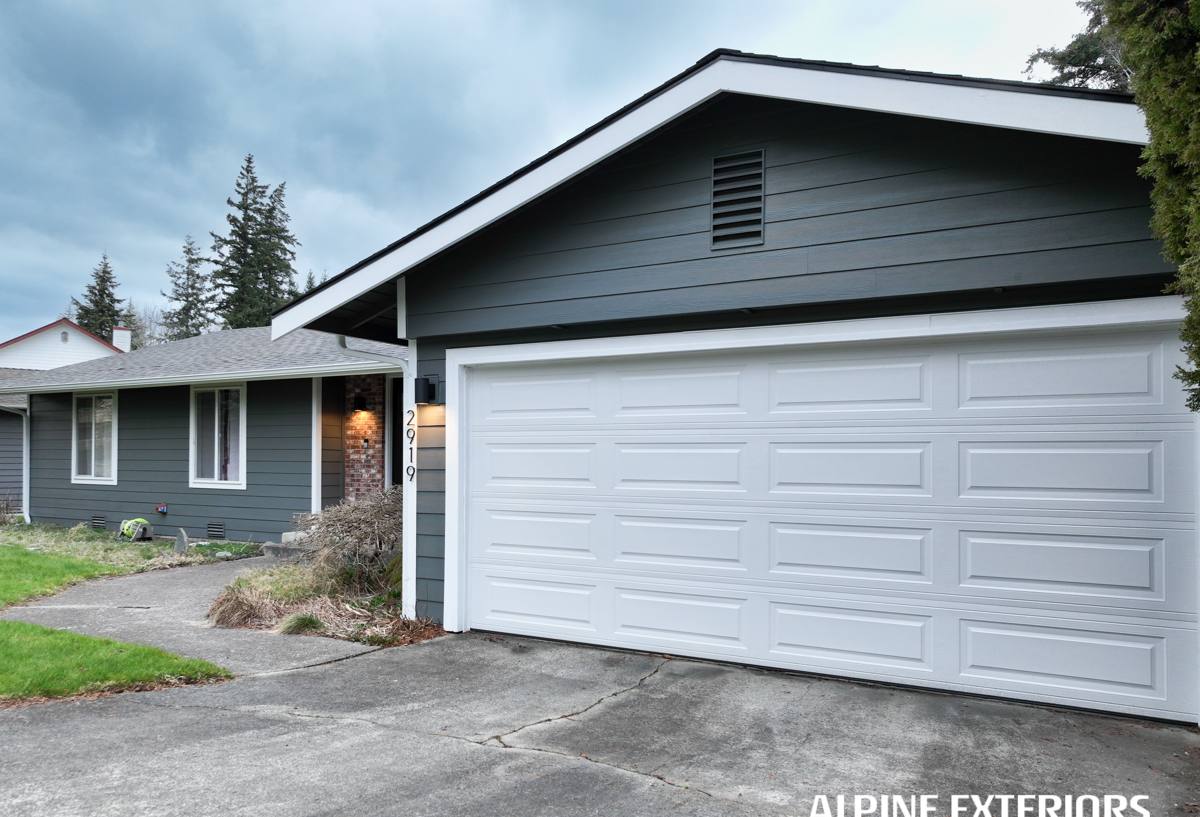
What Whatcom County's Climate Actually Does to Vertical Siding
Moss, Shade, and the Batten Line Problem
Wiser Lake's tree cover and the lake itself keep a lot of moisture in the air around the property, and shaded north- and west-facing walls stay damp longer after every rain. That's the recipe for a long moss season — moss doesn't just grow on roofs here, it takes hold in siding seams, batten joints, and anywhere water sits instead of running off. On board and batten specifically, the vertical battens create dozens of narrow joints per wall. Each one is a place where moss, algae, and trapped moisture can start working on the material underneath if the siding wasn't built to handle it.
Driving Rain and Marine Air Inland
Whatcom County sits close enough to the Salish Sea that marine air and wind-driven rain move inland regularly, and lake-adjacent properties like those around Wiser Lake tend to catch more of it than town lots that are more sheltered by other buildings. Driving rain doesn't just fall straight down — it gets pushed sideways into vertical seams and batten edges under wind pressure. A wall assembly that isn't detailed for that reality will eventually let water behind the cladding, even if the surface looks fine.
Freeze-Thaw Cycling
Whatcom County winters aren't brutal, but they're damp and they do dip below freezing often enough to matter. Any siding material that absorbs water and then freezes is at risk of cracking, swelling, or delaminating over a few winters. That risk compounds every year a lake-area home holds extra moisture in its siding from the surrounding humidity.
What a Correctly Installed Board & Batten Job Actually Involves
The Water-Resistive Barrier Comes First
Before a single panel goes up, the wall needs a continuous, correctly lapped water-resistive barrier. This is the layer that actually keeps a home dry — the siding is the first line of defense, not the only one. Around Wiser Lake, where humidity and driving rain are both working against the wall year-round, skipping or shortcutting this step is the single most common reason siding jobs fail early, regardless of what material sits on top.
Panel Layout and Batten Spacing
Board and batten can be built two ways: as individual boards with strips covering the seams, or as a large panel product with battens applied over it at regular intervals. The panel approach, done with the right engineered material, gives fewer total seams and less opportunity for water intrusion — a meaningful advantage on a site with this much ambient moisture. Batten spacing also needs to account for the specific panel width and manufacturer specs, not just what looks even from the street.
Fastening, Caulking, and Flashing
Every penetration — window and door trim, hose bibs, light fixtures, vents — needs proper flashing integrated with the water-resistive barrier before the siding closes around it. Fasteners need to hit framing at the correct depth and spacing called out by the manufacturer, not just "close enough." And any sealant used at joints needs to be a product rated for the exposure, applied at the right points — sealant is a backup detail, not a substitute for correct flashing and lap sequencing.
Why We Only Install Board & Batten in James Hardie Fiber Cement
Board and batten can be built in several materials, and each one behaves differently once it's living through a Whatcom County winter and a long, damp Wiser Lake moss season. We standardized on James Hardie fiber cement for every siding project we do, board and batten included, because of how it holds up specifically in this climate — not because it's the only option on the market.
| Material | Moisture Behavior | Moss/Algae Resistance | Long-Term Maintenance |
|---|---|---|---|
| James Hardie fiber cement | Doesn't absorb and swell like wood-based products; engineered for wet climates | Factory ColorPlus finish resists staining better than raw or primed wood surfaces | Periodic cleaning; no repainting cycle with ColorPlus finish |
| Engineered wood (LP-type) | Wood-strand core can swell and lose integrity if the finish is breached and moisture gets in | Porous surface can hold moisture longer, feeding moss and algae growth | Requires diligent caulk and finish maintenance to keep the core protected |
| Vinyl | Doesn't absorb water, but panels can warp or bow with temperature swings | Smooth but seams and channels still collect grime and moss buildup | Low maintenance but limited repair options; color isn't factory-baked in the same way |
| Primed spruce/cedar | Natural wood movement and moisture absorption at end grain and joints | Highest risk of moss and rot in shaded, damp conditions without regular upkeep | Needs ongoing painting, caulking, and inspection to last |
Every one of those alternatives has legitimate uses elsewhere. But for a wall assembly with this many vertical seams, sitting in a climate that stays damp for months at a stretch, we've found that fiber cement's dimensional stability and factory finish matter more here than anywhere else in the house. Hardie's HZ10 formulation is engineered specifically for wet, moderate climates like the Pacific Northwest, and the ColorPlus factory finish means the color is baked on rather than field-painted — one less maintenance cycle to manage on a lake property where upkeep visits aren't always convenient.
Our Process for a Wiser Lake Board & Batten Project
- Site walk and moisture assessment — we look at sun exposure, tree cover, drainage around the foundation, and any existing moss or staining patterns before recommending anything.
- Sheathing and substrate check — if we're removing existing siding, we inspect what's underneath for hidden water damage before closing the wall back up.
- Water-resistive barrier and flashing installation — done to manufacturer and code detail, not shortcuts, since this layer does the real work of keeping the home dry.
- Panel and batten installation — laid out and fastened to James Hardie specifications for our climate zone.
- Trim, caulking, and final inspection — every seam and penetration checked before we call the job done.
Signs Your Current Siding Needs Attention
- Dark streaking or green film along batten strips or panel seams, especially on shaded walls
- Soft or spongy spots when pressed near the base of the wall or around window trim
- Paint or finish that's peeling, chalking, or has faded unevenly between boards
- Visible gaps or warping at batten joints after a wet season
- Musty smell or interior staining near exterior walls, which can signal moisture behind the siding
If you're seeing more than one of these on a Wiser Lake property, it's worth having someone look at the wall assembly, not just the surface — especially before another wet season sets in.
Cost Factors Worth Understanding Before You Budget
Board and batten pricing varies more than lap siding because labor time depends heavily on the number of seams and battens involved, not just square footage. A few things that actually move the number:
- Wall complexity — corners, dormers, and multiple gables mean more cuts and more batten joints to detail correctly
- Substrate condition — hidden rot or water damage found during tear-off adds repair work before new siding can go up
- Trim and window detailing — board and batten around windows and doors takes more care than a flat lap surface
- Access — lake-adjacent lots with slopes, limited driveway access, or tree cover close to the house can add setup time
We'll always walk you through the specifics for your home rather than quoting off a generic per-square-foot number — a Wiser Lake property with a lot of shaded, moss-prone wall area is a different job than a similar-sized home on an open, sun-exposed lot.
Why Local Experience Around Wiser Lake Matters
A crew that's already worked lake-area properties in and around Lynden knows which walls take the worst of the driving rain, where moss tends to establish first, and how the humidity off the water changes the maintenance conversation compared to a drier inland lot. That's not something you can fully substitute with a generic install checklist — it comes from having actually built walls in this specific pocket of Whatcom County and having seen how they hold up a few winters later. When you're choosing a contractor for a lake-property investment like this, ask directly about their experience in your specific area and what they've seen go wrong on similar homes.
If you're weighing board and batten for a home near Wiser Lake, we're happy to walk the property, talk through what the specific exposure on your walls calls for, and give you a straightforward, no-pressure estimate using the form below.