 Lynden
 Roofing in Deming: A Different Set of Conditions
A roof in Deming does not fail the way a roof fails in a dry climate. It doesn't crack from UV alone or curl from baking heat. It fails from water that never really leaves — from moss that holds moisture against the shingle mat for months at a time, from driving rain that gets pushed sideways under poorly lapped courses, and from the salt-tinged, moisture-heavy air that moves through Whatcom County off Bellingham Bay and settles into low, tree-shaded valleys like the one Deming sits in. None of that is exotic. It's just relentless, and it's the reason a roof that would coast along fine somewhere drier can start showing real problems here in half the time.
We're a Lynden-based crew, and Deming is part of the territory we already work regularly. That matters more on a roof than it does on almost any other part of a house, because the right roofing decisions here — material choice, ventilation, flashing detail, timing of the work itself — are shaped directly by this climate, not by a generic install manual written for a different part of the country.
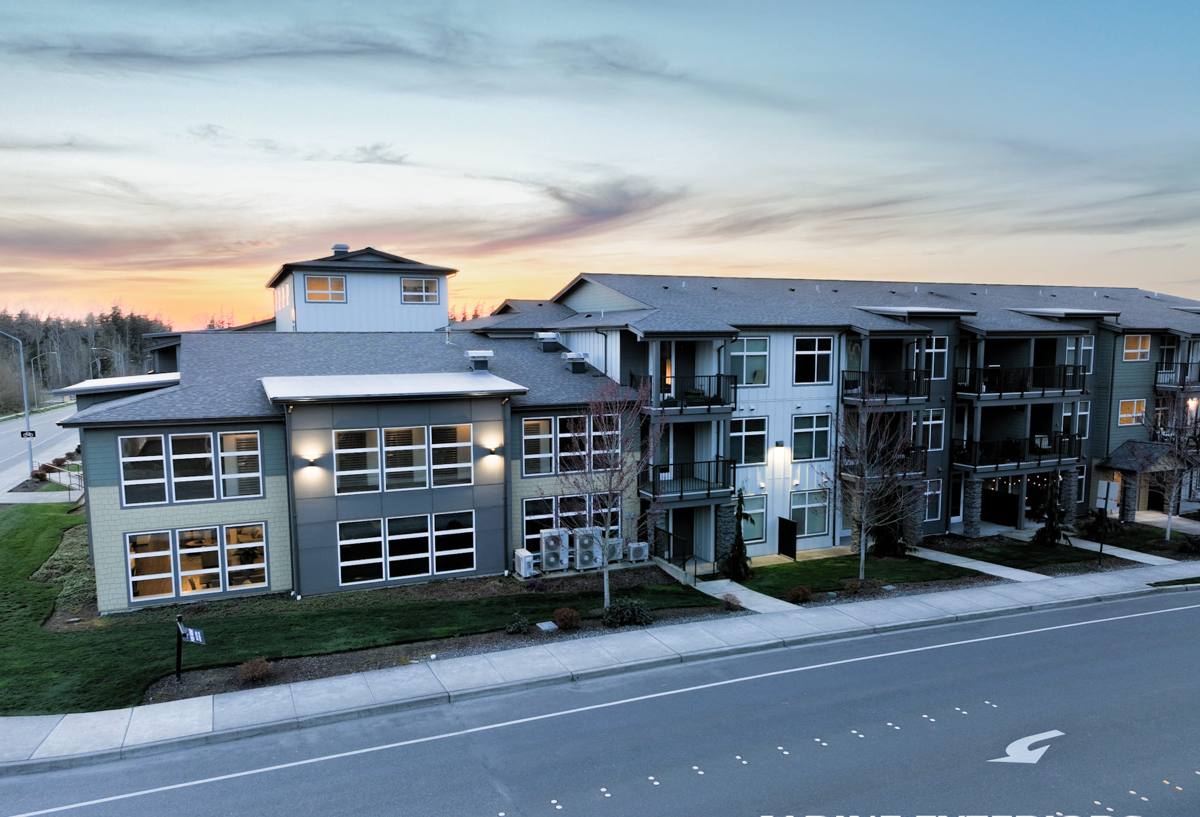
What a Correct Asphalt Shingle Roof Needs Here
"Correct" on a Deming roof isn't just nailing shingles in a straight line. It's a stack of decisions that, together, decide whether the roof sheds this region's weather or slowly loses the fight with it.
Underlayment and Ice-and-Water Shield
Even where hard freezes are infrequent, we still treat eaves, valleys, and any low-slope transition as vulnerable points and protect them with a self-adhering ice-and-water membrane underneath the shingles. In a marine climate, that membrane earns its keep less from ice damming and more from wind-driven rain that gets forced backward under the shingle tabs during a real Whatcom County storm. The rest of the deck gets a synthetic underlayment rated for the exposure the roof will actually see before the shingles go down over it.
Ventilation That Matches the Moisture Load
A shingle roof in a wet climate needs balanced intake and exhaust ventilation — soffit vents pulling air in, ridge venting letting it out — so the attic doesn't sit at a higher humidity than the air outside. Get that wrong and moisture condenses on the underside of the deck itself, which shortens shingle life from below at the same time moss and algae are working on it from above.
Flashing at Valleys and Penetrations
Most of the leaks we get called out for on older roofs aren't a shingle problem at all — they're a flashing problem. Valleys, chimneys, plumbing stacks, and skylight curbs are where water concentrates, and they're the first place a corner-cutting install shows up as a stain on a ceiling two winters later.
Common Problems We Find on Deming Roofs
A few patterns show up over and over on the roofs we're asked to look at in this area:
- Moss colonizing shaded, north-facing slopes — especially under tree cover, where the roof never fully dries between rain events.
- Granule loss and algae streaking from years of standing moisture, which leaves shingles thinner and less protected than they look from the ground.
- Nail pops and lifted tabs from repeated wet-dry cycling of the deck underneath, which loosens fasteners over time.
- Valley wear concentrated exactly where water volume is highest during a heavy rain event.
- Clogged gutters and debris buildup from surrounding tree cover, which backs water up under the lowest courses of shingle.
Most of these are gradual. Caught early, they're a repair. Ignored, they turn into deck rot, interior water damage, and a full tear-off years before it should have been necessary.
Our Process, Start to Finish
- Inspection. We get on the roof, not just in the yard with binoculars, and check the deck, flashing, ventilation, and shingle condition slope by slope.
- Tear-off. Old material comes off down to the deck. We don't install new shingles over old — layering traps moisture and hides deck problems instead of fixing them.
- Deck inspection and repair. Any soft, delaminated, or water-damaged sheathing gets replaced before anything new goes down.
- Underlayment and ice-and-water shield. Applied per the manufacturer's spec, with extra protection at eaves, valleys, and low-slope areas.
- Drip edge and flashing. New metal at eaves, rakes, valleys, and penetrations — reused old flashing is a common source of future leaks.
- Shingle installation. Correct exposure, nailing pattern, and starter course — the details that determine whether the roof holds up to wind and driving rain.
- Ridge ventilation. Installed to work with the soffit intake already in place, or corrected if the existing setup is unbalanced.
- Cleanup and magnetic nail sweep. The property gets walked and swept before we call the job finished.
- Final walk-through. We go over the finished roof with you before we leave.
Choosing the Right Shingle for This Climate
Not every asphalt shingle is built the same way, and in a climate that hands a roof this much sustained moisture, the differences matter more than they would somewhere drier.
| Shingle Type | Typical Lifespan Here | Moss/Algae Resistance | Best For |
|---|---|---|---|
| 3-Tab | Shorter end of the range | Standard, no built-in resistance | Budget-driven projects, simple rooflines |
| Architectural / Dimensional | Longer, thicker mat | Better shed of standing moisture due to profile | Most Deming homes — the balance point of cost and durability |
| Algae-Resistant (AR-rated) | Comparable to architectural | Copper/zinc granules resist algae staining specifically | Shaded lots, north-facing slopes, homes with heavy tree cover |
We'll walk you through which tier makes sense for your specific roof — its pitch, its shade exposure, and how much tree cover it sits under — rather than defaulting to whatever's easiest to sell.
What It Costs — and What Actually Moves the Number
We don't quote a roof over the phone, and we're honest with anyone who asks that a real number only comes from a site visit. But these are the factors that consistently move a Deming-area roofing estimate up or down:
| Factor | Why It Matters |
|---|---|
| Roof pitch and complexity | Steep or cut-up rooflines with multiple valleys take longer and use more flashing and underlayment. |
| Number of existing layers | Tear-off of two or three old layers costs more in labor and disposal than a single-layer tear-off. |
| Deck condition | Rotted or delaminated sheathing found during tear-off adds material and labor to replace it correctly. |
| Shingle tier | 3-tab, architectural, and algae-resistant shingles sit at different price points per square. |
| Access and site conditions | Tree cover, steep lots, and limited equipment access all affect labor time. |
Keeping Moss From Taking Over Again
A well-installed roof still needs some ongoing attention in a climate like this one. A few habits go a long way toward protecting the investment:
- Trim back overhanging branches so shaded slopes get more light and air movement to dry out between storms.
- Consider zinc or copper strips near the ridge, which release trace metal ions that discourage moss regrowth as rain washes over them.
- Clean moss gently — by hand or with a soft approach — rather than pressure washing, which strips granules and shortens shingle life.
- Keep gutters clear so water isn't backing up under the lowest shingle courses.
- Have the roof looked at every couple of years, not just after a leak shows up inside the house.
Why a Crew That Already Works Deming Matters
Roofing work in Whatcom County has a real weather window, and knowing how to read it comes from doing the work here repeatedly, not from a manual. Tear-off timing, drying windows between rain systems, and how aggressively to plan around the wetter months are things a crew learns by actually working this ground — including in Deming and the surrounding areas we already serve out of Lynden. We're not learning this climate on your roof. We already know what driving rain off a fall storm system does to an open deck, and we plan the job around it instead of around it going wrong.
Being local also means we're not disappearing after the invoice is paid. If a question comes up two years later about a valley, a vent, or a spot of moss creeping back, we're the same crew that installed it, still working in the same area.
Ready for a Straight Answer on Your Roof?
If you're dealing with moss, a leak, granule loss, or you just want an honest read on how much roof life you have left, we're glad to take a look. Fill out the form below for a free, no-pressure estimate — we'll tell you what we actually see, not just what's easiest to sell.