 Lynden
 Composite Decking in Deming: Built for the Site You Actually Have
Deming sits in the wooded, river-shaded stretch of Whatcom County east of Lynden, and that setting shapes what a deck needs to survive here. Homes tucked under fir and cedar canopy get less direct sun to dry a deck surface between rains, more standing needles and organic debris collecting in board gaps, and a longer stretch of the year where wood stays damp to the touch. Add in the driving rain that comes through this part of Western Washington most of the fall and winter, and the moss season that can stretch from October well into spring, and you've got conditions that punish the wrong decking choice fast.
Composite decking exists specifically to handle this kind of environment better than wood does. But "composite" isn't one product — board quality, cap-stock type, and installation details vary a lot, and on a shaded Deming lot those differences show up within a year or two, not a decade. This page covers what we actually look at when we build or replace a deck out here.
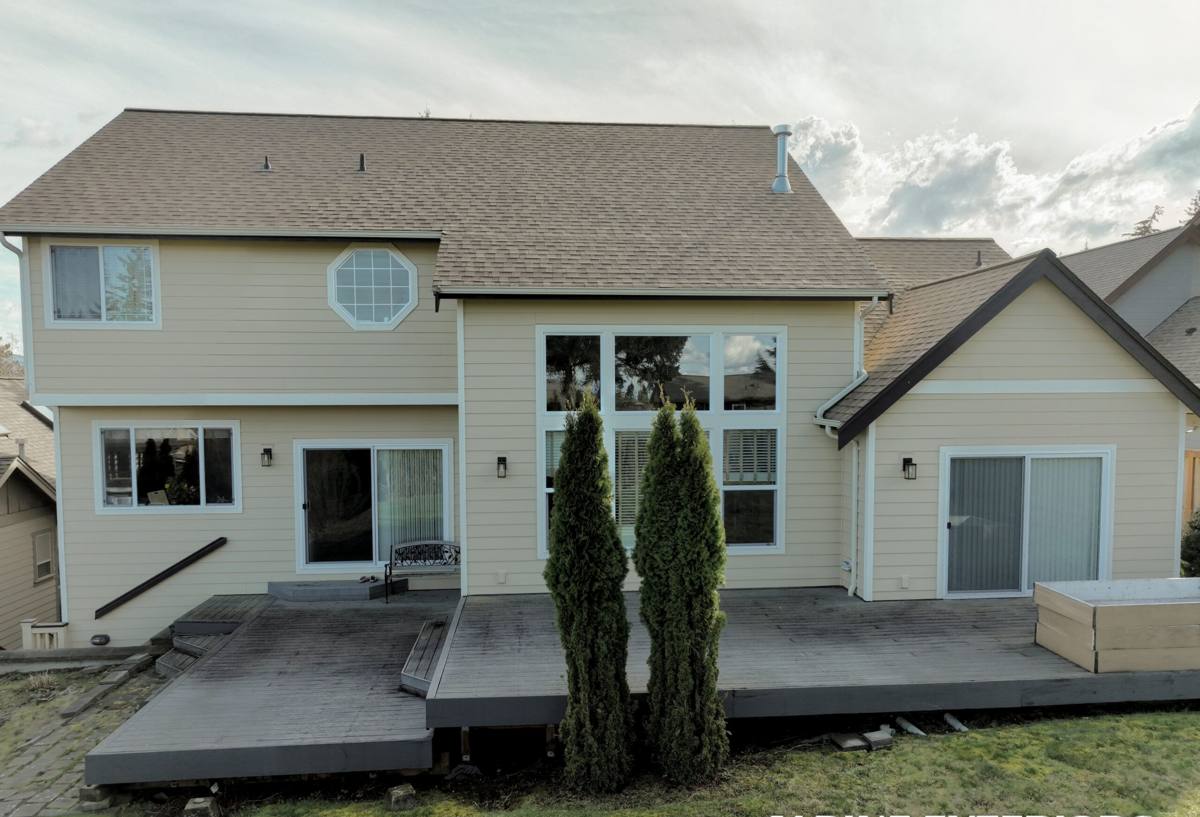
What Deming's Climate Does to a Deck
Shade and Moisture Retention
A deck in full sun in open country dries out within a few hours of a rain stopping. A deck under tree cover in Deming can stay damp for days, especially on the north or east side of a house. That extended moisture window is what feeds moss, mildew, and the slow rot that eats at wood decking from underneath the board, where you don't see it until it's structural.
Moss and Organic Buildup
Needles, leaf litter, and airborne spores settle into any surface with texture or gaps and, given enough sitting moisture, take root. Composite doesn't stop organic debris from landing on it, but a quality cap-stock board sheds moisture fast enough that moss struggles to establish compared to bare or lightly-sealed wood — and what does grow wipes off instead of staining into the fiber.
Driving Rain and Water Management
Wind-driven rain doesn't just fall on a deck surface — it gets pushed under rail posts, into fastener holes, and along any seam that isn't detailed correctly. This is as much about how a deck is built as what it's built from. Flashing at the ledger board, proper gap spacing, and hidden fastener systems that don't puncture the board face all matter more in this kind of weather than they would in a drier climate.
Why We Recommend Composite for Most Deming Homes
We still install wood decking when a homeowner wants that look and understands the upkeep it demands. But for a shaded, damp Deming lot, wood decking means annual cleaning, periodic re-staining or sealing, and realistic odds of soft or splitting boards within 8-12 years if maintenance ever lapses — which it usually does, because life gets in the way. Composite trades a higher upfront material cost for dramatically lower maintenance and a much longer realistic service life in exactly the conditions this area produces.
That said, composite is not maintenance-free, and we don't sell it that way. It still needs periodic washing to keep pollen film and organic buildup from dulling the surface, and the substructure underneath — the framing, ledger, and fasteners — still needs to be built and flashed correctly or moisture problems show up there instead.
Composite vs. Wood: The Honest Trade-offs
| Factor | Composite Decking | Wood Decking |
|---|---|---|
| Upfront material cost | Higher | Lower |
| Annual maintenance | Occasional wash-down | Cleaning, sealing/staining every 1-2 years |
| Moss resistance (shaded lots) | Better — sheds moisture faster | Prone to moss without regular treatment |
| Splintering / splitting risk | Very low | Increases with age and sun/moisture cycling |
| Realistic service life here | 25-30+ years with normal care | 10-15 years without diligent maintenance |
| Repair approach | Board replacement, color-matched | Sanding, staining, board replacement |
What a Correct Composite Deck Build Involves
Framing and Substructure
The composite board is only as good as what's underneath it. We build to current code for joist spacing, which is often tighter for composite than for wood because composite boards flex differently under load and temperature swings. On a shaded, damp site we also pay close attention to ventilation under the deck — trapped moisture at ground level accelerates rot in the framing even when the surface boards above are doing their job fine.
Ledger Attachment and Flashing
Where a deck attaches to the house is the single most common point of water intrusion on any deck, composite or wood. Proper flashing here isn't optional detail work — it's the difference between a deck that lasts and one that causes hidden water damage to the house framing behind it. This is worth confirming with any contractor before work starts, not asking about after.
Fastening and Board Gaps
We use hidden fastener systems on composite boards rather than face-screwing, both for appearance and because face fasteners create a puncture point where water can work into the board core over time. Gap spacing between boards is set to allow drainage and airflow without becoming a debris trap — too tight and moisture sits, too wide and needles and grit pack in.
Railing and Post Details
Rail posts are a common weak point for water intrusion under driving rain, since they penetrate the deck surface and framing below. We flash and seal these connections rather than relying on caulk alone, which fails faster than people expect under this area's rain volume.
Choosing the Right Composite Board for a Shaded Lot
Not all composite decking performs the same way in low-light, high-moisture settings. We look at a few things when helping a homeowner choose:
- Full cap-stock coverage on all four sides of the board, not just the top surface, for consistent moisture resistance
- Manufacturer warranty terms that specifically address staining, mold, and moisture — read the actual exclusions, not just the headline years
- Color choice: darker boards show less pollen and organic film between cleanings, but run hotter in direct sun where a lot does get some exposure
- Board profile (grooved for hidden fasteners vs. solid) and how that affects drainage in gap spacing
- Manufacturer track record in the Pacific Northwest specifically, since not every product is engineered with a wet climate as the baseline case
We don't push one brand as the only answer. We'll walk through the realistic options for your budget and site conditions and explain the trade-offs plainly, including where a mid-tier board is genuinely the smarter choice over a premium one for a particular project.
Our Process for a Deming Composite Deck Project
- On-site assessment: we look at sun exposure, tree cover, existing structure condition (if replacing a deck), drainage, and how the deck ties into the house
- Design and material selection: board brand and color, railing style, framing plan, and any code requirements for height, guardrails, or stairs
- Written estimate: clear scope and pricing before anything starts — no surprise change orders for work that should have been scoped up front
- Demo and framing (if applicable): removal of old decking, inspection and repair of any hidden rot in the substructure before it gets covered up again
- Installation: framing, flashing, decking, railing, and finish trim, built to the spacing and fastening standards the manufacturer and code require
- Final walkthrough: we go over care instructions and answer questions before we consider the job done
What to Check Before Hiring Anyone for This
- Washington contractor license and current bond/insurance — ask to see it, don't just take a verbal answer
- Familiarity with local permit requirements for deck height, guardrails, and stair geometry
- A written scope that specifies flashing method at the ledger, not just "we'll flash it"
- Willingness to talk through board brand trade-offs instead of pushing one product
- References or completed work you can actually see, not just photos
- A clear position on what happens if hidden rot is found once old decking comes off
Why a Crew That Already Works This Area Matters
A deck built the same way in a dry, sunny part of the state and a shaded Deming lot won't age the same way, even with identical materials. Framing ventilation, gap spacing, and where moss actually takes hold are things you learn from building in this specific climate repeatedly, not from a manufacturer's general install guide. We work throughout Whatcom County, including the wetter, shadier lots east of Lynden, and we build with this area's rain and moss season as the baseline assumption, not an afterthought.
If you're planning a new deck or replacing one that's showing rot, moss staining, or soft spots, we're glad to take a look and give you a straightforward, no-pressure estimate — just fill out the form below.