 Lynden
 Deck Repair for Deming Homes
Deming sits back from the open flats around Lynden, closer to the foothills and the Nooksack River valley, with a lot more tree cover overhead. That shade is part of what makes the area beautiful, but it's also exactly what ages a deck faster than almost anything else. Less direct sun, more standing moisture, and a longer window each year where wood and composite decking just don't fully dry out between rains. We've repaired enough decks out this way to know the failure patterns are a little different than what we see on a deck sitting in the open in town, and the repair has to account for that, not just patch what's visible.
This page is specifically about deck repair — fixing an existing deck that's showing damage, movement, or wear — not new deck construction. If your deck is fundamentally sound but has problem areas, repair is almost always the smarter first move, both on cost and on how much of the structure you keep.
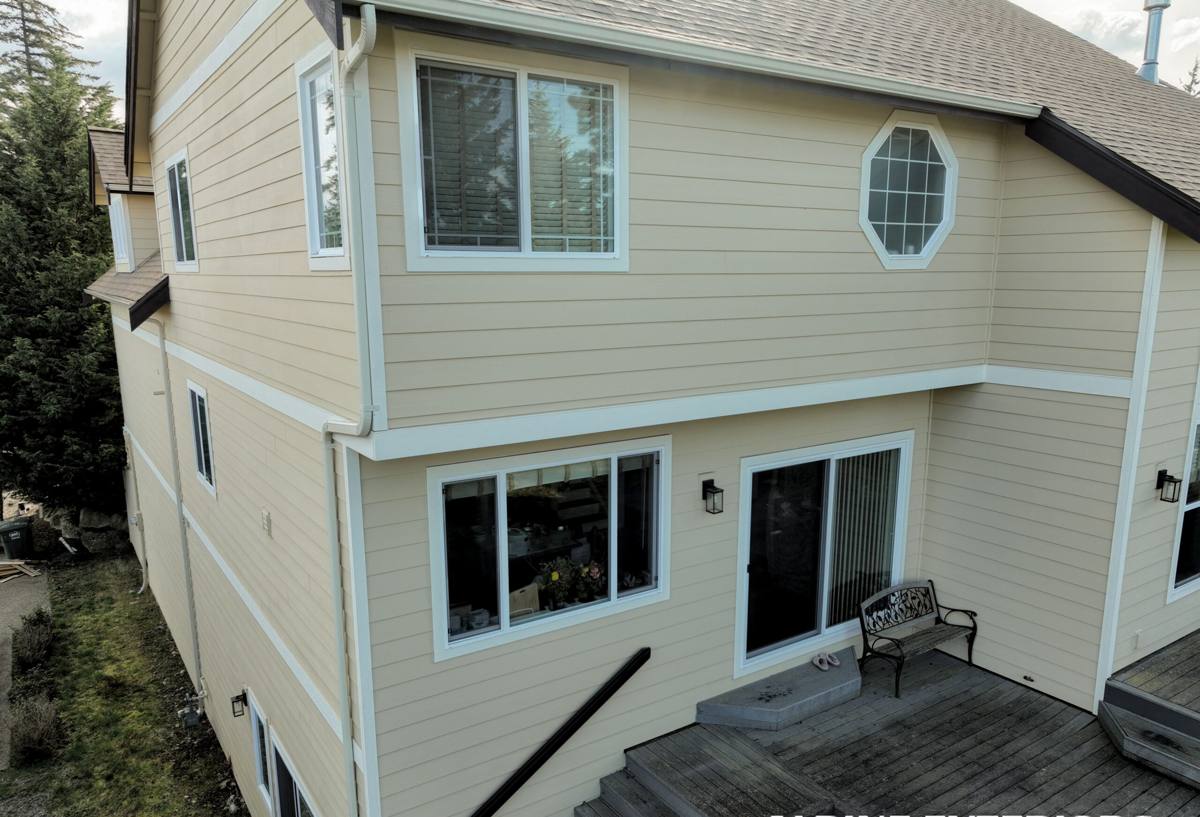
What Deming's Climate Does to a Deck
Shade and slow drying
A deck under or near tree canopy gets less UV exposure, which sounds like a good thing for the finish, but UV is actually what helps kill mold and mildew spores and speeds up drying after rain. Without much direct sun hitting the boards, moisture sits longer in the wood grain, in fastener holes, and in the gaps between boards. That's the setup for rot, not from one bad storm, but from months of the deck never quite drying out.
Moss, algae, and the long wet season
Whatcom County's driving rain and a moss season that can stretch a good chunk of the year both show up on deck surfaces the same way they show up on roofs — a slick green or black film that holds even more moisture against the boards and stair treads. On a deck, that's not just a maintenance nuisance, it's a slip hazard and an accelerant for surface decay. We see it worst on the north side of a house or wherever a deck sits under overhanging branches, which describes a lot of properties around Deming.
Ground contact and river valley humidity
Decks built low to the ground or over unimproved dirt trap humidity underneath, and in a river valley setting that ambient moisture is already higher than it is on higher, more open ground closer to Lynden proper. That affects ledger boards, posts, and joists from below even when the top surface looks fine.
Signs Your Deck Needs Repair
Most deck problems don't announce themselves with a collapse — they show up as small, specific symptoms first. Worth checking for:
- Soft or spongy spots when you walk the deck, especially near the house or at board ends
- Boards that have visibly cupped, split, or pulled away from fasteners
- Rust streaking or fasteners backing out of the surface
- A railing or stair stringer that flexes or feels loose when you lean on it
- Gaps opening up where the deck meets the house, or daylight visible at the ledger connection
- Persistent moss or algae that comes back within weeks of cleaning
- Discoloration or staining on siding or fascia directly below the deck
- Posts that look fine at eye level but are soft or crumbly at the base near grade
Any one of these on its own is usually a straightforward repair. Several at once, especially around the ledger or main support posts, is when we start talking about whether repair still makes sense structurally — more on that below.
Common Deck Repairs We Handle
Repair work on Deming-area decks tends to fall into a few recurring categories:
- Board replacement — swapping out individual rotted, cupped, or split deck boards without disturbing the rest of the surface
- Ledger board repair — the connection where the deck attaches to the house is the single most important structural point on most decks, and it's also the one most exposed to trapped moisture
- Joist and beam sistering — reinforcing a weakened structural member rather than tearing out the whole frame
- Railing and baluster repair — tightening, replacing, or rebuilding railings that have loosened or rotted, which matters for both safety and code compliance
- Stair stringer repair — stairs take more direct wear and moisture exposure than the deck surface itself and often fail first
- Post base and footing repair — addressing rot or movement where posts meet the ground or a concrete pier
- Fastener and flashing correction — replacing corroded hardware and adding or repairing flashing at the ledger, which is frequently the actual root cause of an otherwise mysterious moisture problem
Repair or Replace? How We Decide
Not every deck with problems needs to come down. The honest answer depends on where the damage is and how much of it there is.
| Factor | Usually Repairable | Usually Warrants Replacement |
|---|---|---|
| Location of damage | Isolated boards, one section of railing, a single post | Widespread rot across the frame or multiple structural members |
| Ledger board condition | Localized soft spot, correctable flashing issue | Extensive rot or separation from the house rim joist |
| Frame condition | Joists sound, surface or railing issues only | Joists and beams soft or failing in multiple spots |
| Age of structure | Under 15–20 years, built to a reasonable standard | Older deck near or past its practical service life |
| Cost pattern | Repair cost is a fraction of full rebuild cost | Repairs would need to be repeated across most of the deck within a year or two |
We'll tell you plainly which category your deck falls into. If a repair genuinely won't hold up, we'd rather say that upfront than sell you a patch job that fails again next winter.
How We Approach a Deck Repair
1. On-site inspection
We walk the whole deck, probe suspect boards and posts, and check the ledger connection and any spots under tree cover or shaded siding where moisture tends to linger longer around Deming. We're looking below the surface, not just at what's visibly damaged.
2. Scope and honest estimate
You get a clear breakdown of what needs replacing, what needs reinforcing, and what's still sound. No inflated scope, no vague allowances.
3. Matching materials correctly
Replacement boards, fasteners, and flashing are matched to what's already there — or upgraded where the original installation was part of the problem, such as undersized flashing at the ledger.
4. Structural repairs first
Framing, ledger, and post issues get addressed before any cosmetic surface work, since a solid frame is what makes the rest of the repair actually last.
5. Surface and safety items
Board replacement, railing tightening, and stair repair round out the job, along with correcting any fastener corrosion we found along the way.
6. Walkthrough
We go over what was repaired, what to keep an eye on, and simple upkeep that fits the site — for a shaded Deming lot, that usually includes a recommendation on keeping overhanging branches trimmed back.
Materials and Repair Standards
For wood deck repairs, we use pressure-treated lumber rated for ground contact where the original construction calls for it, and we're careful about fastener selection — mismatched or non-coated hardware in a damp, shaded environment corrodes faster and is a common source of repeat problems. For composite decking, repair means matching board profile and color as closely as possible, since exact discontinued colors aren't always available; we'll tell you honestly if a perfect match isn't realistic so you can decide whether to replace a wider section instead.
We don't cut corners on flashing at ledger connections, even when it's not the part of the job that's visible when we're done. It's consistently the detail that determines whether a repair lasts five years or fifteen.
Why Hire a Crew That Already Works Deming
A deck repair on a shaded, forested lot near Deming isn't quite the same job as one on an open, sunny property closer to town. We already know to check ledger flashing more carefully on north-facing and tree-covered decks, to expect moss regrowth to be faster here than in more open parts of Whatcom County, and to look harder at ground-level post rot on lots with less airflow. That's not guesswork — it's pattern recognition from doing this work across the area, including the Lynden siding jobs where a deck and the adjoining wall damage often get diagnosed together.
We're also close enough to Deming that a warranty callback or a follow-up look isn't a logistics problem. That matters more with deck repair than most exterior work, since moisture issues sometimes don't fully show themselves until the following wet season.
Keeping a Repaired Deck in Good Shape
A few habits go a long way toward not repeating this repair in a few years, especially on a shaded lot:
- Sweep leaves and debris off the surface regularly through fall — trapped organic matter holds moisture and feeds moss
- Clean moss and algae off boards and stairs at least once a year, before it gets slick
- Keep overhanging branches trimmed back to let more light and air reach the deck
- Check and re-seal or re-stain wood decking on the schedule the product calls for — shaded decks often need it more often than the label assumes
- Look underneath the deck occasionally for standing water or vegetation growing against posts
- Address a soft board or loose railing as soon as you notice it — small repairs stay small if caught early
If you've got a deck near Deming showing any of these signs, we're glad to take a look and give you a straightforward, no-pressure estimate — just fill out the form below.