 Lynden
 Fiber Cement Siding, Installed for What Ferndale Actually Deals With
Ferndale homes sit in a spot where marine air, open lowland wind, and a lot of shade from mature trees all overlap. That combination means salt-tinged moisture moving through siding hardware, wind-driven rain finding its way sideways into joints and trim, and a moss season that can stay active on north-facing walls for most of the year. This page is specifically about fiber cement siding services in Ferndale: what the material needs to do here, what a correct installation actually involves, and how our process works from first walkthrough to final inspection.
We install James Hardie fiber cement exclusively. We don't offer LP SmartSide, vinyl, Cemplank, Allura, primed spruce, or cedar as alternatives, and we're upfront about why: this climate rewards a siding system with an inorganic core and a factory-cured finish, and it tends to expose the weak points in wood-based or vinyl alternatives faster than a drier region would.
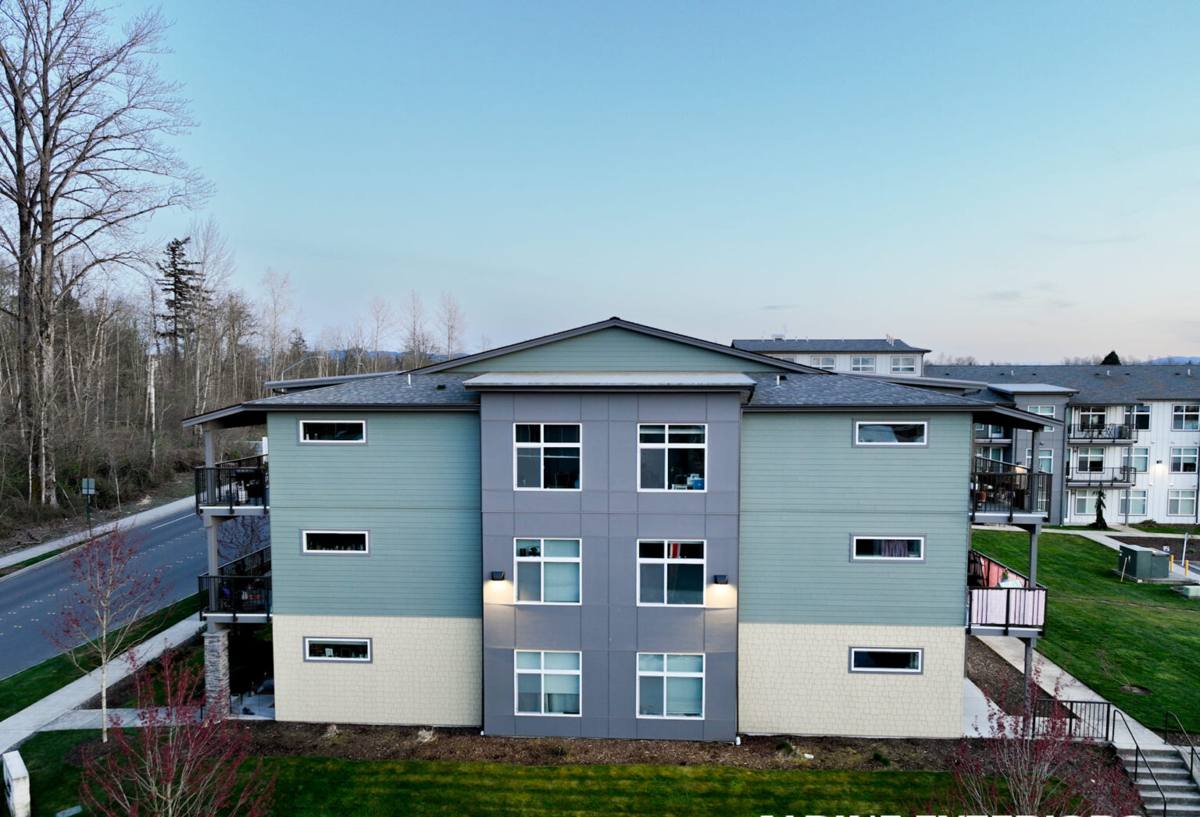
Why Fiber Cement Specifically Suits This Climate
Salt Air and Coastal Exposure
Ferndale doesn't have to sit right on the water for salt-laden air to matter. It moves through the whole area on a regular basis, and it accelerates corrosion in fasteners and trim hardware while breaking down lower-grade finishes faster than you'd see further inland. Fiber cement's cement-based core doesn't corrode, and when it's paired with the right fastener and trim hardware, the whole assembly holds up to that exposure far longer than materials that were engineered for a calmer, drier climate.
Wind-Driven Rain
Rain here rarely falls straight down. Wind pushes it sideways into lap joints, butt seams, and trim returns, which puts more demand on a siding system's water management than a simple rainfall total would suggest. Fiber cement's dimensional stability means it doesn't swell or cup when it takes on repeated wet-season moisture, so the joints and laps that were sealed correctly on install day tend to stay sealed.
A Long Moss and Mildew Season
Mild temperatures, consistent moisture, and plenty of shaded wall area add up to a moss season that can run most of the year on the wrong exposure. An inorganic fiber cement core doesn't give moss and mildew organic material to root into the way wood-based sidings can, which matters most on the north- and tree-shaded walls that stay damp longest.
What "Correct" Fiber Cement Installation Actually Means
Fiber cement performs the way it's designed to only when a specific set of installation details are followed. Skipping or rushing any one of them is the most common way a good material ends up with problems that get blamed on the product instead of the install. On every Ferndale job, that means:
- Correct fastening pattern: Nails or screws placed at the manufacturer-specified spacing and depth, driven flush rather than overdriven, which prevents cracking and keeps the board seated properly against the wall.
- Proper clearance from grade and roofline: Minimum gaps between the bottom of the siding and grade, decks, and roof surfaces so water doesn't wick up into the board or pool against a hard edge.
- Lapped and sealed joints: Butt joints and laps installed with the right overlap and sealed with a compatible sealant, since these are the first place wind-driven rain tests a wall assembly.
- House wrap and flashing integration: A water-resistive barrier and flashing details at windows, doors, and penetrations that work together with the siding rather than relying on the siding alone to keep water out.
- Field-cut edge sealing: Every cut edge primed or sealed before installation, since an unsealed cut edge is one of the more common points where moisture starts working into a board over time.
Our Process for a Ferndale Fiber Cement Job
1. Walkthrough and Assessment
We start by walking the property in person rather than quoting off photos or a phone call. That means looking at wall orientation, shade patterns, existing siding condition, and any visible signs of moisture behind the current material. Ferndale's mix of open, lower-lying lots and tree-shaded yards means two homes a few blocks apart can have genuinely different exposure, and we account for that instead of applying one template to every house.
2. Tear-Off vs. Overlay Decision
Fiber cement can sometimes go over an existing wall assembly if the substrate is sound, but in this climate we lean toward tear-off more often than not, because it's the only way to actually see what's happening behind older siding before we cover it back up. If we find rot, trapped moisture, or failed house wrap during tear-off, we'll tell you before we proceed rather than sealing a known problem behind new siding.
3. Substrate Repair
Any damaged sheathing, framing, or house wrap gets repaired before the first course of fiber cement goes up. Installing new siding over a compromised substrate just delays the same problem and usually makes it more expensive to fix later.
4. Installation to Spec
This is where the fastening pattern, clearances, flashing, and joint details above all come together. We treat these steps as non-negotiable regardless of schedule pressure, because they're what determines whether the siding performs for its full service life or starts showing problems in a few wet seasons.
5. Final Walkthrough
Once the job is done, we walk the property with you, point out what was done and why, and answer any questions about care or what to watch for going forward.
James Hardie Product Lines We Work With
| Product | Typical Use | Why It Fits Ferndale |
|---|---|---|
| HardiePlank lap siding | Primary wall siding, most common choice | Available in the HZ5 formulation built for heavy moisture and freeze-thaw regions |
| HardiePanel vertical siding | Accent walls, gables, modern facades | Fewer horizontal laps means fewer joints exposed to wind-driven rain on vertical runs |
| HardieTrim boards | Corners, window and door trim, fascia | Matches the siding's dimensional stability so trim joints stay tight over time |
| HardieSoffit panels | Eaves and overhangs | Resists the sustained damp conditions common under shaded eaves in this climate |
| ColorPlus factory finish | Pre-finished color on any of the above | Baked-on finish resists fading and moisture intrusion better than field-applied paint, especially against salt air |
Most Ferndale jobs use HardiePlank in the HZ5 formulation as the primary wall material, with HardieTrim and HardieSoffit rounding out the details. We'll walk through which combination fits your home's style and exposure during the estimate.
Repair, Patch, or Full Replacement
Not every fiber cement issue in Ferndale means a full re-side. A section that took storm impact, isolated cracking from an accidental impact, or trim that's failed around one window can often be repaired and matched into existing siding, since Hardie boards and ColorPlus finishes are consistent enough to blend a patch reasonably well. But if moisture has been tracking behind the wall for a while, or if the existing siding is an older product nearing the end of its service life, patching usually just delays a larger job. We'll give you a straight answer about which situation you're actually in.
Signs Your Ferndale Siding Needs a Closer Look
- Moss or dark staining that returns quickly after cleaning, especially on shaded or north-facing walls
- Visible cracking, chipping, or missing sections, particularly after wind events
- Gaps opening up at seams, corners, or trim joints where water can track in
- Soft spots or discoloration low on the wall or around window and door trim
- Peeling or bubbling paint on older, field-finished siding
- Rising energy bills that may point to a wall assembly no longer sealing properly
Cost Factors for a Ferndale Fiber Cement Project
| Factor | What It Affects | Why It Matters Here |
|---|---|---|
| Tear-off vs. overlay | Labor scope and substrate access | Tear-off reveals hidden moisture damage that's common under older siding in this climate |
| Substrate condition | Repair costs before new siding goes on | Years of trapped moisture behind failing siding can rot sheathing and framing |
| Product selection | Material cost per square | HZ5 formulations and ColorPlus finishes cost more upfront but hold up longer against salt air and rain |
| Trim and detail complexity | Labor time and joint count | More corners, dormers, and trim returns mean more joints exposed to wind-driven rain |
| Site access and shade | Setup, staging, and drying time between steps | Tree-shaded lots common in Ferndale can extend timelines around wet weather |
Exact numbers depend on the specific home and its condition, which is why we walk the property in person before giving a real estimate instead of quoting off a generic price sheet.
Why a Local Crew Matters for Fiber Cement Specifically
Fiber cement rewards a crew that installs it constantly in the exact conditions it has to perform in. A crew working across Whatcom County day in and day out learns which wall orientations stay wet longest, where extra flashing attention actually pays off, and which detailing shortcuts tend to show up as callbacks two winters later. That's different from general familiarity with siding as a category. Fiber cement has its own fastening requirements, its own cut-edge sealing needs, and its own joint tolerances, and getting those details right consistently is what separates an installation that lasts thirty years from one that needs attention in five.
Siding Rarely Fails in Isolation
A leaking roof valley, a poorly flashed window, or a deck ledger board trapping moisture against the house can all show up as siding damage even when the siding itself isn't the source of the problem. Because we also handle roofing, windows, and decks, we can look at a Ferndale home as one connected exterior system during the estimate rather than diagnosing a wall in isolation and missing the water's actual entry point.
If you're considering fiber cement siding for a Ferndale home, whether that's a full re-side, a repair, or just an honest opinion on what's happening behind an aging wall, we're glad to take a look. Reach out using the form below to schedule a free, no-pressure estimate.