 Lynden
 Deck Replacement Built for Kendall's Climate, Not a Catalog
Kendall sits out where Lynden's farmland gives way to the foothills, and that location shapes what a deck goes through year to year. You get more shade from surrounding trees, more standing moisture after storms roll off the Sound, and a longer stretch of the year where surfaces just don't fully dry out. Add in the marine-influenced air that moves through the whole Whatcom County valley and you have a climate that is genuinely tougher on outdoor structures than most manufacturers' warranty language assumes. A deck built or replaced without that reality in mind will look fine for a season or two and then start showing problems that are expensive to unwind.
Deck replacement here isn't a cosmetic upgrade project. It's structural work that has to account for how water moves, where moss and algae actually take hold, and how salt-tinged air slowly works on fasteners and connectors most homeowners never think to check. This page covers what that actually looks like for a Kendall property, not a generic national overview.
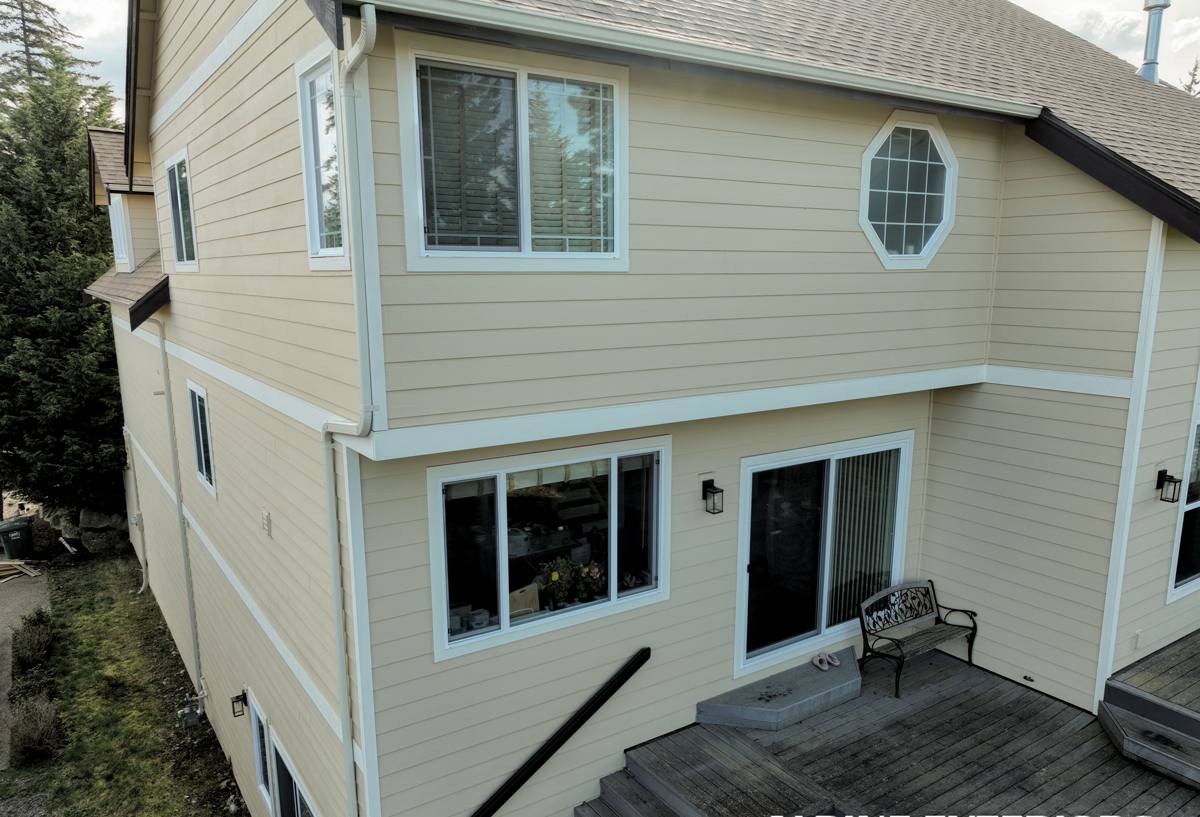
Signs a Kendall Deck Needs Replacement, Not Just Repair
Repair makes sense when the problem is isolated — a cracked board, a loose railing baluster, a single soft spot near a planter. Replacement becomes the honest recommendation once the damage is systemic. In this climate, that line gets crossed faster than homeowners expect, because moisture problems spread underneath the deck surface long before they're visible on top.
- Soft or spongy decking in more than one area, especially near the house or under shaded sections
- Persistent moss or green-black staining that returns within weeks of cleaning
- Visible gaps, cupping, or splitting boards across multiple sections rather than one or two spots
- Rust streaking or corrosion at fastener heads and metal connectors
- Any give or bounce in the frame when you walk across it, not just the surface boards
- A ledger board (where the deck attaches to the house) that shows staining, softness, or gaps at the flashing
- The deck is 15-25+ years old and has never had the substructure inspected, only the surface refinished
If you're only seeing one of these in one spot, repair is often the right call and we'll tell you that. Replacement gets recommended when the frame itself — joists, ledger, footings — is compromised, because no amount of new decking fixes a structure that's failing underneath.
What a Correct Deck Replacement Actually Involves
It starts below the surface
A deck replacement that's done right addresses the parts homeowners never see: the ledger board connection to the house, the joist framing, the footings, and the flashing that keeps water out of the wall assembly behind the deck. In a wet climate like Whatcom County's, the ledger-to-house connection is one of the most common failure points, because it's where water is most likely to sit against untreated or improperly flashed wood year-round.
Then the visible work
Once the frame is sound, decking, railings, stairs, and any built-in features go back in. This is also where drainage and airflow decisions matter more than most people realize — board spacing, joist tape, and under-deck ventilation all affect how fast the structure dries out after the rain Kendall sees for much of the year.
| Component | What Correct Work Looks Like | Common Shortcut That Fails Here |
|---|---|---|
| Ledger board & flashing | Proper flashing tape and metal flashing directing water away from the house wall | Caulk-only sealing that fails within a few wet seasons |
| Joists | Pressure-treated lumber with joist tape over the top edge | Untaped joists that trap moisture under the decking |
| Fasteners & connectors | Corrosion-resistant, code-rated hardware matched to the treated lumber | Standard hardware that corrodes under marine-influenced moisture |
| Footings | Sized and set to local frost depth and soil conditions | Undersized or shallow footings that shift over time |
| Decking surface | Spacing and fastening pattern that allows drainage and airflow | Tight-fit boards that trap water and accelerate moss growth |
Choosing Decking Material for a Kendall Property
There's no single "best" decking material — there's the right trade-off for how much maintenance you want to do and what you're willing to spend up front versus over time. In a climate with this much rain and shade-driven moss pressure, the maintenance conversation matters more than it does in drier parts of the state.
| Material | Upfront Cost | Moisture/Moss Behavior | Maintenance |
|---|---|---|---|
| Pressure-treated wood | Lowest | Needs sealing to resist moisture absorption; prone to moss without upkeep | Annual cleaning and periodic re-sealing |
| Cedar | Moderate | Naturally rot-resistant but still needs sealing in constant moisture | Regular cleaning, periodic staining |
| Composite | Higher | Doesn't absorb moisture like wood; still needs cleaning where moss can grow on the surface | Occasional washing, no sealing/staining |
| PVC/synthetic | Highest | Best moisture resistance of the group; surface still needs periodic cleaning | Lowest ongoing maintenance |
We install all of these and won't push you toward the highest-margin option. If you want the lowest upfront cost and are willing to clean and reseal on a schedule, treated wood or cedar is a reasonable choice — as long as the substructure underneath is done right. If you want to spend less time maintaining it over the next 15-20 years, composite or synthetic decking earns back the higher upfront cost in time saved, particularly on a shaded lot where moss keeps coming back.
How We Handle Moisture and Moss on Kendall Decks
Most moss and algae problems on decks aren't a cleaning failure — they're a drying failure. If a deck can't shed water and dry out between storms, moss will come back no matter how often you power-wash it. That's the actual engineering problem we're solving on replacement projects here, not just a materials choice.
- Board spacing and fastening patterns that let water drain through rather than pool on the surface
- Joist tape and proper flashing so the frame underneath isn't sitting in trapped moisture
- Ledger flashing detailed to shed water away from the house wall, where the driving rain in this area does the most damage
- Corrosion-resistant fasteners and connectors sized for treated lumber, so the marine-influenced air in the region doesn't compromise the hardware first
- Layout and railing choices that avoid creating shaded, poorly ventilated pockets where moss gets a head start
Our Deck Replacement Process
- On-site assessment — We inspect the existing deck's frame, ledger, footings, and decking to confirm whether replacement is actually the right call versus repair.
- Straightforward estimate — You get a written scope and price range before any work starts, with material options explained honestly, not upsold.
- Tear-out — Full removal of the old structure down to what's being reused, if anything, with the site protected and cleaned up as we go.
- Frame and flashing rebuild — Ledger, joists, footings, and flashing done to code and to the standard this climate actually requires, not the minimum.
- Decking, railings, and stairs — Installed with the drainage and fastening details covered above.
- Final walkthrough — We go over the finished deck with you, including what maintenance (if any) the material you chose will need going forward.
What Affects the Cost of a Kendall Deck Replacement
| Factor | Why It Matters |
|---|---|
| Deck size and footprint | More square footage means more framing, decking, and fasteners |
| Material selection | Treated wood, cedar, composite, and PVC carry different material costs |
| Frame condition | A frame with rot or footing problems adds structural rebuild cost beyond surface replacement |
| Height and access | Multi-level decks or decks over difficult terrain take more labor |
| Railings and features | Built-in benches, stairs, or custom railing designs add scope |
| Site access | Rural or wooded lots common around Kendall can affect equipment access and material staging |
Rather than quote a number without seeing the deck, we walk the site and give you a real range based on what we find — including telling you upfront if a repair would actually serve you better than a full replacement.
Why It Matters to Hire a Crew That Already Works in Kendall
A deck built for a dry-climate spec sheet doesn't hold up out here. Crews who mostly work in other parts of the state, or who build to a generic national standard, often skip the flashing detail, joist tape, or corrosion-resistant hardware that this region actually requires — not out of carelessness, but because it's not what their usual conditions demand. Whatcom County's combination of driving rain, shaded lots, and marine-influenced air punishes those shortcuts faster than most places.
Working regularly in and around Lynden and Kendall means we've seen how decks in this specific area actually fail over time, not just how they're supposed to perform on paper. That shapes the framing details, material recommendations, and drainage decisions we make on every replacement.
Before You Call: A Quick Homeowner Checklist
- Note where moss, algae, or standing water show up most — that tells us where drainage is failing
- Check for soft spots by walking the deck slowly, including near the house and stairs
- Look at the ledger board area where the deck meets the house for staining or gaps
- Have a rough idea of how you use the deck (furniture, grill, hot tub) so we can plan structural capacity correctly
- Decide how much ongoing maintenance you're willing to do — it's the single biggest factor in material choice
If your Kendall-area deck is showing any of the wear signs above, or you just want a straight answer on repair versus replacement, we're glad to take a look. The estimate is free, there's no pressure attached to it, and you can request one using the form below.