 Lynden
 Roof Repair for Sumas Homes, Done by a Crew That Already Works This Corner of Whatcom County
Sumas sits out on the flats near the Canadian border, a short drive from our home base in Lynden. It's farm country — open fields, low elevation, and weather that comes straight off the water with nothing much to slow it down. That combination is hard on roofs in a specific way: driving rain finds every weak seam, moss gets a long growing season because things stay damp for months at a time, and salt-tinged marine air works its way inland and speeds up corrosion on fasteners, flashing, and vents. None of that is dramatic on its own. It's the slow, steady kind of wear that turns a small flaw into a real leak if nobody catches it.
We do roof repair work around Sumas regularly, alongside our siding and exterior work throughout Whatcom County. This page is about doing that one job right — what actually needs fixing on roofs out here, how we approach a repair versus talking someone into a full tear-off they don't need, and what to expect if you call us.
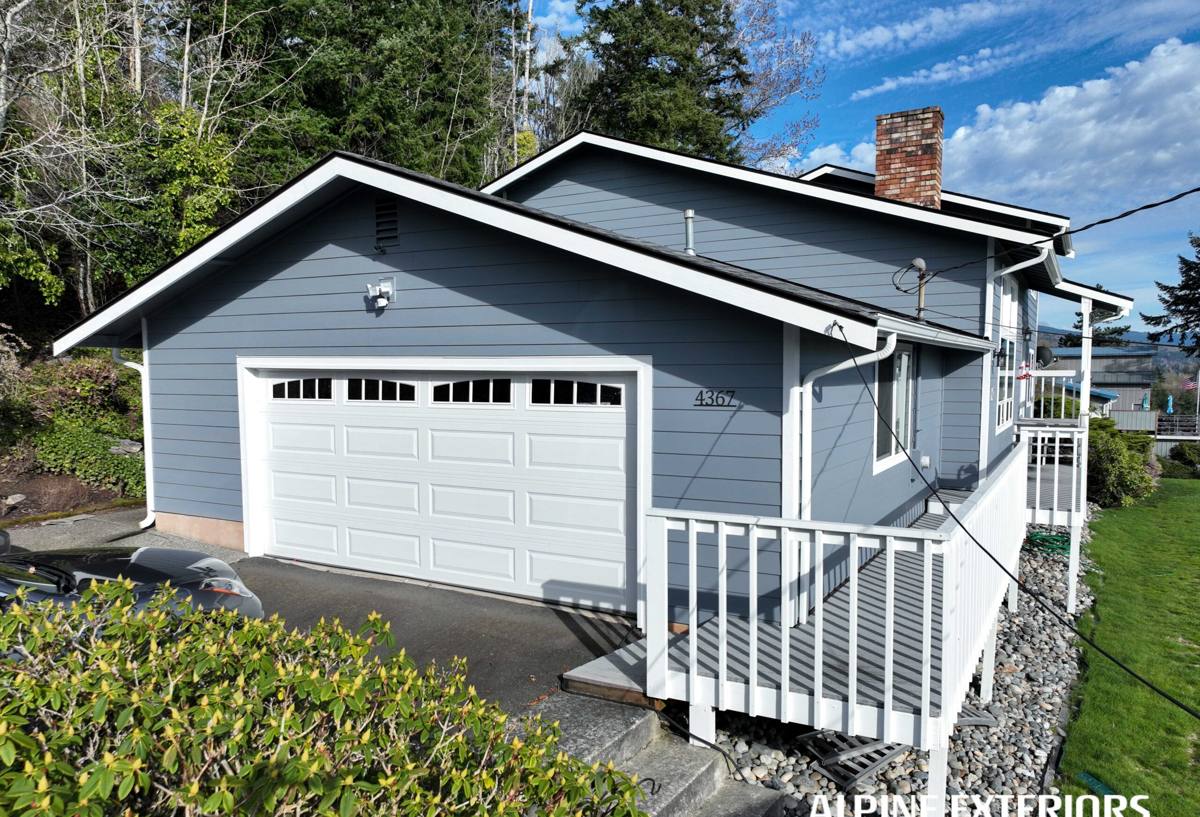
What Whatcom County Weather Actually Does to a Roof
Driving Rain and Wind-Driven Moisture
Rain that falls straight down is easy on a roof — it sheds off shingles the way they're designed to shed. Rain that comes in sideways during a windstorm is a different problem. It gets pushed up under shingle tabs, into open valleys, and around anything that penetrates the roof deck — vent pipes, chimneys, skylights. Out on the Sumas flats, with less tree cover to break the wind than you'd find tucked into town, that wind-driven rain hits roofs at a harder angle more often. Flashing and seals that were installed a little loose, or that have started to lift with age, are exactly where this shows up first.
A Long Moss Season
Moss needs shade, moisture, and time — and this region gives it all three for most of the year. Moss doesn't just sit there looking bad; it holds water against the shingle surface, works its way under tab edges, and lifts granules loose over time. On north-facing slopes and anywhere gutters or trees keep a section of roof shaded, moss can take hold within a couple of seasons and start shortening the life of otherwise sound shingles.
Salt Air and Metal Fatigue
You don't have to be right on the water to feel the effect of salt-carried marine air — it travels with the weather systems that move through Whatcom County, and it accelerates corrosion on exposed metal: nail heads, flashing edges, vent boots, gutter hardware. Once a fastener or flashing piece starts to corrode, it stops sealing the way it should, and that's often the actual source of a leak that looks, at first glance, like a shingle problem.
The Repair Issues We See Most Often Around Sumas
- Valley leaks — where two roof planes meet is where the most water volume concentrates, and it's the first place a worn or improperly lapped valley will fail.
- Flashing failures — around chimneys, skylights, and roof-to-wall transitions, where the flashing has corroded, pulled loose, or was never properly stepped and counter-flashed to begin with.
- Moss-lifted shingles — tabs raised just enough by moss growth underneath that wind or rain can get beneath them.
- Vent boot cracking — the rubber collar around plumbing and exhaust vents dries out and splits well before the shingles around it wear out.
- Wind-lost or torn shingles — usually along ridge lines and roof edges, where uplift forces are strongest during a storm.
- Gutter and edge-flashing backup — clogged or undersized gutters that let water back up under the first course of shingles instead of running off.
What a Correct Roof Repair Actually Involves
A repair that actually holds up starts with finding the real source of the problem, not just patching where the water showed up inside. Water travels — a stain on a ceiling in one room can trace back to a flashing gap several feet away on the roof. That's the first and most important part of the job, and it's the part that gets skipped when a repair is rushed.
Our Repair Process
- Trace the leak, not just the symptom. We follow the water path on the roof deck and underlayment before we touch a shingle, so we're fixing the cause and not just the visible spot.
- Check the surrounding material condition. A leak is often a sign that the roofing around it has reached the end of its useful life — we tell you honestly if a "repair" area is really a sign the whole slope needs attention soon.
- Match materials properly. Shingle color and profile fade and change over the years; we get as close a match as the market allows and set expectations up front on visible difference, especially on a roof that's had sun and moss exposure.
- Rebuild flashing details correctly. Step flashing, counter-flashing, and valley metal get replaced and properly lapped — not caulked over, which is a short-term fix that fails again within a season or two in this climate.
- Check ventilation while we're up there. Poor attic ventilation traps moisture that accelerates moss growth and shingle deterioration from underneath — worth flagging even on a targeted repair visit.
Repair or Replace? How We Help You Decide
Not every roof problem in Sumas needs a full replacement, and we don't push one when a solid repair will genuinely hold. The honest answer usually comes down to a few factors:
| Factor | Leans toward Repair | Leans toward Replacement |
|---|---|---|
| Roof age | Under 15–18 years (asphalt) | Approaching or past manufacturer's expected lifespan |
| Extent of damage | Isolated to one area (valley, flashing, one slope) | Multiple slopes affected, widespread granule loss |
| Moss history | Recently treated, minimal lifting | Long-term moss coverage with shingle tabs lifted broadly |
| Underlying deck condition | Solid, no rot found during inspection | Soft spots or rot found in the sheathing |
| Typical cost range | Several hundred to a few thousand dollars, depending on scope | A larger, whole-roof investment — we scope and quote it directly |
We'll walk the roof, tell you what we see, and give you a straight answer — including when a repair now buys you several more good years, and when it's better to put that repair money toward a replacement instead.
Roofing Materials: Our Standard and the Trade-offs
Most Sumas-area repairs we handle are on standard architectural asphalt shingle roofs, which remain the practical choice for this climate when installed and maintained correctly. We do work on other materials, but we're upfront about our approach:
Asphalt Shingle (Architectural)
Our default recommendation for repairs and re-roofs alike. Good wind resistance when properly nailed, reasonable moss resistance with the right treatment, and straightforward to patch and match years later — which matters when a future repair is needed.
Metal Roofing
A solid option for steep-slope durability and shedding moss faster than shingles, but it comes with its own maintenance considerations — panel fastener seals need periodic checking, and repair work requires matching panel profiles and finishes exactly, which isn't always available years after original installation. We'll discuss whether it's the right fit for your situation rather than assuming it's an upgrade in every case.
Older or Specialty Materials
On older homes we sometimes find wood shake or built-up roofing that's reaching the end of its practical service life. In those cases we're honest that ongoing "repair" starts to cost more than it saves, and we'll tell you that plainly instead of billing patch after patch.
Our Process, Start to Finish
- Call or request an estimate — tell us what you're seeing (a stain, a missing shingle, a draft) and where.
- We inspect the roof in person — not just a drive-by guess — including the attic side where accessible, since that's often where a leak's real path shows up.
- You get a written scope and price before any work starts, with repair and (if relevant) replacement options laid out honestly.
- We do the repair — proper flashing, matched materials, and a check of the surrounding roof so we're not leaving a second problem for next season.
- We clean up — old material, nails, and debris hauled off, not left in the yard or gutters.
A Quick Checklist Before You Call
If you're not sure whether what you're seeing needs a repair call now or can wait, this covers the signs worth acting on:
- A ceiling stain that appears or grows after a windy rainstorm
- Visible moss buildup, especially on north-facing or shaded slopes
- Shingle tabs that look lifted, curled, or are missing entirely
- Granules collecting in gutters or at the base of downspouts
- Cracked or shrunken rubber boots around roof vents
- Rusted or visibly separating flashing around a chimney or skylight
- Daylight visible through the attic roof deck (a serious sign, worth an immediate call)
Why It Matters That We Already Work in Sumas
A roofer who works Whatcom County regularly already knows how wind-driven rain behaves on an open, low-tree-cover property, how long moss takes to establish here versus a drier climate, and what flashing details tend to fail first under this area's marine weather pattern. That's not something you can fake with a general roofing checklist written for a different climate. It also means shorter response times for an active leak, and a crew that's still local and reachable if a question comes up after the repair is done — not a company that was in the area for one season and moved on.
If you're dealing with a leak, missing shingles, or a moss problem on a roof in or around Sumas, we're happy to come take a look. Reach out for a free, no-pressure estimate using the form below — we'll tell you honestly what we see and what it'll take to fix it right.