 Lynden
 Why Siding Takes a Beating in Kendall
Kendall sits in the part of Whatcom County where the weather doesn't do anything halfway. Rain comes in sideways off winter storms, humidity lingers under tree cover for days at a time, and the moss season here isn't a few weeks in spring — it's most of the year. Add in the salt-tinged marine air that moves through the county and you've got a climate that's constantly testing every seam, nail hole, and butt joint on a home's exterior. Siding doesn't fail all at once in a place like this. It fails at the details — a piece of trim that was never quite sealed right, a corner that catches wind-driven rain at an angle the original installer didn't plan for, a shaded north wall where moss has had a decade to work into the material.
That's the reality we work with on every repair call in Kendall: the damage is rarely random. It's almost always tied to how water and moisture move around a specific house in this specific climate. A repair that doesn't account for that just buys a homeowner a year or two before the same spot fails again.
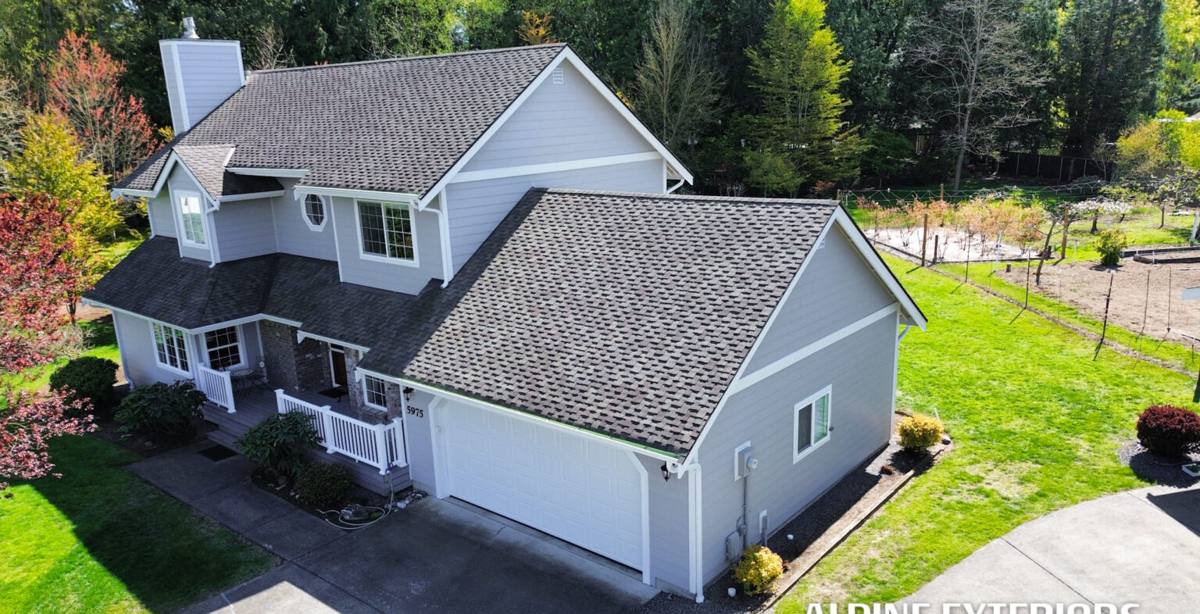
Signs Your Siding Needs Repair — Not Just a Fresh Coat of Paint
Homeowners often call us after noticing something cosmetic, but the real problem is usually a step or two deeper. Here's what we look for, and what you should be watching for between inspections:
- Soft or spongy spots when you press on a section of siding — usually a sign moisture has reached the substrate
- Dark streaking, green-black staining, or thick moss buildup that keeps returning after cleaning
- Cracked or crumbling caulk lines around windows, doors, and trim boards
- Visible gaps or separation at butt joints and corners
- Paint that's bubbling, peeling, or failing faster than the rest of the house
- Warping, bowing, or panels that no longer sit flat against the wall
- Impact damage from storm debris, branches, or equipment
- Interior clues — a musty smell, a soft patch of drywall, or a damp spot near an exterior wall
Any one of these can be a minor fix. Several together, especially clustered in one area, usually mean water has been getting behind the siding for a while — which changes what the repair needs to accomplish.
What's Actually Causing Most of the Damage We See
Moisture Intrusion at Trim and Flashing
The majority of repair calls trace back to flashing and trim details, not the siding panels themselves. Where siding meets a window, door, deck ledger, or roofline, water needs a clear path down and away from the wall. When flashing is missing, undersized, or was never installed correctly, water works its way behind the cladding instead — and by the time it shows up as a stain or soft spot, it's often been happening for months.
Moss and Algae Holding Moisture Against the Wall
Kendall's shaded lots and long damp stretches are ideal for moss and algae growth. On their own they're mostly cosmetic, but left alone they hold moisture directly against the siding surface far longer than open air would allow. Over time that constant dampness accelerates wear on caulk, paint, and any exposed edges of the material underneath.
Impact and Storm Damage
Wind-driven debris, falling branches, and the occasional ladder or lawn equipment mishap crack or dent siding panels. This kind of damage is usually the easiest to diagnose and repair — but it's also the easiest to botch with a mismatched patch if the crew doesn't have access to properly finished replacement material.
Caulk and Sealant Failure
Caulk has a service life, and in this climate it's shorter than most homeowners expect. Once it cracks or shrinks away from the joint, it stops doing its job long before it looks obviously bad — which is why a repair should never just mean recaulking over a problem that's already let water in.
Repair or Replace? How We Make That Call
Not every damaged section needs a full re-side, and not every problem should be patched. The right call depends on how far the damage has spread and what's underneath it.
| Factor | Points Toward Repair | Points Toward Replacement |
|---|---|---|
| Extent of damage | Isolated to one or two areas | Spread across multiple walls or the whole house |
| Substrate condition | Sheathing and framing are sound | Rot has spread into structural wood |
| Age of existing siding | Siding is mid-life and otherwise performing well | Siding is near or past its expected service life |
| Cause of damage | Storm impact, isolated flashing failure | Systemic moisture problems, chronic install defects |
| Material match | Existing profile and color can be matched cleanly | Discontinued profile, no reasonable match available |
We'll always tell you honestly which side of that table your home falls on. A targeted repair is the right answer far more often than a full replacement — but only when the underlying structure is sound.
What a Correct Repair Actually Involves
Diagnosing Before Cutting Anything
Before we remove a single piece of siding, we check how far the moisture or damage actually extends. That means pulling back enough material to see the sheathing, checking for soft or discolored wood, and confirming whether the problem is contained or has traveled along a seam.
Fixing the Cause, Not Just the Symptom
If the damage came from a flashing gap, a missing kick-out, or a caulk joint that was never sealed correctly, that detail gets corrected as part of the repair — not left in place to cause the same failure again in a year or two. Replacing a panel without fixing the water path behind it is a temporary patch dressed up as a repair.
Matching Material and Finish
A repair should be invisible from the curb. That means matching the panel profile, the exposure, and — critically — the color, which is a lot easier when the original siding was installed with a factory-applied finish that hasn't been repainted or weathered unevenly over the years.
Sealing and Finishing the Details
New flashing, correctly lapped house wrap, proper fastener placement, and the right sealant at every joint. These are the parts of a repair nobody sees once it's done — and the parts that determine whether it lasts.
Why We Repair Exclusively With James Hardie Fiber Cement
We install and repair James Hardie siding only — we don't work in vinyl, LP SmartSide, primed spruce, cedar, or other fiber cement brands. That's a deliberate standard, not a limitation we apologize for. Hardie's fiber cement doesn't absorb and swell with moisture the way wood-based products can, which matters enormously in a climate where siding stays damp for long stretches of the year. Its ColorPlus factory finish is baked on and backed by its own finish warranty, which means a repair patch installed years after the original job can still be color-matched with far more confidence than a field-painted product that's weathered unevenly.
When we repair a Hardie wall, we're working within one engineered system — one manufacturer's specs for fasteners, gaps, flashing, and finish — rather than guessing how a mismatched or discontinued product will behave next to new material. That consistency is a big part of why a repair holds up rather than becoming the first spot to fail again next winter.
Our Repair Process for Kendall Homeowners
- Inspection: We walk the exterior, check suspect areas, and pull back siding where needed to confirm what's happening underneath.
- Diagnosis and honest recommendation: We tell you plainly whether you're looking at a targeted repair, a larger section replacement, or something bigger — and why.
- Written estimate: A clear scope of work and price before anything is touched.
- Repair work: Damaged material removed, underlying issue corrected, new Hardie material and flashing installed to spec.
- Finish and cleanup: Color-matched panels, sealed joints, and the site left the way we found it.
Why Hiring a Crew That Already Works in Kendall Matters
A repair crew that's worked on homes throughout Whatcom County already knows what to expect from a house in this area — how far moss and moisture damage typically spreads before it's noticed, which details tend to fail first on homes exposed to driving rain, and how to get a color match right on siding that's been sitting under Kendall's rain and shade for years, not months. That local pattern recognition shortens the diagnosis and helps avoid a repair that only addresses what's visible on the surface.
There's also a practical side to it: a company that regularly works in and around Kendall can respond faster when storm damage needs a quick assessment, and isn't learning the area's quirks — driveway access, typical lot layouts, seasonal weather windows for exterior work — on your job.
Keeping Your Siding Healthy After the Repair
A good repair should be close to the last time that section of wall needs attention for a long while. A short list of habits keeps it that way:
- Rinse moss and algae growth off siding before it builds up thick enough to hold moisture
- Keep gutters clear so overflow doesn't run down the wall face
- Trim back vegetation that keeps a wall shaded and damp longer than necessary
- Do a quick walk-around after major storms to catch new impact damage early
- Have caulk and trim joints checked every couple of years rather than waiting for a visible failure
If you're noticing soft spots, staining, or storm damage on your home's siding, we're happy to take a look and give you a straightforward, no-pressure assessment of what's actually going on and what it would take to fix it right. Use the form below to request a free estimate.