 Lynden
 Why Metal Roofing Makes Sense for Laurel Homes
Laurel sits in the kind of Whatcom County weather that's hard on a roof year-round. Homes here deal with salt-laden marine air drifting in off the Sound, long stretches of driving rain through fall and winter, and a moss season that can run eight or nine months if a roof gets enough shade and moisture. A lot of roofing products are engineered for drier, milder climates and just don't hold up the same way out here. Metal roofing, installed correctly, is one of the few systems that genuinely shrugs off all three of those problems at once — which is why we see more Laurel homeowners asking about it every year.
This page is specifically about metal roofing for homes in and around Laurel, not a generic rundown of metal roofing everywhere. The install details, the finish choices, and the maintenance schedule we recommend here are shaped by what actually happens to a roof in this corner of Whatcom County.
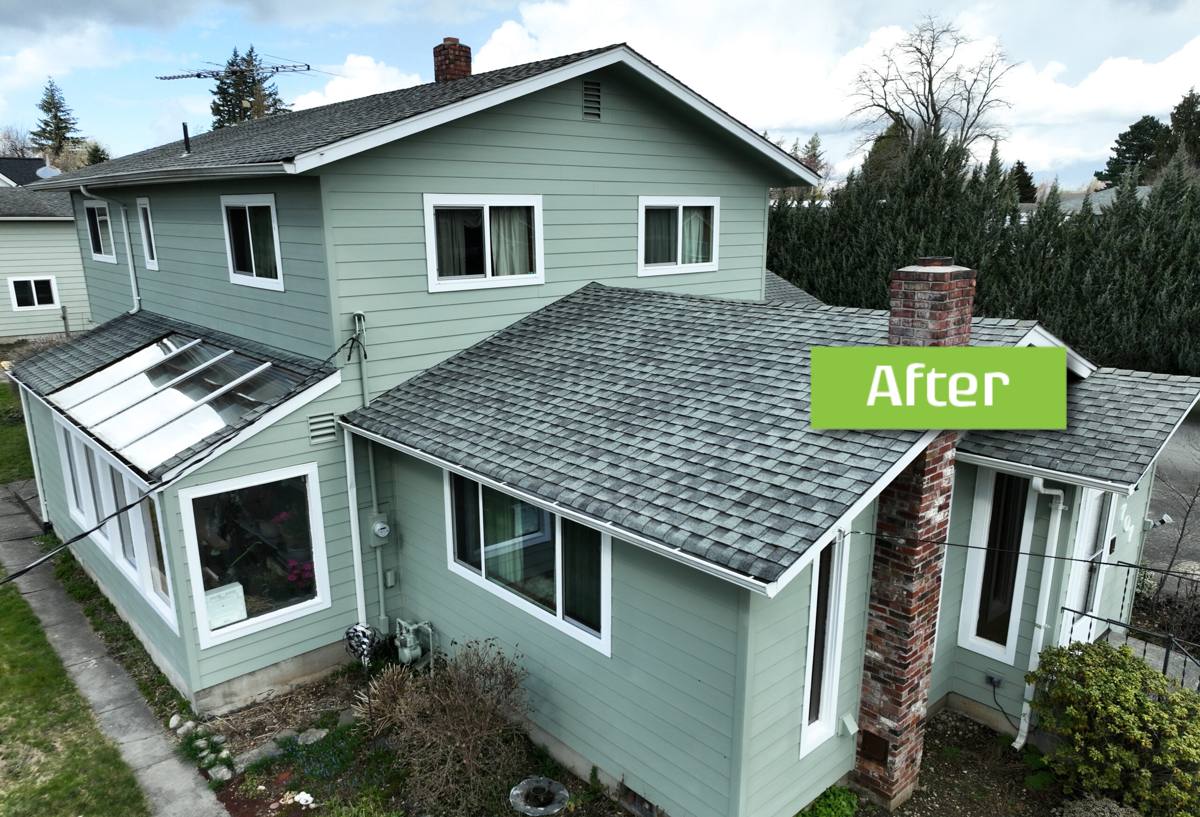
What Whatcom County Weather Does to a Roof Over Time
Salt Air and Corrosion
Homes closer to the Sound and the bay pick up airborne salt that settles on every exterior surface, roofs included. On uncoated or poorly coated metal, that salt accelerates corrosion at cut edges, fastener heads, and anywhere the protective coating gets scratched during installation. It's not usually a dramatic failure — it's slow pitting and rust bleed that shows up years later and is much cheaper to prevent than to fix.
Driving Rain and Wind-Driven Water
Pacific storms don't just drop rain straight down here — wind pushes it sideways and up under laps, flashing, and fasteners that weren't detailed for that kind of pressure. A roof that would be fine in a calmer climate can leak in Laurel simply because the water is coming from an angle the original install never accounted for.
Moss, Shade, and Moisture
Between the tree cover common in this area and the number of overcast, damp days each year, moss has a long runway to establish itself. On asphalt shingles, moss roots into the mat and lifts granules, shortening the roof's life. On metal, moss can't root the same way, but it can still hold moisture against seams and fasteners if it's allowed to build up, so panel choice and slope still matter.
Choosing the Right Metal Roofing System
Panel Profiles
Most metal roofs in this area are either standing seam or exposed-fastener corrugated/ribbed panels. Standing seam uses concealed clips and interlocking seams with no exposed screws on the field of the roof, which removes the most common long-term leak point — a fastener that's backed out or lost its seal. Exposed-fastener panels cost less up front but rely on screw gaskets that do wear out and need eventual re-torquing or replacement.
Finishes and Coatings
The coating matters as much as the metal underneath it, especially with salt air in the mix. A quality baked-on paint system (PVDF-type finishes are the higher tier) resists chalking, fading, and coating breakdown far longer than a basic painted finish. Galvalume and similar coated steel substrates give strong corrosion resistance for the price; aluminum costs more but is a good option for properties closer to salt exposure since it doesn't rust the way steel can if the coating is ever compromised.
| Panel Type | Fasteners | Typical Lifespan | Best Fit |
|---|---|---|---|
| Standing Seam | Concealed clips | 40-60+ years | Long-term owners, best leak resistance |
| Exposed-Fastener Panel | Screws through panel face | 25-40 years | Budget-conscious projects, outbuildings, shops |
| Stone-Coated Steel | Concealed/nailed depending on system | 30-50 years | Homeowners wanting a shingle or tile look |
What a Correct Installation Actually Involves
Underlayment and Moisture Barrier
Metal roofing is only as good as what's underneath it. In a climate with this much rain, we install a full synthetic underlayment (not felt, which breaks down faster under repeated wetting) and use self-adhered ice-and-water membrane at valleys, eaves, and any low-slope transitions where wind-driven rain is most likely to work its way back up under the panels.
Fastening and Flashing Details
Every penetration — vent pipes, chimneys, skylights — is a place water can find a way in if it's not flashed correctly. We custom-fit flashing rather than relying on generic boots wherever possible, and on exposed-fastener systems we make sure fasteners are driven straight and to the correct torque so the rubber washer seals properly without over-compressing.
Ventilation
A roof deck that can't breathe traps moisture, which leads to rot underneath a roof that looks fine from above. We check attic and ridge ventilation as part of every metal roofing job, not as an afterthought, because moisture problems in this climate usually start below the roofline, not on top of it.
Metal Roofing vs. Asphalt Shingles in This Climate
| Factor | Metal Roofing | Asphalt Shingles |
|---|---|---|
| Moss resistance | Won't root moss into the surface | Moss roots into granules, lifts and shortens lifespan |
| Wind-driven rain | Interlocking seams shed water at steep angles | More laps and edges for wind to push water under |
| Salt air durability | Strong with the right coating/substrate | Granule loss accelerates in salt-laden, wet conditions |
| Lifespan | 25-60+ years depending on system | 15-25 years in this climate |
| Upfront cost | Higher | Lower |
Asphalt still has a place — it's a reasonable choice on a tighter budget or a shorter ownership horizon. But for homeowners planning to stay in Laurel long-term, the lower lifetime maintenance and moss resistance of metal usually make up the cost difference over time.
Our Process for Laurel Metal Roofing Projects
- On-site assessment of your existing roof, deck condition, ventilation, and any moss or moisture damage already present
- Written quote outlining panel type, finish, underlayment, and flashing plan specific to your roof's exposure
- Tear-off (or install over existing deck where structurally appropriate) and deck repair if rot or soft spots are found
- Underlayment, ice-and-water membrane, and flashing installation at all vulnerable points
- Panel installation with attention to fastener torque, seam alignment, and ventilation continuity
- Final walkthrough where we show you the completed work and go over basic care
We don't skip steps to save time on the underlayment or flashing details, because those are exactly the parts of the job that fail first when a roof is rushed in a climate like this one.
Maintenance to Keep a Metal Roof Performing
Metal roofing is low-maintenance compared to shingles, but "low" doesn't mean "none." A short annual check catches small issues before they become expensive ones.
- Clear debris and needles from valleys and gutters before fall storms, especially under overhanging trees
- Do a visual check for lifted or loose fasteners on exposed-fastener panels every year or two
- Watch for any moss or algae buildup at shaded, low-slope sections and remove it gently — no pressure washing directly at seams
- Check flashing around chimneys, vents, and skylights for gaps after any major windstorm
- Keep an eye on scratched or scuffed coating from fallen branches, since exposed metal is where corrosion starts
What Influences the Cost of a Metal Roof
| Factor | How It Affects Cost |
|---|---|
| Panel type | Standing seam costs more than exposed-fastener panel due to labor and materials |
| Roof complexity | More valleys, dormers, and penetrations mean more flashing labor |
| Substrate/finish | Aluminum and premium coatings cost more than standard coated steel |
| Tear-off vs. overlay | Removing an old roof adds cost but lets us inspect and repair the deck |
| Deck condition | Rot or soft decking found during tear-off adds repair costs |
Metal roofing generally runs higher upfront than asphalt, but the honest way to compare them is cost per year of service, not just the install invoice. We'll walk through real numbers for your specific roof during a quote — we don't think broad online estimates are useful when every roof's complexity is different.
Why Hire a Crew That Already Works in Laurel and Lynden
A roofing crew that only occasionally works this far north in Whatcom County is guessing at things a local crew already knows — how far wind-driven rain travels up a valley in a fall storm, which tree-shaded roofs need extra moss attention, and how salt exposure varies even within a few miles depending on elevation and wind exposure. That local knowledge shows up in flashing details and material choices that aren't obvious from a spec sheet.
We also know that Laurel homeowners are dealing with a specific mix of conditions — enough tree cover for moss to be a real issue, enough storm exposure for wind-driven rain to matter, and enough proximity to the Sound for salt air to factor into material choice. A metal roofing job planned around all three, rather than a generic install, is what actually holds up here.
If you're weighing metal roofing for your Laurel home, we're happy to take a look and give you a straightforward, no-pressure estimate — just fill out the form below and we'll go from there.