 Lynden
 Roof Repair Built for the Laurel Area's Climate
Homes in the Laurel area near Lynden take a different kind of beating than roofs further inland. You're close enough to the water to get salt-laden air working on metal fasteners and flashing, you get long stretches of driving rain that finds every weak seam, and you get a moss season that can run most of the year in shaded, north-facing sections of a roof. None of that means your roof is doomed — it means a repair here has to account for all three, not just patch the spot that's leaking today.
We've been doing roof and siding repair work in and around Lynden long enough to know which roof styles, pitches, and exposures in this part of Whatcom County fail first, and why. A roof repair that ignores moss growth, or reuses old flashing because it "still looks fine," is a repair that gets you a callback in eighteen months. Our approach is to fix the actual problem, not just the symptom you noticed.
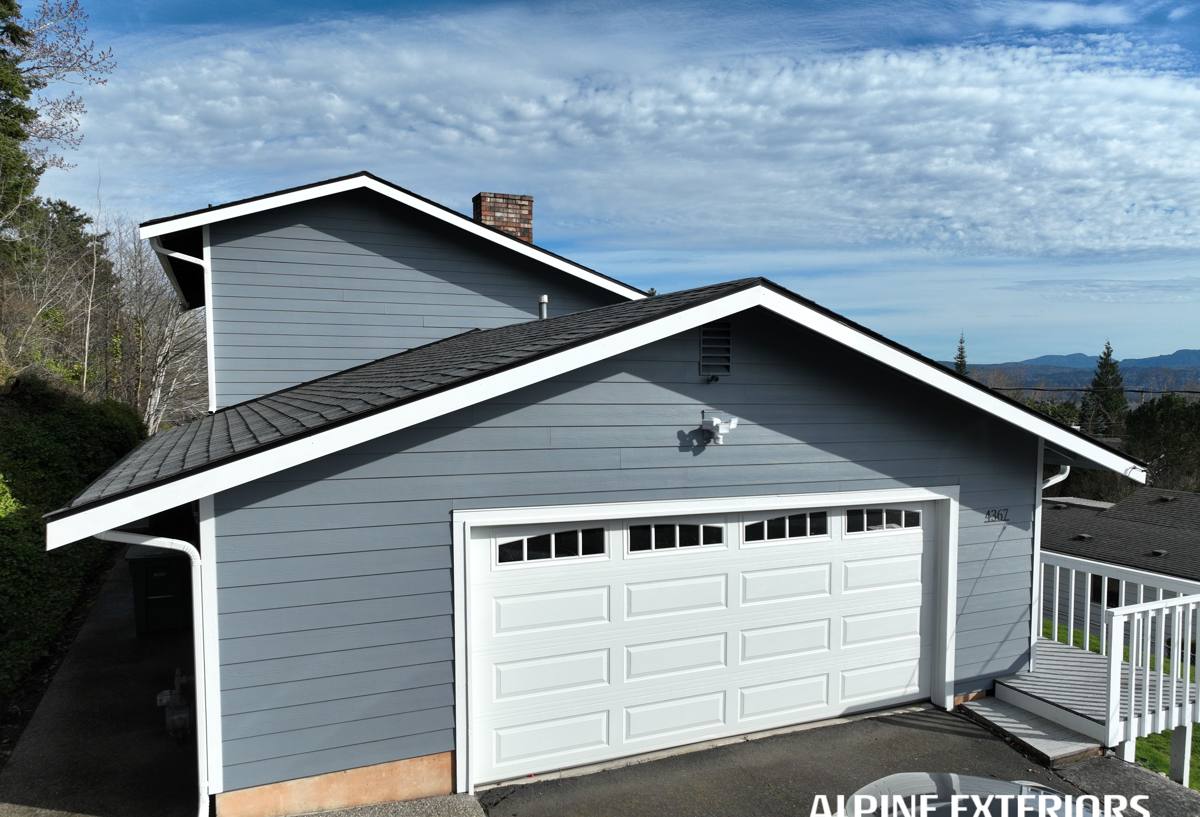
Signs a Laurel-Area Roof Needs Repair, Not Just a Look
Most roof repairs we do start with something a homeowner noticed indoors — a stain, a draft, a smell — long before they saw anything wrong on the roof itself. That's normal; roofs are hard to inspect from the ground, and most damage starts underneath the visible surface. Here's what tends to show up first on homes in this area:
- Water stains on ceilings or upper walls, especially after a heavy rain event
- Moss or algae buildup along the north or shaded side of the roof, especially where tree cover keeps things damp
- Granules collecting in gutters or at downspout outlets (a sign shingles are wearing thin)
- Curling, cracked, or missing shingles, particularly on slopes facing prevailing weather
- Rusted, lifted, or gapped flashing around chimneys, skylights, and roof-to-wall transitions
- Soft or spongy spots when walking the roof, or sagging visible from the ground
- Daylight visible through the roof deck from inside an attic
- Musty odor in an attic or upper-floor closet that wasn't there before
If you're seeing more than one of these at once, that's usually a sign the problem has been developing for a while — not a reason to panic, but a reason to get it looked at before the next stretch of driving rain turns a repair into a bigger project.
What a Correct Roof Repair Actually Involves
Finding the Real Source of the Leak
Water rarely enters where it shows up. It can travel along rafters, sheathing, or underlayment for several feet before it drips somewhere visible. A repair that just seals the spot where the stain appeared, without tracing the water back to its actual entry point, is a repair that fails again the next time it rains hard. We start every repair with a proper diagnosis — checking flashing, penetrations, valleys, and shingle condition uphill from the visible damage — before we open anything up.
Flashing First
In a climate with this much rain and salt exposure, flashing is usually the real culprit behind roof leaks — more often than the shingles themselves. Flashing around chimneys, skylights, vents, and wall intersections is what keeps water out of the seams where two roof planes or materials meet. Salt air accelerates corrosion on lower-grade metal flashing, and once it's compromised, no amount of caulk or sealant on top of it is a permanent fix. A correct repair replaces failed flashing rather than patching over it.
Moss and Organic Growth Removal
Moss isn't just cosmetic. Its root structure holds moisture against the roof surface and works its way under shingle edges, lifting them and creating entry points for water. Any repair on a moss-affected roof has to include safe removal (not pressure washing, which can strip granules and force water under shingles) and treatment to slow regrowth, plus a look at whether the shaded, damp conditions that caused it can be reduced — trimming back overhanging branches, for example.
Matching Materials, Not Just Covering the Hole
Repairs on an existing roof mean working with materials that are already partway through their service life. We match shingle type, profile, and as close to the existing color as the manufacturer allows, and we make sure new material is properly integrated with old — woven into existing courses, not just nailed on top — so the repair doesn't become the weak point of the roof.
Common Roof Problems We See in the Laurel Area
| Issue | Typical Cause Here | What a Proper Fix Involves |
|---|---|---|
| Leak near chimney or skylight | Corroded or improperly stepped flashing, often salt-accelerated | Full flashing replacement, not resealing over old metal |
| Lifted or missing shingles | Wind-driven rain finding an existing weak edge | Reweave matching shingles into surrounding courses |
| Heavy moss on north-facing slopes | Shade, moisture retention, long wet season | Safe manual removal, treatment, and reduced shade where possible |
| Soft roof deck or sagging | Long-term hidden moisture intrusion under damaged shingles | Sheathing repair or replacement before re-roofing the section |
| Gutter overflow damaging fascia | Granule loss and debris buildup from moss and tree cover | Gutter clearing plus fascia and edge repair as needed |
Our Roof Repair Process
1. Inspection and Honest Diagnosis
We walk the roof (and the attic, when accessible) and identify not just the obvious damage but what caused it. You get a plain explanation of what's actually wrong — no upsell to a full replacement if a targeted repair will genuinely hold.
2. A Clear, Written Scope
Before any work starts, you know what's being repaired, what materials will be used, and roughly what it will cost. No vague line items.
3. The Repair Itself
We address the root cause first — flashing, deck, or underlayment — then rebuild the visible roofing over it so the finished repair blends in and performs like the rest of the roof.
4. Cleanup and Walkthrough
We clear debris, check gutters and downspouts near the repair area, and walk you through what was done and what to watch for going forward.
Repair or Replace? How We Help You Decide
Not every damaged roof needs to be replaced, and not every repair is worth doing on a roof that's near the end of its life. We give you a straight answer based on a few honest factors rather than steering you toward the bigger job by default.
| Factor | Leans Toward Repair | Leans Toward Replacement |
|---|---|---|
| Age of roofing material | Under roughly two-thirds of its expected lifespan | Near or past its expected service life |
| Extent of damage | Localized to one section, flashing, or a small run of shingles | Widespread across multiple slopes |
| Deck condition | Sound, dry sheathing under the damaged area | Soft, rotted, or water-stained sheathing in multiple spots |
| History of repairs | First or second issue on this roof | Recurring leaks in different spots over recent years |
If a repair is the right call, we'll tell you that plainly. If the roof is genuinely past the point where repair makes financial sense, we'll explain why, using the specific condition we found — not a general sales pitch.
Why It Matters That We Already Work the Laurel Area
A crew that's unfamiliar with this part of Whatcom County has to relearn, on your roof, what a local crew already knows: which roof styles hold up to driving rain off the water, how fast moss regrows in shaded valleys here, and where salt air tends to attack flashing and fasteners first. That familiarity shows up in faster, more accurate diagnosis and fewer surprises once a repair is underway. It also means we're not far away if a question comes up after the work is done.
How We Approach Materials
For repairs, we prioritize materials that match or reasonably approximate what's already on your roof, from a supplier with a track record for consistent quality in wet coastal climates. Where a homeowner is open to it, we'll point out lower-maintenance options for the repaired section — but we won't recommend tearing out sound existing roofing just to install something different. Our standard is straightforward: use flashing and underlayment rated for sustained moisture exposure, avoid shortcuts like sealant-only fixes over failing metal, and never leave a repair that trades a quick patch for a longer-term problem.
Keeping a Repaired Roof in Good Shape
A good repair buys you time and protects the rest of the roof, but a little upkeep afterward keeps it that way, especially through a wet Whatcom County winter.
- Clear gutters and downspouts before the fall rains pick up
- Trim back branches that keep sections of the roof shaded and damp
- Have moss treated before it spreads, rather than after shingles have already lifted
- Take a look at flashing and roof penetrations after any major windstorm
- Address small leaks early — they're far cheaper to fix than the damage they cause if ignored
If you're dealing with a leak, moss buildup, or damaged shingles on a Laurel-area home, we're glad to take a look. Estimates are free and there's no pressure to move forward — just a clear look at what your roof actually needs.