 Lynden
 Siding Replacement in Laurel: Why the Details Matter Here
Laurel sits in a part of Whatcom County where the weather doesn't do anything dramatic — it just doesn't stop. Homes here aren't hit by hurricanes or wildfire embers. They're worn down slowly, year after year, by salt-tinged marine air, rain that comes in sideways more often than straight down, and a moss season that can run most of the calendar. That combination is hard on siding in ways that don't show up right away. A house can look fine from the road for years while moisture is already working its way into seams, fastener holes, and butt joints underneath.
A siding replacement in Laurel isn't just about picking a color and nailing up new panels. It's about correcting whatever let moisture in the first time, choosing a material that's genuinely built for this climate rather than one that's merely marketed for it, and installing it the way the manufacturer actually specifies — not the fastest way to close out a job. That's the standard we hold every Laurel project to.
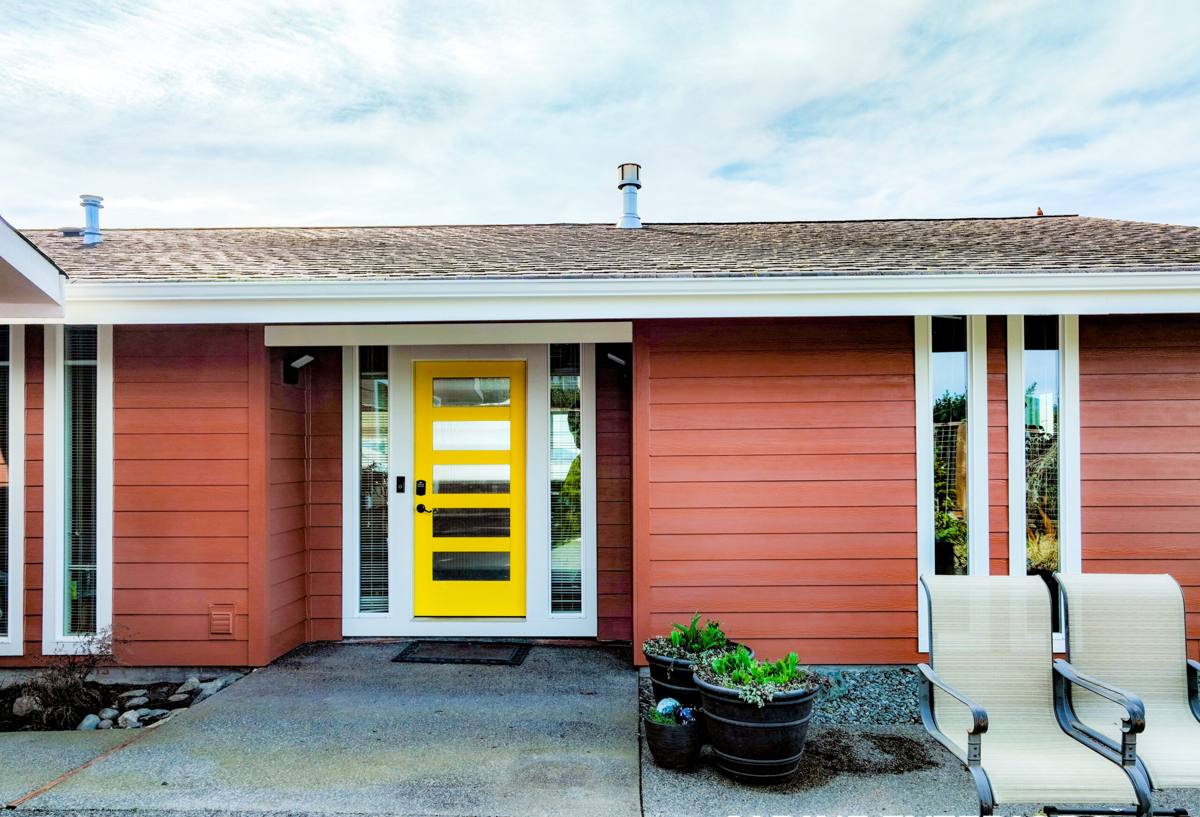
What Whatcom County's Climate Does to Siding Over Time
Salt-Laden Air
Whatcom County sits close enough to the Salish Sea that marine air carries salt well inland, even on properties that aren't waterfront. Salt accelerates corrosion of exposed metal — nail heads, trim flashing, hardware — and it's harsh on any coating that isn't formulated to resist it. Siding with a thin or field-applied paint job loses its protective layer faster in this air than the same product would in a drier inland climate.
Driving Rain
Lynden-area storms frequently come with wind, which means rain doesn't just fall on a wall, it drives into it — into laps, joints, corner boards, and anywhere a fastener penetrates the surface. Siding systems that rely on tight tolerances or perfect caulking to stay watertight are more likely to let moisture through here than in a calm, dry climate. The water-resistive barrier and flashing behind the siding end up doing as much work as the siding itself.
A Long Moss Season
Shaded walls, north-facing elevations, and anything near overhanging trees or landscaping stay damp for extended stretches. That dampness is exactly what moss, algae, and mildew need to establish themselves. Once organic growth takes hold on a siding surface, it holds moisture against the material longer, which speeds up whatever deterioration process is already underway — rot in wood-based products, coating breakdown, swelling at cut edges.
Signs a Laurel Home May Need Siding Replacement
Most siding failure in this climate is gradual, so it helps to know what to look for before a small problem becomes a wall-cavity problem. Common warning signs include:
- Soft or spongy spots when you press on the siding, especially near the bottom courses or below windows
- Visible swelling, bubbling, or delamination at panel edges or seams
- Paint that's cracking, peeling, or chalking faster than a normal repaint cycle would explain
- Persistent moss or dark staining that keeps returning shortly after cleaning
- Gaps opening up at butt joints, corner trim, or around window and door casings
- Warping or visible waviness in the wall plane, which often points to moisture already trapped behind the siding
- A musty smell or noticeable temperature difference near exterior walls, which can indicate moisture reaching the sheathing
Any one of these is worth a look. Several at once usually means the siding has been letting water in for a while and a patch repair won't solve the underlying problem.
What a Correct Siding Replacement Actually Involves
Ripping off old siding and putting up new material is the easy part to see. The parts that determine whether the new siding lasts are mostly hidden once the job is done.
Tear-Off and Sheathing Inspection
Every replacement should include a real inspection of the wall sheathing once the old siding is off — not a glance, an actual check for soft spots, rot, or hidden damage from years of moisture intrusion. In a climate like this one, it's common to find some degree of damage behind older siding, particularly around window openings and lower wall sections. Compromised sheathing gets repaired before anything new goes up; siding fastened over rotten sheathing is a problem deferred, not solved.
Water-Resistive Barrier and Flashing
Given how much driving rain this area sees, the water-resistive barrier underneath the siding and the flashing details around every window, door, and penetration matter as much as the siding itself. Proper lapping, sealed seams, and correctly integrated flashing are what keep wind-driven rain from finding its way behind the cladding even when it's actively pushing against the wall.
Fastening and Installation to Spec
Fiber cement siding has manufacturer-specified nailing patterns, fastener types, and clearances — from grade, from roofing, from decks — that exist specifically to manage moisture and allow the material to perform as designed. Skipping or shortcutting these specs is one of the most common ways a siding job fails early, regardless of how good the material itself is.
Caulking and Finish Details
Joints, corners, and trim transitions need the right sealant, applied correctly, at the points where the system is designed to be sealed — not as a blanket fix for gaps that shouldn't exist in a properly installed system.
Why We Only Install James Hardie Fiber Cement
We made a decision as a company to install one siding system: James Hardie fiber cement. We don't install vinyl, LP SmartSide, Cemplank, Allura, primed spruce, or cedar. That's not a marketing position — it's a reflection of what holds up when we're the ones coming back to look at it years later.
Fiber cement is non-combustible, dimensionally stable, and doesn't feed moss or mildew growth the way wood-based products can. James Hardie's ColorPlus finish is factory-applied and baked on under controlled conditions, which gives it better long-term resistance to fading, chipping, and cracking than field-applied paint holds up to in a wet, salt-influenced climate. Hardie also engineers specific product lines (their HZ5 line, for example) for exactly this kind of Pacific Northwest exposure, and backs installations with a strong transferable warranty when the job is done to spec.
That last part matters as much as the product itself. A great material installed wrong will still fail. That's why our process is built around installing to manufacturer spec every time, not just using a good product and hoping the details take care of themselves.
How Common Siding Materials Compare in This Climate
| Material | Performance in Salt Air & Driving Rain | Moss/Moisture Resistance | Typical Maintenance Burden |
|---|---|---|---|
| James Hardie fiber cement | Dimensionally stable; factory finish resists salt and UV degradation | Doesn't feed organic growth; holds up well to sustained dampness | Low — periodic washing, no repainting on a normal cycle |
| Vinyl | Can warp or become brittle with temperature swings and wind loading over time | Doesn't rot, but moisture can collect behind panels at seams | Low, but panels are hard to color-match if damaged and replaced individually |
| Wood-based/engineered wood (e.g., LP SmartSide) | Wood-based core is more sensitive to sustained moisture exposure than fiber cement | Requires diligent sealing at cut edges and joints to resist moisture and organic growth | Moderate to high — coating and edge maintenance are important in wet climates |
| Primed spruce / cedar | Natural wood movement and moisture absorption are amplified by driving rain | Most susceptible to moss, mildew, and rot without consistent upkeep | High — regular repainting, sealing, and inspection needed |
Our Process for a Laurel Siding Replacement
We approach every Laurel-area project the same way:
- On-site assessment — we look at the existing siding, sheathing condition where visible, drainage around the foundation, and any areas showing early signs of moisture damage.
- Written estimate — a clear scope of work and cost, with no pressure to sign on the spot.
- Tear-off and sheathing repair — old siding comes off, sheathing is inspected, and any damaged material is repaired before moving forward.
- Water-resistive barrier and flashing installation — done to spec around every opening and penetration, since this is what actually keeps driving rain out.
- James Hardie installation to manufacturer specification — correct fasteners, clearances, and nailing patterns throughout.
- Final walkthrough — we go over the finished work with the homeowner before calling the job complete.
Why a Crew That Already Works Laurel Makes a Difference
Siding installation isn't one-size-fits-all across a state as geographically varied as Washington. A crew that regularly works Whatcom County knows how much clearance a wall needs from grade in a wet climate, which elevations tend to hold moss longest, how aggressively flashing needs to be detailed around openings, and what the marine air does to fasteners and coatings over a five- or ten-year span — not just at install. That local pattern recognition is what catches a problem area before it becomes a rot repair, and it's the difference between a crew reading a spec sheet for the first time and one that's installed this exact system on homes facing this exact weather, repeatedly.
What Drives the Cost of a Laurel Siding Replacement
| Factor | Why It Matters |
|---|---|
| Extent of sheathing damage found at tear-off | Rot or moisture damage behind old siding has to be repaired before new siding goes on — this is the single biggest source of cost variation |
| Home size and wall complexity | More corners, openings, and trim details mean more cutting, flashing, and labor time |
| Number of stories and access | Second-story and steep-lot work require more equipment and time |
| Siding profile and trim selection | Lap width, trim style, and accessory details affect material and labor cost |
| Existing exterior condition | Removal of old siding, house wrap, and any existing damage repair adds scope beyond the new material itself |
Because sheathing condition is such a large variable, we're cautious about giving a firm number before we've actually looked at the house. A written estimate after an on-site assessment is always more reliable than a rough figure over the phone.
Living with New Siding in Laurel
Once James Hardie siding is installed correctly, upkeep in this climate is manageable: a periodic rinse to clear off pollen, dust, and early moss growth, keeping gutters and downspouts clear so water isn't dumping directly onto walls, and trimming back vegetation that shades siding and keeps it damp. There's no repainting cycle to plan around, and the factory finish is built to hold its color through the kind of sustained damp exposure Whatcom County sees most of the year.
If you're seeing early warning signs on your Laurel home, or you're simply due for a siding replacement and want it done with the right materials and the right details underneath, we're happy to take a look and walk you through what we find. Reach out for a free, no-pressure estimate — there's no obligation, just an honest assessment of where your siding actually stands.