 Lynden
 Composite Decking Built for Maple Falls' Wet, Mossy Climate
Maple Falls sits in a part of Whatcom County that sees more rain, more shade, and a longer moss season than most people expect when they're picking out decking material. Between the tree cover, the driving rain off the foothills, and the salt-tinged air that reaches inland across the county on a west wind, an outdoor deck here takes a beating that a deck in a drier climate never has to deal with. Composite decking is one of the few materials that holds up to that combination without turning into a maintenance chore every spring. This page covers what that actually looks like in practice for a Maple Falls home — not a generic decking pitch, but what we've learned installing and repairing decks in this specific corner of the county.
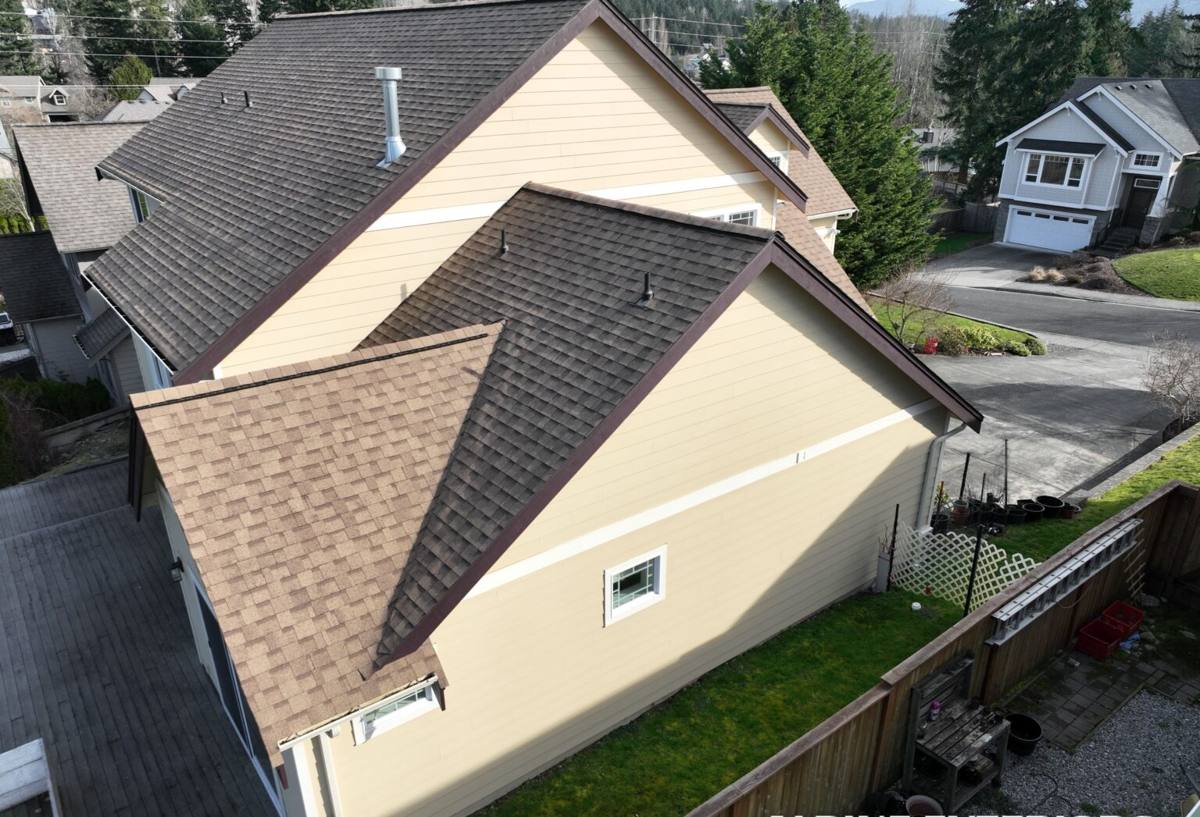
What Maple Falls Homes Are Actually Up Against
Before talking about materials, it helps to be honest about the conditions a deck out here has to survive year after year:
- Extended wet season. Whatcom County gets a long stretch of low-intensity rain and overcast days, which means decking surfaces stay damp far longer than in a sunnier climate — even after the rain itself stops.
- Heavy shade from tree cover. Many Maple Falls lots back up to trees or sit in partial shade most of the day, which slows drying time on a deck surface even further.
- Moss and algae pressure. The combination of moisture and shade is exactly what moss needs to establish itself on wood, and it will happily colonize decking joints, fastener heads, and end grain if given the chance.
- Salt-influenced air. Whatcom County's proximity to the water means a lot of homes deal with some level of salt air exposure, which accelerates corrosion on fasteners, brackets, and any exposed hardware.
- Freeze-thaw swings. Winter cold snaps followed by wet thaws stress any material that absorbs moisture, opening cracks and joints that widen a little more each cycle.
None of these conditions are unusual for this part of the state — but they add up, and they're exactly why the decking choice and the installation details matter more here than they would in a drier region.
Why Composite Decking Makes Sense for This Area
Moisture and Rot Resistance
Wood decking relies on regular staining or sealing to keep water out of the fibers. In a climate where the boards rarely get a long enough dry stretch to fully cure a fresh coat, that maintenance schedule gets harder to keep up with — and once a gap opens in the finish, moisture gets in and stays in. Composite boards are made from a wood-fiber and plastic blend (capped composites add a protective outer shell) that doesn't absorb water the same way solid wood does, so they're far less prone to the swelling, splitting, and soft spots that show up on neglected wood decks in wet climates.
Moss and Algae Growth
Composite doesn't stop moss and algae from landing on a deck surface — nothing does, if the conditions are right — but it doesn't give organic growth the same foothold that raw or weathered wood grain does. Capped composite boards in particular have a smoother, denser surface that's easier to rinse or scrub clean before growth gets established, which matters a lot on a shaded Maple Falls lot where moss pressure is constant through the wet months.
What You Give Up
To be straight about it: composite isn't free of trade-offs. It costs more upfront than pressure-treated wood, it can get warmer underfoot in direct summer sun than some wood species, and if it's ever damaged, you're replacing a board rather than sanding and refinishing a section. For most Maple Falls homeowners weighing a decade-plus of upkeep against a higher purchase price, composite still comes out ahead — but it's a real trade-off, not a free upgrade.
What a Correct Composite Deck Installation Involves
Composite decking fails early far more often from installation mistakes than from the material itself. A few details matter more here than they would in a dry climate.
Substructure and Drainage
The framing underneath a composite deck still needs to be pressure-treated lumber or an approved alternative, properly spaced, and — critically in this climate — graded and flashed so water doesn't pool against ledger boards or joists. Ledger board flashing against the house is one of the most common failure points we find on older decks in wet regions, and it's invisible until the rot underneath is already advanced.
Board Spacing and Fastening
Composite boards expand and contract with temperature more than most people expect, and manufacturer gap specs exist for a reason — tight joints in a wet, temperature-swinging climate lead to buckling. Hidden fastener systems keep the surface clean and reduce the exposed metal points where moss and grime like to collect, but they need to be installed to spec, not eyeballed.
Railings, Fascia, and Stairs
Matching composite fascia and railing systems finish the job and keep the whole structure at a consistent maintenance level — mixing composite decking with untreated wood railings just moves the moss and rot problem to a different part of the same deck. Stair stringers and any ground-contact posts need their own moisture protection regardless of what decking material sits on top.
Composite Decking Cost Factors
Every deck is different, but these are the variables that move the price on a Maple Falls composite decking project:
| Factor | Why It Matters |
|---|---|
| Deck size and shape | Square footage plus the number of cuts and corners — complex shapes waste more board material |
| Composite tier | Base composite vs. capped/premium composite lines vary significantly in price and warranty length |
| Substructure condition | A deck built on new or sound framing costs less than one where rotted joists or a bad ledger connection need to be rebuilt first |
| Height and access | Elevated decks or decks with limited site access take more labor for framing, footings, and material staging |
| Railings and fascia | Matching composite railing and fascia systems add cost over a bare deck surface but keep maintenance consistent |
| Site drainage work | Grading, flashing, or drainage correction under the deck adds labor but prevents the rot issues this climate causes |
We'll walk through each of these on a site visit and give you real numbers for your specific deck — broad online price ranges rarely account for what's actually happening under an existing structure.
Our Process for Maple Falls Deck Projects
- On-site assessment. We look at the existing structure (if there is one), the framing condition, drainage around the foundation, and sun/shade exposure specific to your lot.
- Material walkthrough. We go over composite tiers and color options in person, with honest input on what holds up best given your deck's shade level and exposure.
- Written estimate. A clear scope covering demo (if needed), framing repair or replacement, decking, railings, and fascia — no vague allowances.
- Substructure work first. Any rot, poor flashing, or drainage issues get corrected before a single composite board goes down. This is the step that gets skipped most often on rushed jobs, and it's the one that determines whether the deck lasts.
- Installation to spec. Manufacturer-specified fastening, gapping, and flashing — not shortcuts to save an afternoon.
- Final walkthrough. We go over the finished deck with you, including basic care so it holds up through the wet season ahead.
Common Problems We See on Older or DIY Decks in This Area
- Ledger boards attached to the house with no flashing, letting water track behind the siding
- Wood decking with no gap left for expansion, leading to cupped or split boards
- Fasteners that have corroded and stained the decking around them, especially on decks with salt air exposure
- Moss and algae buildup in shaded corners that's been pressure-washed but never actually addressed at the source
- Railing posts bolted to rim joists without proper blocking, creating a safety issue that isn't visible from the surface
- Composite boards installed tight against each other with no thermal gap, which buckles in temperature swings
Why a Crew That Already Works Maple Falls Matters
Decking installation isn't identical everywhere — what holds up on a dry, open lot in eastern Washington doesn't automatically hold up on a shaded, rain-heavy lot in Maple Falls. A crew that works this specific stretch of Whatcom County regularly already knows how the moisture, moss, and salt-air conditions here behave on a deck over the first few winters, and builds for that from the start rather than learning it on your project. That's the difference between a deck that needs attention in year three and one that's still solid a decade later.
If you're planning a new composite deck or replacing a wood deck that's showing its age, we're happy to come take a look and walk you through your options — no pressure, no obligation. Use the form below to request a free estimate for your Maple Falls property.