 Lynden
 Building Decks for Nooksack-Area Homes Near Lynden
Nooksack sits in the river valley east of Lynden, in a stretch of Whatcom County where farmland, timber, and the Nooksack River all shape how a house — and everything attached to it — holds up over time. A deck built for this area has to do more than look good for a season. It has to shed water fast, resist moss and mildew through a long wet stretch of the year, and stand up to salt-tinged marine air that moves inland off the Sound. We build decks for this specific set of conditions, not a generic Pacific Northwest deck plan pulled off a shelf.
Whether it's a new deck off the back of a farmhouse, a replacement for a rotted structure that's been patched one too many times, or a first-time build for a newer home, the same rules apply here: get the substructure right, choose materials that actually perform in this climate, and detail every connection so water has somewhere to go besides into the wood.
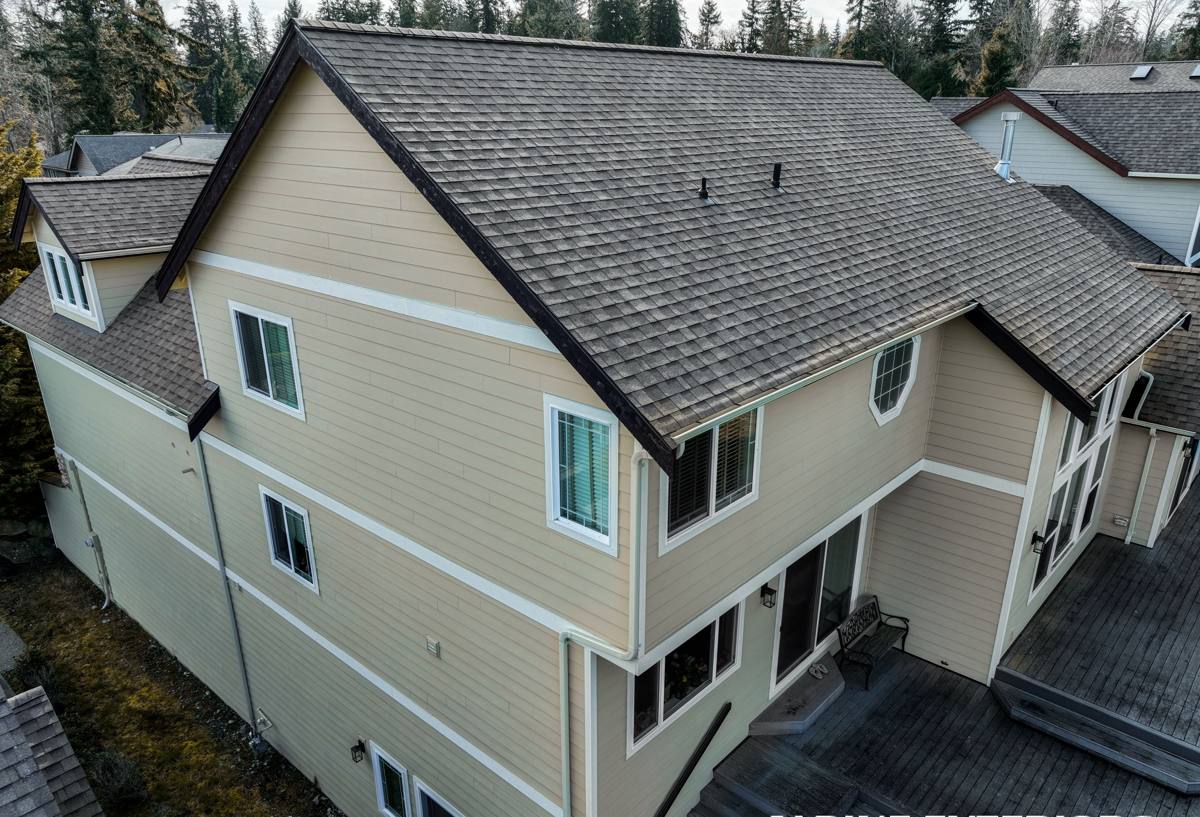
What Whatcom County Weather Does to a Deck Over Time
Lynden and the surrounding Nooksack area get a long wet season, often eight or nine months of the year where surfaces rarely fully dry out. Add in occasional salt-laden air pushing in from Bellingham Bay and the Strait of Georgia, and you get a combination that's harder on exterior materials than most homeowners expect.
The main stressors
- Driving rain — wind-driven rain gets pushed sideways into ledger connections, stair stringers, and any joint that isn't properly flashed.
- Moss and algae — shaded decks, north-facing builds, and anything under tree cover grow a slick moss layer fast, which holds moisture against the surface and becomes a slip hazard.
- Salt-influenced air — even well inland, salt air accelerates corrosion on fasteners, hinges, and any unprotected metal hardware.
- Freeze-thaw cycling — Whatcom County gets enough cold snaps each winter to stress footings and connections that weren't set below frost depth.
None of these are dramatic on their own. The problem is they compound. A deck with a marginal footing, standard hardware, and no drainage detailing might look fine for a couple of years, then fail all at once — soft joists, rusted brackets, and a railing post that's gone spongy at the base.
Decking Material Options for This Climate
There's no single "best" decking material — there's a best material for a given budget, sun exposure, and maintenance appetite. Here's how the common options actually perform under Nooksack-area conditions.
| Material | Moss/Moisture Resistance | Maintenance | Typical Lifespan Here |
|---|---|---|---|
| Pressure-treated fir/hem-fir | Fair — needs regular sealing | Annual cleaning + re-stain every 2-3 years | 15-20 years with upkeep |
| Cedar | Good natural rot resistance, but surface grays and can host moss without cleaning | Periodic cleaning + oiling if color is wanted | 20-25 years |
| Capped composite | Very good — non-porous cap resists moss growth and water absorption | Occasional washing, no sealing/staining | 25-30+ years, per manufacturer warranty |
| Uncapped/older-style composite | Weaker — can absorb moisture at cut edges and fastener holes | More frequent cleaning to prevent surface mold | Variable, shorter than capped composite |
For homes in and around Nooksack that get heavy tree shade or sit close to the river, we generally steer clients toward capped composite or well-detailed cedar over uncapped composite or bare pressure-treated boards left unsealed. It's not that the cheaper options can't work — it's that they demand a maintenance schedule most homeowners don't keep up with once the deck is a year or two old, and that's when moss and rot get a foothold.
Why we're selective about which composite lines we install
Not every composite product is engineered the same way. Board density, cap thickness, and how the manufacturer handles cut-edge sealing all affect how a board performs after five winters of standing water and moss. We install product lines with a track record of holding up in wet marine-influenced climates like ours, and we're upfront when a lower-cost option carries real trade-offs in long-term moisture performance — that's a maintenance and warranty conversation, not a brand-bashing one.
What a Correctly Built Deck Substructure Looks Like
The parts nobody sees are what determine whether a deck lasts 10 years or 30. This is where most corner-cutting happens, and it's also where it's hardest for a homeowner to catch after the fact.
Footings and posts
Footings need to go below the local frost line and bear on undisturbed soil — not backfill. In a river valley area like Nooksack, soil drainage around footings matters even more than in drier parts of the county, since saturated ground around a post base is what eventually rots wood posts from the bottom up.
Ledger attachment
Where a deck attaches to the house, the ledger board needs proper flashing that directs water away from the rim joist and wall sheathing behind it — not caulk alone. This single detail is responsible for a large share of the hidden rot we find when replacing older decks in this area.
Joist protection
Joist tape or an equivalent flashing membrane over the top of every joist keeps deck screws from creating a thousand tiny entry points for water into the framing. It's a small material cost that pays for itself many times over in framing life.
Railings, Fasteners, and Hardware That Hold Up
Hardware is where salt-influenced air does its quiet damage. Standard zinc-coated fasteners can start showing surface corrosion within a few years in this climate, especially on decks that get any wind off the Sound. We use stainless or heavy hot-dip galvanized structural hardware and coated deck screws rated for ground contact and coastal exposure, matched to whatever decking and framing material is going in.
Railing posts and connections
Railing posts take a lot of lateral load — leaning, kids, furniture bumps — and they're also a common rot point if the post base isn't isolated from standing water. Proper post-to-frame connection hardware, correctly through-bolted rather than just screwed, matters as much for safety as it does for longevity.
Our Process From Estimate to Finished Deck
- On-site walkthrough — we look at sun exposure, drainage, tree cover, and how the deck will tie into the existing structure.
- Material recommendation — based on budget, maintenance preference, and how exposed the site is to moss and driving rain.
- Permit and code check — deck permits and footing requirements are handled through Whatcom County, and we confirm what applies before any digging starts.
- Framing and inspection — footings, posts, and framing go in first, with inspections at the appropriate stages.
- Decking, railing, and finish work — boards, railings, stairs, and any fascia or skirting are installed last.
- Walkthrough and care guidance — we go over what maintenance the specific material you chose actually needs, in plain terms.
Maintenance: What Nooksack Homeowners Should Actually Expect
Every deck needs some upkeep — the question is how much, and how forgiving the material is if that upkeep slips for a season. Given the long wet stretch and moss pressure typical here, we tell clients to plan around a simple annual rhythm rather than a one-time "set it and forget it" expectation, even with lower-maintenance materials.
- Clear leaves and debris from between boards and off the surface before fall rains set in.
- Rinse or lightly scrub moss growth in shaded areas before it gets established — it's far easier to remove early than after a full wet season.
- Check railing post bases and stair stringers annually for softness or standing water pooling nearby.
- Re-seal or re-stain wood decking on the schedule the product actually requires, not just when it starts looking gray.
- Keep gutters and downspouts near the deck clear so runoff isn't dumping directly onto the structure.
Pre-Build Checklist for Nooksack Deck Projects
- Confirm the deck's sun/shade exposure and how much of the year it stays damp
- Decide on maintenance appetite before choosing decking material
- Ask about footing depth and how it accounts for local frost and soil drainage
- Confirm ledger flashing details in writing, not just verbally
- Ask what fastener and hardware grade is being used, given salt-influenced air in this area
- Get the Whatcom County permit and inspection plan spelled out before work starts
- Ask for a written maintenance guide specific to the material installed
Why a Local Lynden Crew Matters for Nooksack Projects
A crew that already works this stretch of Whatcom County isn't guessing at how a deck will hold up here — we've seen what a decade of driving rain, moss, and salt-influenced air does to different materials and different framing details on real jobs nearby. That means fewer surprises: we're not learning on your project which fastener grade corrodes first in this air, or which shaded corner of a Nooksack lot never quite dries out between storms. It also means we're a known, reachable local business if a warranty question or maintenance question comes up years down the line, not a crew that worked the area once and moved on.
If you're planning a new deck or replacing one that's past its prime, we're happy to come take a look and put together a straightforward, no-pressure estimate — no obligation, just an honest read on what your specific site needs. The form below gets you started.