 Lynden
 Why Roofs in Deming Take a Different Kind of Beating
Deming sits in the wooded, rain-heavy stretch of Whatcom County east of Lynden, where tall conifers, higher rainfall totals, and long stretches of overcast, humid weather all work against a roof at the same time. The marine air that moves through the county keeps humidity high for much of the year, and combined with heavy tree cover, that means roofs here rarely get a real chance to dry out between storms. Add in driving rain that comes sideways off the foothills during fall and winter systems, and you have a climate that finds every weak seam, cracked pipe boot, and lifted shingle tab a roof has.
The result is a roof that can look fine from the ground for years while small problems compound underneath — a slightly lifted shingle edge, a nail that backed out, moss holding water against the roof deck. By the time a stain shows up on a ceiling, the moisture has usually been working its way in for a while. Roof repair in Deming isn't just patching a hole; it's addressing a set of conditions that are more aggressive than what a roof in a drier, more open part of the county deals with.
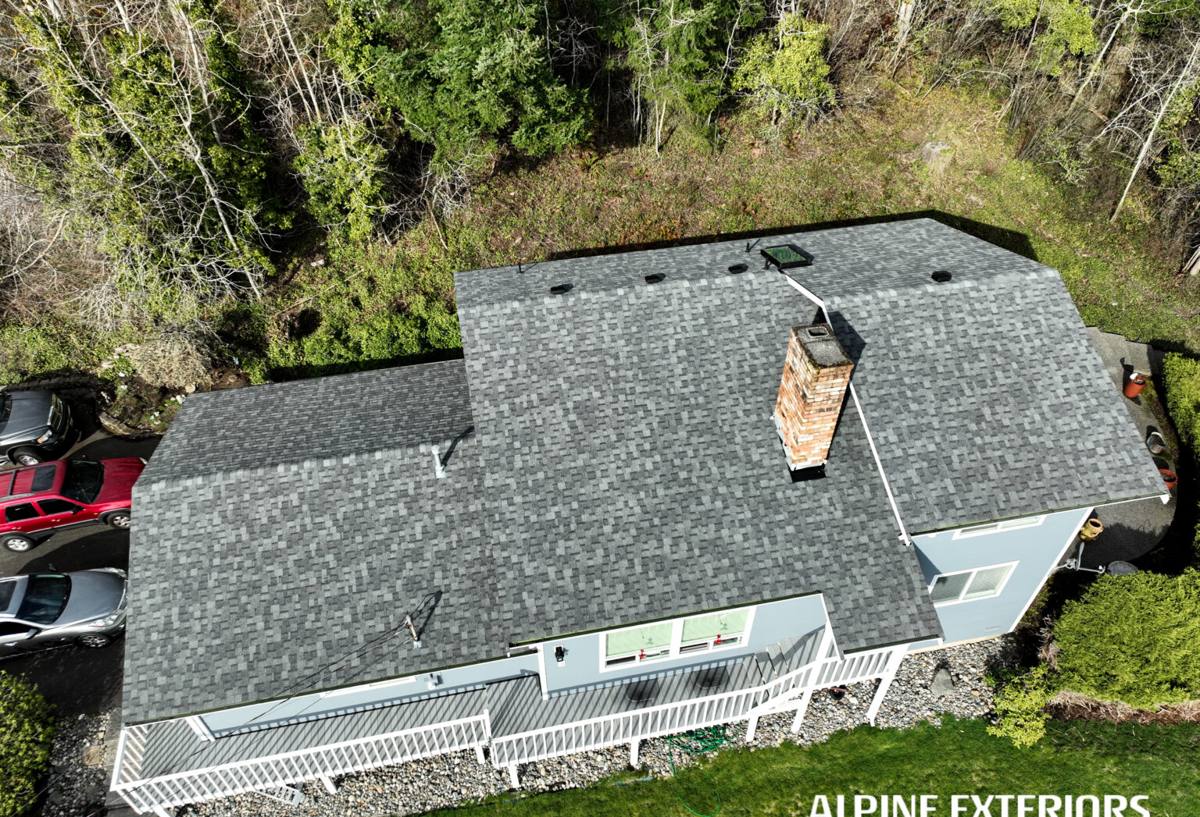
What a Proper Roof Repair Actually Involves
Diagnosis before anything else
A repair that starts with a patch instead of a diagnosis usually ends up being the first of several visits. We start on the roof and in the attic, tracing water stains back to their actual entry point rather than assuming the leak is directly above the stain — water travels along rafters and sheathing before it shows itself indoors, and moss-clogged valleys or worn flashing several feet away are often the real source.
Matching materials, not just patching
Whatever we use to repair a section needs to match the existing roof's material, weight, and profile closely enough that it sheds water the same way the surrounding roof does. A mismatched shingle or a patch that sits proud of the surrounding surface becomes its own dam for water and debris, which on a shaded Deming roof means a spot where moss and needle litter collect first.
Flashing, not just shingles
Most leaks we find aren't failed shingles at all — they're flashing. Step flashing at wall intersections, valley metal, and pipe boots take the brunt of driving rain and are usually the first components to fail, often years before the shingle field around them shows any wear. A repair that replaces shingles but ignores tired flashing is a repair that will need to be done again.
Common Roof Problems We See Around Deming
Every region has its own pattern of roof failures. Around Deming, tree cover and sustained rain push certain problems to the top of the list more often than others.
| Symptom | Likely Cause | What Fixing It Right Looks Like |
|---|---|---|
| Ceiling stain near an exterior wall | Failed step or counter flashing | Remove and rebuild the flashing, not just seal over it |
| Granules collecting in gutters | Aging shingle field or moss holding grit against the surface | Assess remaining shingle life; repair or plan replacement |
| Dark streaks or thick moss patches | Shade, moisture retention, organic debris | Careful low-pressure cleaning plus a zinc or copper control strip |
| Soft or spongy decking underfoot | Long-term moisture intrusion into the sheathing | Cut back to sound wood, replace decking, then re-flash and re-cover |
| Leak only during wind-driven rain | Undersized or worn pipe boots, ridge caps, or vent flashing | Replace the specific component, tested under similar conditions |
Moss, Needle Litter, and the Tree-Cover Problem
A long moss season is close to unavoidable on a shaded roof in this part of Whatcom County, but moss itself isn't just cosmetic. It holds water against roofing material far longer than an open, sun-exposed roof would ever experience, and its root structure works into shingle granules and seams over time. Needle litter compounds the problem by collecting in valleys and behind chimneys, creating small dams that back water up under shingles during heavy rain.
A few habits go a long way toward keeping a Deming roof out of trouble between repairs:
- Have gutters and valleys cleared of needles and debris at least twice a year, more often under heavy tree cover
- Address moss with gentle, low-pressure methods — never a pressure washer, which strips granules and shortens shingle life
- Keep overhanging branches trimmed back to reduce shade, debris, and physical abrasion on the roof surface
- Check attic ventilation; poor airflow traps moisture from below just as tree cover traps it from above
- Have a roof inspected after any major windstorm, even if nothing looks obviously wrong from the ground
Repair or Replace? How We Help You Decide
Not every roof problem calls for a full replacement, and we don't push one when a solid repair will hold up. The decision usually comes down to how much of the roof's remaining service life is left and how widespread the damage actually is.
| Factor | Leans Toward Repair | Leans Toward Replacement |
|---|---|---|
| Age of roof | Under 15-18 years, asphalt shingle | Approaching or past expected shingle life |
| Extent of damage | Isolated to one section or component | Spread across multiple slopes or the whole roof |
| Decking condition | Sound, dry sheathing | Soft, delaminated, or repeatedly wet decking |
| Repair history | First real issue in years | Third or fourth repair call in a short span |
| Moss/algae staining | Surface-level, recently developed | Deep, long-term staining with granule loss |
We'll always tell you honestly which side of that line your roof falls on, including when a repair is the right call even though a replacement would be more profitable for us.
Our Process, Start to Finish
- Inspection: We walk the roof and check the attic, tracing any leak to its real source rather than the visible symptom.
- Written scope: You get a clear explanation of what's failing, why, and what it will take to fix it correctly — no vague line items.
- Material match: We source shingles, flashing metal, or underlayment that matches your existing roof's age, color, and profile as closely as possible.
- The repair itself: Old material is removed back to sound decking, flashing is rebuilt where needed, and new material is installed to manufacturer specifications.
- Cleanup and walk-through: Debris is cleared, the repair area is walked with you, and we point out anything else worth keeping an eye on.
Roofing Materials We Work With — and Our Honest Take
Most homes around Deming are roofed in asphalt composition shingle, with some cedar shake and a growing number of standing seam metal roofs. Each has a different relationship with moss, moisture, and long-term maintenance.
| Material | Moss/Moisture Behavior | Maintenance Reality |
|---|---|---|
| Asphalt composition shingle | Moderate moss risk in shaded areas; repairable in sections | Lowest upfront cost; periodic cleaning and spot repair extend life |
| Cedar shake | Higher moss and moisture sensitivity if not ventilated well | Needs regular cleaning and occasional shake replacement to stay sound |
| Standing seam metal | Sheds moss and debris well due to smooth, steep-pitched surface | Lower ongoing maintenance; repairs are more specialized and less common |
We're upfront that cedar shake, while attractive, asks more of a homeowner in a wet, shaded location than either asphalt or metal — it's a maintenance and moisture-management commitment, not a flaw in the product itself. We'll work with whatever is on your roof, but we'll tell you the real trade-offs before you decide what to repair it with.
What It Costs (and What Changes the Price)
Roof repair pricing varies enough between jobs that a flat number isn't honest to quote. What we can tell you is what actually moves the price up or down.
| Cost Factor | Why It Matters |
|---|---|
| Roof pitch and access | Steep or hard-to-reach roofs take longer and need more safety setup |
| Extent of decking damage | Replacing rotted sheathing adds material and labor beyond a surface patch |
| Flashing complexity | Valleys, chimneys, and wall intersections take more time than open field repair |
| Material match | Discontinued or specialty shingle colors can add sourcing time and cost |
| Number of repair areas | Multiple separate problem spots cost more than one localized fix |
Simple, single-area repairs are generally a modest expense measured in a few hundred dollars; anything involving decking replacement or extensive flashing work runs higher. We'll give you a firm number after inspecting the actual damage, not a guess from a phone description.
Why Hire a Crew That Already Works Deming
A roofing crew that already knows this part of Whatcom County isn't guessing about how tree cover, rainfall patterns, and moss behave here — they've seen it repeatedly and know which failure points to check first. That familiarity saves time during diagnosis and means fewer surprises once a repair is underway. It also means someone who understands that a repair job in a heavily wooded area needs to account for continued debris and shade after the work is done, not just the day the crew leaves.
Local crews are also simply easier to schedule with when weather is closing a window, and easier to call back if a question comes up after the fact. That kind of continuity matters more for a roof than for almost any other part of a home.
If you're dealing with a leak, moss buildup, or storm damage on a Deming roof, we're happy to take a look and give you a straight answer about what it needs. Reach out for a free, no-pressure estimate using the form below.