 Lynden
 Laurel's Roofing Challenges in a Whatcom County Climate
Homes in the Laurel area near Lynden deal with a specific combination of weather that's harder on a roof than most homeowners realize. Whatcom County sits close enough to the Salish Sea that moisture-laden marine air moves through the region most of the year, carrying fine salt and humidity that settles on roofing surfaces. Add the driving rain that comes through on winter storm systems — often sideways, pushed by wind rather than falling straight down — and you get water intrusion points that a roof built for a drier climate simply isn't designed to handle.
Then there's the moss. Lynden's tree cover, cooler shaded rooflines, and long wet stretches between late fall and early spring create ideal conditions for moss and algae to take hold. Once established, moss holds moisture against the roofing surface long after a storm has passed, which shortens the life of shingles, lifts edges, and works its way into fastener holes and flashing seams. A roof replacement in this area isn't just about swapping old material for new — it has to be built to shed water fast, resist the marine air, and slow moss regrowth from day one.
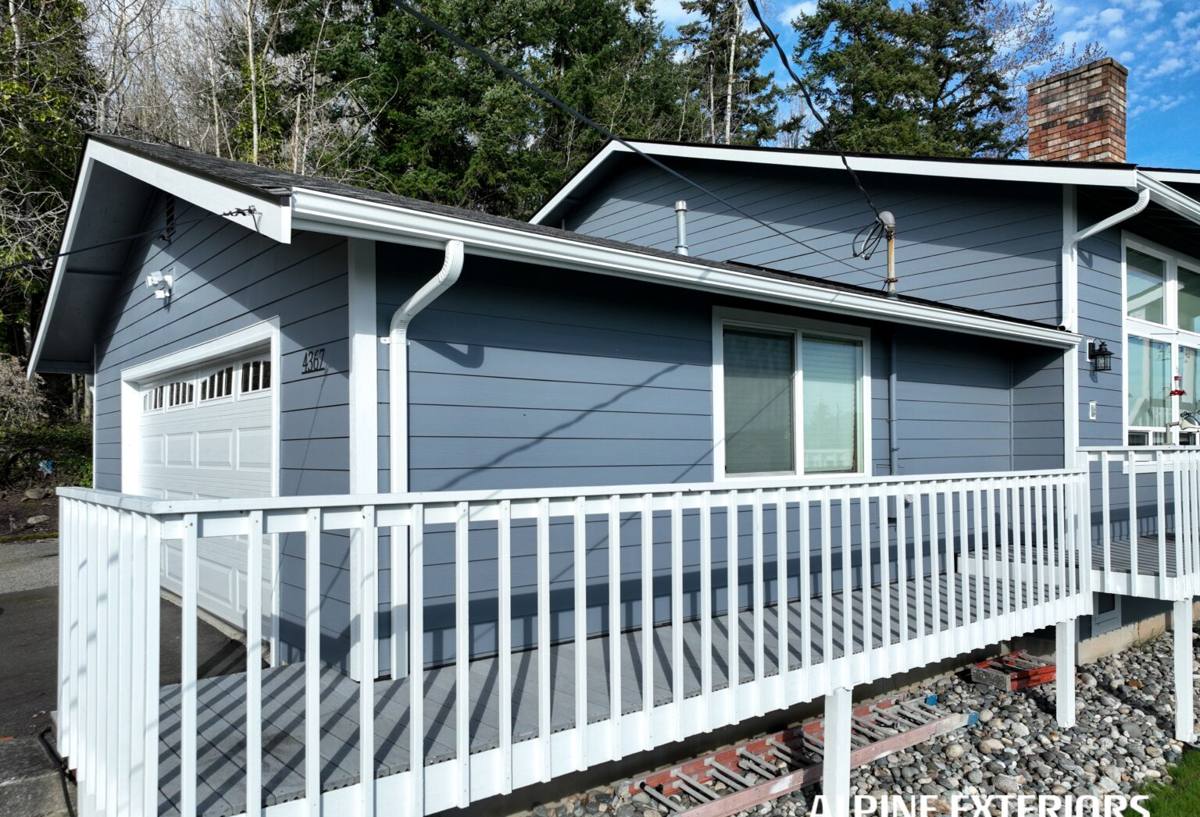
Repair or Replace? Signs to Watch For
Not every roofing problem calls for a full tear-off. But in a climate that punishes small gaps and delayed maintenance, it's worth knowing when a repair is patching a symptom versus when the underlying roof system has run its course.
- Granule loss heavy enough that you're finding grit in gutters or downspouts every season
- Shingles that are curling, cupping, or cracking, especially on south- and west-facing slopes
- Moss or algae that returns within a few months of cleaning, even after treatment
- Soft spots, sagging, or visible daylight in the attic when the sun hits the roof deck
- Repeated leaks in different spots rather than one isolated failure point
- A roof that's already had two or more repair visits in the last few years
- Flashing around chimneys, skylights, or sidewalls that's rusted, lifted, or was never properly stepped in
One or two of these on their own might mean a targeted repair is enough. Several at once, especially on a roof that's already past the midpoint of its expected lifespan, usually means the underlying materials and flashing details need to be rebuilt from the deck up rather than patched again.
What a Correct Roof Replacement Actually Involves
A roof replacement done right is a system, not a single product. Every layer has to work together to move water off the house and out of the structure, especially in a climate where wind-driven rain and moss are constants rather than occasional events.
Tear-Off and Deck Inspection
We remove the old roofing down to the deck rather than layering over it. That's the only way to actually see the plywood or plank sheathing underneath and catch soft, rotted, or delaminated spots before they're covered up again. Any section of deck that's been compromised by long-term moisture gets replaced before anything new goes down — skipping this step is the single most common reason a "new" roof fails early.
Underlayment and Ice-and-Water Protection
Synthetic underlayment has largely replaced traditional felt because it holds up better to the extended exposure that's common on a multi-day tear-off in a region where you can't always count on a dry week. At eaves, valleys, and any low-slope transition, a self-adhering ice-and-water membrane goes down first — this is the layer that actually stops wind-driven rain from working its way backward under the shingles during a hard blow off the Sound.
Flashing Details
Flashing is where the great majority of roof leaks actually start, not in the field of the shingles themselves. Chimneys, skylights, sidewalls, and roof-to-wall transitions all need new step flashing and counterflashing installed correctly and integrated with the underlayment — not just caulked over the old metal. It's slower work, but it's the difference between a roof that's still watertight in ten years and one that starts leaking at the first hard storm.
Ventilation
A roof that's sealed tight without balanced intake and exhaust ventilation traps moisture in the attic, which condenses, soaks insulation, and rots the deck from underneath — often before it ever shows up as a visible leak. We check that intake at the soffits and exhaust at the ridge or roof vents are actually balanced for the attic volume, not just present for the sake of code minimums.
Matching the Material to the Weather
There's no single "best" roofing material for Laurel and Lynden — the right choice depends on the home's roofline, budget, and how much long-term maintenance the owner wants to take on. Here's how the common options actually compare in this climate:
| Material | Typical Lifespan | Moss/Algae Resistance | Maintenance Needs |
|---|---|---|---|
| Architectural asphalt shingle (algae-resistant) | 25–30 years | Good with copper/zinc strips; moderate without | Periodic moss removal on shaded slopes |
| Standing seam metal | 40–50+ years | Very good — smooth surface sheds debris and dries fast | Low; occasional debris clearing |
| Cedar shake | 20–30 years with upkeep | Poor without diligent maintenance; absorbs moisture | High — regular treatment and inspection required |
We'll install cedar shake when a homeowner wants that look and understands the maintenance commitment, but our professional standard is to be upfront about the trade-off: shake absorbs and holds moisture in a way that architectural shingles and metal don't, and in a climate with this much sustained dampness, that translates into more frequent inspection and treatment to get a full service life out of it. Architectural shingles with algae-resistant granules are the most common choice for Laurel homes because they balance upfront cost, appearance, and moss resistance reasonably well. Metal roofing costs more up front but sheds moss and debris the best of the three and needs the least attention over its life.
Moss, Algae, and the Long Whatcom Moss Season
Moss doesn't just sit on top of a roof — it holds a film of moisture against the shingle surface for weeks at a time during the wetter months, which accelerates granule loss and can lift shingle edges enough for wind-driven rain to get underneath. On a new roof, we install zinc or copper strips near the ridge on north-facing or heavily shaded slopes, which release trace amounts of metal ions with every rain that inhibit moss growth downstream of the strip. It's a passive system that keeps working season after season without chemical treatment.
On existing roofs, gentle removal — never pressure washing, which strips granules and shortens shingle life — combined with a soft wash treatment on a normal schedule keeps moss from establishing a foothold. If a roof already has heavy moss growth built up under the shingle tabs, that's often a sign the underlying material has been holding moisture longer than it should have, which is worth having inspected before it's assumed to be a cosmetic issue only.
Our Process From Estimate to Final Walkthrough
Every job follows the same sequence, adjusted for the specific roof:
- Inspection and estimate — we get on the roof (not just the ladder), check the deck condition where visible, and give a written estimate that spells out materials, scope, and price.
- Material selection — we walk through the options above based on the home's style, budget, and how much upkeep the owner wants going forward.
- Scheduling around the weather — in this climate, timing a tear-off matters. We plan for a realistic dry window and always aim to get a roof dried in the same day the old material comes off.
- Tear-off and deck repair — old roofing removed, deck inspected and repaired as needed, debris hauled off site.
- Underlayment, flashing, and material installation — installed in the sequence and detail described above, not shortcut to save a day.
- Cleanup — magnetic sweep for stray nails and fasteners, gutters cleared of debris from the job.
- Final walkthrough — we go over the finished roof and the warranty coverage with the homeowner before calling the job done.
Why a Crew That Already Works Laurel and Lynden Matters
A roof replacement isn't a one-day transaction — it's a system that has to perform through years of Whatcom County winters. A crew that's already working in and around Lynden knows what that actually means in practice: which roof pitches and orientations in this area tend to hold moss longest, how to sequence a tear-off around the region's rain patterns instead of getting caught with an open deck in a downpour, and which local suppliers stock the materials that actually hold up here rather than what's cheapest to order.
There's also the after-the-job reality. Flashing can settle, a fastener can work loose, a wind event can lift a shingle edge — and when that happens, a local crew can get back out to the property quickly rather than a homeowner waiting on a company that has to schedule a special trip from out of the area. For a neighborhood like Laurel, where mature tree cover and shaded rooflines mean the moss and moisture conditions are fairly consistent from one property to the next, that local, repeat experience shows up in fewer callbacks and roofs that perform the way they were designed to.
Permits, Codes, and Warranty Basics
A full tear-off and reroof generally requires a permit, whether the property sits inside Lynden's city limits or in unincorporated Whatcom County — the exact process depends on which jurisdiction the home falls under. Part of a proper estimate includes confirming what's required and handling that paperwork so the homeowner isn't left to sort it out. Materials should also meet the wind and fire ratings required by the Washington State Building Code for the region; this isn't optional, and it's worth confirming in writing before work starts.
Warranty coverage on a roof replacement typically has two separate parts: the manufacturer's warranty on the material itself, and the contractor's warranty on the labor and installation. Ask for both in writing, and ask what happens if a problem shows up that involves both flashing work and the shingles themselves — that's usually where warranty gaps get exposed if it wasn't spelled out clearly up front.
Get a Straightforward Estimate
If your Laurel-area roof is showing its age, holding moss it didn't used to hold, or you're just not sure whether it's a repair or a replacement, we're happy to take a look and give you a straight answer. The estimate is free, there's no pressure to sign anything on the spot, and you'll get a written scope you can actually compare against other quotes. Fill out the form below to get started.