 Lynden
 The Marine Climate Aldergrove and Lynden Homes Share
Aldergrove sits just across the line from Lynden, and the two communities deal with the same weather patterns. Homes here take on moist, marine-influenced air that rolls in off the Salish Sea and settles into the Fraser Valley and Whatcom County lowlands. That means long stretches of driving rain in the fall and winter, humidity that lingers into spring, and shade pockets under mature trees or tight side yards that almost never fully dry out. Add in occasional cold snaps and freeze-thaw cycles, and you have a climate that is genuinely hard on exterior cladding — not dramatic, just relentless.
Wood-based products absorb that moisture and swell, crack, or rot over time. Some engineered wood products can hold up reasonably well but are sensitive to how well the job site controls moisture during installation. Vinyl handles rain fine but flexes with temperature and can crack in a hard cold snap, and it doesn't stop the moss and algae staining that this climate produces. None of these are hypothetical problems for this area — they're the normal wear pattern on homes that have gone twenty-plus years without a good look at their siding.
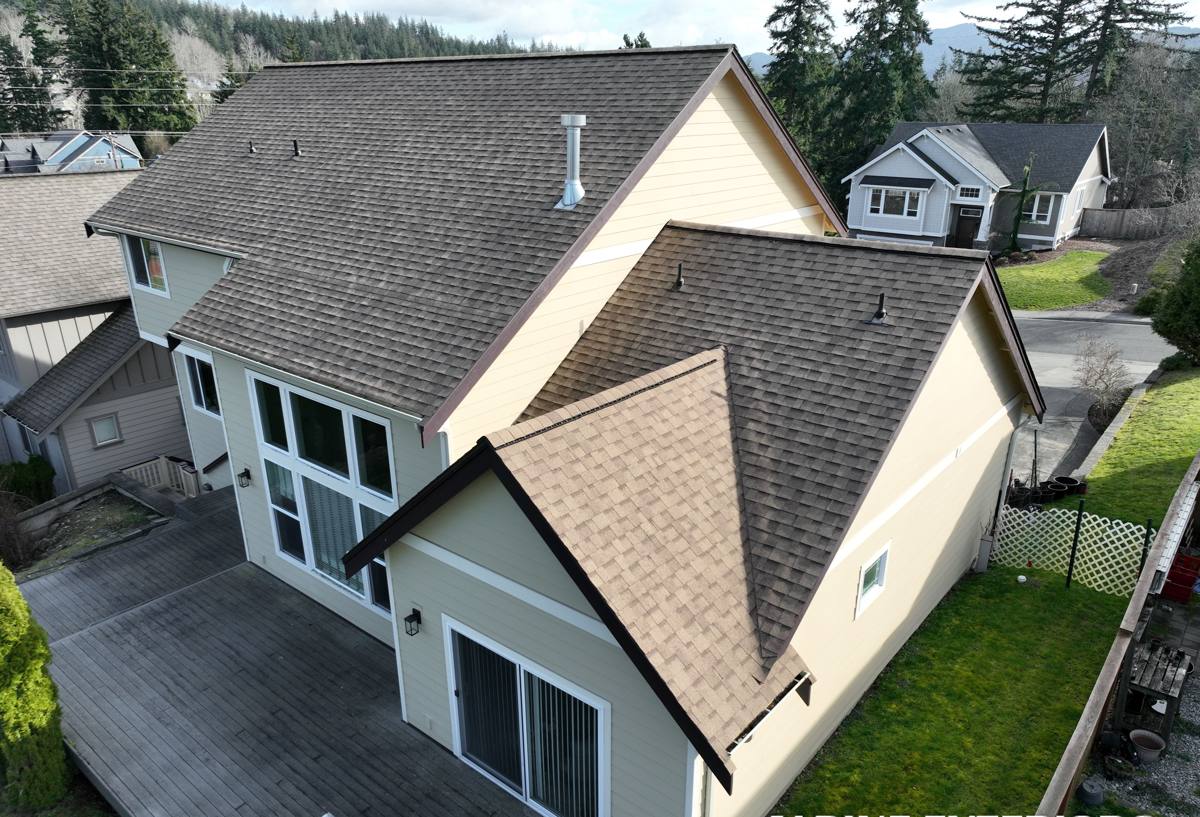
What Correct Siding Installation Actually Requires
Fiber cement siding is a forgiving, long-lasting product — but only when the installation follows the manufacturer's specifications closely. Most of the siding failures we get called out to inspect aren't material failures. They're installation shortcuts that let water get behind the cladding, where it has nowhere to go and no way to dry out.
The Details That Matter
- Correct clearance between siding and the ground, roof lines, decks, and other hard surfaces
- Weather-resistive barrier and flashing installed and lapped in the right order, before a single piece of siding goes up
- Proper fastener type, spacing, and depth — over-driven or under-driven nails are one of the most common causes of early failure
- Correctly sized gaps at butt joints and trim, caulked with a product rated for the exposure
- Panel and joint layout planned to shed water downward, not trap it
Common Installation Mistakes That Cause Early Failure
The mistakes we see most often on older installs in this area are siding installed tight to grade or a deck surface with no drainage gap, house wrap that was cut short or taped incorrectly around windows, and caulk used as a substitute for flashing instead of a supplement to it. Every one of these is invisible on the day the job is finished and becomes obvious three, five, or ten years later as staining, soft spots, or paint failure.
Why This Crew Installs Only James Hardie Fiber Cement
We made the decision to install James Hardie fiber cement siding exclusively — we don't install vinyl, LP SmartSide, or other engineered wood products, and we don't install unprimed cedar or spruce. That's not a marketing position, it's a standard we hold because of what this climate does to a house over decades, not just the first few years.
James Hardie's fiber cement is non-combustible, doesn't swell or rot from moisture the way wood-based products can, and comes factory-finished with ColorPlus technology, which holds color and resists fading far longer than field-applied paint. Hardie also engineers its HardieZone product lines for specific climate conditions, including versions built for regions that see colder inland winters — relevant for homes on either side of a border that runs through the same weather system. The warranty is transferable and backed by a company with a long track record, which matters to homeowners who plan to sell within the life of the siding.
| Climate Factor | What It Does to Siding | How Correct Installation Responds |
|---|---|---|
| Driving, wind-blown rain | Pushes moisture into joints, laps, and fastener holes | Proper flashing, lap direction, and sealed penetrations before panels go up |
| Long moss and algae season | Traps moisture against the surface, stains and degrades some finishes | Factory-cured ColorPlus finish resists staining better than field paint |
| Freeze-thaw cold snaps | Causes some materials to contract, crack, or become brittle | Fiber cement is dimensionally stable across temperature swings |
| Shaded, slow-drying wall sections | Extends the time siding stays wet after rain | Correct clearance and drainage gaps let walls dry instead of holding water |
How Our Installation Process Works
Every job starts with a site walk, not a sales pitch. We look at the existing siding condition, the sheathing underneath where accessible, water damage patterns around windows and trim, and anything specific to the lot — grading, tree cover, prevailing wind exposure — that affects how the new siding needs to be detailed.
- Tear-off of existing siding and inspection of the sheathing and framing underneath for hidden rot or moisture damage
- Repair of any compromised sheathing before anything new goes on the wall
- Installation of a weather-resistive barrier and correctly lapped flashing at every penetration, window, and transition
- Hardie panel or plank installation to manufacturer fastening and clearance specifications
- Trim, corners, and caulking with climate-rated sealant at the joints that need it
- Final walkthrough with the homeowner before we consider the job done
Permits and Inspections
Requirements differ depending on which side of the border a property sits on, and we work through the correct permitting and inspection process for the jurisdiction the job is actually in rather than assuming one set of rules covers both. Whatcom County work and Aldergrove work aren't handled identically, and we account for that up front rather than after the fact.
Local Crew Advantage: Based in Lynden, Working Aldergrove
Being based in Lynden means Aldergrove isn't an out-of-the-way job for us — it's part of the same service area we work every week. That matters in a few concrete ways. We're already familiar with the housing stock common to this stretch of the border, the typical wall assemblies used in homes built in different decades, and the specific weather exposure that comes with being this close to open farmland and river-bottom terrain.
It also means faster response for site visits, warranty follow-up, or a question that comes up mid-project, instead of waiting on a crew that has to drive in from a city an hour or more away. A crew that already knows the area doesn't have to relearn local conditions on your project.
Cost Factors and Timeline
Every siding installation is priced around the specifics of the house, so we won't put a number on a page that hasn't seen your property. What we can tell you is what actually drives the cost up or down on a typical job:
- Full tear-off versus installing over existing sheathing that's still sound
- Amount of hidden repair needed once old siding comes off
- Home size, number of stories, and roofline complexity
- Trim detail — plain versus more elaborate window and corner treatments
- Plank versus panel product choice, and color selection
Most single-family homes in this area take a crew several days to a couple of weeks depending on size and how much repair work turns up once the old siding is off. Weather windows matter too — we plan installation timing around the wetter months rather than fighting them.
After Installation: Keeping Siding Performing
Fiber cement siding installed correctly needs very little upkeep, but "very little" isn't "none." A yearly walk-around to check caulking at joints and trim, keep gutters clear so water isn't dumping down a wall section, and knock back any moss or vegetation growing against the siding will keep a correctly installed job performing for decades. None of that is labor-intensive — it's the same basic maintenance any exterior surface in this climate benefits from.
Signs It's Time to Replace
Homeowners often wait longer than they should because siding damage isn't always obvious from the ground. Worth checking for:
- Visible cracking, warping, or bulging panels
- Soft or spongy spots when pressed, especially near the bottom of walls
- Paint that's peeling or blistering repeatedly in the same spots
- Persistent moss or dark staining that comes back shortly after cleaning
- Gaps opening up at trim, corners, or window edges
- Rising energy bills that suggest moisture or air infiltration behind the wall
If your home is showing more than one of these, it's worth having someone look at what's happening underneath, not just patch what's visible.
If you're weighing a siding project on a home in Aldergrove or anywhere nearby, we're glad to take a look and give you a straight, no-pressure estimate — just fill out the form below.