 Lynden
 Siding That Has to Work in Sumas, Not Just Look Good
Sumas sits in the low, flat farmland of eastern Whatcom County, close enough to Lynden that homeowners in both areas deal with the same weather pattern year-round: long stretches of soaking rain, damp river-bottom air, and short winter days that never quite dry the north side of a house out. Add the moist, moving air that comes up the valley off the Sound and the Fraser lowlands, and you get siding conditions that are tougher than they look on paper. It's not dramatic weather — no hurricanes, no hailstorms — just relentless moisture, month after month, for most of the year.
That's the environment James Hardie fiber cement siding was engineered for, and it's the only siding product we install on homes in this area. This page walks through what Sumas homes specifically need from their siding, what a correct Hardie installation actually involves, and why hiring a crew that already knows this stretch of Whatcom County matters more than it might seem.
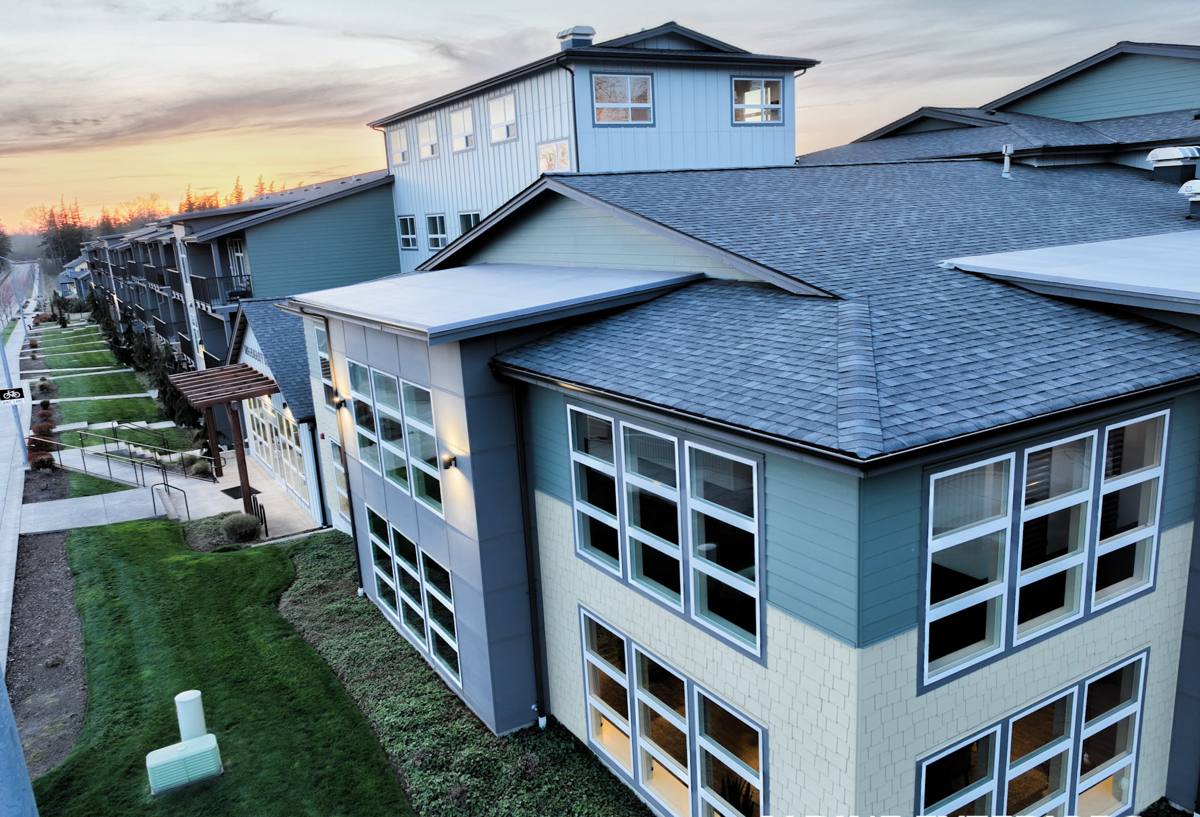
What the Local Climate Actually Does to Siding
Driving Rain and Wind-Driven Moisture
Rain in this part of Washington rarely falls straight down. Wind pushes it sideways into wall assemblies, seams, and trim joints. Siding materials that rely on surface paint film or that swell and shrink with moisture — wood, some composites — start failing at exactly those joints first, usually years before the field of the siding shows any problem.
Moss, Algae, and Prolonged Dampness
Whatcom County's moss season isn't a few weeks — it's most of the year on shaded or north-facing walls. Moss and algae growth thrive on surfaces that stay damp and on materials with any organic content (wood fiber, cellulose-based composites) that can feed growth over time. Siding that can't dry out between rain events becomes a long-term moisture trap behind the cladding, not just a cosmetic issue.
Salt-Influenced Coastal Air
Even away from the immediate waterfront, the marine air that moves through Whatcom County carries salt content that accelerates corrosion of fasteners and metal trim, and it keeps humidity levels elevated compared to drier inland climates. Siding systems and the fasteners behind them need to be rated for that reality, not just for generic exterior exposure.
Freeze-Thaw Cycling
Sumas gets cold snaps that Lynden proper sometimes escapes by a degree or two, being farther from the moderating effect of Puget Sound. Repeated freeze-thaw cycling stresses any material that has absorbed moisture, since water expands as it freezes inside cracks, seams, or saturated fibers.
Why We Install Only James Hardie Fiber Cement
We don't offer LP SmartSide, vinyl, Cemplank, Allura, primed spruce, or cedar, and it's worth explaining why, honestly, rather than just stating it as a policy. Each of those products has real strengths — vinyl is inexpensive and low-maintenance in mild climates, cedar has genuine natural beauty, engineered wood products install quickly. But every one of them asks a Whatcom County homeowner to accept a trade-off we don't think makes sense given what this climate does to a house over 20-30 years:
- Wood and engineered wood siding has an organic component that can feed moss and fungal growth, and needs consistent paint maintenance to keep water out at cut edges and joints.
- Vinyl siding is not fire-resistant, can warp or become brittle with UV and temperature swings, and its water management relies heavily on correct installation of the substrate behind it — problems that hide until they're expensive.
- Other fiber cement brands (Cemplank, Allura) are legitimate products, but we've standardized on one manufacturer's system, factory finish, and warranty rather than mixing installation standards across brands.
James Hardie is fiber cement — sand, cement, and cellulose fiber cured under pressure. It's non-combustible, it doesn't feed moss the way wood-based products can, and it holds paint and factory finish far longer than wood substrates because it doesn't move with moisture the same way. For a Sumas or Lynden home sitting in this climate for decades, that difference compounds year after year.
The HZ5 Product Line and Why It Matters Here
James Hardie engineers its siding by climate zone, and Whatcom County falls into the HZ5 category — Hardie's product line built for regions with significant moisture exposure and freeze-thaw cycling. HZ5 boards are formulated with that specific combination of wet-and-cold conditions in mind, which is different from the HZ10 line built for hot, dry, high-UV climates in the Southwest.
This is one of the most overlooked details in siding shopping: two houses can have "James Hardie siding" and be running different formulations because they were built for different climates. We install the HZ5 product line on Sumas and Lynden-area homes because it's what the manufacturer engineered for exactly this kind of weather — not the closest available option.
ColorPlus Factory Finish vs. Field-Applied Paint
Most James Hardie siding we install uses the ColorPlus finish — color baked on at the factory under controlled conditions rather than painted on-site after installation. In a climate like this one, that distinction matters more than it does somewhere dry:
| Factor | ColorPlus Factory Finish | Field-Applied Paint |
|---|---|---|
| Cure environment | Controlled factory conditions | Dependent on weather during install season |
| Coating consistency | Uniform across every board | Varies with applicator, temperature, humidity |
| Touch-up needs | Rare, minor color-match kits available | Full repaint cycles needed sooner |
| Warranty coverage | Finish is separately warrantied by Hardie | Typically covered only by painter, if at all |
| Long-term fade/wear in wet climate | Formulated for UV and moisture exposure | Depends entirely on paint product chosen |
Field-painted siding isn't wrong, but in a market that gets this much rain during install season, waiting on the right paint-curing window can stretch a project out. Factory finish removes that variable entirely.
What a Correct Installation Involves
The siding board itself is only part of the system. Most siding failures we get called out to inspect — regardless of brand — trace back to installation details, not the material. For Sumas homes specifically, we pay close attention to:
- Water-resistive barrier and flashing sequencing — installed shingle-style so every layer sheds water down and out, never trapping it behind the cladding.
- Correct fastener type and placement — corrosion-resistant fasteners driven per Hardie's blind- or face-nailing specs, sized and spaced for the specific board profile.
- Proper clearance at grade and hard surfaces — siding held up off decks, patios, and soil per manufacturer minimums so splash-back moisture doesn't wick into the bottom edge.
- Butt joint and trim sealing — factory-primed cut edges sealed correctly, since an unsealed cut edge is the single most common entry point for moisture in any fiber cement job.
- Ventilation behind the cladding — a drainage plane that lets incidental moisture escape rather than sit against the back of the board.
Skip any one of these and you can put James Hardie boards on a house and still end up with the moisture problems the product was supposed to solve. The material and the installation are a system — neither one does the job alone.
How Our Process Works
1. On-Site Assessment
We walk the exterior, check the current siding and any trim or moisture damage, and look at drainage, grade, and sun/shade exposure on each elevation — north-facing walls in this climate carry a different risk profile than south-facing ones.
2. Product and Color Selection
We go through the HZ5 board profiles (lap, shingle, panel) and ColorPlus color options relevant to the home's style, and talk through trim and accent choices.
3. Written Scope and Estimate
A clear, itemized scope — what's being removed, what underlayment/barrier work is included, fastener and flashing details, and a firm price before any work starts.
4. Installation
Old siding removal (when applicable), barrier and flashing installation, then Hardie board installation to manufacturer spec, with attention to the joint and clearance details above.
5. Final Walkthrough
We walk the finished job with the homeowner, check every elevation, and go over warranty registration and any care notes for the specific board and finish installed.
Why Local Experience in This Area Matters
Sumas and Lynden don't have exotic weather, but they have consistent weather, and consistent weather punishes shortcuts. A crew that's worked homes in this specific stretch of Whatcom County already knows which elevations take the worst wind-driven rain, how far moss creeps up a north wall in a given winter, and how the freeze-thaw pattern here differs from a coastal Seattle job or a drier eastern Washington one. That's not something a general contractor picks up on one job — it's pattern recognition built from doing this work repeatedly in this exact climate.
A Quick Homeowner Checklist
- Ask whether the siding line is climate-zone matched (HZ5 for this region) or just "James Hardie" generically.
- Ask whether the finish is factory ColorPlus or field-applied, and what that means for your warranty.
- Confirm the contractor's flashing and water-resistive barrier plan in writing, not just verbally.
- Check fastener spacing and type against Hardie's published installation manual for your board profile.
- Get clearance measurements at grade, decks, and patios in the written scope.
- Ask how cut edges will be sealed before installation, not after.
If you're weighing a siding replacement or repair on a Sumas or Lynden-area home, we're happy to walk the exterior with you and give you a straight, no-pressure assessment of what your home actually needs. Use the form below to request a free estimate.