 Lynden
 Window Replacement in Sumas: A Border-Town Climate That's Hard on Windows
Sumas sits at the far northeast corner of Whatcom County, right on the US-Canada border, in open farm country that takes the full brunt of whatever weather moves through the valley. It doesn't have the direct shoreline exposure of the county's coastal towns, but it sits inside the same marine-influenced weather system that shapes exterior work across this whole region: salt-tinged air drifting in off Puget Sound, rain that arrives sideways more often than straight down, and a moss season that runs long enough here to work on almost any surface that stays shaded or damp. Windows take the brunt of that weather because they sit right at the seam between conditioned interior space and everything outside trying to get in.
Siding is our main line of work, and it's a short drive from our home base in Lynden out to Sumas. Along the way we've replaced and repaired enough windows on Whatcom County homes to know the pattern well: most of the water damage we find around a window traces back to how it was installed, not to the window itself, and a failed window is one of the most common reasons a siding job we're called out for turns out to have a bigger cause than the siding alone. This page covers what Sumas's climate actually does to windows, what a correct replacement involves, and how our process works if you're weighing one.
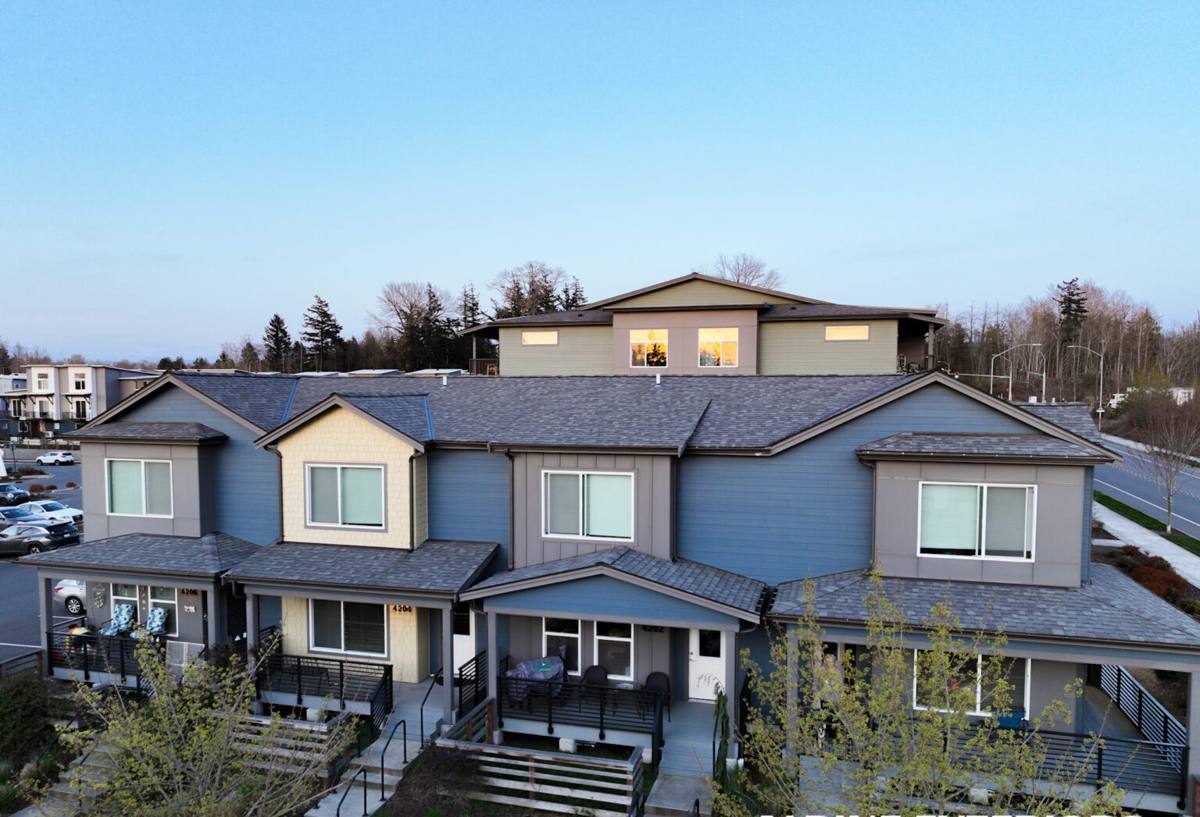
What Sumas's Climate Does to Windows
Driving Rain on Open, Exposed Lots
Sumas sits in open farmland with less tree cover and fewer windbreaks than towns closer to the foothills, which gives wind a clearer run at a house. Rain rarely falls straight down here — wind pushes it sideways into window flashing, head trim, and the sill pan underneath the frame. That sideways load is a bigger test of installation quality than of the window product itself. A well-made window with sloppy flashing will leak; a modest window installed with correct flashing and a properly pitched sill usually won't.
A Long Moss and Mildew Season
Mild temperatures and near-constant moisture give moss and mildew a season that runs most of the year on shaded sills and window trim. On older wood-framed windows especially, that moisture works into the sill and lower corners slowly, and most homeowners don't notice until paint starts failing or a sill feels soft underfoot.
Salt Air, Even This Far Inland
Sumas isn't a coastal town, but marine air still moves through this part of Whatcom County, and over years it adds up on window hardware, screen frames, and lower-grade fasteners. It's a slower process than at the immediate coastline, but it's real, and it's worth accounting for in hardware and finish choices rather than assuming an inland location means no exposure at all.
Temperature Swings and Condensation
Border-area winters bring cold snaps that push harder on window performance than the county's milder coastal edge sees. Single-pane and older double-pane windows with failed seals show it first: condensation between panes, cold drafts at the sash, and higher heating bills. That's often the first sign a homeowner notices before anything looks visibly wrong from outside.
Window Materials: What Actually Holds Up in Sumas
There's no single right answer for every home — budget, sun exposure, and how long you plan to stay in the house all factor into it. What matters is understanding the real trade-offs before deciding, especially on a property with the wind exposure a lot of Sumas homes have.
| Frame Material | Moisture & Wind Behavior | Typical Maintenance | Realistic Lifespan Here |
|---|---|---|---|
| Vinyl | Won't rot; holds up well against wind-driven rain when welds and seams are installed correctly | Low; occasional track and weep-hole cleaning | 20-30 years |
| Fiberglass | Dimensionally stable through temperature swings; resists moisture and corrosion well | Low | 30-40+ years |
| Wood, painted or clad | Attractive, but vulnerable at joints and sills without regular upkeep | Higher; ongoing paint or finish maintenance | 15-30 years depending on upkeep |
| Aluminum | Conducts cold hard during border-area winters; can corrode over time without a good finish | Moderate | 20-30 years |
We'll walk through which material fits your home's exposure, budget, and the look you want, rather than defaulting to whichever product is easiest to sell. A wide-open, wind-exposed wall and a wall sheltered by an outbuilding or tree line on the same property don't always call for the same answer.
Full-Frame Replacement vs. Insert Replacement
One of the first decisions on any window project is whether to do a full-frame replacement, which removes the old window down to the rough opening and rebuilds the flashing from scratch, or an insert replacement, which fits a new window into the existing frame. Insert replacement is faster and less invasive to the surrounding siding and trim, and it works well when the existing frame is structurally sound and properly flashed. Full-frame replacement costs more and takes longer, but it's the honest answer when there's already moisture damage at the sill or jambs, or when the original flashing was never done correctly in the first place. Sumas has a good number of older farmhouses and homes built before current flashing standards were common, so full-frame replacement comes up more often here than it might in a newer subdivision. We'll tell you which situation you're actually in rather than defaulting to the cheaper option and sealing a moisture problem up behind a new window.
What a Correct Installation Actually Involves
A window replacement is only as good as the details most homeowners never see again once the trim goes back on. On every job, that means:
- Removing the old window and inspecting the rough opening for rot or hidden water damage before anything new goes in
- Building or repairing a sloped sill pan so any water that gets past the window drains back outside instead of into the wall
- Flashing the head, jambs, and sill in the correct order so water sheds down and out at every layer
- Sealing and insulating the gap between the window frame and the rough opening without over-packing it, which can bow the frame
- Setting the window level, plumb, and square so the sash operates correctly for years, not just on install day
- Finishing exterior trim and caulking in a way that sheds wind-driven rain rather than trapping it against the frame
Skip any one of those steps and the window can look fine for a year or two before a leak shows up, usually somewhere that makes it hard to trace back to the original cause.
Our Process for a Sumas Window Replacement
We start with a walk-through of the home to look at each window's condition, the framing around it, and any signs of existing moisture damage, since that changes whether a job should be an insert or full-frame replacement. From there we talk through material and glass options based on your budget and how the house is exposed to wind and sun, and put together a written estimate that spells out what's included rather than a single lump number. Once you approve the work, we order the windows, which typically involves a lead time of a few weeks depending on the manufacturer and size, and we schedule installation around that timeline. On install day, we protect the surrounding siding, trim, and interior finishes, remove the old windows, address anything unexpected we find in the rough opening, and install and flash the new windows to the standard described above. We clean up and haul away the old units, walk the finished work with you, and stand behind the installation afterward — if something needs a follow-up adjustment once the house settles into a new window, that's a call to us, not a hunt for whoever did the original work.
Signs a Sumas Home's Windows Need Attention
- Visible condensation or fogging between the panes of a double-pane window, which means the seal has failed
- Drafts near the sash even when the window is fully closed and latched
- Windows that are difficult to open, close, or lock, especially after humid weather
- Soft, discolored, or spongy wood at the sill or lower corners of the frame
- Peeling paint or a chalky finish on the interior sill, often a sign moisture is getting in from outside
- Daylight or a noticeable draft visible around the frame from inside
- A heating bill that's climbed without any other explanation, especially on an older home with original windows
None of these automatically mean full replacement is the only option, but each is worth a professional look before another wet season adds to the damage rather than after.
What Affects Window Replacement Cost in Sumas
Every estimate is specific to the house, but a few factors consistently move the number. The count and size of the windows matters most, along with whether they're standard operable units or larger fixed, bay, or bow configurations that need more structural support. Full-frame replacement costs more than insert replacement because it involves rebuilding flashing and often repairing trim or siding around the opening. Frame material and glass package (double-pane versus triple-pane, and any low-E or gas-fill options) shift the price as well. New windows also need to meet the U-factor requirements in the Washington State Energy Code, which can affect which product lines are a fit for a given project. And on some jobs, especially where a window opening is being resized or a bedroom's egress window is affected, a local building permit is required, which adds a bit of time to the schedule but isn't something to skip. We walk through these factors specifically during the estimate so you understand what's driving the number, rather than handing over a total with no explanation behind it.
Why a Local Whatcom County Crew Matters for Sumas Homes
Working out of Lynden means we're on job sites in this corner of Whatcom County through every season, including the wind-driven storms and cold snaps that hit an exposed, open-farmland town like Sumas harder than more sheltered parts of the county. That repeated, local experience shapes real decisions on the job: how much flashing attention a wind-exposed wall needs, how a sill pan should be pitched for the amount of water a given elevation actually sees, and which install-day details are worth the extra time so you're not dealing with a leak two winters later. It also means that if a warranty question or a maintenance issue comes up years down the road, it's a call to a crew still working in the same area, not a company that's moved on. And because we're a siding contractor first, we're used to looking at a window in the context of the whole wall assembly around it, not as an isolated product.
If your Sumas home has windows that are drafty, fogged, hard to operate, or original to a house that's due for an upgrade, we're glad to take a look and give you a straightforward, no-pressure estimate. Reach out using the form below to get started.