 Lynden
 Windows Built for Wiser Lake's Weather
Wiser Lake sits in the low, wet country outside Lynden, in Whatcom County — a part of Washington where homes take a steady beating from driving rain, marine-influenced air moving in off the Salish Sea, and a moss season that can stretch from October well into spring. Windows here don't just need to look good. They need to shed water fast, seal tight against wind-driven rain, and hold up against wood rot, seal failure, and the slow creep of mildew that comes with months of damp, low-light weather. When a window replacement is done right in this area, it's done with all of that in mind — not just swapping glass, but rebuilding the whole opening so water has nowhere to go but back outside.
We work on homes around Wiser Lake regularly, and the patterns repeat: original wood windows with swollen or rotted sills, aluminum-frame windows from the '80s and '90s fogging up between the panes, and newer vinyl units that were installed without proper flashing and are already leaking behind the trim. None of that is unusual for this climate. It's what happens when windows are installed for a dry-weather standard in a place that rarely gets one.
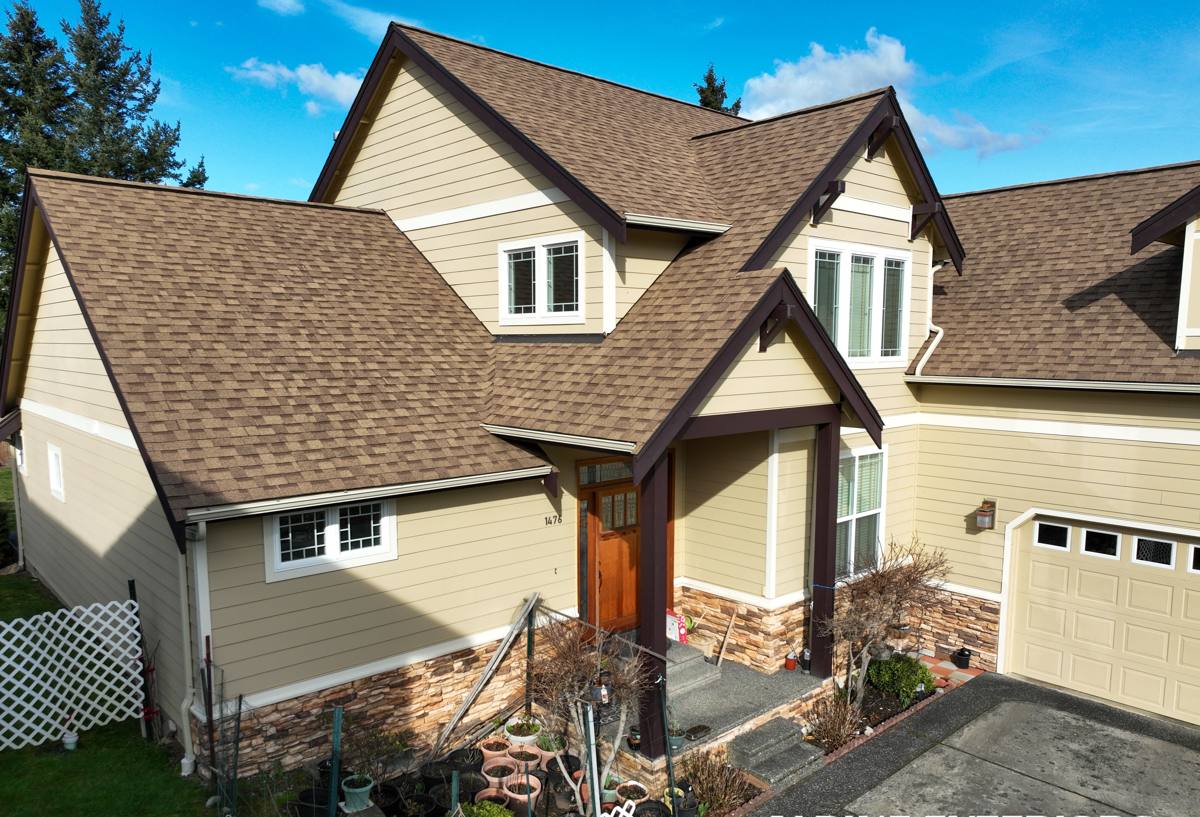
What Wiser Lake Homes Actually Need From a Window
Water Management First, Looks Second
A window that looks great but wasn't flashed correctly will fail here faster than almost anywhere else in the state. Wiser Lake's combination of frequent rain, wind exposure around the open lake and low farmland, and long stretches of humidity means any gap in the flashing or sealant becomes a slow leak — one that often isn't visible until there's already rot in the framing behind it. The window itself is only part of the job; the flashing, sill pan, and sealant details around it matter just as much.
Moss and Organic Growth
Long moss seasons don't just affect roofs. Moss, algae, and mildew build up on horizontal window sills, in corner joints, and along poorly draining trim — especially on north-facing walls that don't get much sun to dry out between rains. Materials and details that resist organic growth, and that are easy to clean, hold up noticeably better here than ones that trap moisture in tight corners.
Wind and Driving Rain
Open exposure around the lake and surrounding farmland means wind-driven rain hits windows at an angle, not just straight down. That changes what "watertight" actually requires — a unit and installation that handle vertical rain fine can still leak under sideways wind pressure if the sill pan, weep system, and seals weren't built for it.
Quick Signs a Wiser Lake Home Needs Window Replacement
- Soft or spongy wood at the sill or lower frame corners when pressed
- Fogging or a milky haze between panes on double-pane units (seal failure)
- Persistent black mildew or moss buildup on the sill that returns days after cleaning
- Drafts or a cold line felt near the frame edge in winter
- Difficulty opening, closing, or locking — often a sign of frame warping or swelling
- Visible gaps, cracked caulk, or daylight around the trim from outside
- Water staining on interior drywall or trim below or beside the window
What a Correct Window Replacement Job Involves
Replacing a window is straightforward in theory and easy to get wrong in practice. The window unit itself is a relatively small part of the overall performance — most leaks and failures trace back to what happens during removal and installation, not the product.
- Careful removal of the old unit without tearing the surrounding siding or trim more than necessary, and an honest look at what's underneath — this is where hidden rot or old damage usually turns up.
- Inspection and repair of the rough opening — any soft framing, old rot, or failed sheathing gets addressed before a new window goes in. Installing a new window over a compromised opening just hides the problem for a few more years.
- Sill pan flashing installed so any water that does get past the window sheds back outside instead of pooling in the framing — one of the most commonly skipped steps in budget installs, and one of the most important in this climate.
- Proper flashing integration with the house wrap or weather-resistive barrier, shingled correctly (upper layers overlapping lower ones) so water always moves down and out.
- Setting the window level, plumb, and square, with shims at the correct load points so the frame isn't stressed and the sash operates smoothly for years, not just on install day.
- Insulating the gap between the window frame and rough opening — enough to stop drafts, without overfilling in a way that bows the frame inward.
- Exterior sealant and trim work done with weep paths preserved, so the window can still drain if water does get behind the cladding.
- Interior finish — trim, casing, and paint or stain matched to the rest of the room.
Choosing the Right Window for This Property
There's no single "best" window brand or material — the right choice depends on the home's exposure, budget, and how the current windows are failing. What we won't do is install a product in a way that ignores this area's moisture load just to save a step. That includes skipping sill pan flashing, using cheap or aging caulk instead of proper flashing tape, or setting a window without shimming it correctly. Those shortcuts show up as callbacks two or three winters later, and by then the damage is inside the wall.
| Frame Material | Typical Strengths | Considerations for Wiser Lake |
|---|---|---|
| Vinyl | Cost-effective, low maintenance, good energy performance | Solid all-around choice; quality varies a lot between manufacturers — frame rigidity and weep design matter more here than in drier climates |
| Fiberglass | Very stable in temperature swings, strong, low expansion/contraction | Handles the area's damp-to-dry seasonal swing well; higher upfront cost |
| Wood-clad | Traditional interior look, good insulating properties | Cladding needs to be genuinely watertight — exposed wood in this climate is a maintenance commitment |
| Aluminum | Slim sightlines, durable frame | Poor insulator and prone to condensation in cold, damp weather unless thermally broken — generally not our first recommendation for this area |
Why It Matters That We Already Work in This Area
A crew that's replaced windows on homes around Wiser Lake and greater Lynden has already seen how the local exposure plays out — which walls take the worst of the wind-driven rain, how fast moss builds up on north-facing sills, and which older installation shortcuts tend to fail first. That's not something you get from a general product spec sheet. It shapes real decisions on the job: where to add extra flashing attention, which sill details hold up best against standing moisture, and how to sequence the work around Whatcom County's wetter months so the opening isn't sitting exposed longer than it needs to be.
Local experience also means straight answers about what your specific windows are dealing with. If a window is failing because of a bad original install rather than an old or worn-out unit, that's worth knowing before you spend money on replacement — sometimes reflashing and resealing an otherwise sound window is the right call, not a full swap.
Cost Factors for Wiser Lake Window Replacement
Every home is different, and giving a number without seeing the windows isn't honest. What does move the price, broadly:
| Factor | Why It Affects Cost |
|---|---|
| Number and size of windows | More units and larger openings mean more material and labor |
| Frame material chosen | Vinyl, fiberglass, and wood-clad options span a wide price range |
| Condition of the rough opening | Rot repair or sheathing replacement adds time and material beyond the window itself |
| Access and site conditions | Second-story windows, tight landscaping, or limited access add labor |
| Trim and siding tie-in | Matching existing trim profiles or repairing siding around the opening affects finish work |
Our Process, Start to Finish
- Free on-site evaluation — we look at each window, check for rot or seal failure, and note anything unusual about that wall's exposure
- A clear, written estimate that breaks out product and labor, with no pressure to decide on the spot
- Scheduling that accounts for weather — we don't leave rough openings exposed overnight during an active rain stretch
- Careful removal and rough opening inspection before any new material goes in
- Proper flashing, insulation, and sealing at every step, not just the parts that show
- A final walkthrough so you can see and understand the work before we call it done
Maintaining New Windows in This Climate
Even a correctly installed window benefits from basic upkeep in a climate like this one. Rinsing sills and tracks periodically during moss season keeps organic growth from taking hold. Checking exterior caulk lines once a year — especially after a hard winter — catches small cracks before they become leaks. And keeping gutters and downspouts clear nearby matters more than people expect, since overflow near a window opening puts extra water exactly where you don't want it.
If you're seeing drafts, fogged glass, soft trim, or persistent moss around your windows, it's worth having them looked at before another wet season adds to the damage. We offer free, no-pressure estimates for window replacement in Wiser Lake and throughout the Lynden area — use the form below to get a time on the calendar.