 Lynden
 Building a Deck That Actually Holds Up Out in Acme
Acme sits back in the wooded, low-lying stretch of Whatcom County south of Van Zandt, and it lives with a different set of problems than a deck going up in downtown Lynden or out on the flat farmland closer to the border. Tree cover means shade most of the day on a lot of lots, shade means the wood stays wet longer after every storm, and wet wood is exactly what moss, algae, and rot need to get established. Add the driving rain that comes through this part of Whatcom County most of the fall and winter, plus the salt-tinged air that reaches inland from the Sound on a west wind, and you've got a climate that's hard on any structure sitting outside year-round. A deck built here needs to be built for this place, not for a catalog photo taken somewhere dry.
We build and repair custom decks throughout the Lynden area, and Acme jobs come with their own checklist because of the tree cover, the grade of a lot of properties, and the moisture that sits in the ground longer than it does in more open parts of the county.
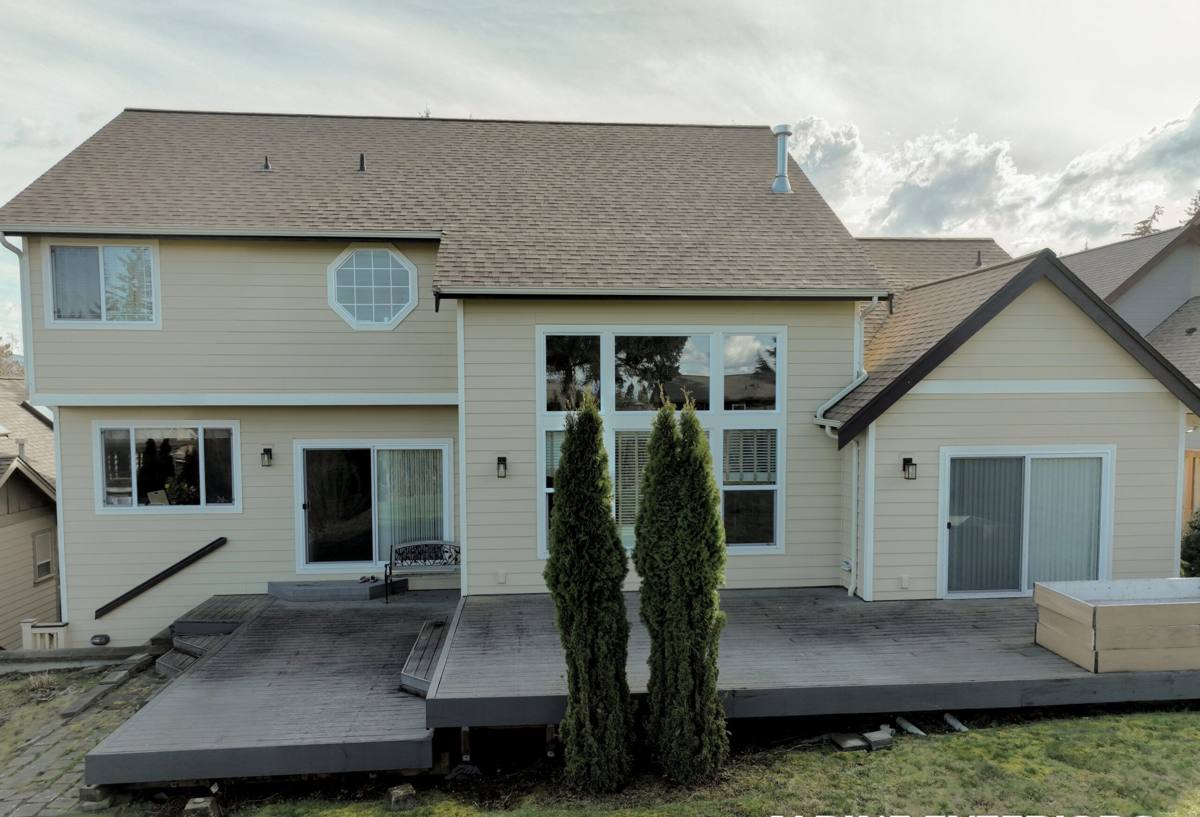
What Acme's Terrain and Weather Do to a Deck Over Time
A few things show up again and again on decks we're asked to repair or replace in this area:
- Moss and algae growth on decking boards and stair treads, especially on the shaded side of a house or under mature trees — it's a slip hazard as much as a cosmetic one.
- Ledger board rot where the deck attaches to the house, usually from missing or failed flashing that let water track behind the siding for years before anyone noticed.
- Corroded fasteners — nails and screws that weren't rated for treated lumber or coastal-influenced moisture, leaving rust streaks and weakened connections.
- Soft or spongy joists under boards that look fine on top, because the damage is happening from underneath where drainage and airflow are poor.
- Footings that have shifted or heaved on lots with heavier, wetter soil and less consistent drainage than you'd get on higher ground.
None of this is unusual for the region — it's just what driving rain, a long moss season, and salt-laden air do to any wood or metal left exposed. The fix isn't a different climate, it's building and maintaining the deck with that climate in mind from day one.
Why "Looks Fine From the Top" Isn't Good Enough
Most of the deck failures we get called out for in Acme didn't look dangerous until someone put weight on the wrong board. The damage that matters — ledger rot, joist decay, footing movement — happens where you can't see it during a casual walk around the yard. That's why any honest evaluation of an existing deck involves getting underneath it and checking the connections, not just eyeballing the surface boards.
Choosing the Right Decking Material for This Climate
There's no single "best" decking material — there's a best material for your budget, your maintenance appetite, and how much shade and moisture your specific lot deals with. Here's how the common options actually compare once you factor in Whatcom County's wet side:
| Material | Upfront Cost | Moss/Algae Resistance | Maintenance | Typical Lifespan |
|---|---|---|---|---|
| Pressure-treated lumber | Lowest | Poor without upkeep | Annual cleaning/sealing recommended | 15-20 years |
| Cedar | Moderate | Fair, better in sun | Regular sealing to hold color and resist rot | 15-25 years |
| Composite (capped) | Higher | Good, cleans easily | Occasional wash, no sealing | 25-30+ years |
| PVC | Highest | Best, sheds moisture fastest | Lowest of all options | 30+ years |
In a shaded, damp spot in Acme, we lean toward recommending capped composite or PVC decking for the surface boards, simply because they don't feed algae the way raw wood fibers do and they shrug off standing moisture instead of absorbing it. That said, plenty of homeowners are happy with well-maintained cedar or treated lumber — it's a real trade-off between upfront cost and how much cleaning and sealing you're willing to keep up with.
The Structural Details That Matter More Than the Boards on Top
The decking surface is what you see, but the structure underneath is what determines whether the deck is still safe in ten years. On every custom deck we build, this is where the real work happens:
Ledger Flashing
Where the deck ties into the house, the ledger board needs proper flashing that sheds water away from the wall, not a bead of caulk and hope. This is the single most common failure point we see on older decks in wet parts of the county, and it's the one detail that causes the most expensive damage — because it's not just the deck that rots, it's the wall framing behind it.
Joist Protection
Joist tape over the top edge of every joist keeps water from soaking into end grain and fastener holes, which is exactly where rot starts on an unprotected joist. It's a small material cost that adds years to the structure's life.
Footings and Post Bases
Footings need to be set below frost depth and sized for the soil they're going into — which varies more than people expect across Acme's mix of wooded and low-lying lots. Post bases that hold the post above the concrete, rather than embedding it, keep the wood out of standing water.
Fasteners and Hardware
Everything — screws, joist hangers, structural screws, bolts — needs to be rated for treated lumber and exterior exposure. Mixing incompatible metals causes galvanic corrosion, which shows up as rust streaks and weakened hardware well before the wood itself gives out.
Railings, Stairs, and Code
Any deck more than 30 inches off the ground needs a code-compliant guardrail, and stairs with a certain number of risers need a graspable handrail — Whatcom County follows the state building code on this, and it's not optional or negotiable at inspection. Beyond the legal minimum, railing spacing and baluster strength matter for actual safety, especially on a deck used by kids or older family members. We build railings to hold up structurally, not just to pass a tape-measure check.
Our Process for a Custom Deck in Acme
- On-site visit — we look at the lot's grade, shade pattern, existing structure if there is one, and how the deck ties to the house.
- Design and material discussion — layout, decking material, railing style, and a straightforward look at cost trade-offs for your specific site.
- Permit handling — we take care of the paperwork for the county where a permit is required, so you're not stuck deciphering it yourself.
- Demo (if replacing an existing deck) — including a real check of the ledger and framing, not just tearing off the old boards.
- Framing, flashing, and footings — the structural work described above, done in the order that keeps water out from the start.
- Decking, railing, and stairs installed — to the material and layout you chose.
- Final walkthrough — we go over the finished deck with you, including what maintenance it will and won't need.
Keeping a Deck Moss-Free Through the Wet Season
Whatever material you choose, a little seasonal attention goes a long way in a climate with this much rain and shade. A simple routine:
- Sweep leaves and debris off the deck regularly in fall — trapped organic matter is what feeds moss and algae.
- Rinse or lightly scrub shaded areas and stair treads before they get slick, rather than waiting until moss is established.
- Check that gaps between boards haven't filled with debris, which blocks drainage and traps moisture against the wood.
- On wood decks, reseal on the manufacturer's recommended schedule, not just "when it looks dry."
- Look underneath once a year for soft spots, rust streaks, or gaps in ledger flashing — catching a small problem early is a lot cheaper than a structural repair later.
Why a Crew That Already Works Acme Is Worth Something
Acme isn't a place where every lot behaves the same way — some sit in heavier shade, some have soil that drains slower, some are more exposed to weather coming off the Sound than others just a few miles away. A crew that's already built and repaired decks in this specific area knows which details to over-build rather than build to the bare minimum, because we've seen what happens when they're skipped. That's not a sales pitch — it's the difference between a deck that needs attention again in five years and one that's still solid in twenty.
If you're planning a new custom deck or need an honest look at one that's showing its age, we'd be glad to come out, walk the site, and give you a straightforward estimate — no pressure, no upsell, just what your project actually needs. The form below gets you started.