 Lynden
 Asphalt Shingle Roofing Built for Everson's Climate
Everson sits in the part of Whatcom County where marine air off the Salish Sea meets the moisture rolling down from the foothills. That combination means homes here deal with more than just rain — they deal with salt-tinged air, long stretches of damp cloud cover, and a moss season that can run from October through May. A roof that would hold up fine in a drier climate can start showing granule loss, algae streaking, and soft spots within a few years out here if it wasn't installed with this specific weather in mind.
Asphalt shingles remain the most practical roofing choice for the vast majority of Everson homes — they're proven, repairable, and cost-effective — but only when the installation accounts for how much water this roof will actually see over its lifetime. That's the difference between a shingle roof that lasts its full rated life and one that needs premature repairs.
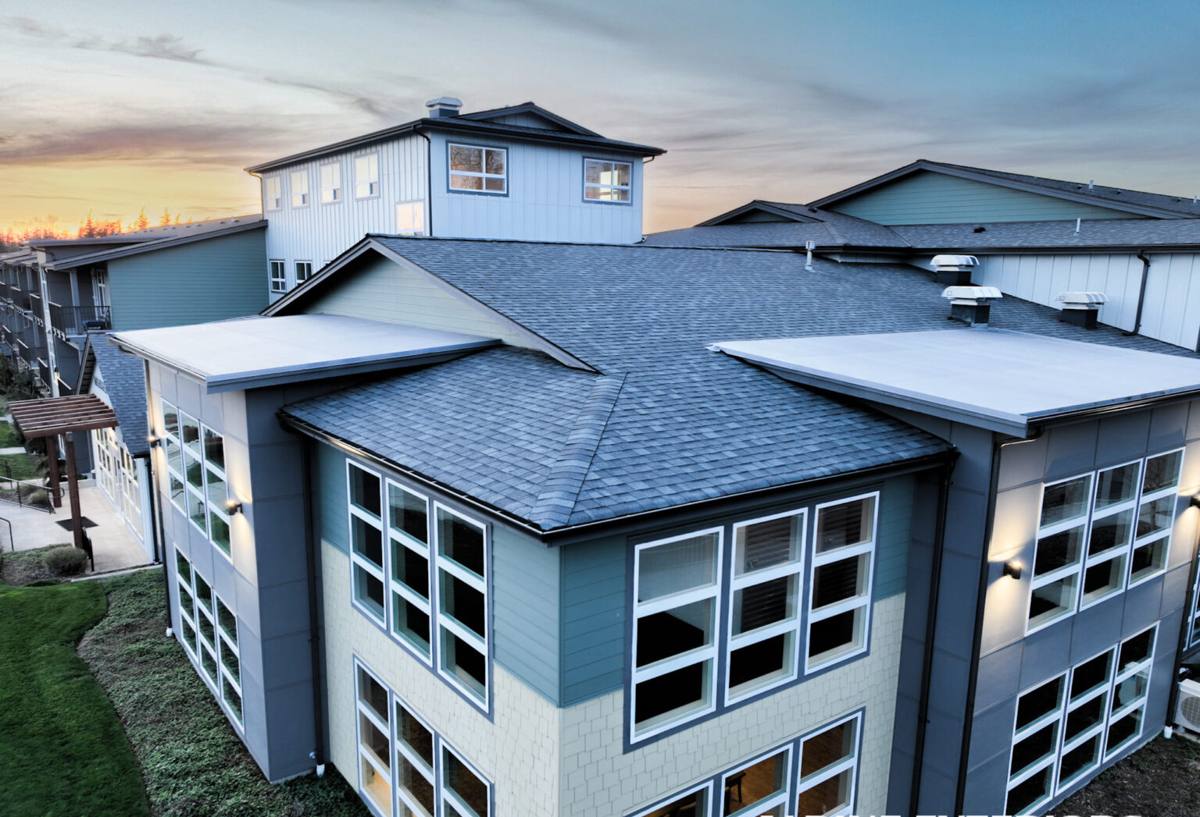
What Driving Rain and Salt Air Do to a Roof Over Time
Three regional factors do most of the damage to asphalt shingle roofs in this area, and each one calls for a different response in how the roof is built:
Driving rain and wind-driven water
Storms coming off the water don't always fall straight down — wind pushes rain sideways and up under shingle tabs and around flashing. A roof detailed for calm-weather rain alone will eventually let water find its way under laps, around chimneys, and at valleys. This is why underlayment coverage and flashing detail matter more here than in drier inland regions.
Persistent moisture and slow drying
Everson doesn't get long dry spells in the fall, winter, or early spring. A roof surface that stays damp for days at a time is exactly what moss, lichen, and algae need to establish. Once organic growth gets a foothold under shingle tabs, it holds moisture against the shingle mat and accelerates granule loss from underneath — damage you often can't see from the ground.
Salt-influenced air
Being close enough to the water to catch salt-laden air affects metal components faster than homeowners expect — nail heads, flashing, vent boots, and drip edge corrode sooner if they're not rated for coastal exposure. A shingle roof is only as good as its metal detailing, and that detailing is often where cheap installations fail first.
What a Correct Asphalt Shingle Job Actually Involves
A shingle roof is a system, not just a layer of shingles nailed to plywood. For Everson's climate, every layer of that system needs to be right:
- Deck inspection and repair — any soft, delaminated, or water-stained sheathing gets replaced before anything else goes down. Nailing shingles over a compromised deck just hides a bigger problem.
- Ice-and-water shield at vulnerable zones — valleys, eaves, and roof-to-wall transitions get self-adhering waterproof membrane, not just felt, because these are the spots where wind-driven rain and ice dams (on the rare hard freeze) cause the most damage.
- Synthetic underlayment across the full field — a durable, water-resistant layer under the shingles that keeps the deck dry even if wind lifts a tab or a shingle is damaged later.
- Proper starter strip and drip edge — these prevent wind uplift at the edges, which is where most storm-related shingle loss actually starts.
- Correct nailing pattern — six nails per shingle in high-wind zones, placed in the manufacturer's nailing strip, not high or low. This single detail determines whether shingles stay put in a windstorm.
- Flashing at every penetration and transition — chimneys, skylights, plumbing vents, and sidewalls all need step flashing or counter-flashing that's actually integrated with the shingle courses, not just caulked over.
- Balanced attic ventilation — intake at the eaves and exhaust at the ridge, sized to the attic volume, so moisture from inside the house doesn't condense against the underside of the deck and shorten the roof's life from below.
Choosing the Right Shingle for This Area
Not all asphalt shingles perform the same way in a wet, moss-prone climate. We steer Everson homeowners toward products and specs that hold up to the specific conditions here rather than whatever is cheapest at the yard.
| Factor | Standard 3-Tab | Architectural (Laminate) |
|---|---|---|
| Wind rating | Typically lower (60-70 mph) | Higher (110-130 mph common) |
| Moss/algae resistance options | Limited | Widely available with copper or zinc granules |
| Expected lifespan in this climate | Shorter — flatter profile holds water longer | Longer — thicker mat sheds water faster |
| Appearance | Flat, uniform | Dimensional, shadow-line look |
| Typical cost | Lower upfront | Moderate premium, better long-term value |
For most Everson roofs we recommend architectural shingles with algae-resistant granules. The added cost over 3-tab is modest, and the combination of a thicker mat and copper/zinc-infused granules directly addresses the two biggest local threats: wind and moss.
A note on algae-resistant granules
These granules release small amounts of metal ions over time that inhibit algae growth on the shingle surface. They don't make a roof moss-proof — nothing does in a climate this damp — but they meaningfully slow the black streaking and organic growth that shortens shingle life and looks bad from the street.
Our Process, Start to Finish
1. On-site assessment
We walk the roof (not just look from the ground), check the attic for ventilation and moisture signs, and note the condition of the deck, flashing, and any problem areas like valleys or roof-wall intersections.
2. Honest scope and estimate
You get a written scope that spells out materials, underlayment type, flashing work, ventilation changes if needed, and a clear price — no vague allowances that turn into surprise add-ons mid-project.
3. Tear-off and deck prep
Full removal of old roofing, deck inspection, and replacement of any damaged sheathing before a single new shingle goes down.
4. Weatherproofing layers
Ice-and-water membrane at vulnerable areas, synthetic underlayment across the field, and new flashing everywhere it's needed — this is the part of the job that determines how the roof performs in a real storm, not just on a sunny inspection day.
5. Shingle installation
Correct nailing pattern, proper exposure, and attention to valleys, hips, and ridge caps so the finished roof sheds water the way it's designed to.
6. Ventilation check and final walkthrough
We confirm intake and exhaust ventilation is balanced, clean the site, and walk the finished roof with you before calling the job done.
Maintenance That Actually Extends Roof Life Here
Because of the moss season, an asphalt shingle roof in Everson needs a bit more attention than the same roof would in a drier climate. A simple annual routine goes a long way:
- Check for moss or algae growth each fall before the wet season sets in, and treat early growth before it spreads under tabs
- Keep gutters clear so water doesn't back up under the lowest courses of shingle
- Trim back overhanging branches — shade and falling debris both encourage moss and speed up wear
- Have flashing and vent boots checked every few years, since these fail well before the shingles themselves typically do
- Address small leaks immediately — a stained ceiling patch is almost always cheaper than the deck repair that follows a delay
Signs your roof needs a look
Granules collecting in gutters, dark streaking across the roof face, curling or lifting shingle edges, daylight visible in the attic, or soft spots underfoot are all signs worth having checked before they turn into interior damage.
Why It Matters to Hire a Crew That Already Works This Area
Roofing detail work that's correct in a dry inland climate isn't automatically correct here. A crew that primarily works drier parts of the state may under-spec underlayment coverage, skip ice-and-water shield in spots that don't technically require it by code but do need it given local rain patterns, or use standard fasteners where corrosion-resistant ones make more sense this close to the water. A crew that works Whatcom County regularly builds these decisions into every estimate by default, because we've seen what shortcuts cost homeowners here a few winters down the road.
We're also familiar with the older homes throughout Everson and the surrounding county — the roof pitches, the attic configurations, and the common trouble spots that tend to repeat on houses of a certain age and style in this area. That familiarity shows up in a faster, more accurate estimate and fewer surprises once tear-off begins.
What a New Roof Typically Costs
Every roof is different, but the biggest cost drivers on an Everson asphalt shingle project are usually roof size and pitch, the number of layers being torn off, deck condition once the old roofing is removed, and how much flashing and ventilation work is needed. Architectural shingles with algae-resistant granules cost more upfront than basic 3-tab, but the difference is small relative to total project cost and pays for itself in reduced maintenance and a longer service life in this climate. We'll walk through the real cost factors for your specific roof during the estimate rather than quoting a number that doesn't reflect your actual house.
If your roof is due for attention, has visible moss, or you just want a straight answer on what shape it's in, we're happy to come take a look. Fill out the form below for a free, no-pressure estimate.