 Lynden
 Roofing in Blaine Faces a Different Set of Problems
Blaine sits right on the water at the top of Whatcom County, and that location changes what a roof has to deal with year after year. It isn't just rain — it's salt-laden marine air, wind-driven rain that gets pushed sideways instead of falling straight down, and long stretches of shade and dampness that keep moss growing for most of the year. A roofing system that would be fine forty miles inland can wear out faster here if it wasn't built with these conditions in mind. That's the starting point for any honest conversation about roof replacement in this area: the climate isn't a footnote, it's the design brief.
Salt Air and Metal Components
Airborne salt accelerates corrosion on anything metal — fasteners, flashing, vent caps, gutter hangers. On a lot of older roofs we look at in this area, the shingles themselves still have some life left, but the metal flashing and exposed nail heads are rusting and failing well before the field of the roof does. A correct replacement uses corrosion-resistant fasteners and flashing metals from the start, not because a manufacturer requires it, but because it's the only way to get a full service life out of the roof near this kind of air.
Driving Rain, Not Just Rainfall Totals
Wind off the water pushes rain sideways and up under laps, ridge caps, and flashing details that would shed water fine in a calm downpour. This is why lap coverage, fastener placement, and flashing overlap direction matter more here than the raw amount of annual rainfall does. A roof can be installed to code and still leak in these conditions if those details were rushed.
Moss, Shade, and a Long Wet Season
Between the marine layer and tree cover common to this part of Whatcom County, roofs here stay damp longer after every rain, and moss gets a real foothold on north-facing slopes and anywhere debris collects. Moss isn't just cosmetic — it holds moisture against the roofing material and lifts shingle edges over time, which shortens the life of an otherwise sound roof.
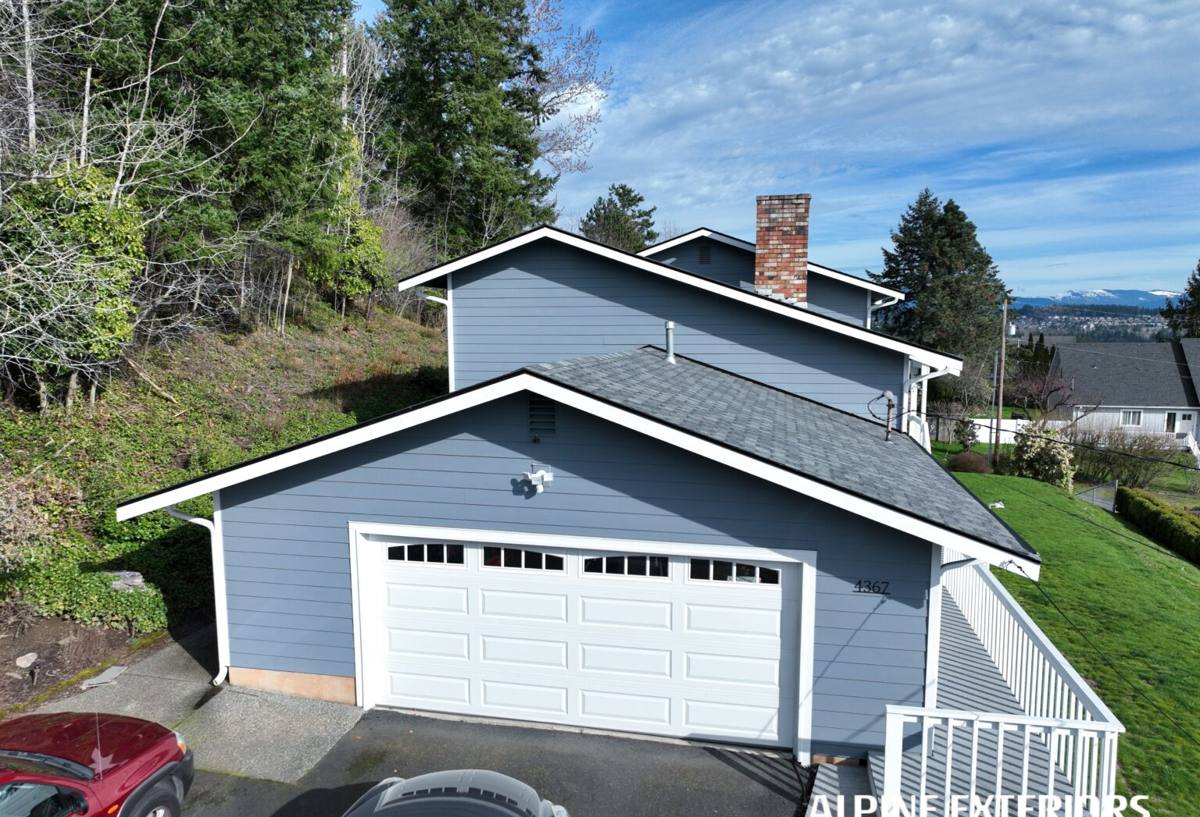
Signs a Roof Needs Replacing, Not Just Patching
Not every roof problem calls for a full replacement, but in a coastal climate the window between "still repairable" and "needs to come off" can close faster than homeowners expect. These are the signs we take seriously when we're deciding whether a repair will actually hold:
- Granule loss heavy enough that you're finding grit in gutters and downspouts every season
- Shingles that are cupping, curling, or cracking, especially on south and west-facing slopes
- Rusted or lifting flashing around chimneys, skylights, and roof-to-wall transitions
- Persistent moss or algae growth that comes back within a few months of cleaning
- Soft spots, sagging, or visible daylight in the attic where there shouldn't be any
- Water stains on interior ceilings or exterior fascia, even if the leak seems minor
- A roof that's approaching or past the typical service life for its material and exposure
If a roof is showing two or three of these at once, patching usually turns into a maintenance treadmill rather than a fix. We'll always tell a homeowner honestly if a repair is a reasonable option — replacement isn't the answer to every roof problem, and we don't sell it as one.
What a Correct Roof Replacement Actually Involves
Full Tear-Off and Deck Inspection
We don't recommend roofing over an existing layer. A full tear-off is the only way to actually see the deck — soft or rotted sheathing, especially around valleys and eaves where water has been sitting, needs to be found and replaced before anything new goes down. Covering over a compromised deck just hides the problem under a new roof.
Underlayment and Water Protection at Vulnerable Points
In a climate with wind-driven rain, the underlayment is doing more work than people assume. We use self-adhered, waterproof membrane at eaves, valleys, and roof penetrations — the spots most likely to see water pushed uphill or sideways by wind — with synthetic underlayment across the rest of the field for durability during the install and beyond.
Flashing Details That Actually Hold Up Near the Water
Chimney flashing, wall step flashing, skylight curbs, and vent boots are where most roof leaks start, not in the open field of shingles. We use corrosion-resistant flashing metal and proper step-and-counter-flashing techniques rather than relying on sealant alone — sealant fails over time; correctly lapped and fastened metal doesn't depend on it.
Ventilation That Matches the Climate
Balanced intake and exhaust ventilation keeps the underside of the roof deck dry and reduces the moisture that feeds moss and mildew from below. A roof that looks great from the ground can still be trapping damp air in the attic if the ventilation wasn't sized correctly for the home.
Choosing a Roofing Material for a Marine Climate
There's no single "best" roofing material for every home — it depends on the roof's exposure, the home's structure, and the homeowner's priorities around maintenance and budget. Here's how the common options actually compare in a coastal, moss-prone climate like Blaine's:
| Material | Typical Lifespan | Maintenance in This Climate | Best Fit For |
|---|---|---|---|
| Architectural asphalt shingle | 20–30 years | Periodic moss treatment; watch granule loss on sun-exposed slopes | Most homes; best balance of cost and performance |
| Standing seam metal | 40–60 years | Low; sheds moss and debris well if properly finished and fastened | Homeowners planning to stay long-term or wanting minimal upkeep |
| Cedar shake | 20–30 years with upkeep | High; needs regular treatment and is more sensitive to constant dampness | Homeowners committed to the look and the maintenance schedule it requires |
We install architectural asphalt and metal roofing as our standard offerings. We're upfront that cedar shake, while attractive, carries a heavier maintenance burden in a climate this damp — that's a trade-off we lay out honestly rather than talk a homeowner out of a look they want.
What Affects the Cost of a Roof Replacement
We don't quote prices without seeing the roof, but the main variables that move a project's cost up or down are consistent from job to job:
- Roof size and the number of planes, valleys, and penetrations
- Roof pitch and accessibility — steeper or harder-to-reach roofs take longer to work safely
- Condition of the existing deck once tear-off exposes it
- Material chosen — asphalt, metal, and cedar sit at different price points
- Amount of flashing, ventilation, or structural work needed beyond the roofing itself
- Disposal and staging logistics for the property
Any estimate we give reflects what we actually find on the roof, not a flat per-square number pulled out of the air — which is also why we walk every roof before quoting one.
Our Process, Start to Finish
- Inspection. We walk the roof and attic, check the deck condition where accessible, and look at flashing, ventilation, and drainage — not just the shingles.
- Written estimate. A clear scope of work and price, so there's no ambiguity about what's included before work starts.
- Scheduling around the weather. Coastal weather windows matter — we plan tear-off days around forecasts so a roof isn't left open longer than necessary.
- Tear-off and deck repair. Old material comes off, the deck gets inspected, and any soft or damaged sheathing is replaced before anything new is installed.
- Underlayment, flashing, and roofing installation. Waterproof membrane at vulnerable points, corrosion-resistant flashing, then the finished roofing material.
- Ventilation check. We confirm intake and exhaust venting is balanced for the home before calling the job done.
- Cleanup and final walkthrough. Site cleared of debris and old material, with a walkthrough so the homeowner sees the finished work firsthand.
Why a Crew That Already Works Blaine Matters
Roofing crews that mostly work drier, inland areas can miss the details that matter here — under-flashing at eave edges, corrosion-resistant fastener choices, or scheduling that accounts for how quickly a coastal weather window can close. Our crew is based in Lynden and works throughout Whatcom County, including Blaine, so these aren't unfamiliar conditions we're adjusting to on the fly — they're what we build for by default. That also means we're a known, findable local business if a question or warranty issue comes up years down the road, not a crew that worked the area once and moved on.
Keeping a New Roof Performing After Installation
A correctly installed roof still benefits from some basic upkeep in this climate. Keeping gutters and valleys clear of needles and debris prevents standing water at the exact spots most exposed to wind-driven rain. Treating moss before it establishes — rather than after it's visible and spreading — is far easier than removing an entrenched patch later. And a periodic look at flashing around chimneys, skylights, and vents catches small issues while they're still small. None of this is heavy maintenance, but skipping it entirely shortens the life of even a well-built roof in a climate this damp.
If your roof is showing its age or you just want an honest read on what condition it's really in, we're happy to take a look. The estimate is free, there's no pressure attached to it, and you'll get a straight answer about whether you need a replacement, a repair, or nothing at all right now — just fill out the form below to get started.