 Lynden
 Why Board & Batten Fits Bellingham Homes
Board and batten is one of the most requested siding profiles we install in and around Bellingham, and it's not just a style preference. The vertical lines read as classic Pacific Northwest — at home on a farmhouse-style rebuild, a craftsman remodel, or a new build going for a modern-cottage look. It also happens to be a smart technical choice for this stretch of Whatcom County, where wide, flat cladding surfaces catch every bit of the weather the coast throws at them. Done with the right material and the right fasteners, board and batten holds paint and color evenly across those long vertical runs instead of showing the blotching and streaking that shows up on lower-grade products a few years in.
We install board and batten as one profile option among several, but we only do it in James Hardie fiber cement. That's not a marketing line — it's the material decision that determines whether this look still looks good in year twelve.
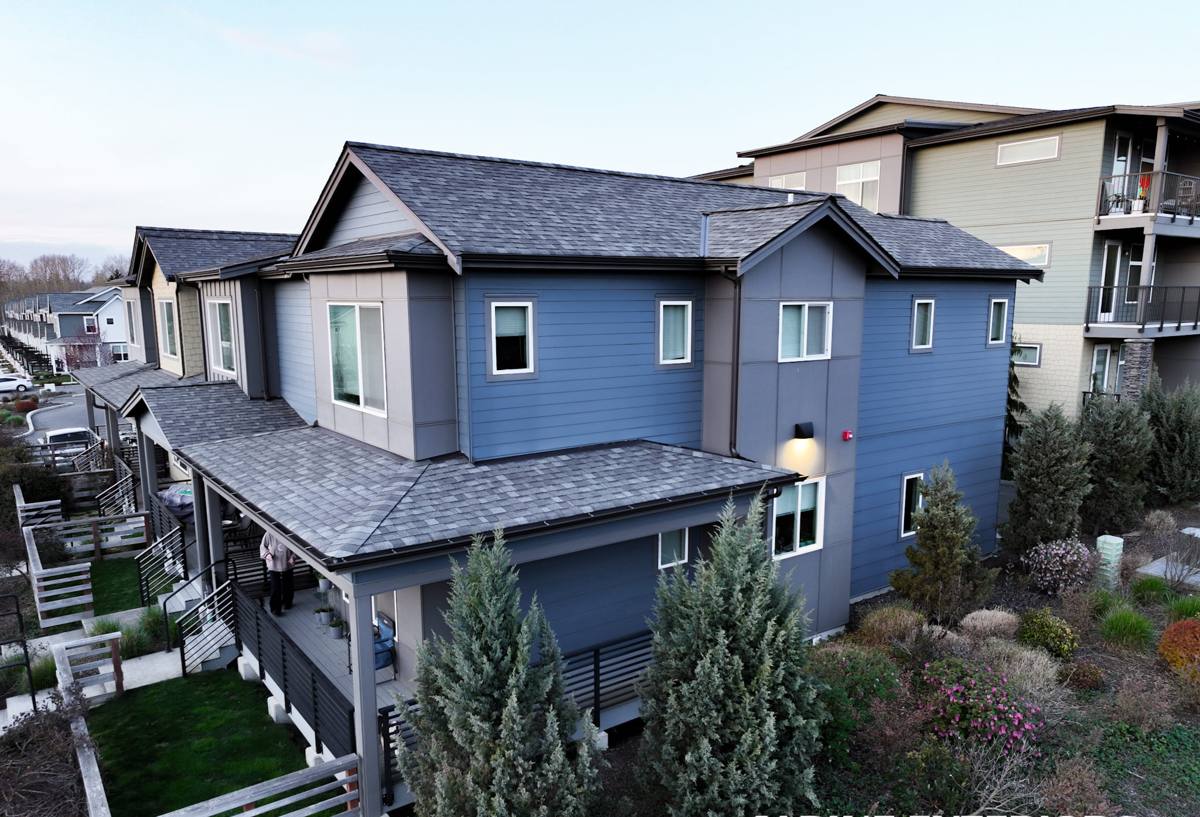
What Bellingham's Climate Does to Siding
Bellingham sits close enough to the water that salt air is a real factor, not a theoretical one. Combine that with the driving, wind-pushed rain that comes off the Strait and Bellingham Bay, and siding here takes on moisture from more directions than a typical inland install has to deal with — not just top-down rain, but rain pushed sideways into seams, corners, and board edges. Add Whatcom County's long, gray moss season, when shaded and north-facing walls stay damp for weeks at a stretch, and you've got three separate stressors working on the same wall assembly at the same time.
Board and batten makes this worse if it's built wrong. Every vertical batten strip creates a seam, and every seam is a place where wind-driven rain can get pushed uphill against gravity and behind the cladding. A profile with more seams than lap siding needs tighter execution, not looser — which is exactly where we see other contractors' board and batten jobs start failing first around here.
Where the Failures Actually Start
- Butt joints between boards that weren't back-primed or flashed, letting moisture wick in from the cut edge
- Battens face-nailed directly through both layers without expansion room, causing splitting as the material moves seasonally
- Bottom edges too close to grade or hardscape, sitting in splash-back moisture through the wet months
- North and shaded walls where moss and algae get a permanent foothold because the material itself absorbs and holds water
Board & Batten Done Right: What the Job Actually Involves
A correct board and batten install starts underneath the boards, not with them. We run a code-compliant weather-resistive barrier and rain-screen gap where the wall assembly calls for it, so water that does get past the cladding has somewhere to drain and dry instead of sitting against sheathing. The vertical boards go up over that with proper fastener spacing, and the battens go on with room for the material to expand and contract with temperature and moisture swings — not pinned so tight that the wood-fiber substrate has nowhere to move.
Every horizontal joint gets flashed, not just caulked. Caulk is a maintenance item; flashing is a permanent detail. Corners, window and door trim, and the transition to foundation all get treated as places water will eventually test, because in this climate, it will.
What We Check Before the First Board Goes Up
- Sheathing condition — any rot or soft spots from the old siding get replaced, not covered up
- Proper rain-screen or drainage plane behind the new cladding
- Flashing at every window, door, and roof-to-wall intersection
- Correct fastener type and spacing for James Hardie board and batten panels or planks specifically — not generic siding nails
- Clearance at grade and hardscape to keep the bottom edge out of standing moisture
James Hardie vs. Other Board & Batten Materials
Board and batten gets installed in several different materials around Whatcom County, and homeowners comparing quotes are often comparing very different products under the same name. Here's how the common options actually hold up under salt air, driving rain, and a long moss season:
| Material | Moisture Behavior | Salt Air / Coastal Exposure | Long-Term Maintenance |
|---|---|---|---|
| James Hardie fiber cement | Non-combustible, engineered for Pacific Northwest moisture cycles; doesn't swell or rot | Holds up well; factory ColorPlus finish resists fading and chalking near the coast | Occasional wash; repaint not needed for the life of the factory finish |
| Primed spruce / wood board and batten | Absorbs moisture at cut ends and joints; prone to swelling, splitting, rot | Salt air accelerates finish breakdown and wood movement | Repainting and caulk maintenance on a recurring cycle |
| Vinyl board and batten | Doesn't rot, but seams and panels can warp or gap with temperature swings | Can become brittle and fade faster under coastal sun and salt exposure | Low maintenance but limited to no repair once faded or cracked |
| LP SmartSide / engineered wood | Wood-strand core is moisture-sensitive at cut edges and seams if not sealed correctly | Performs adequately when installed to spec; sensitive to installation errors | Depends heavily on installer diligence at every seam and edge |
We're not going to tell a homeowner that every one of these products is a bad choice — plenty of them perform fine when installed correctly and maintained on schedule. But we made a business decision years ago to install James Hardie exclusively, because it's the one product in this list where correct installation plus the coastal climate here still adds up to decades of low-drama performance, backed by a transferable warranty that doesn't depend on us staying in business forever to mean something.
Our Process for Bellingham-Area Installations
We start with an on-site walk of the home, looking specifically at wall orientation — which sides take the worst of the wind-driven rain, which stay shaded and damp longest — because that changes how aggressive the drainage detailing needs to be on that elevation. From there:
- Written estimate covering tear-off, sheathing repair allowance, house wrap or rain-screen system, and the specific Hardie board and batten product line for the look you want
- Old siding removal and a real look at what's underneath — this is where hidden rot or past water damage shows up, and we flag it before covering it back up
- Weather barrier and drainage plane installation
- Board and batten installation with correct fastening, joint flashing, and expansion spacing
- Trim, corners, and final detailing at every penetration and transition
- Final walk-through so you know what you're looking at and what (if anything) needs periodic attention
Signs Your Current Siding Needs Replacing
Not every siding problem means a full replacement, but in this climate a few signs are worth taking seriously before they become structural:
- Soft or spongy spots when you press on the siding, especially near the bottom courses
- Persistent moss or algae growth that comes back within weeks of cleaning
- Visible gaps, splits, or warping along board and batten seams
- Paint that's bubbling, peeling, or chalking heavily on one side of the house
- Interior signs — musty smell, discoloration on interior walls near exterior corners
- Siding that's original to a home built before modern rain-screen and flashing practices were standard
Why a Local Lynden Crew Matters for Bellingham Jobs
Board and batten failures around here almost never come from bad material — they come from installation details that don't account for the actual weather a wall will see. A crew that works Bellingham and greater Whatcom County regularly already knows which elevations take the worst wind-driven rain off the water, how long moss season really runs, and how salt air changes maintenance expectations over time. That's the difference between a generic install and one built for this specific coastline.
Being based in Lynden also means we're a short drive away if a warranty question or a maintenance question comes up five or ten years down the road — not a call center for a company that installed your siding once and moved on.
Maintenance After Installation
James Hardie board and batten is low-maintenance, not no-maintenance. A yearly rinse to clear pollen, salt residue, and early moss growth keeps the ColorPlus finish looking factory-new far longer than skipping it. Keep an eye on caulking at trim joints and touch it up if it starts to crack or pull away — that's normal maintenance, not a sign of a failed install. Trim back vegetation or landscaping that keeps a wall section shaded and damp longer than it needs to be, since that's usually where moss gets its first foothold.
If you're considering board and batten siding for a Bellingham-area home, we're glad to come take a look and give you a straightforward, no-pressure estimate — what your walls actually need, what it costs, and why we'd build it the way we do.