 Lynden
 Storm Damage Roof Repair Built for Bellingham's Weather
Bellingham sits close enough to the water that homes here take a different kind of beating than roofs twenty miles inland. Salt-laden air off Bellingham Bay works into fasteners and flashing. Wind-driven rain off the Strait doesn't just fall on a roof, it gets pushed sideways under shingles and around penetrations. And the long gray stretch from October through May gives moss and moisture months to work into places they shouldn't be. When a windstorm or a heavy rain event finally finds the weak spot, it's usually one that's been building for a while. Our job is to find that spot, repair it correctly, and make sure the next storm doesn't find it again.
This page covers what storm damage repair actually looks like for a Bellingham roof — not a generic list of storm services, but the specific failure points we see on homes exposed to Whatcom County's coastal weather, and how we approach a repair so it holds.
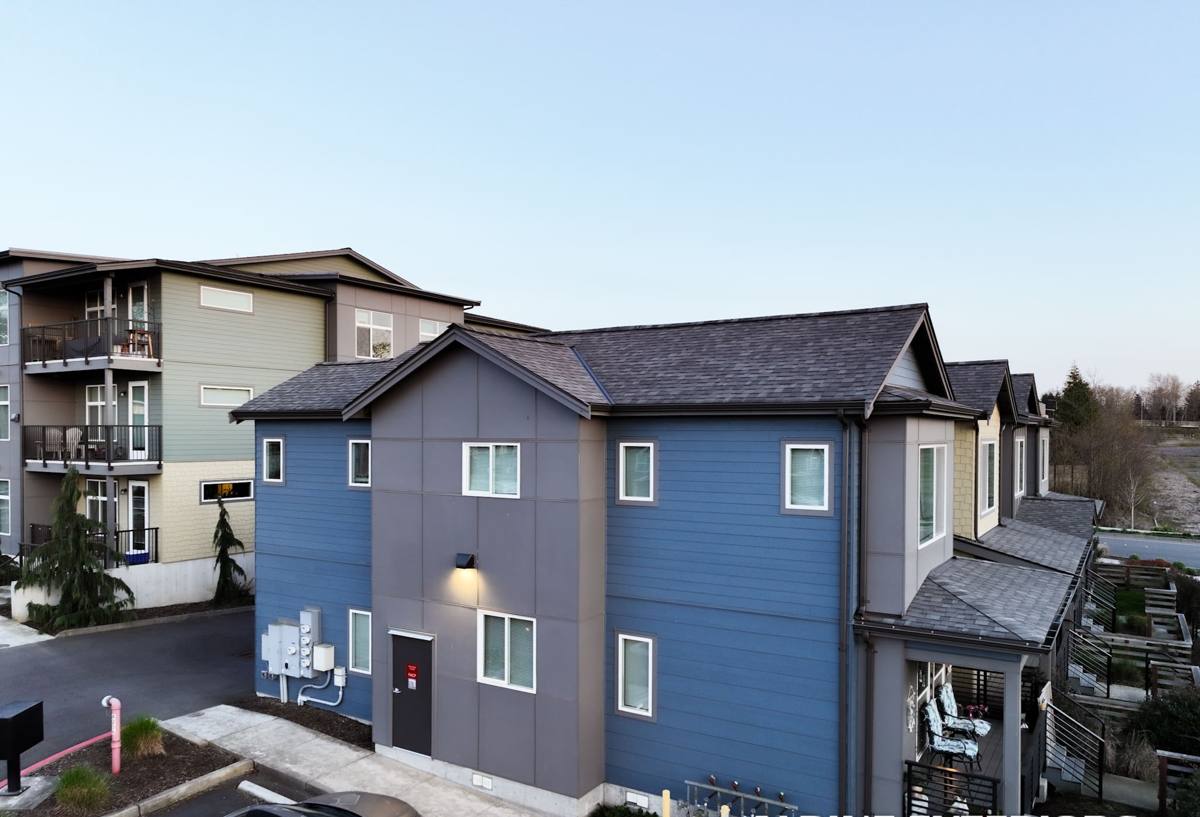
Why Bellingham Roofs Take Storm Damage Differently
Salt Air and Metal Fatigue
Homes within a few miles of Bellingham Bay or the waterfront neighborhoods deal with airborne salt that accelerates corrosion on exposed metal — flashing, fasteners, gutter hardware, and vent caps. A nail that's rusted and lost its grip doesn't announce itself; it just lets a shingle lift a little more each time the wind picks up, until a storm finally tears it loose.
Driving Rain and Wind Direction
Storms coming off the Strait of Juan de Fuca and Georgia Strait tend to hit from a fairly consistent direction, which means the same roof edges and wall-roof intersections take repeat abuse year after year. Wind-driven rain doesn't need a hole to get in — it needs a lapped seam facing the wrong way, an open pipe boot, or a step-flashing joint that's been nudged loose by years of gusts.
Moss Season and Trapped Moisture
Whatcom County's moss season typically runs from fall through spring, and on north-facing slopes and shaded roof sections it barely lets up. Moss holds moisture against the shingle surface, degrades granules, and lifts shingle edges just enough for wind to grab underneath during a storm. A roof that looked fine going into a windstorm can lose shingles simply because moss had already loosened the seal.
What Counts as Storm Damage (and What Doesn't)
Not every roof problem after a storm is actually storm damage, and being straight about that distinction matters — both for your insurance claim and for what repair actually fixes the issue.
- Wind-lifted or missing shingles — often storm-caused, especially along ridges, edges, and valleys where wind uplift is strongest.
- Flashing pulled away from chimneys, walls, or skylights — can be storm-caused, but frequently reveals flashing that was already failing from age or corrosion.
- Granule loss and bald spots — usually a sign of aging shingles or moss damage, not storm impact, even if it becomes visible after a storm.
- Punctures from falling limbs or debris — clearly storm damage, and usually the most straightforward to document.
- Gutter and downspout damage — can be wind-caused, or can be ice/debris buildup from a prior season finally giving way.
- Interior water staining after a storm — the storm may have exposed a leak path that existed already; the roof failure itself might predate the storm by months.
We tell homeowners honestly which category their damage falls into. If it's pre-existing wear that a storm simply exposed, that's useful information for planning a repair or for how you approach an insurance conversation — we're not going to inflate a claim by calling ordinary wear "storm damage."
Our Storm Damage Repair Process
1. Roof and Attic Inspection
We start on the roof surface and, where accessible, in the attic. Storm damage often shows up in two places at once — a lifted shingle outside and a corresponding stain or damp insulation inside. Checking both gives us a real picture instead of guessing from the ground.
2. Documentation
We photograph the damage clearly enough to support an insurance claim if you're filing one, and we note what's storm-related versus what's pre-existing. This documentation is yours to use regardless of who repairs the roof.
3. Temporary Protection, If Needed
If there's an active leak or exposed decking, we can install a temporary tarp or dry-in to stop water intrusion while the full repair is scheduled. This matters more here than in drier climates — a few days of exposure during a wet Bellingham stretch can turn a shingle repair into a decking replacement.
4. The Actual Repair
Depending on what we find, this might mean replacing a section of shingles, re-securing and resealing flashing, rebuilding a valley, or repairing damaged decking underneath before anything new goes back on top. We match materials as closely as possible and tie new work into the existing roof system correctly, not just patch over the surface.
5. Post-Repair Check
Once the repair is done, we walk the surrounding area — not just the damaged spot — because storms rarely damage just one isolated point. If wind lifted one section of shingles, we check neighboring courses for the same early signs of failure.
Common Repair Scenarios We See in Bellingham
| Damage Type | Typical Cause Locally | What a Correct Repair Involves |
|---|---|---|
| Lifted or missing shingles at roof edges | Wind uplift, often worsened by aging sealant strips | Replace affected shingles, re-nail per manufacturer pattern, reseal exposed edges |
| Flashing separation at chimneys/walls | Corrosion from salt air plus wind flexing the joint | Remove and reinstall step and counter-flashing, not just caulk over the gap |
| Valley leaks | Debris buildup and driving rain overwhelming an aging valley | Clear debris, inspect underlayment, replace valley metal or membrane if compromised |
| Soft or stained decking | Prolonged moisture from moss or a slow prior leak | Cut out and replace damaged decking sections before re-roofing that area |
| Gutter separation or sagging | Wind load plus corroded hangers | Reattach or replace hangers, check fascia condition underneath |
Insurance Claims: What Homeowners Should Know
Many storm repairs in Bellingham get filed as insurance claims, and there are a few things worth understanding going in:
- An adjuster's inspection and a contractor's inspection can differ — adjusters are working from a claims standpoint, we're working from a "what does this roof need" standpoint. Having your own documentation helps close that gap.
- Insurers generally want to see damage tied to a specific storm event, so timing and dated photos matter.
- Pre-existing wear (old shingles, prior moss damage) is typically excluded from storm claims, which is why an honest assessment up front saves you a denied claim later.
- We can provide a repair estimate and damage documentation for your claim, but the decision to file, and communication with your insurer, is yours to manage.
Why Moss and Long-Term Moisture Change the Repair, Not Just the Roof
A storm repair in a drier climate is often a straightforward patch. In Whatcom County, a storm frequently exposes a second problem: months or years of moss growth that's already degraded the shingle mat or held moisture against the decking. When we open up a damaged section, we're checking for that too — soft decking, dark staining, or granule loss well beyond the immediate storm damage. Repairing only the visible storm damage and leaving moss-compromised material in place means you're likely calling us back after the next heavy rain, not the next storm.
What We Check Beyond the Obvious Damage
- Condition of shingles immediately surrounding the damaged area, not just the damaged spot itself
- Decking firmness when probed near the repair zone
- Signs of moss regrowth or staining on north-facing or shaded sections
- Gutter and downspout function, since a storm-damaged gutter compounds moisture problems fast in a wet climate
- Attic ventilation, which affects how quickly a roof dries out between storms
What a Correct Repair Costs — and Why the Range Varies
Storm repair costs depend heavily on what's underneath the surface damage, which is exactly why we don't quote a number before inspecting the roof. Broadly, homeowners should expect repairs to fall somewhere between a few hundred dollars for a small, contained shingle or flashing fix, and several thousand dollars if decking replacement or a larger section of roofing is involved. Here's what typically drives that range:
| Factor | Why It Matters |
|---|---|
| Extent of decking damage | Rotted or soft decking has to be cut out and replaced before new roofing goes down — this is the single biggest cost driver |
| Roof pitch and access | Steeper or higher roofs take longer and require more safety setup |
| Material match | Matching existing shingle color and profile can affect material sourcing and cost |
| Flashing complexity | Chimney, skylight, and wall flashing repairs take more time than open-field shingle replacement |
| Insurance involvement | Claims-based repairs sometimes require additional documentation steps that affect timeline more than cost |
Preventing the Next Storm From Doing the Same Damage
Part of a proper storm repair is looking at why that section failed in the first place. If it's a one-time fluke — a branch came down, a gust caught an already-loose shingle — the repair itself solves it. But if we see a pattern, like recurring flashing corrosion from salt exposure or repeat moss-related lifting on the same slope, we'll tell you and talk through options: better ventilation, a moss-resistant approach for that section, or upgraded flashing materials better suited to coastal exposure. We'd rather flag that once than keep repairing the same spot every storm season.
Simple Homeowner Checklist Between Storms
- Walk your gutters and downspouts clear of debris before the fall rain season starts
- Look for moss buildup on shaded or north-facing roof sections at least once a year
- After any significant windstorm, do a visual check from the ground for obviously lifted or missing shingles
- Check attic insulation and ceilings for new staining after heavy rain events
- Have flashing around chimneys and skylights inspected every few years, since it's the most common failure point in coastal wind conditions
Why a Local Crew Matters for Storm Repair
Storm repair isn't just a technical skill, it's a familiarity skill. A crew that works Bellingham and the surrounding Whatcom County area regularly knows which roof orientations take the worst of the wind off the water, which neighborhoods deal with heavier moss cover, and what flashing details tend to fail first on homes exposed to salt air. That local pattern recognition means less time spent diagnosing and more time spent fixing the actual problem — and it means a follow-up call, if you ever need one, comes from a crew that already knows your roof's history.
If you've got storm damage, or you're not sure whether what you're seeing is storm-related or just years of Bellingham weather catching up with your roof, we're happy to take a look. Fill out the form below for a free, no-pressure estimate — we'll tell you honestly what we find and what it'll take to fix it right.