 Lynden
 Window Installation in Bellingham Isn't a Generic Job
Bellingham sits close enough to salt water and open weather systems that windows here take a different kind of beating than windows fifty miles inland. Between the salt air coming off the bay, driving rain that hits siding and trim sideways instead of straight down, and a moss season that runs long and wet for much of the year, this part of Whatcom County is hard on building envelopes. Window installation that would be fine in a drier climate can fail early here if the details are skipped.
We're a Lynden-based crew, and Bellingham is inside our regular service area. That matters more than it sounds like it should — a lot of window problems we get called out to fix started with an installer who did a technically "fine" job but didn't account for how this specific climate moves water and moisture around a house.
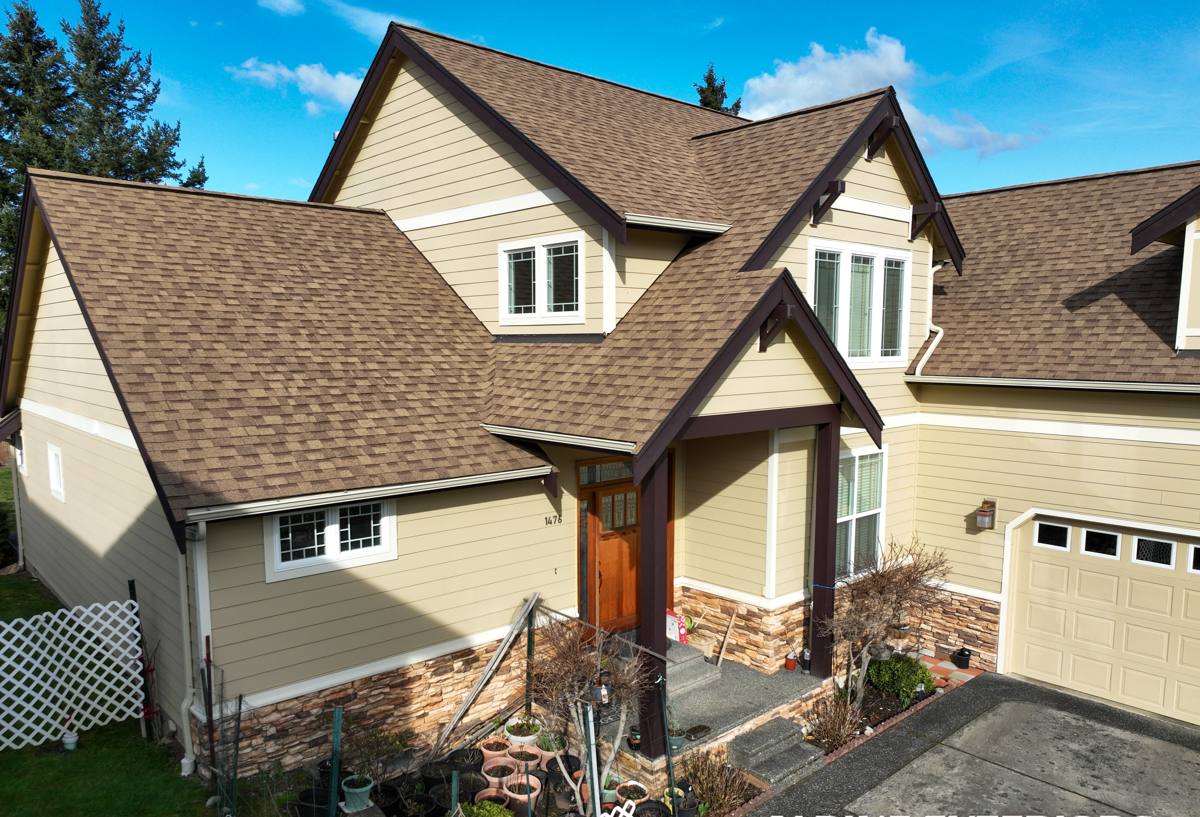
What Salt Air, Rain, and Moss Actually Do to Windows Here
Salt Air and Hardware
Proximity to Bellingham Bay means a steady low-level exposure to salt-laden air, especially on homes closer to the water or on higher, wind-exposed lots. Over years, that air accelerates corrosion on window hardware — hinges, locks, balance mechanisms, and any exposed fasteners. Cheaper hardware finishes pit and seize up faster in this kind of exposure than they would in a dry inland climate.
Driving Rain and Wind-Driven Water
Storms coming off the water frequently bring rain in sideways rather than straight down. That kind of wind-driven rain finds weaknesses that a calmer climate would never expose — a slightly under-lapped flashing, a bead of sealant that's thinner in one spot, a nailing fin that wasn't fully seated. Windows installed without careful attention to water-shedding details can leak years after installation, once the original caulking starts to age and shrink.
Moss, Shade, and Trapped Moisture
Western Washington's long wet season keeps north-facing walls, shaded elevations, and anything under tree cover damp for months at a time. Moss and algae growth on siding and trim near window openings isn't just cosmetic — it holds moisture against the wall assembly longer, which is exactly the wrong thing to have happening right next to a window opening if the flashing and drainage underneath aren't done correctly.
What a Correct Window Installation Actually Involves
A window installation is not just "remove old window, set new window, caulk the edges." In a climate like this, the sequence and the details around the window are what determine whether it performs for twenty-plus years or starts leaking in five.
The Opening Comes First
Before a new window ever goes in, the rough opening needs to be inspected for rot, soft framing, or old flashing that's already failed. If there's hidden water damage from a previous installation, that gets addressed before anything new is installed — putting a new window into a compromised opening just hides the problem for a while.
Flashing and Drainage, Not Just Caulk
Correct installation builds a drainage path: a sloped sill pan so any water that gets past the window has somewhere to go besides into the wall, properly lapped flashing tape that integrates with the house's weather-resistive barrier (not just taped over it), and head flashing that sheds water out and away rather than trapping it above the window. Sealant is part of the system, but it is not the system — sealant alone fails, especially with the UV exposure and temperature swings this region gets.
Insulation and Air Sealing
The gap between the window frame and the rough opening needs to be insulated and air-sealed without over-packing it, which can bow the frame and cause the sash to bind. Low-expansion foam or backer rod and sealant, sized correctly for the gap, keeps the window operating smoothly and keeps conditioned air from leaking out around the frame.
Trim and Final Weatherproofing
Exterior trim gets reinstalled or replaced with attention to the same water-shedding logic — kerf cuts, back-priming on cut ends, and sealant only where it's supposed to carry the load, not as a substitute for flashing that was skipped.
- Rough opening checked for rot or old water damage before the new window goes in
- Sloped sill pan flashing installed, not just a bead of sealant
- Flashing tape properly lapped with the existing weather-resistive barrier
- Window shimmed level, plumb, and square — not just "fits the hole"
- Gap insulated and air-sealed without overpacking the frame
- Sash and hardware tested for smooth operation before we leave
- Exterior trim and sealant applied as the last step, not a cover-up for missed flashing
Full-Frame Replacement vs. Insert Replacement
One of the first decisions on any window project is whether to do a full-frame replacement (removing the old window down to the rough opening) or an insert/pocket replacement (installing a new window inside the existing frame). Both are legitimate approaches — the right one depends on the condition of what's already there.
| Factor | Full-Frame Replacement | Insert (Pocket) Replacement |
|---|---|---|
| Best for | Rot, water damage, or failed flashing behind the old frame | Sound existing frame with no hidden moisture damage |
| Access to flashing/moisture barrier | Full access — can correct old flashing mistakes | Limited — relies on the existing frame's flashing still being sound |
| Glass area | Can often be maximized | Slightly reduced, since the new frame nests inside the old one |
| Labor and cost | More labor, higher cost | Faster, generally less expensive |
| Risk if opening has hidden damage | Damage gets found and fixed | Damage can get sealed in and worsen unseen |
Given how much moisture cycles through this area, we lean toward pulling the trim and taking a real look at the opening rather than assuming an insert is safe — but there are plenty of solid, dry openings around Bellingham where an insert replacement is the sensible, cost-effective choice. We'll tell you honestly which situation you're in before we quote the job.
Materials That Hold Up in This Climate
Frame material matters less than installation quality, but it's not irrelevant. Vinyl frames are the most common choice locally — they don't corrode, they handle moisture well, and modern multi-chamber vinyl frames perform reasonably in our temperature range. Fiberglass frames cost more but expand and contract closer to the rate of glass, which can mean tighter long-term seals on larger window units. Wood and wood-clad windows still get requested for their look, especially on older homes, but they carry a real maintenance burden in a climate this wet — any gap in the exterior cladding or finish becomes an entry point for moisture, and upkeep isn't optional the way it can be with vinyl or fiberglass. We'll install what you choose, but we'll also tell you plainly what kind of upkeep that choice commits you to.
Glass packages matter too. Double-pane, low-E glass is the baseline we'd recommend for this climate — it manages both winter heat loss and the glare/heat gain from long summer days, and argon-filled units add a modest efficiency bump for a modest cost increase.
How We Handle a Bellingham Window Job
- On-site assessment of the existing openings, siding condition, and any signs of past water intrusion
- Precise measurement for each opening — older homes especially rarely have perfectly uniform window sizes
- Ordering the correct units, with realistic lead times communicated up front
- Installation day: removal, opening inspection and repair if needed, flashing and drainage detailing, setting and sealing the new window, insulation and air sealing, trim and cleanup
- Final check of operation, sealant lines, and a walkthrough before we consider the job done
We don't rush the flashing and drainage steps to save time on install day. That part of the job is invisible once the trim goes back on, but it's the difference between a window that's dry in ten years and one that isn't.
Why It Matters That We Already Work in Bellingham
A lot of Bellingham's housing stock spans decades of different building practices, which means rough openings, siding types, and old flashing details vary a lot from house to house — sometimes within the same neighborhood. A crew that regularly works in the area has already seen the common failure points on older homes here: undersized flashing laps, missing sill pans, trim that was never back-primed. That experience shows up in fewer surprises during the job and fewer callbacks after.
Being based in Lynden also means we're a short drive away for follow-up, warranty questions, or a quick look if something seems off after a storm — not a crew that has to schedule a special trip out from somewhere else in the region.
Cost Factors Homeowners Should Understand
Window installation pricing depends on several variables, and any contractor who gives you a firm number without seeing the openings is guessing. The broad factors that move the price:
- Full-frame vs. insert replacement — full-frame costs more but addresses hidden problems
- Number and size of openings — larger or custom-sized windows cost more per unit
- Frame material — vinyl is generally the most affordable, fiberglass and wood-clad cost more
- Condition of the existing opening — rot repair adds labor and material cost that's hard to estimate until the trim comes off
- Access and site conditions — second-story windows, tight lots, or extensive trim work add time
Most straightforward single-window replacements land in a broad mid-range for materials and labor combined; whole-house projects scale from there. We'll walk your specific openings and give you a real number rather than a ballpark that falls apart once we open the wall.
Keeping Windows Performing After Installation
A correctly installed window still needs some basic upkeep in this climate. Keep gutters and downspouts clear so water isn't sheeting down past window heads during heavy rain. Address moss and algae buildup on siding and trim near windows before it holds moisture against the wall for months at a stretch. Check exterior sealant lines every year or two — sealant is a wear item, and catching a cracked bead early is a five-minute fix compared to what it can turn into if water gets behind the trim unnoticed through another wet Bellingham winter.
If you're weighing a window project for a Bellingham-area home, we're happy to take a look and give you a straightforward, no-pressure estimate — just fill out the form below and we'll get back to you.