 Lynden
 Why Birch Bay's Coastal Climate Changes What a Deck Needs to Survive
Birch Bay sits close enough to the water that a deck here deals with a different set of stresses than one built a few miles inland in Whatcom County. Salt-laden air moves off the bay and settles onto every exposed surface, driving rain comes in sideways during fall and winter storms, and the long, damp shoulder seasons give moss and algae months at a time to get established on anything that stays wet. None of that means a deck can't be built to last here — it means the build has to account for those three things from the footings up, not just at the surface.
A deck that would be perfectly fine in a drier part of Washington can start showing corrosion streaks, soft spots, or a slick green film within a couple of seasons if it's built to a generic spec instead of a coastal one. The fix isn't exotic — it's using the right fastener class, flashing details, and drainage planning consistently, and not skipping any of them because they're the parts nobody sees once the boards are down.
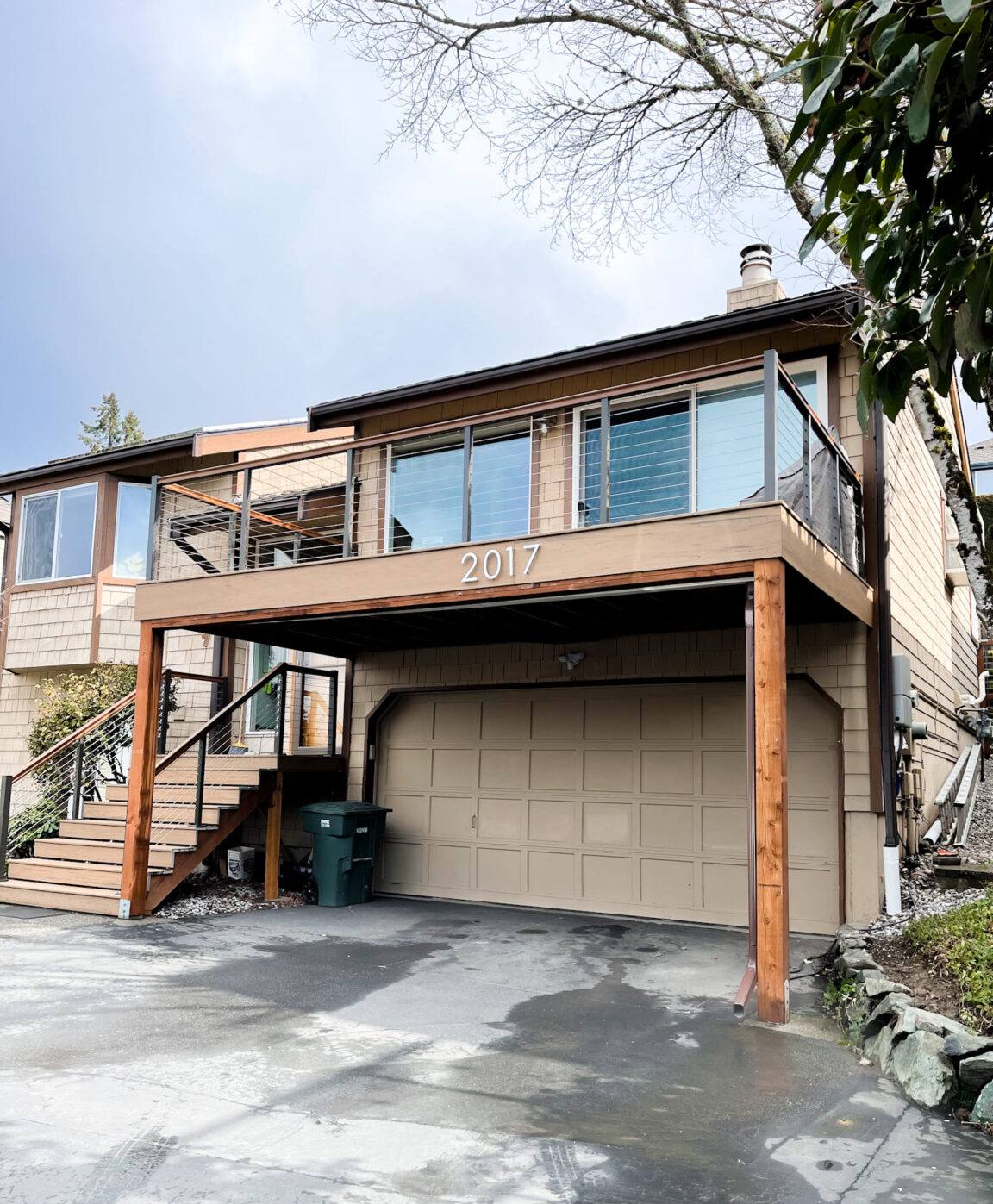
What "Correct" Actually Means: Structure Before Style
Homeowners usually start a deck conversation with decking material and railing style, which is fair — that's what you look at every day. But the decisions that determine whether a deck is still solid in fifteen years happen underneath, before a single visible board goes on.
Ledger Attachment and Flashing
Where the deck attaches to the house is the single most common failure point on any deck, and it's the spot where driving rain does the most damage if it's not detailed correctly. A proper ledger installation means flashing that sheds water away from the house sheathing, not just a bead of caulk and a bolt pattern. In a climate that gets sustained wind-driven rain, this detail either keeps water out of your wall framing for good or it starts a slow rot problem you won't see until it's expensive.
Footings and Frost Considerations
Footings need to be sized and set to the depth the local building department requires, and set on undisturbed or properly compacted soil. Whatcom County's damp soil conditions mean footing prep matters more here than in drier regions — a footing that shifts even slightly over a few wet winters will telegraph movement up through the whole structure.
Joist Protection
Every cut end and every top edge of a joist should get sealed or taped before decking goes down. This is a cheap step during construction and a genuinely difficult one to fix later, since it means pulling boards to get at framing that's already rotting from the top down.
Choosing Decking Material for Salt Air and Moss
There's no single "best" decking material for Birch Bay — there's a right material for your budget, your maintenance appetite, and how much sun versus shade the deck gets. Shaded, north-facing decks near the water hold moisture longer and grow moss faster regardless of material, which should factor into the choice.
| Material | How it handles salt air & moisture | Moss/algae resistance | Maintenance |
|---|---|---|---|
| Cedar | Naturally rot-resistant, ages gracefully if finished | Moderate — needs periodic cleaning | Refinish every 2-3 years |
| Pressure-treated pine | Good with correct fasteners; can cup if not sealed | Low — traps moisture in grain | Seal/stain regularly, clean yearly |
| Capped composite | Excellent — impervious outer shell | High — smooth surface, less to grip | Occasional washing, no staining |
| PVC decking | Excellent — fully synthetic, won't absorb moisture | High | Occasional washing, no staining |
We install all four of these depending on what a homeowner wants, but we're honest about the trade-offs: cedar looks and feels the best but asks the most of you in upkeep near the water, while composite and PVC cost more up front and give a lot of that maintenance time back. Pressure-treated is the budget option, and it can absolutely work here — it just needs a sealed finish and shouldn't be left bare in this climate.
Fasteners and Hardware: The Part Nobody Sees But Salt Air Attacks First
This is the detail most likely to get skipped on a lower-bid deck job, and it's the one salt air punishes fastest. Standard galvanized fasteners can start showing rust bleed within a year or two this close to the bay. We build with stainless steel or high-grade coated fasteners rated for coastal and treated-lumber exposure, along with structural connectors — joist hangers, post bases, ledger bolts — in a corrosion class that matches the environment, not just the minimum the code allows inland.
The same logic applies to any metal railing components, post anchors, or fastener heads left exposed on the surface. It costs more per fastener. It's not a place to cut cost on a deck that's going to face the bay air every day of the year.
Fighting Moss and Algae Before They Fight You
Whatcom County's long wet season gives moss and algae a real head start on any horizontal wood surface, and a deck near Birch Bay gets that exposure worse than most. Moss isn't just cosmetic — it holds moisture against the board surface, which accelerates rot in wood decking and makes any surface slicker and more dangerous underfoot, especially on stairs.
Design Choices That Reduce Moss Buildup
- Gapping boards correctly for drainage and airflow underneath, not tighter than the material calls for
- Keeping the deck surface pitched slightly away from the house so water doesn't pool
- Trimming back overhanging vegetation that keeps sections of the deck shaded and damp
- Choosing a lower-maintenance material for heavily shaded sections even if the sunnier parts of the deck use wood
- Planning stair treads and high-traffic areas with a material or finish that stays gripped when wet
None of these eliminate the need for occasional cleaning, but together they mean the difference between hosing off a deck once a season and fighting a losing battle with a pressure washer every few weeks.
Railings, Stairs, and Code Considerations
Any deck more than a modest height off grade needs code-compliant railings, and stairs need proper rise/run consistency and graspable handrails. This isn't optional or a place where "close enough" is acceptable — it's both a legal requirement and a real safety issue, especially on a surface that gets wet and mossy for months at a time. We pull permits and build to the current code adopted in Whatcom County, including guard height, baluster spacing, and stair geometry, so the deck passes inspection the first time and doesn't become a liability down the road.
Railing material matters near the bay too. Untreated or poorly coated metal railing components will show corrosion streaks well before the deck itself shows any wear, so we spec hardware and railing systems built for the same exposure as the rest of the structure.
Our Process for a Birch Bay Deck Project
- On-site assessment — we look at sun/shade exposure, existing structure if it's a rebuild, drainage patterns around the house, and how exposed the site is to prevailing wind and rain off the bay.
- Design and material selection — sizing, layout, and a material and hardware spec matched to that specific site's exposure, not a one-size answer.
- Permitting — we handle the permit application and inspections required by the local building department.
- Footings and framing — footings set to code depth, framing built with sealed joist ends and coastal-rated fasteners and connectors throughout.
- Ledger flashing and waterproofing — the single detail most likely to fail on a poorly built deck, done correctly the first time.
- Decking, railings, and stairs — installed to the chosen material's spec, with attention to drainage gaps and code-compliant railing geometry.
- Final walkthrough — we go over maintenance expectations specific to the material you chose and the site's exposure.
Maintenance Checklist for a Coastal Deck
What you do after the deck is built matters as much as how it was built. A little consistent upkeep prevents most of the problems this climate causes.
- Rinse or sweep debris off the surface regularly, especially in fall when leaves and organic matter feed moss growth
- Check and clean under-deck drainage and gaps at least once a year
- Inspect fasteners and hardware annually for early rust bleed or loosening
- Re-seal or re-stain wood decking on the schedule the finish product calls for — don't wait until it's visibly failing
- Wash composite or PVC decking periodically to prevent surface film buildup, even though it won't rot
- Check railing posts and stair stringers for movement after major storm seasons
Why Hiring a Crew That Already Works Birch Bay Matters
A lot of deck problems we get called to fix weren't caused by bad intentions — they were caused by a build that followed a generic spec instead of one suited to this specific stretch of coast. A crew that works Whatcom County's shoreline communities regularly already knows which fastener grade to use without being asked, already accounts for driving rain in the ledger detail, and already knows which shaded, low-airflow spots on a typical Birch Bay lot are going to grow moss the fastest. That local pattern recognition is worth more than it sounds like on paper — it's the difference between a deck that needs attention every year and one that just quietly works.
If you're planning a new deck or replacing one that's showing its age, we're happy to take a look and talk through what makes sense for your site. Reach out for a free, no-pressure estimate using the form below.