 Lynden
 Board & Batten Siding, Built for the Blaine Area
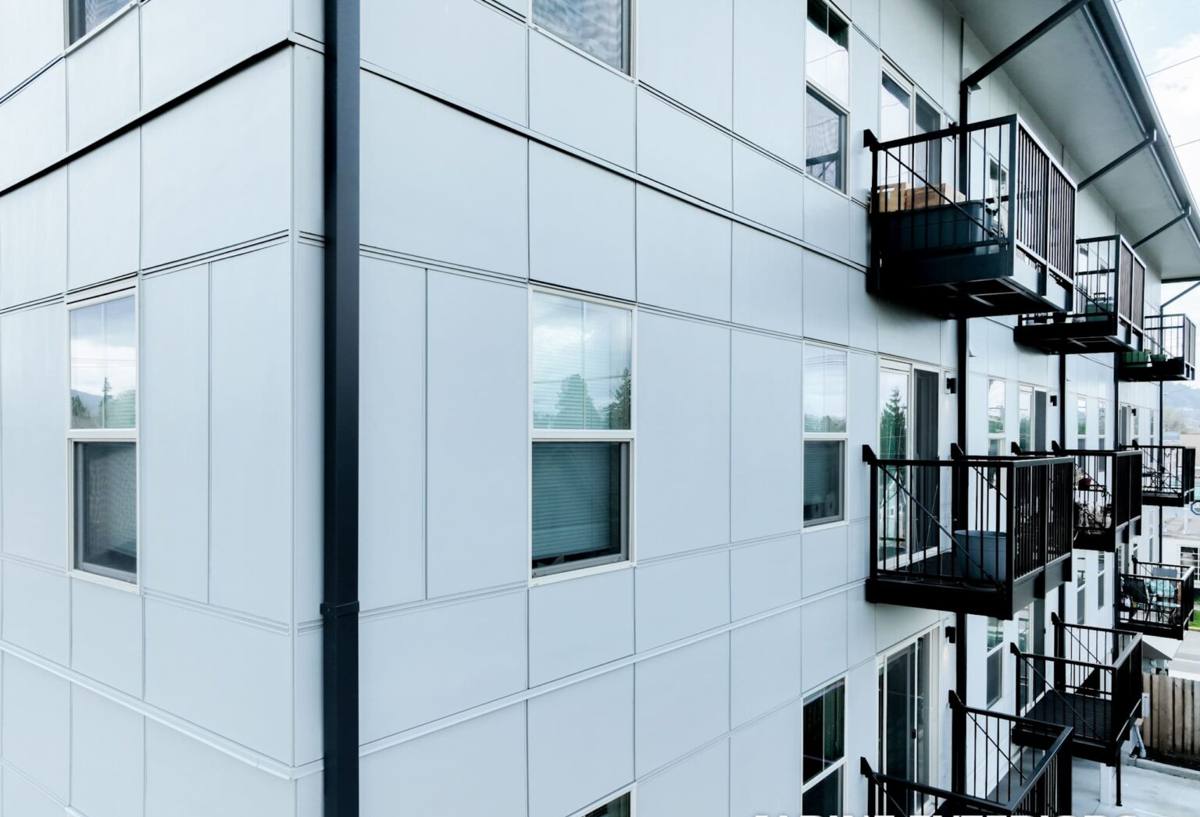
Board & batten has become one of the most requested looks in Whatcom County — clean vertical lines, deep shadow reveals, and a farmhouse-meets-modern profile that works on everything from a new build to a full re-side. But the style that gets requested most often in the Blaine area isn't always the style that holds up best there. Homes near the water deal with a different set of stresses than homes further inland: salt-laden air off the bay, wind-driven rain that hits siding sideways instead of straight down, and a moss season that can run most of the year in the shaded, damp corners of a lot. Board & batten done right can handle all of that. Board & batten done with the wrong material or the wrong details will show problems within a few winters.
This page covers what board & batten siding actually needs to perform in Blaine's climate, what a correct installation involves, and why we install it in James Hardie fiber cement only — never vinyl, never LP SmartSide, never primed wood.
What Blaine's Climate Does to Vertical Siding Over Time
Vertical board & batten has more seams per square foot than horizontal lap siding — every batten covers a joint, and every joint is a place water can get behind the cladding if it isn't detailed correctly. That makes the material and installation choices more consequential here than on a simpler lap job.
Salt Air
Properties close to the water pick up airborne salt that settles on siding, trim, and especially fasteners. Salt is corrosive and hygroscopic — it draws moisture to the surface it's sitting on. Over years, that accelerates rust on exposed steel fasteners, breaks down cheap coatings, and can pit or chalk lower-grade paint finishes faster than the same siding would wear a few miles inland.
Driving Rain
Storms coming off the water don't just fall on a roof — they push rain horizontally into wall assemblies, and vertical battens can funnel that water downward along the seams if the underlying panel and flashing aren't installed correctly. A board & batten wall is only as water-resistant as its weakest joint.
A Long Moss Season
Shaded north walls, tree-lined lots, and Whatcom County's damp fall-through-spring stretch all favor moss and algae growth. Moss holds moisture against the siding surface for extended periods, which is hard on any substrate that isn't dimensionally stable and properly sealed at the edges.
Why We Install James Hardie for This Look — Not the Alternatives
Board & batten is achievable in several materials, and we get asked to bid it in vinyl or engineered wood fairly often. We don't install those products, and it's worth explaining why rather than just saying no.
- Vinyl board & batten is affordable and low-maintenance in mild conditions, but it's a thin extruded plastic that expands and contracts with temperature swings, can crack in a hard impact, and simply isn't rated to stand up to salt exposure and driving rain the way a rigid, engineered material is. Seams and battens in vinyl also rely heavily on overlap and clip systems rather than the kind of mechanically fastened, caulked joint that holds up long-term near the water.
- LP SmartSide and other engineered wood products are wood-based — treated and engineered, but still wood at the core. In a climate with a long moss season and near-constant moisture exposure, any wood-based product depends entirely on the factory coating and field sealing staying intact at every cut edge and joint. One missed seal at a batten seam is an entry point for water into a wood substrate.
- Primed cedar or spruce board & batten looks great on day one but is a maintenance commitment — repainting, caulk inspection, and moisture monitoring on an ongoing basis, especially on a salt-exposed elevation.
James Hardie fiber cement is non-combustible, dimensionally stable, and doesn't rely on an intact factory coating to resist moisture the way wood-based products do — the material itself is cement, sand, and cellulose fiber, not organic wood. That's the foundation the board & batten look needs in this climate.
How James Hardie Board & Batten Actually Works
Board & batten in the Hardie system isn't a single product — it's an assembly. Understanding the parts helps homeowners evaluate whether a bid is describing a correct installation or a shortcut.
The Panel
The base layer is typically HardiePanel vertical siding, installed in large sheets over a properly prepared wall — smooth or a lightly textured finish depending on the look you want. This is what actually sheds the bulk of the water off the wall.
The Battens
Vertical battens are fastened over the panel seams, creating the shadow-line reveal that gives board & batten its character. Batten spacing and reveal depth are a design choice, but the fastening pattern and the treatment underneath each batten are what determine whether the assembly actually manages water or just looks like it does.
The HZ10 Formulation
James Hardie engineers its siding by climate zone. Homes in our part of Washington fall in Hardie's HZ10 zone, formulated for wetter, harsher conditions than the product sold in dry, low-humidity regions. That's not a marketing detail — it affects the moisture performance of the material itself.
ColorPlus Factory Finish
Rather than a job-site coat of paint, ColorPlus is a baked-on, factory-applied finish with a longer color warranty than field-applied paint typically carries, and better resistance to fading and chalking from UV and salt exposure than most site-applied coatings.
What a Correct Installation Involves
The product only performs as well as the install. On a board & batten job specifically, we pay close attention to a handful of details that are easy to rush and expensive to fix later.
| Detail | Why it matters in Blaine's climate |
|---|---|
| Weather-resistive barrier behind the panel | Provides a secondary drainage plane in case any water does get past the cladding during a driving rain event |
| Correct fastener type and spacing | Corrosion-resistant fasteners driven to Hardie's specified pattern resist the corrosive effect of salt air far longer than generic or under-driven fasteners |
| Flashing at windows, doors, and roof lines | Every penetration and transition is a place wind-driven rain can force water behind the siding if flashing is skipped or undersized |
| Batten seam treatment | Determines whether the vertical joints actually shed water or slowly let it track down behind the battens |
| Bottom clearance and kickout flashing | Keeps the lowest course of siding from sitting in standing moisture or splash-back, which matters on shaded, damp lots prone to moss |
| Caulking at cut ends and terminations | Factory-finished edges are protected; field-cut edges need to be sealed to keep moisture out of the cut cement |
Our Process for a Blaine Board & Batten Project
The steps are consistent, but the details get adjusted for the specific elevation, exposure, and existing wall condition of each home.
- On-site assessment. We look at sun and wind exposure, proximity to water, existing moisture or moss damage, and how the current siding is performing before recommending a scope.
- Removal and wall inspection. Old siding comes off and the sheathing underneath gets inspected for rot or moisture damage before anything new goes up — this is often where hidden problems from a prior installation surface.
- Weather barrier and flashing. We install or verify the water-resistive barrier and flash every window, door, and penetration before the first panel goes up.
- Panel and batten installation. HardiePanel is installed to manufacturer fastening specs, followed by battens at the seams, with attention to consistent reveal and secure, corrosion-resistant fastening throughout.
- Trim, caulking, and cut-edge sealing. All field cuts and terminations get sealed so no exposed cement is left unprotected.
- Final walkthrough. We review the finished job with the homeowner and confirm the details that matter most for long-term performance in this climate.
Living With Board & Batten in a Salt Air, Moss-Prone Climate
James Hardie siding is low-maintenance, not no-maintenance. A little routine attention keeps a board & batten job looking and performing the way it should for decades.
- Rinse salt residue and general grime off the siding a couple of times a year, especially on elevations facing open water or prevailing wind
- Keep gutters clear so overflow isn't running down and pooling behind battens on any wall
- Trim back landscaping and tree cover on shaded, moss-prone elevations to let the wall dry out between rain events
- Soft-wash algae or moss growth rather than pressure-washing, which can force water behind battens and damage caulked joints
- Have caulking at trim, windows, and cut ends inspected every few years and touched up before a small gap becomes an entry point
- Walk the exterior after major storms and check for loose battens, damaged flashing, or fresh moss growth in shaded corners
Why a Crew That Already Works in Blaine Matters
Board & batten installed to spec in Spokane and board & batten installed to spec in Blaine aren't the same job — the exposure, the moisture load, and the wear pattern are different. A crew that regularly works Whatcom County's coastal and near-coastal properties has already seen how salt air and driving rain affect fastener choice, flashing details, and where moss tends to take hold on a given lot orientation. That experience shows up in the small decisions during installation that don't get written down in a manufacturer's spec sheet but make the difference between siding that looks good for a year and siding that performs for decades. It also means straightforward permitting, realistic timelines built around this area's weather windows, and a crew that isn't learning the local climate on your house.
Get a Straight Answer on Board & Batten for Your Home
If you're weighing board & batten for a home near Blaine, we're glad to walk your property, talk through what your specific exposure calls for, and give you a straightforward, no-pressure estimate — no invented urgency, just an honest look at what your siding needs. Use the form below to get started.