 Lynden
 Why Blaine's Climate Changes the Metal Roofing Equation
Blaine sits at the northern edge of Whatcom County, right where the Strait of Georgia and Drayton Harbor meet the mainland. That location gives homes here a combination of stresses that most inland roofs never deal with: salt-laden air blowing off the water, driving rain that comes in sideways during winter storms, and a moss season that can run eight or nine months out of the year in shaded, north-facing sections of a roof. Any one of these on its own is manageable. Together, they mean a roofing system that works fine in Bellingham or the Lynden area can still underperform a few miles closer to the water in Blaine.
Metal roofing handles this combination better than most materials when it's specified and installed correctly. The problem is that "metal roofing" covers a wide range of products and installation quality, and a roof that looks right on day one can start showing corrosion, leaks, or moss buildup within a few years if the wrong fasteners, coating, or flashing details were used. This page is about what actually matters for a metal roof going on a home in Blaine, not metal roofing in general.
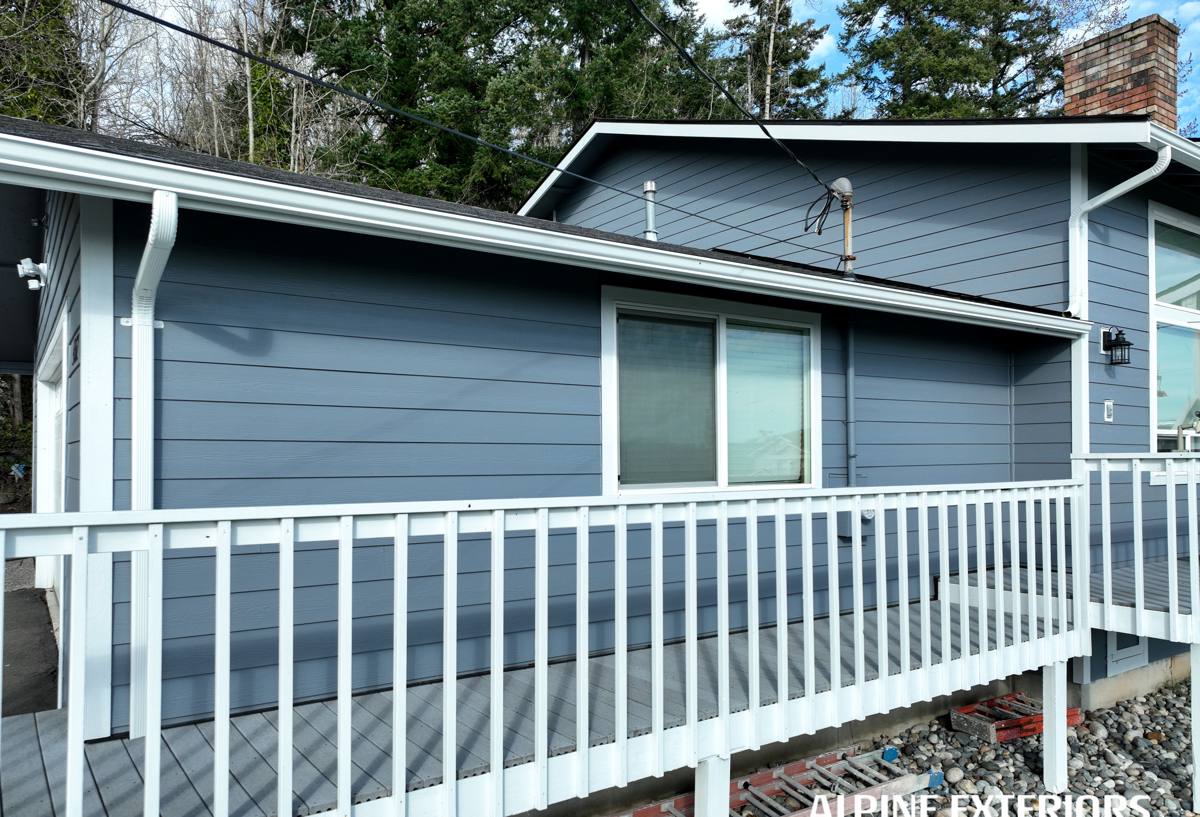
What a Correct Metal Roof Looks Like on a Blaine Home
A correctly built metal roof in this area is really a system: panel profile, fastening method, underlayment, and flashing all have to work together. Get one piece wrong and the rest doesn't matter.
Standing Seam vs. Exposed-Fastener Panels
Both panel types are sold as "metal roofing," but they behave very differently in a marine environment, and we treat that difference as a real decision point with homeowners rather than a given.
| Factor | Standing Seam | Exposed-Fastener |
|---|---|---|
| How panels attach | Hidden clips, no fasteners through the panel face | Screws through the panel face into the deck or purlins |
| Salt-air durability | Fewer penetration points, less long-term corrosion risk | Every fastener is a potential rust or leak point over time |
| Upfront cost | Higher | Lower |
| Maintenance | Minimal once installed correctly | Fastener washers should be checked periodically and eventually replaced |
| Where we typically recommend it | Homes closer to the water, higher-budget projects, long-term ownership plans | Detached structures, budget-driven projects, less exposed sites |
We'll install either system, but for homes within a mile or two of Drayton Harbor or Semiahmoo Bay, we generally steer homeowners toward standing seam if the budget allows it. It's not that exposed-fastener panels are a bad product — it's that every screw penetration is one more spot where salt air and moisture can start working on the metal, and that adds up over 20-plus years near the water.
Fasteners, Flashing, and the Galvanic Corrosion Trap
One mistake we see on roofs that weren't installed by crews familiar with this stretch of coastline: mismatched metals. Pairing the wrong fastener or flashing metal with the panel material sets up galvanic corrosion, where one metal essentially eats the other wherever they touch and moisture is present. In a salt-air environment, this process happens faster than it would twenty miles inland. Correct practice means matching fastener and flashing metal to the panel (or using a compatible isolator), and it means every flashing detail — valleys, rake edges, chimney and vent penetrations, and the transition where the roof meets siding — gets sealed and lapped to shed water, not just caulked and hoped for.
Moss and Debris: The Long Season Most Homeowners Underestimate
Whatcom County's moss season isn't a minor cosmetic issue — on the wrong roof, sustained moss growth holds moisture against the surface, works into seams, and accelerates wear. Metal roofing is inherently more moss-resistant than asphalt shingles or wood shakes because there's no granular or fibrous surface for spores to grip, but it isn't moss-proof. Shaded, low-slope sections, valleys, and areas near overhanging trees can still collect enough organic debris and moisture to support growth over time.
The fix is mostly in the design and the maintenance plan, not the metal itself: adequate slope, valleys that are wide and clean enough to shed debris instead of trapping it, and gutters sized and pitched so they don't back water up under the panel edges. We also talk with homeowners honestly about tree cover — a roof shaded most of the day by conifers will need more attention regardless of material, and that's worth knowing before installation, not after.
Underlayment and Weatherproofing for Driving Rain
Wind-driven rain off the water is a different challenge than a straight-down downpour. It can push water up under panel laps and around penetrations that would stay dry in calmer conditions. A correct installation accounts for this with:
- A synthetic or self-adhered underlayment rated for the exposure, not just builder's felt
- Self-adhered ice-and-water membrane at eaves, valleys, and around every roof penetration, even though Blaine doesn't see heavy ice — the membrane's real job here is sealing against wind-driven water
- Panel laps and end laps oriented and sealed correctly for the prevailing wind and rain direction on that specific roof
- Properly lapped and sealed step flashing anywhere the roofline meets a wall or dormer
Skipping or shortcutting any of these is invisible from the ground and invisible for the first year or two. It shows up later as a stain on a ceiling or rot in the sheathing, usually after a hard winter storm.
Choosing Metal and Coating for a Salt-Air Environment
Not all metal roofing products are equally suited to coastal exposure, and this is where we're direct with homeowners about trade-offs rather than pushing whatever is easiest to install.
| Option | Where it fits | Trade-off to know |
|---|---|---|
| Coated steel (Galvalume or similar base with a quality paint system) | Most Blaine homes, good value | Coating quality matters more here than inland — a premium PVDF/Kynar-type finish holds up to salt air far longer than a basic paint system |
| Aluminum | Homes in direct salt exposure near the water | Naturally corrosion-resistant since it doesn't rust, but typically costs more and dents more easily than steel |
| Uncoated or bare galvanized | Rarely our recommendation on occupied homes here | Lower upfront cost but a shorter service life in this environment, since the coating is what's doing the real corrosion protection |
Our standard is to spec a coating system rated for the exposure the specific home actually has, not the cheapest option that technically qualifies as "metal roofing." A house two blocks from the harbor and a house set back on a wooded lot a mile inland don't need the same spec, and we'll tell you which situation you're in.
Our Installation Process
- On-site assessment — we look at slope, existing decking condition, tree cover, prevailing wind exposure, and proximity to salt water before recommending a panel or coating system.
- Tear-off and deck inspection — old roofing comes off and we check the sheathing for rot or soft spots, which are common on older Whatcom County homes that have seen decades of moisture.
- Deck repair as needed — any compromised sheathing gets replaced before anything else goes down; metal panels installed over a soft deck will fail regardless of how good the panel is.
- Underlayment and membrane installation — synthetic underlayment plus self-adhered membrane at all vulnerable points, matched to the roof's actual wind and rain exposure.
- Panel installation — panels run, fastened, and lapped per the manufacturer's spec for this climate, with fastener and flashing metal matched to the panel to avoid galvanic reaction.
- Flashing, trim, and penetration detailing — valleys, ridges, vents, and wall transitions finished and sealed.
- Final walkthrough — we go over the finished roof with you, including what routine maintenance it actually needs (and what it doesn't).
Cost Factors for a Blaine Metal Roof
Pricing depends on the specific home, but these are the factors that move the number most on jobs in this area:
| Factor | Why it matters here |
|---|---|
| Panel type (standing seam vs. exposed-fastener) | Standing seam costs more upfront but reduces long-term corrosion risk near the water |
| Coating grade | A premium coating system costs more but is the main defense against salt-air degradation |
| Deck condition | Older homes with moisture history often need sheathing repair before install |
| Roof complexity | Valleys, dormers, and multiple penetrations all add labor and flashing detail |
| Distance from salt water | Homes closer to Drayton Harbor or the Strait typically warrant a higher-grade spec |
We'd rather walk a homeowner through these trade-offs on-site and give a firm number for their actual roof than quote a generic range that doesn't hold up once we're on the deck.
Maintenance Checklist for Blaine Homeowners
Metal roofing is low-maintenance compared to shingles, but "low-maintenance" isn't "no-maintenance" in this climate. A short annual routine catches most problems before they become expensive:
- Clear gutters and valleys of needles and debris before the fall rains start
- Check for moss or algae buildup in shaded areas, especially north-facing slopes under tree cover
- Look at exposed fasteners (if applicable) for early rust or loose screws after major windstorms
- Inspect flashing around chimneys, vents, and wall transitions for gaps after severe weather
- Trim back overhanging branches that keep sections of the roof shaded and damp
Why a Crew That Already Works Blaine Matters
A metal roof installed to a generic spec sheet will hold up fine somewhere with a dry, sheltered climate. Blaine isn't that. A crew that regularly works this part of Whatcom County knows which streets sit close enough to the water to warrant a higher coating grade, which older homes tend to have deck moisture issues, and how the local building department handles metal roofing permits and inspections. That local pattern recognition is the difference between a roof that's technically installed correctly and one that's installed correctly for this specific place.
If you're weighing a metal roof for a home in Blaine, we're happy to take a look and walk you through what your specific roof needs — no pressure, no generic quote. Fill out the form below for a free estimate.