 Lynden
 Why Custer Roofs Wear Differently Than Roofs Inland
Custer sits close enough to the water that salt air is a real factor in how roofing materials age, not just an inconvenience. Metal flashing, fasteners, and drip edge corrode faster here than they do a few miles inland around Lynden proper. Add Whatcom County's long stretch of driving rain each fall and winter, plus a moss season that can run from October well into spring, and you've got three separate stresses working on the same roof at the same time. None of them show up as a dramatic failure right away. They show up as small, boring problems — a lifted shingle tab, a rusty nail head, a shaded north slope that never quite dries out — that turn into leaks a year or two later if nobody deals with them.
That's the case for repair-first thinking in a lot of Custer homes. A roof doesn't need to be replaced just because it's showing its age. It needs someone to look at what the climate has actually done to it and fix that, specifically, instead of guessing.
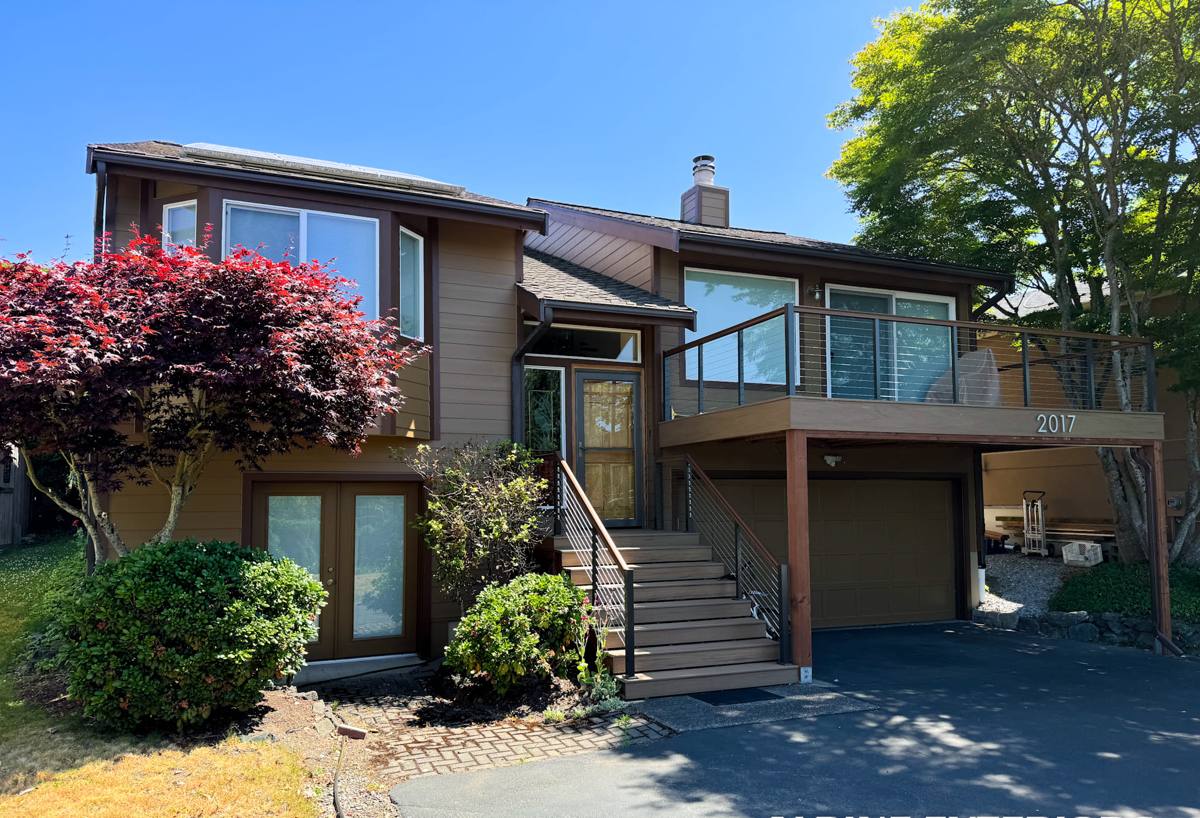
What Roof Repair Actually Covers
"Roof repair" gets used loosely, so it's worth being specific about what it means on a real job. Repair is targeted work: fixing flashing that's failed at a chimney, valley, or wall intersection; replacing a run of shingles that blew off or cracked; resealing or rebuilding a penetration around a vent pipe; correcting a spot where moss has held moisture against the deck long enough to soften it. It is not a patch-and-hope job, and it's not a full tear-off either. Good repair work identifies the boundary of the actual damage, removes everything inside that boundary down to sound material, and rebuilds it correctly — including the underlayment and flashing details, not just the visible shingle layer.
When Repair Is the Right Call
Repair makes sense when the damage is localized: one slope, one valley, one flashing detail, a section under a tree that's been dropping debris and holding moisture. If the roof covering elsewhere is still within its service life and the decking underneath is sound, there's no reason to replace the whole roof to fix one problem area.
When Repair Isn't Enough
If moisture has been getting into the attic for a long time, or if multiple slopes are showing granule loss, curling, or soft decking in more than one spot, a repair can end up being a short-term fix on a roof that needs full replacement. Part of an honest estimate is telling you which situation you're actually in before any work starts.
Common Problems We See on Custer Roofs
Every coastal Whatcom County roof has its own history, but the same patterns come up often enough to be worth listing plainly:
- Moss colonies on north-facing or shaded slopes that hold moisture against the shingles year-round
- Rusted or failing metal flashing at chimneys, skylights, and roof-to-wall intersections
- Shingle tabs lifted or torn loose along eaves and ridges from sustained wind-driven rain
- Granule loss and early aging on slopes with direct salt-air exposure
- Clogged or undersized gutters causing water to back up under the first course of shingles
- Soft or discolored decking found only after a leak has already reached the interior
- Nail pops and fastener corrosion loosening shingles over time
None of these are unusual or a sign of a bad original installation — they're the normal wear pattern for this stretch of coastline. What matters is catching them before they cause interior damage.
What a Correct Repair Involves
A repair that actually holds up isn't just laying new shingles over the damaged spot. It follows a sequence:
- Diagnose the actual source — a leak that shows up over a bedroom ceiling can originate several feet away, following a rafter or the underlayment before it drips. Chasing the stain instead of the source is the most common way repairs fail.
- Remove damaged material fully — shingles, underlayment, and flashing in the affected area come out until what's left is dry, sound decking. Covering over compromised material just delays the same failure.
- Address the deck — any soft or delaminated sheathing gets replaced, not sealed over. This is the step that gets skipped by anyone trying to do a repair too cheaply.
- Rebuild the water path — new underlayment, correctly lapped flashing, and shingles matched as closely as possible to the surrounding roof, so water sheds the way it's supposed to rather than finding the next weak point.
- Check ventilation and moss exposure — if the repair area failed partly because of trapped moisture or a shaded, poorly ventilated section, that gets flagged even if it's outside the immediate repair scope.
Our Process on a Custer Repair Call
1. Inspection and Honest Scope
We walk the roof (weather permitting) and the attic if there's access, look at the actual extent of the damage, and tell you plainly whether it's a repair or something bigger. If it's a small job, we say so — we're not going to talk a one-slope flashing repair into a full re-roof.
2. Written Estimate Before Any Work
You get a clear scope and price before we start. No surprise add-ons once we're up there, unless we find something during teardown that genuinely wasn't visible from the ground or attic — and if that happens, we stop and talk to you before continuing.
3. Weather-Aware Scheduling
Given how much of the year in Whatcom County involves rain, we plan repair work around weather windows and use temporary protection if a job has to be staged across more than one day. A roof shouldn't sit open overnight on a guess.
4. Repair, Cleanup, and Follow-Up
We do the work, clean up the job site (old shingles, nails, and debris don't get left in the yard or gutters), and walk you through what was done. If the repair uncovered a broader issue — early-stage moss on other slopes, aging flashing elsewhere — we'll tell you what to watch for, not push you into more work you don't need yet.
Repair vs. Replacement: What Actually Drives the Decision
| Factor | Points Toward Repair | Points Toward Replacement |
|---|---|---|
| Age of existing roof | Well within expected lifespan | Near or past typical service life for the material |
| Extent of damage | One slope, valley, or flashing detail | Multiple slopes, widespread granule loss or curling |
| Decking condition | Sound where exposed | Soft, delaminated, or damaged in more than one area |
| Moss/algae history | Surface growth, no sustained moisture intrusion | Long-term moss cover with moisture reaching the deck |
| Interior signs | None, or a single isolated stain tied to one source | Recurring stains in different rooms or attic moisture in multiple spots |
This table is a starting point, not a diagnosis — the only way to know which column applies is an actual inspection. Roofs that look rough from the ground (heavy moss staining, for example) are sometimes structurally fine underneath, and roofs that look okay from the street can have a soft spot from a slow leak nobody's noticed yet.
Material Choices That Matter for This Climate
On repair work, matching materials to what's already on the roof is usually the right call for appearance and cost. But where we have latitude — flashing, underlayment, fasteners — we lean toward materials that hold up specifically to salt air and sustained moisture rather than whatever's cheapest at the counter that day.
Flashing and Fasteners
Corrosion-resistant flashing and fasteners cost more up front but last dramatically longer this close to the water. Using standard galvanized components where corrosion-resistant options exist is one of the more common shortcuts that leads to a callback in a few years, and we treat that as our own standard to avoid, not an accusation against any particular brand.
Underlayment
In a region where a roof deck can stay damp for days after a storm, the underlayment's ability to manage that moisture matters more than in drier climates. We use products rated for the exposure and lapping conditions the job actually presents, rather than defaulting to the cheapest roll available.
Moss-Resistant Details
On repairs to shaded or north-facing slopes with a history of moss, we'll sometimes recommend zinc or copper strips near the ridge as part of the repair. It's a small addition that reduces regrowth without changing the appearance of the roof.
Why It Matters to Hire a Crew That Already Works This Area
A crew that repairs roofs across Lynden, Custer, and the surrounding Whatcom County coastline sees the same failure patterns often enough to recognize them quickly instead of treating every job as a fresh mystery. That translates into faster, more accurate diagnosis — knowing, for example, that a stain in a particular ceiling location usually traces back to a specific type of flashing failure rather than needing to explore every possibility from scratch. It also means realistic scheduling around this area's rain patterns, and a working knowledge of which repair details actually hold up against salt air instead of just looking fine on installation day.
It also matters for accountability. A local crew that plans to keep working in Custer has every reason to do the repair right the first time and stand behind it, rather than disappearing after the invoice is paid.
Simple Maintenance That Extends a Repair's Life
A good repair lasts longer with a small amount of upkeep in between:
- Clear gutters and downspouts before the fall rains start in earnest
- Have moss treated or removed before it establishes a thick mat, not after
- Trim back branches that keep a slope shaded and slow to dry
- Check the attic after major storms for any new signs of moisture
- Get a quick inspection if a repair is more than a few years old and you haven't had eyes on it since
If you're dealing with a leak, moss buildup, or flashing that's starting to look rough on a home in Custer or anywhere nearby, we're happy to take a look and give you a straight answer on what it actually needs. Reach out for a free, no-pressure estimate using the form below.