 Lynden
 Why Siding Fails Faster in Custer
Custer sits in the northern stretch of Whatcom County, close enough to the water that salt-laden air is a regular part of the weather, not an occasional event. Add in driving rain that comes sideways off winter storms and a moss season that can stretch from October well into spring, and you have a combination that wears on exterior siding faster than most homeowners expect. None of this means siding is doomed here — it means siding needs to be installed and repaired with this climate in mind, not treated like it's going up in a dry inland town.
We work on homes throughout the Lynden area, and Custer's homes see a specific pattern of wear: fastener corrosion, moisture trapped behind trim, and moss and algae holding dampness against the wall longer than it should sit there. Understanding that pattern is what separates a repair that lasts from one that fails again in two years.
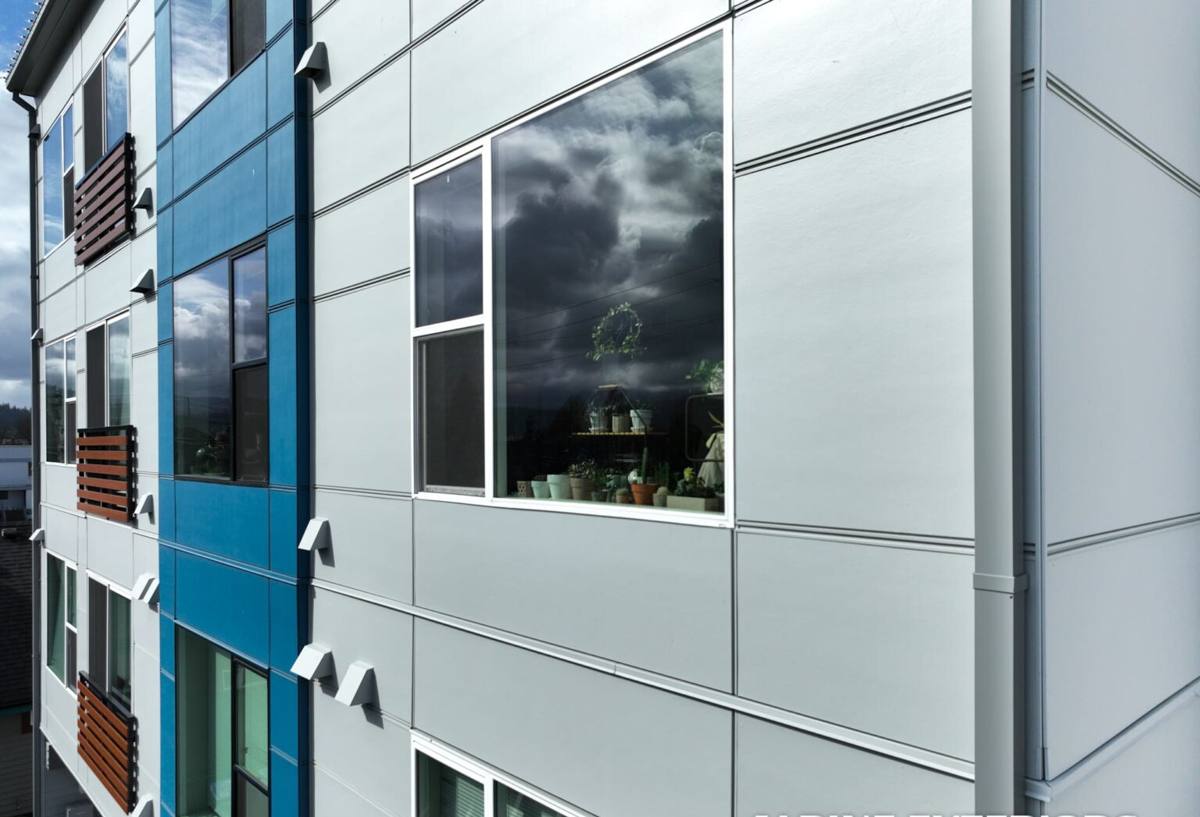
Signs a Custer Home Needs Siding Repair
Most siding problems don't show up as a single dramatic failure. They show up as small signs that get ignored until moisture has already worked its way behind the cladding. If you own or manage a home in Custer, it's worth walking the exterior once or twice a year and checking for the following:
- Soft, spongy, or discolored spots, especially near the bottom courses and around window and door trim
- Visible gaps, cracks, or separation at butt joints and corners
- Bubbling or peeling paint, which often signals moisture trapped underneath
- Streaks of green or black growth that keep coming back after cleaning
- Nail heads that have popped, backed out, or left rust trails down the face of a board
- Warping or bowing panels, particularly on north-facing or shaded walls where things stay damp longest
- Musty smells or damp patches on interior walls that share a wall line with suspect siding
Any one of these is worth a look. Several at once usually means water has been getting in for a while.
Common Repair Scenarios We See in Custer
Moisture and Rot at Trim and Butt Joints
The most frequent repair call isn't storm damage — it's slow moisture intrusion at the seams. Butt joints where two siding pieces meet, and the trim around windows and doors, are the weak points where caulking fails or was never detailed correctly to begin with. Once water gets behind the cladding, it doesn't dry out quickly in this climate, and the wood sheathing or framing underneath can start to soften before it's ever visible from the outside.
Moss, Algae, and Surface Staining
A long moss season means north-facing walls, areas under eaves with poor airflow, and anything shaded by trees or fences tend to stay damp and grow moss or algae faster than the rest of the house. On its own this is mostly cosmetic, but moss that's allowed to build up holds moisture against the siding surface and accelerates whatever damage is already starting underneath.
Fastener and Corrosion Issues
Salt air speeds up corrosion on fasteners and metal flashing. Nails that weren't rated for coastal exposure can rust, weaken, and eventually pop or fail, leaving boards loose or misaligned. This is a repair we see disproportionately in homes closer to the water, Custer included, compared to siding calls further inland.
Impact and Storm Damage
Wind-driven debris, ladders, landscaping equipment, and the occasional storm event can crack or chip individual boards. This is usually the most straightforward repair, provided the damage is caught before water gets behind the crack.
Repair or Replace: How We Make the Call
Not every damaged section needs a full re-side, and not every repair is worth doing instead of replacing a whole wall or the whole house. We look at a handful of factors before recommending either path, and we'll walk you through our reasoning rather than just handing you a number.
| Factor | Leans Toward Repair | Leans Toward Replacement |
|---|---|---|
| Extent of damage | Isolated to a few boards or one wall section | Spread across multiple walls or the whole exterior |
| Underlying moisture | Surface-level, sheathing still sound | Rot has reached the sheathing or framing |
| Siding age and material | Recent, still-serviceable material | Original material is aging out or was a poor performer for this climate |
| Material match | Matching product is available or the difference won't be visible | Discontinued color or profile with no clean match |
| Cost over time | Repair cost is a small fraction of full replacement | Repeated repairs are starting to add up to what replacement would cost |
When the damage is contained and the sheathing underneath is still sound, a targeted repair is the honest recommendation, and we'll say so. When we find rot has spread past a few boards, or the existing siding is a product that struggles in coastal conditions to begin with, we'll tell you that too, along with why we think replacement is the better long-term investment.
What a Correct Siding Repair Actually Involves
A repair that just covers up visible damage without addressing what caused it is a repair you'll be paying for again. We treat every repair call as a small diagnostic job first, then a fix.
- Confirm the cause, not just the symptom. A cracked board might be impact damage, or it might be a sign that water has been getting behind that wall for months. We check both before we touch anything.
- Open it up if needed. If there's any doubt about moisture behind the siding, we pull back enough material to inspect the weather-resistive barrier and sheathing before closing it back up.
- Repair the water management, not just the board. Flashing, house wrap, and caulking details get corrected as part of the repair, not left as-is around a new patch.
- Match the material properly. New boards get fastened, gapped, and finished to the same specification as the surrounding siding, so the repair doesn't become the next weak point.
- Clean and treat surface growth. Where moss or algae contributed to the problem, we address the growth and the conditions that let it take hold, not just the stain.
Why We Repair and Replace With James Hardie Materials
Our company installs only James Hardie fiber cement siding — we don't work with vinyl, LP SmartSide, or other engineered wood or composite products, including for repairs. That's a deliberate standard, not a limitation we work around. Fiber cement doesn't absorb water the way engineered wood products can, it doesn't expand and contract with humidity the way vinyl does, and it's manufactured with this exact climate in mind through Hardie's HZ5 product line, which is engineered for high-moisture, freeze-thaw regions like ours.
For repairs specifically, that matters because Hardie's ColorPlus factory finish is designed to be matched and touched up consistently, and the material itself holds up to the salt air and moisture cycling that causes so many of the repair calls we get in Custer in the first place. When a repair calls for new boards, we're not patching a compromised system with more of the same material that failed — we're bringing in a product built to handle the conditions.
Our Process for a Custer Repair Call
We keep the process straightforward because most homeowners just want the problem fixed correctly without a runaround.
- Inspection. We come out, look at the visible damage, and check the areas around it that tend to hide related problems — trim, corners, and anywhere water collects.
- Honest assessment. We tell you what we found, whether it's a simple repair or something that points to a bigger issue, and why.
- Clear quote. You get a written estimate before any work starts, with no pressure to upgrade beyond what the house actually needs.
- Scheduled work. Repairs are completed efficiently, with attention to matching the existing siding and correcting the moisture detailing underneath.
- Clean finish. We leave the site clean and walk you through what was done and why.
Why It Matters to Hire a Crew That Already Works in Custer
Siding repair isn't just carpentry — it's diagnosing how water moves around a specific house in a specific climate. A crew that regularly works homes in Custer and the surrounding Lynden area already knows which details tend to fail first in this environment: which wall orientations hold moss longest, which fastener choices hold up to salt air, and which trim details need extra attention on homes exposed to driving rain. That local pattern recognition is the difference between a repair that solves the problem and one that just resets the clock until it shows up again.
Being based nearby also means we're not treating a repair call as a one-off trip. If something about the fix needs a follow-up look after the next stretch of weather, we're a short drive away, not a distant crew that's already moved on to the next region.
Get a Straight Answer on Your Siding
If you're seeing soft spots, gaps, staining, or loose boards on a Custer home, it's worth getting a professional look before the damage spreads further. We'll give you a free, no-pressure estimate, tell you honestly whether repair or replacement makes more sense for your situation, and explain exactly what the work would involve. Fill out the form below to get started.