 Lynden
 Windows Built for the Acme Side of Whatcom County
The homes scattered through the Acme area and the rural stretches around Lynden don't get the same weather deal as a house downtown. You're further from shelter, closer to open farmland and tree line, and more exposed to wind-driven rain coming off the valley. Add in the damp, low-sun stretch of fall through spring that keeps every north-facing surface wet for months, and windows here take a beating that a spec sheet from a big-box retailer never accounts for. A window that's "rated for the Pacific Northwest" on paper still needs to be installed by someone who understands what that rating actually has to hold up against on your specific lot.
This page is about one job, done right, in one area: replacing or installing custom windows on homes in and around Acme, near Lynden, Whatcom County. Not a general overview of window brands — the specific problems this climate causes, what a correct installation looks like, and how we handle the job when we're out at your place.
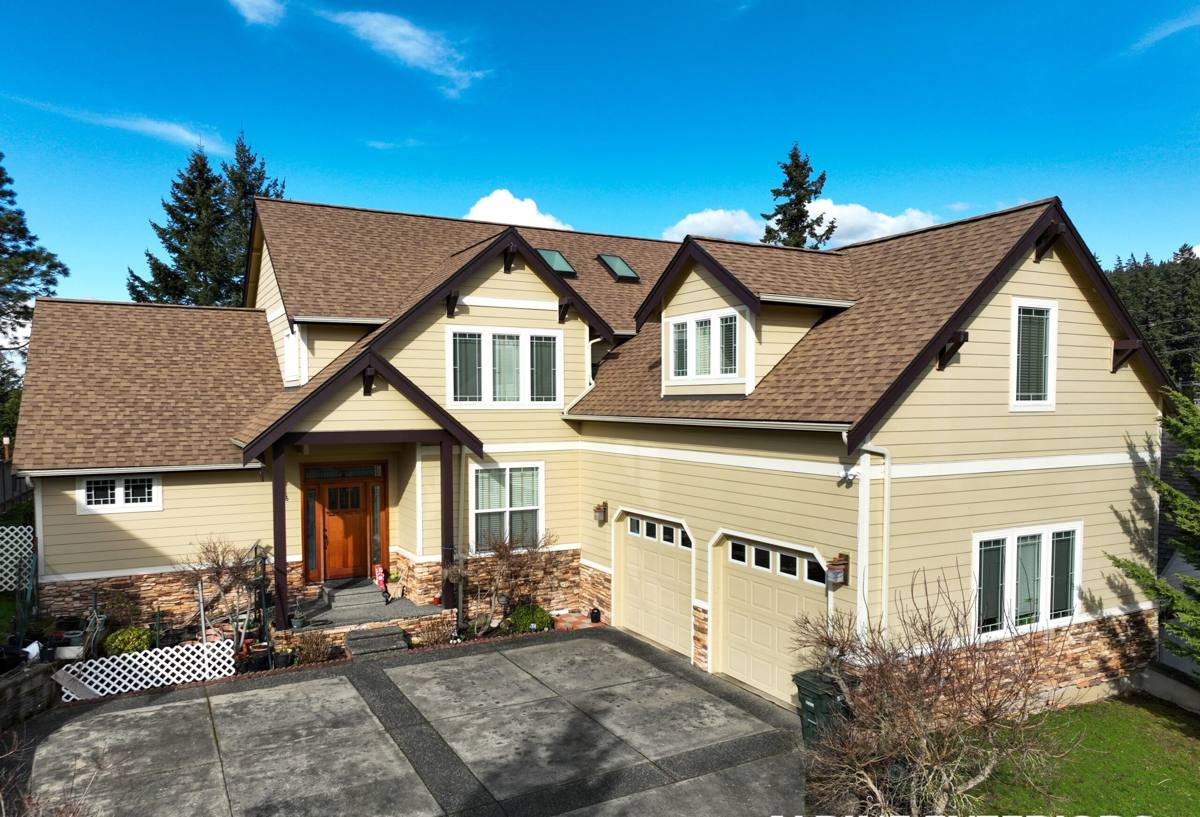
What Salt Air, Driving Rain, and Moss Season Actually Do to a Window
Salt Air
Whatcom County sits close enough to Puget Sound and the Strait that salt-laden air moves inland on a regular basis, especially with westerly weather systems. Salt air is hardest on metal — window hardware, aluminum cladding, and uncoated fasteners corrode faster here than they would fifty miles inland. Once hardware starts to pit or seize, locks stop aligning, cranks bind, and the window stops sealing tightly even if the glass and frame look fine.
Driving Rain
Rain here rarely falls straight down. Wind-driven rain gets pushed sideways into wall assemblies, and it finds any gap in flashing, caulking, or sill design. A window that's watertight in a still-air test can still leak under real Whatcom County storm conditions if the flashing details weren't done correctly at install. Most "mystery leaks" homeowners deal with years after a window replacement trace back to flashing and sill pan mistakes made on install day — not a defect in the window itself.
Moss and Algae Season
The long wet season — often six or seven months of the year with limited direct sun on shaded and north-facing walls — is exactly what moss, algae, and mildew need to take hold. On windows, that shows up as green or black growth on sills, in corner joints, and along trim, along with slower drying after every rain. Wood components that don't shed water fast enough stay damp longer, and sustained dampness is what actually causes rot — the moss is just the visible symptom.
Signs Your Windows Are Losing the Fight
- Fogging or a permanent haze between the panes (failed seal on the insulated glass unit)
- Soft or spongy wood at the sill or lower corners when you press on it
- Locks or cranks that bind, stick, or no longer pull the sash tight
- Visible moss, black staining, or algae buildup on sills and trim that returns soon after cleaning
- Drafts you can feel with a hand near the frame on a windy day
- Paint or finish that's peeling, bubbling, or cracking specifically around the window opening, not the whole wall
- Condensation forming on the interior glass or frame regularly through fall and winter
Any one of these on its own might just need a repair. Several together, especially on an older home, usually means the window unit and its surrounding flashing are past the point where patching makes sense.
What a Correct Installation Actually Involves
Swapping a window sounds simple — remove old, set new, caulk the edges. That approach is exactly why so many "replacement" jobs in this climate end up leaking again within a few years. Here's what we actually do, in order:
- Remove the old unit carefully and inspect the rough opening for hidden rot, especially at the sill and bottom corners, which is where wet-climate damage almost always starts.
- Repair or rebuild the rough opening if there's any compromised framing — installing a new window into a soft or rotted opening just moves the failure a few years down the road.
- Install a sloped sill pan so any water that does get past the exterior seal drains back out instead of pooling against the framing.
- Flash correctly, shingle-style — building paper or house wrap layered so each piece overlaps the one below it, directing water down and out rather than trapping it behind the siding.
- Set the window plumb, level, and square, with proper shimming so the frame isn't under stress that would rack it out of alignment over time.
- Insulate the gap between frame and rough opening — not packed so tight it bows the frame, not so loose it leaves a draft path.
- Seal and trim the exterior with materials and detailing suited to driving rain, not just a bead of caulk around the perimeter.
Skip or rush any one of those steps and the window itself becomes almost irrelevant — even a premium unit will leak or rot at the frame if the opening underneath it wasn't handled correctly.
Choosing Frame Material for This Climate
There's no single "best" window material — it's a set of trade-offs, and the right call depends on the house, the exposure, and your maintenance appetite. Here's how the common options actually perform under Whatcom County's specific conditions:
| Material | How it handles salt air & moisture | Maintenance | Typical trade-off |
|---|---|---|---|
| Vinyl | Doesn't corrode or rot; handles damp exposure well | Low — occasional cleaning | Limited color/profile options; can look plain on older or historic homes |
| Fiberglass | Excellent — stable in wet and salt-air conditions, resists warping | Low | Higher upfront cost |
| Wood-clad (wood interior, metal or vinyl exterior) | Good on the exterior face; interior wood still needs protection from any leaks | Moderate — relies on the cladding staying intact | Failure at the cladding seam can trap moisture against the wood unseen |
| Solid wood | Poor without diligent upkeep — the material most vulnerable to this area's rot and moss cycle | High — regular repainting/sealing required | Best reserved for homes where matching original historic character matters more than low maintenance |
| Aluminum | Vulnerable to salt-air corrosion and poor thermal performance | Moderate | We generally steer clients away from it for this specific coastal-influenced climate |
We're not going to tell you every wood window is a bad idea — plenty of older Acme-area farmhouses and character homes are worth keeping true to their original look. But we will be honest that it's a higher-maintenance choice here, and we'll tell you that up front rather than let you find out the hard way in year three.
What Drives the Cost
| Factor | Why it matters |
|---|---|
| Frame material | Vinyl is generally the most affordable; fiberglass and wood-clad cost more up front but often less over the life of the window |
| Opening condition | Rotted framing found during removal adds repair time before the new unit can even go in |
| Number and size of openings | Larger or custom-shaped windows require more precise fabrication and flashing detail |
| Exposure of the wall | West- and south-facing walls that take the brunt of driving rain often warrant upgraded flashing details |
| Access | Second-story or hard-to-reach openings add setup time |
| Trim and finish work | Matching existing exterior trim profiles, especially on older homes, adds labor |
We won't quote a job over the phone with any real accuracy — the only honest way to price a window replacement is to look at the actual openings and the condition of the framing behind the old units.
How We Work in the Acme Area
We already do work throughout the Lynden area and out toward Acme, so we're familiar with the housing stock — a mix of older farmhouses, mid-century homes, and newer construction spread across larger rural lots. That matters for a few practical reasons:
- We know what wall assemblies and window ages are common out this way, so we know what to expect when we open up an opening.
- We're not driving in from out of county and guessing at the weather exposure — we've seen how wind-driven rain behaves on homes with similar orientation and tree cover nearby.
- Being local means a warranty callback is a short trip, not a scheduling headache.
- We can usually give you a realistic install timeline that accounts for the wetter months, when work sometimes needs to shift around a storm system rather than push through one.
A crew that's only ever installed windows in a dry climate, or in a subdivision with tight, sheltered lots, doesn't have the same instinct for flashing and sill work that this area demands. That instinct is built by doing the job here, repeatedly, and dealing with the callbacks when it's done wrong.
A Simple Checklist Before You Get Quotes
- Walk your home's exterior and note which windows show moss, staining, or peeling finish — these are your priority openings
- Press gently on sills and lower corners for soft spots, and note anything that gives
- Check for fogging between panes on each window, room by room
- Ask any contractor you're considering how they handle sill pans and flashing, specifically — not just what brand of window they sell
- Ask whether they inspect and repair rough openings as part of the job, or only if you request it
- Confirm what's covered by warranty on both the window unit and the installation labor, and for how long
Getting an Honest Look at Your Windows
If you're not sure whether your windows need full replacement, a repair, or nothing at all yet, that's a fair question to bring to us directly — we'd rather tell you a window has a few more good years left than sell you a job you don't need. We offer free, no-pressure estimates for homeowners in the Acme area and throughout Lynden and Whatcom County; fill out the form below and we'll get a look at what's actually going on with your windows before recommending anything.